Category: today i learned (til)

  • Macroevolution: The Big Picture of Life’s Changes

    When most people think about evolution, they picture small changes happening over time, like finches developing different beak shapes or bacteria becoming resistant to antibiotics. But there’s actually a much bigger story happening on a grander scale, and that’s what macroevolution is all about. While microevolution deals with those small, observable changes within species, macroevolution zooms out to look at the really major transformations: how new species emerge, how entire groups of organisms come to be, and how life on Earth has diversified into the incredible variety we see today.

    So what exactly counts as macroevolution? Basically, it’s evolutionary change that happens at or above the species level. We’re talking about the origin of new species (speciation), the emergence of major new body plans and features, and patterns we can see when we look at the fossil record over millions of years (Futuyma, 2017). Think about how different a whale is from its land-dwelling ancestors, or how birds evolved from dinosaurs. Those are macroevolutionary changes. These transformations don’t happen overnight; they accumulate over vast stretches of time through the same basic mechanisms that drive microevolution, just playing out on a much larger scale.

    One of the coolest things about macroevolution is how we can actually track it through multiple lines of evidence. The fossil record is probably the most obvious one. It literally shows us snapshots of life from different time periods, and we can see how organisms have changed over millions of years. We can observe transitional fossils, like Tiktaalik, which shows features of both fish and early tetrapods, giving us insight into how vertebrates made the move from water to land (Shubin et al., 2006). But fossils aren’t the only evidence. Comparative anatomy reveals how different species share similar structures because they inherited them from common ancestors. The bones in a human arm, a bat’s wing, and a whale’s flipper are arranged in basically the same way, which makes sense when you realize we all share a common ancestor.

    Then there’s molecular evidence, which has become huge in recent decades. By comparing DNA sequences between different species, scientists can reconstruct evolutionary relationships and even estimate when different lineages split apart. The more similar the DNA, the more recently two species shared a common ancestor (Bromham, 2016). This molecular data often confirms what we suspected from fossils and anatomy, but sometimes it reveals surprising connections we didn’t know about.

    What drives these large-scale changes? A lot of it comes down to the same processes that cause microevolution (natural selection, genetic drift, mutation, and gene flow) just operating over much longer time periods. But there are also some big-picture factors at play. Mass extinctions, for instance, have dramatically reshaped life on Earth multiple times, wiping out dominant groups and creating opportunities for survivors to diversify into newly available ecological niches. Geographic isolation also plays a major role in speciation. When populations get separated by mountains, oceans, or other barriers, they evolve independently and can eventually become different species.

    Some people try to draw a hard line between micro and macroevolution, but most biologists see them as the same processes just viewed at different scales. The small changes we can observe in real time, given enough time and the right circumstances, can accumulate into the major transformations we see in the fossil record. It’s like the difference between watching a river erode a rock versus the Grand Canyon forming. Same process, different timescale.

    Understanding macroevolution isn’t just about satisfying our curiosity about the past. It helps us understand biodiversity, predict how organisms might respond to environmental changes, and even informs fields like medicine and conservation. Evolution is the framework that makes sense of life’s diversity, and macroevolution is what shows us how we got here.


    References

    1. Futuyma, D. J. (2017). Evolutionary biology today and the call for an extended synthesis. Interface Focus, 7(5), 20160145. https://doi.org/10.1098/rsfs.2016.0145
    1. Futuyma, D. J., & Kirkpatrick, M. (2017). Evolution (4th ed.). Sinauer Associates.
  • The Race to Understand Mars: What Current Research Reveals

    Mars has never been more accessible to human exploration. Right now, multiple spacecraft are actively studying the Red Planet, fundamentally reshaping our understanding of whether life ever existed there and whether it could exist there again.

    Water: The Breakthrough Discovery

    The most significant recent finding came from Mars rovers and orbiters detecting substantial evidence of ancient water. NASA’s Perseverance rover, which landed in Jezero Crater in 2021, has been exploring what scientists believe was once a river delta. The rover has found sedimentary rocks and minerals that only form in the presence of water, suggesting Mars once had conditions potentially suitable for microbial life.

    Even more intriguing, the European Space Agency’s Mars Express orbiter has detected what appears to be liquid water beneath the planet’s southern ice cap. If confirmed, this subsurface lake could be one of the best places to search for existing Martian life.

    The Search for Biosignatures

    Perseverance isn’t just looking at rocks—it’s collecting them. The rover is gathering samples in sealed tubes as part of the Mars Sample Return mission, a collaboration between NASA and ESA. These samples, scheduled to return to Earth in the 2030s, could contain organic molecules or other biosignatures that might indicate past life.

    Meanwhile, the Curiosity rover continues analyzing Martian soil and has detected complex organic compounds and methane fluctuations that scientists are still working to explain. On Earth, methane is often produced by living organisms, though geological processes can create it too.

    Understanding Mars’ Atmosphere and Climate

    The MAVEN (Mars Atmosphere and Volatile Evolution) orbiter has revealed how Mars lost most of its atmosphere over billions of years. Solar wind gradually stripped away the protective magnetic field and atmosphere, transforming Mars from a potentially habitable world into the cold, barren desert we see today. Understanding this process helps scientists determine when Mars might have supported life and what that means for Earth’s own atmospheric future.

    China’s Tianwen-1 mission and the UAE’s Hope probe have added new perspectives, studying Martian dust storms and seasonal changes that affect the entire planet.

    Human Exploration on the Horizon

    Current research isn’t just academic, it’s preparing for human arrival. Scientists are testing whether Martian soil could grow food, studying radiation levels astronauts would face, and identifying water ice deposits that future missions could use. NASA’s Artemis program aims to establish a lunar base first, using it as a proving ground for eventual Mars missions in the late 2030s or 2040s.

    The Controversial Question

    But here’s where scientific consensus breaks down: Should we go at all? Some researchers argue we should focus on robotic exploration to avoid contaminating Mars with Earth microbes, potentially destroying evidence of Martian life before we find it. Others insist that human presence is essential for the kind of complex scientific work needed to truly understand Mars and that becoming a multi-planetary species is crucial for humanity’s long-term survival.

    As our robots continue sending back data and our rockets grow more powerful, Mars is transforming from a distant mystery into humanity’s next frontier. Whether that’s progress or hubris may be the most charged question of all.


    References

    1. NASA. (2024). “Mars Perseverance Rover.” NASA Mars Exploration. https://mars.nasa.gov/mars2020/
    1. Orosei, R., et al. (2018). “Radar evidence of subglacial liquid water on Mars.” Science, 361(6401), 490-493.
  • Strange Insect Encounter: The Human Instinct

    Labor Day Encounter

    On Labor Day this year, I visited West Point Dam, Georgia for a small family picnic. It’s supposedly a good spot for fishing, but I didn’t catch any. However, an uninvited guest took a liking to my fishing rod. It was a fellow Yellow Jacket, or so I thought!


    Figure 1. Encounter at West Point Dam, Georgia. Video by Diemmy Dang, 2025.

    From my survival instinct, half of me wanted to shoo the strange-looking guest away; The other half of me took over and let the guest take the free ride. Perhaps sensing my intense glare, the guest left after approximately fifteen minutes. I guessed it is a bee based on the obvious appearance traits: the black and yellow stripes. The surrounding withered flower fields also contribute to this thought. However, what is it to be exact? Surely, there are so many species of them. 

    Figure 2. Zoomed in Image of Encounter at West Point Dam, Georgia. Image by Diemmy Dang, 2025.

    A Small Investigation

    My best friend – Google, helped me get started on the investigation. I used the inefficient and brute-force way to search for “bee” and keep looking at the ones that strike the familiarity. The closest one I have gotten to is Hoverfly (flower fly). Hoverfly is a beneficial insect for ecosystems, pollinating plants and eating pests. As their round shapes suggested, Hoverfly are friendly and harmless to humans, and they are unable to sting. However, the guest never struck me as a friendly type.

    As the investigation continued, Kayla – a fellow member of STEMComm VIP team, introduced me to Google Lens. Surprisingly, it gave me a solid answer right away – Robber fly. To be more exact, the guest belongs to the species Promachus rufipes (red-footed cannibalfly).

    Figure 3. Flipped image horizontally from File:Promachus rufipes 314724260.jpg by Anne, 2023, Wikimedia Commons. CC0 1.0 Universal Public Domain Dedication.

    Despite the rhyme names with Hoverfly, Robber fly is an insect hunter. They are beneficial to the ecosystem by controlling pest populations, but they are also aggressive predators. Robber flies can cause painful bites if they feel threatened by humans. 

    As the fun investigation came to an end, I was left with curiosity. Why did I have conflicted reactions and emotions that day?

    The Negative Human Emotion

    A potential cause is that human instincts regarding insects have been passed down from ancestors. Fear of contamination, fear of being bitten, and fear of infestation can manifest into disgust as an emotional adaptation to help humans increase likelihood of survival (Jose, 2019). Small stings and bites can trigger an unknown allergy to a minority of people, threatening a good health body. 

    Growing up in the countryside, I was once chased by a group of wasps (?) when I was a child. Though the painful experience doesn’t last long in my memory, I have learned to avoid messing with bee kinds. Lockwood (2013) stated that “people consistently overestimate the likelihood that fear-relevant stimuli (e.g, an image of a spider) will be associated with a painful experience (e.g, an electric shock) compared to neutral stimuli” (p. 23). Humans survive by learning to avoid dangers. Survival of the fittest theory is still holding strongly.

    Surprisingly, appearances can also contribute to human’s negative emotions toward insects. In cartoons, dangerous wild animals are commonly represented as cute creatures. Unlike them, small and harmless insects are usually depicted as ugly, visually unappealing, and sometimes villainous (Jose, 2019). According to psychologists, fear can be triggered by visual cues: “the ugliness of antennae … the oddly proportioned eyes and bodies, … discomfort of hairiness and sliminess … the more divergent a creature is from the human form, the greater its capacity to evoke fear” (Lockwood, 2013, p. 23). Jose (2019) suggests this has something to do with rejection response, which is a mechanism to keep human safe. The presence of insects has been associated with the threat of sickness, and disgust seems to be an evolutionary response to disease’s prevention. This idea is tied back to the survival of fitness theory.

    The Positive Human Reaction

    So, was my decision of letting the guest stay purely due to fear and disgust?

    Despite the fear of an unknown insect, my original impression of the guest is a bee – an insect providing well known benefits. An experiment with different age groups, with the youngest in elementary school, and expert beekeepers found that all subgroups perceive bees as useful and worthy of conservation (Schönfelder & Bogner, 2017). Bee products and the importance of pollination for the ecosystem are remarked upon. Perhaps I was just letting a friendly insect take a break on Labor Day.

    Final thoughts

    Human instincts can be contributed by many factors. Although it’s not fair to fear insects differently from other wild animals, it’s important to keep oneself safe and healthy. Insect allergy can be severe, so if anyone is planning a trip to somewhere with a potential of bee family mass attack, wearing white or light-colored clothing might reduce the risk (Greene & Breisch, 2005).

    As I conclude this article, it happens to be Thanksgiving as well. Happy holidays and stay safe out there!


    References

    Anne. (2023). File:Promachus rufipes 314724260.jpg. [Photograph] Wikimedia Commons. Wikimedia Foundation. Retrieved November 27, 2025, from https://commons.wikimedia.org/wiki/File:Promachus_rufipes_314724260.jpg.

    Greene, A., & Breisch, N. L. (2005). Avoidance of bee and wasp stings: An entomological perspective. Current Opinion in Allergy & Clinical Immunology, 5(4), 337–341. https://doi.org/10.1097/01.all.0000173781.58154.53

    Jose, V. (2019). Why are humans so afraid of insects. International Journal of Trend in Scientific Research and Development, 3(2), 1027–1029. https://doi.org/10.31142/ijtsrd21564

    Lockwood, J. A. (2013). Chapter 2: Evolutionary Psychology: Survival of the Scaredest. In The infested mind: Why humans fear, loathe, and Love insects (pp. 20–34). essay, Oxford University Press.

    Schönfelder, M. L., & Bogner, F. X. (2017). Individual perception of bees: Between perceived danger and willingness to protect. PLOS ONE, 12(6). https://doi.org/10.1371/journal.pone.0180168

  • The Future of Touch: How Neural Networks are Revolutionizing Prosthetics

    You might be familiar with The Amazing Spiderman where Dr. Connors, the villain, has an amputated arm. He tests reptilian DNA to see how to regenerate tissue. Instead of simply regrowing his arm, he becomes the Lizard and terrorizes New York City. This story was focused on the dangers and corruption of greed, but also reflects a human desire and reveals a sympathetic side: to restore something that was lost. 

    Nowadays, scientists are following the same dream that Dr. Connors was pursuing, minus the whole turning into a villain issue. People are developing something even more incredible: bionic limbs that can think, feel, and move just like a biological limb can. Welcome to the world of neuroprosthetics, where the line between humans and machines is slowly merging. 

    What are Prosthetics and Why Do they Matter?

    Prosthetics are appliances designed to replace missing body structures for those who were born without or have gone through a traumatic experience. In history, prosthetics used to be purely mechanical and used available resources like wooden legs, hook hands, and other contraptions that are able to grab and hold objects. While these prosthetics had some functionality to it, they had many issues from skin irritation to pressure discomfort. Imagine trying to pick up an egg and you can’t feel how hard you are squeezing it. That is the feeling for millions of people suffering with this disability. 

    Now, the field is evolving rapidly. There has been new prosthetic research completely restoring the human experience of touch, movement, and sensation . Researchers and scientists are asking more questions to further the impact of this field like: Can we create limbs that directly interact with the brain? Can prosthetics perceive temperature, texture, and pressure?

    The answer is, increasingly, yes.

    Training Machines to Speak like the Brain

    The most exciting aspect of this new generation of prosthetics are neural networks. This includes our brains and AI systems that are still learning how to process similar thoughts and actions. At the core of the revolution are BCIs or brain-computer interfaces establishing a connection between neural signals and prosthetic devices.  

    How it works begins with our hands. Once we conduct a hand movement, our brain sends electrical impulses to our muscles and these nerves will always release to the according limb even if it is amputated. Today, scientists are developing brain-computer interface systems that can detect and interpret nerve impulses immediately (Willsey et al., 2025). With these methods, scientists were able to find that prosthetics were responsive and even reached 97-98% accuracy in individual finger and wrist motions using artificial intelligence agents (Diu et al., 2022). These results reveal a major step towards restoring the limb as an extension of the body through AI systems and actively work as a biological device again for the patient. 

    At Stanford’s Neural Prosthetics Translational Lab, scientists try to take their research to the next level where they attempt to translate neural activity to speech on the screen in front of them (NPTL, 2025). This kind of technology uses machine learning and advanced computational methods to learn the specific patient’s neural patterns and then creates a personal movement dictionary connecting the brain activity to the patient’s speech and movement.  

    Making Prosthetics Feel

    Going back to our Spiderman reference, Dr. Curt Connors was able to feel with his one hand. He could sense temperature, feel textures, and experience pressure, all of which he missed out on with his amputated limb. Early prosthetics lacked this sensory dimension, but now, the movement is changing that. 

    Prosthetics today directly connect with brains to provide live sensory data. Studies show that they are able to recreate the nuanced feeling of hands through electrical stimulation (Greenspon et al., 2024). Researchers conduct these experiments by placing electrodes in certain parts of the brain in order to trigger the response for sensation and tactile feedback in the respective limbs. This is revolutionary for patients as it proves to reduce phantom limb pain for patients, where they still feel pain sensation despite the loss of a limb. The future of neuroprosthetics aims to make artificial touch as immersive and intuitive as possible and now scientists are on the path to finding a way. 

    Osseointegration

    Perhaps the most impressive breakthrough in this field is figuring out how to implement this into the body for it to coexist with the patient comfortably. Conventional prosthetics often cause discomfort, limited control and even skin irritation. Osseointegration is the integration of titanium implants into the skeletal tissue, a method to attach artificial limbs without discomfort and allows for machine learning control through embedded electrodes and sensors (Ortiz-Catalán et al., 2023). This innovation is crucial for pushing towards products that are more viable for daily use among patients. 

    In a critical clinical trial, researchers experimented on a patient with a traumatic injury to her right hand. Surgeons implemented a prosthesis which then attached the bionic hand to her forearm bones by placing the titanium implants directly on there. The result proved successful allowing the patient to control all five phantom fingers at a completion rate of 95% in the post motion test given (Ortiz-Catalán et al., 2023). Additionally, her sensations prompted consistent neural responses revealing exceptional sensory feedback. This surgery proved to be very helpful as it substantially reduced patient pain as phantom limb pain decreased as well as discomfort from the prosthetics. This allowed the patient to use the prosthesis for over three years improving her overall quality of life and independence. 

    Conclusions

    Scientists from so many varied fields are merging to accomplish something incredible in the field of neuroprosthetics, going above and beyond biological capabilities. The goal is to design something that doesn’t wear out, use sensors and processors, and beautifully blend human and computer communication. 

    This has shown how possibilities are endless and can immensely improve the lives of those struggling without body parts. Dr. Connors was wrong to turn the whole city into lizards, but his pain and suffering can be empathized with across the world. Advanced technology today is able to help amputees and paraplegics communicate with others, move again, and reestablish their neural networks. 

    In the future, prosthetics may even become so progressive that its biological counterparts will be indistinguishable. Machines will be controlled by our thoughts and actions in the split of a second and move so effortlessly that people will forget they are even wearing a prosthetic. Restoring something so significant in our daily lives is truly life-changing for these individuals and merging it with technology can help us achieve that goal faster and make movement more accessible everywhere. 


    References

    Diu, K., Luu, Nguyen, A., Jiang, M., Drealan, M., Xu, J., Wu, T., Tam, W.-K., Zhao, W., Lim, B., Overstreet, C., Zhao, Q., Cheng, J., Keefer, E., & Yang, Z. (3 C.E.). Artificial Intelligence Enables Real-Time and Intuitive Control of Prostheses via Nerve Interface.

    Greenspon, C. M., Valle, G., Shelchkova, N. D., Hobbs, T. G., Ceci Verbaarschot, Callier, T., Berger-Wolf, E. I., Okorokova, E. V., Hutchison, B. C., Efe Dogruoz, Sobinov, A. R., Jordan, P. M., Weiss, J. M., Fitzgerald, E. E., Prasad, D., Driesche, A. V., He, Q., Liu, F., Kirsch, R. F., & Miller, J. P. (2024). Evoking stable and precise tactile sensations via multi-electrode intracortical microstimulation of the somatosensory cortex. Nature Biomedical Engineering. https://doi.org/10.1038/s41551-024-01299-z

    NPTL. (2025). NPTL; Stanford University. https://nptl.stanford.edu/

    Ortiz-Catalán, M., Zbinden, J., Millenaar, J., D’Accolti, D., Controzzi, M., Clemente, F., Cappello, L., Earley, E. J., Enzo Mastinu, Justyna Kolankowska, Munoz-Novoa, M., Stewe Jönsson, Njel, C., Paolo Sassu, & Rickard Brånemark. (2023). A highly integrated bionic hand with neural control and feedback for use in daily life. Science Robotics, 8(83). https://doi.org/10.1126/scirobotics.adf7360

    Willsey, M. S., Shah, N. P., Avansino, D. T., Hahn, N. V., Jamiolkowski, R. M., Kamdar, F. B., Hochberg, L. R., Willett, F. R., & Henderson, J. M. (2025). A high-performance brain–computer interface for finger decoding and quadcopter game control in an individual with paralysis. Nature Medicine. https://doi.org/10.1038/s41591-024-03341-8


  • How To Prove That You Are Psychic

    Throughout history, many people have claimed to be able to perform amazing feats that defy science and logic. Such claims continue today in many different flavors. There are claims of dowsing, psychic spoon bending, telekinesis, miracle healing, telepathy, x-ray vision, contacting the dead, electricity detection, cloud moving, and much, much more. When a person claims to have amazing abilities, usually one of two things happen. The person’s story is laughed off or ignored by the public, or they are seen as legitimate, gain a significant following, and make lots of money from public demonstrations of their powers. Both scenarios have an interesting common element: A deliberate exclusion of science. Many news reports that cover alleged psychics, for instance, maintain a skeptical tone but avoid mentioning the fact that psychic powers have not been proven to exist. On the opposite end of the public belief spectrum, people who fully believe in the reality of superpowers brush aside little things like the laws of physics and are always ready with an explanation of how their favorite psychic is not obligated to prove that their powers are real. This phenomenon of silence on the intersection of science and superpowers begs the question of how a person with superpowers could scientifically prove them to be real.

    Luckily, we don’t have to speculate about this topic. There is a clear pathway for an individual with psychic or paranormal powers to prove themselves and gain scientific acceptance of the existence of their abilities. If you are such an individual, read on for a list of dos and don’ts that will help you on your quest for scientific acceptance.

    Do work with experts to investigate your ability

    One of the harshest realities of proving the existence of superpowers is that public acceptance means nothing. Large numbers of people routinely fall for fake psychics, political propaganda, and Nigerian prince emails. The number of people who believe in your powers does not constitute strong evidence in your favor. What you actually need is the acceptance of experts who have education and experience in a field of study that is closely related to your claims. Willingness to have an expert test your powers will earn you goodwill with the scientific community, and participating in an experiment designed by someone with knowledge of the workings of science increases the likelihood of acceptance of your powers if you pass the test. If you are telekinetic or psychic, go find a physicist or psychologist and ask them about testing your powers. If you can alter the brightness of a lightbulb, approach an expert in electricity. If you have the power to make someone urinate with your mind (yes, a person has claimed to have this ability), ask a doctor or medical researcher. Expertise comes in many forms; professional magicians are a frequently overlooked group of experts on superpowers. Since magicians make their living by fooling people, they are experts in distraction, deception, and performing the seemingly impossible on command. If you can demonstrate an ability that a magician cannot replicate with magic tricks, it greatly lessens the likelihood of fraud on your part.

    Now, most individual scientists and magicians have busy schedules and may not be available to test your claims. However, there are a few professional groups that hold contests or challenges related to unusual abilities (Wikipedia Contributors 2025). Generally, the way the challenges work is that if someone is able to demonstrate superpowers under scientific testing conditions and passes both a preliminary demonstration and a final test, they will win scientific recognition of their ability and a monetary prize. One of the most prominent is held by the Center for Inquiry Investigations Group. The CFIIG’s Paranormal Challenge invites people with superpowers to participate in a two-part test of their abilities and offers a $500,000 prize to winners (Kreidler 2012). (A smaller $5,000 amount is also available to anyone who refers a winner to the CFIIG.) To accept the challenge, an applicant simply fills out an online application. Once the application is received, the CFIIG contacts the applicant to ask for further details and negotiate a testing protocol that both parties can agree on.

    Don’t refuse to be tested by skeptics

    The inverse of the first piece of advice is obvious, and yet it is frequently ignored. Don’t refuse tests of your powers! Science relies on repeated testing to prove the existence of any particular phenomenon, so anything that cannot be tested will not be accepted by science. This is a fact that most public psychic mediums choose to ignore. (James Randi, a famous magician, once offered a million-dollar prize to psychics who could prove their powers to him, but the most famous psychics of his day, including Uri Geller and Sylvia Browne, never took up the challenge [Higginbotham 2014].) Since a person who publicly claims to have amazing powers has nothing to lose and much to gain by getting tested, refusal makes one look suspicious at best and intentionally deceptive at worst.

    Here’s a quick primer on how an experiment works. The gold standard for many areas of science is replicable experiments that are both controlled and double blinded. A “control” in an experiment is a factor that is kept the same throughout the test; it helps establish that the test procedure is working properly. (You may remember the “C” bar on a COVID-19 at-home test, which signaled that the test was invalid if it did not appear.) In addition, the use of experimental controls helps reduce the effects of chance and any variables other than the one being tested. For example, in a test of the ability to move clouds across the sky, a participant would focus on a single cloud and move it to a certain part of the sky or near a particular landmark that had been decided on before the start of the test. The researchers could keep track of the wind speed and weather at the location of the cloud mover and schedule the test for a date when low winds and no significant changes in weather are forecasted.

    A double blinded experiment is one in which neither the participant nor the researcher knows crucial information about the condition or treatment that the participant receives until after the test ends. Blinding is very important in scientific research, as there are many areas of study in which the expectations of the people involved can bias results and reduce the accuracy of experiments, including paranormal research. For a person who claims to be able to predict future events, such as knowing the next playing card in a deck, an example of double blinding would be measures to keep the deck hidden and random. The researcher could replace old cards and shuffle the deck before each trial, then remove a new card from the deck and present it to the participant facedown on a table. The participant would then predict the card’s number and suit without having any information about it. Because the researcher would also be unable to see the card, they would not be able to accidentally give away any hints via body language, facial expressions, or other gestures. Furthermore, the constant replacement of cards and reshuffling of the deck would mean that the participant would not be able to make guesses that were informed by the knowledge of which cards had already appeared. In a scenario like this one, correct predictions are much more likely to be due to a genuine paranormal skill than in a situation in which, say, the cards weren’t replaced and the participant could have made accurate predictions via card counting.

    Finally, all established facts in science must be replicable. This criterion is simple: If an experiment produces certain results, and someone else later runs the same experiment with the same protocol, it should produce similar results to the original. Groups of studies are more reliable than single ones, since the effects of chance and poor experimental design become diluted as the topic is studied more. Moreover, the replication of results by people who are unconnected to the original researcher reduces the likelihood of experimenter bias. Replicability is why many paranormal contests ask participants to successfully complete two tests to win. If a participant is able to demonstrate a superpower multiple times on demand in well-designed experiments, researchers can be significantly more confident in deeming the results to be truly due to the claimed power and not a statistical fluke.

    Demonstrating a willingness to complete scientific tests includes not refusing controls, blinds, or repeats. The actions of one applicant to the CFIIG Paranormal Challenge, Toni M., provide an excellent example of what not to do when creating test protocol and performing demonstrations. Toni initially suggested that the CFIIG should simply take her at her word that she could perform miracle healings, exorcise demons, and speak to the dead. When informed that testimony was not sufficient and that she needed to be tested, she responded, “OK so this means no lol thank you i guess [errors in original text]” (Underdown 2022). Months later, after reapplying, negotiating, and receiving suggestions for test protocol, Toni reversed course and agreed to a demonstration in which she would determine the birth dates of eight dead people from photographs. All parties agreed that she only needed to determine months and days of birth, not years. However, she failed to show up for the preliminary demonstration three times, resulting in weeks of delays. When Toni finally attended, she told CFIIG personnel that she was confident in her abilities and would be able to correctly identify each birth date, but turned out to be incorrect on all eight people. If you are ever within reach of scientific acceptance of your powers, don’t reject rigorous testing or fail to keep your appointments. Such behavior will draw the suspicion of the people who are investigating your ability, make you look lazy and entitled, and give the impression that you want to be given scientific acceptance without having to put in the work to provide evidence.

    Do create a specific claim that can be tested in a practical manner

    A frequent problem relating to the scientific acceptance of unusual abilities is that the claim cannot be tested. There are a number of pitfalls that can make a claim untestable. Sometimes a person has a claim that is very vague. (“I can send thoughts to people.” Can you send words, images, or both? How lengthy or complex can they be? Do you need to sit close to a person, or can you send them thoughts from a distance?) Once in a while, a claim is unfalsifiable, meaning that it is so arbitrary and expansive that it can never be proven wrong under any circumstances. (“I am capable of remote viewing – describing a given location that I have never seen with my eyes.” In these cases, even the most vague and common details can count as a hit, such as the statement that one can see grass, trees, and fields of crops when challenged to describe a particular farm.) Occasionally, a claimed superpower is not tested because an experiment would be too dangerous for participants. (According to Jim Underdown, one of the main investigators for the CFIIG, a man once tried to enter the Paranormal Challenge with the claim that he could stop bullets with his mind. Underdown’s legal consultant immediately nixed the test [Center for Inquiry 2024].)

    To avoid these issues, work with researchers to craft a specific claim about a single ability. If you have more than one power, they can each be tested in separate experiments. Think about the questions that you might be asked. If you can predict the future, what kinds of events can you predict? If you can move objects with your mind, how far? If you can sense electricity, do you see, hear, feel, or smell it? Does your ability work under any circumstances, or do you need certain conditions to use it? How much time does it generally take for you to get results? Do you need particular items or other participants for a demonstration? Answering these questions can both help you learn more about your powers and aid in creating a test that you are sure is both fair and a good demonstration.

    Don’t ignore the realities of mental illness

    On the CFIIG’s Paranormal Challenge application webpage, there is a section labeled “Please Read Before Applying.” It includes a video and few paragraphs for people who apply to the challenge with the claim of telepathy. Here is the most important excerpt.

    “If your telepathic claim involves hearing voices that those around you don’t hear, reading other people’s thoughts, or believing others can hear your thoughts, please consider the following:

    What you are experiencing is consistent with recognized illnesses of the mind that are known to cause symptoms like what you are experiencing. Conditions like schizophrenia and other disorders are not paranormal ability, they are chemical imbalances in the brain, and there may be treatment available to help you.” (CFIIG 2012)

    This warning touches on an important issue that is relevant to the scientific testing of psychic abilities: mental health. Although the majority of paranormal believers and people who believe they have unusual powers are not mentally ill, there are specific alleged abilities that include symptoms of mental illness. If you (or someone you know who claims to have such abilities) experience these symptoms, it’s important to get checked by a licensed professional, even if only to check off an alternative explanation for your powers.

    The presence of mental illness also has significant implications for certain social dynamics in situations where unusual abilities are involved. There are cases where a person is both mentally ill and is encouraged in their belief of their powers by the people around them, raising the possibility of abuse and exploitation. The CFIIG once tested a young man named Phillip L. who claimed that he had clairaudience, the ability to hear sounds from very far away and even through soundproof barriers (Kreidler 2011). Phillip participated in a preliminary demonstration in which he attempted to listen in on words and phrases that were spoken by a person in a room a floor above him. After he proved unable to tell what they were saying, the CFIIG interviewed him and discovered that he had been diagnosed with schizophrenia, and that his parents and church had directed him to stop taking his medication. This scenario is extremely concerning. Instead of supporting him and encouraging him to stay in treatment, Phillip’s community likely misled or pressured him into the belief that he was clairaudient, which is unlikely to help him and could cause him significant harm. At best, this was a misguided attempt at using religion to erase a real and serious medical condition. At worst, Phillip’s parents were focused on earning monetary benefits from his “powers,” either by receiving the $5,000 referral award or by controlling the way Phillip spent his own prize money. If you are ever in such a situation, recognize the red flags and get out!

    Despite the problematic nature of mental illness in testing superpowers, the CFIIG has a rule that they will not refuse to test a person due to mental illness (or any altered state of mind, including intoxication)(Center for Inquiry 2024). After all, if psychic powers or paranormal abilities truly do exist, there is no reason why a person could not have a mental illness in addition to such an ability, and it is not the CFIIG’s place to give unsolicited diagnoses. Nonetheless, anyone who believes they have a superpower or knows someone who does should know the relevant facts and be prepared to rule out mental health as an explanation.

    Do remain open to scientific and alternative explanations for your powers

    Not every amazing power will turn out to be real. In fact, to this day, no one has ever successfully demonstrated such an ability under scientific testing conditions. Therefore, the odds of your particular power being a genuine paranormal ability are very low. This isn’t a bad thing, but it does mean that you should be willing to explore alternative hypotheses.

    Sometimes, a proposed superpower is actually an ordinary human ability or a byproduct of known physics. The CFIIG once received an application from a Jon G., who claimed to be able to “circumvent Newton’s Laws of Motion” (Underdown 2020). As evidence, Jon sent in a video showing a glass top that spins counterclockwise, then stops, turns clockwise, and then reverses again and spins counterclockwise once more. The video surprised CFIIG personnel, and they asked Jon to add controls and brainstormed various ways of cheating, but these measures did not affect the top’s motion in repeated experiments. Finally, they called in some physics experts, who told them that a slight tilt in the table and an irregular top shape would produce the effect. The CFIIG was able to create a top of their own and replicate the three turns, demonstrating that the effect that Jon observed was unlikely to be due to any superpowers on his part.

    Another possible explanation for many superpowers is the Dunning-Kruger Effect, a psychological phenomenon in which a person believes they are much more skilled or competent than they actually are (Wikipedia Contributors 2025). The amusing event that inspired the original research on this topic was a series of 1995 bank robberies. Two men named McArthur Wheeler and Clifton Johnson robbed two Pittsburgh banks at gunpoint, and for some reason, they didn’t seem to take any measures to hide their faces or disguise themselves. They were caught relatively quickly due to the fact that their faces were visible on security camera footage. When asked for an explanation for their apparent lack of precautions, the men claimed that they had covered their faces with lemon juice to make themselves invisible to cameras and were shocked when they saw photos of themselves that had been taken from the camera footage. Wheeler said that he had even tested their theory by putting lemon juice on his face and photographing himself and claimed that he hadn’t appeared in the resulting photo. (This result probably occurred due to bad film or user error.) The fact that the robbers were willing to bet their freedom on the paranormal properties of lemon juice demonstrates how easy it is to become overconfident in oneself, no matter how outlandish or nonsensical one’s ideas are.

    There are a host of other physics, psychological, and statistical nuances that produce results similar to many alleged psychic powers, too many to list here. However, they all demonstrate the same facts: That our perception, memory, and reasoning are flawed, and that it is entirely possible for ordinary people to believe that they have supernatural powers or have witnessed an unexplainable event when nothing out of the ordinary actually happened. These phenomena have fooled countless individuals, from Nobel Prize winners and powerful heads of state to average Joes. It’s perfectly plausible that you may have been tricked as well, and that doesn’t mean you are unintelligent or not observant; it just means that you are human.

    Don’t make excuses for failure

    One last piece of advice: If your abilities are tested and fail, don’t try to make excuses or ask for extra opportunities. Agreeing to a test means confirming that you believe you are capable of successfully completing the tasks involved. Success in a test provides evidence that your powers are real, and failure is evidence against their existence. If you refuse to admit this fact in the event of failure, your claims become unfalsifiable and you will not gain scientific acceptance.

    The case of Natasha Demkina illustrates this fact well. Hailed by believers as “the girl with X-ray eyes,” the 17-year-old claimed to be able to see inside peoples’ bodies well enough to identify organs and make medical diagnoses (Hyman 2005). She alleged that she could see through a person’s clothing (though not through cloth screens, for some reason) and diagnose via photographs as well as in person. There were plenty of people willing to offer anecdotal evidence in her favor, but she did not participate in any formal tests until the Discovery Channel became interested in making a program about her story.

    Natasha was tested in 2005 by the Center for Inquiry, the CFIIG’s parent organization, as part of the material for the television program. The issue in Natasha’s claim (and any claim involving medical diagnoses) was that it’s possible to know a person’s medical information via means other than X-ray vision. As a result, the test included measures to prevent the following phenomena:

    • Good Luck and the Texas Sharpshooter Fallacy: It’s easy to claim high accuracy when only your best results are reported. Natasha had given diagnoses for so many people by the time she agreed to be tested that she had a high probability of being surprisingly accurate in at least a few cases just by luck. Her supporters then argued that her powers were real by publicizing those “accurate” cases and downplaying or ignoring instances in which she turned out to be wrong. To prevent this fallacy from coming into play during the test, the CFI personnel simply kept track of all of her stated diagnoses, whether they were accurate or not.
    • Post Hoc Hypotheses: An experiment rarely yields relevant information if a specific hypothesis and test criteria aren’t constructed beforehand. A major issue in the testimony in favor of Natasha’s ability was that no one ever took the time to craft hard rules for what counted as “accurate” diagnoses and what counted as “inaccurate” ones. This failure meant that Natasha could make any reasonably likely diagnosis and clients and supporters would decide after the fact that everything she said was correct. If Natasha told a person that they had a health issue in an area of the body where they were suffering or that they had previously experienced difficulty with, they would claim that she successfully detected a problem that they knew all along was a significant health issue. If Natasha told them that they had a disease or injury in a part of the body that they had not had problems with, on the other hand, she would be credited with discovering a brand new health issue that had mysteriously escaped the notice of both the client and their doctor. The CFIIG’s test dodged this issue by settling on specific test criteria for clear-cut medical issues, and they enlisted test volunteers who had known internal medical conditions. Natasha agreed that she would view the volunteers and write down her diagnoses for the absence or alteration of organs, since such conditions were easy to verify. (The test was even made easier because the CFIIG gave her test papers asking for certain organs: Heart, skull, esophagus, lung, hip, appendix, and one control volunteer with no changes to any of these body parts. Each paper included an anatomical diagram in addition to a written prompt.) In addition, all parties agreed on the bar for success beforehand. If Natasha was able to successfully identify the organ status of five or more of the seven volunteers, the test would be considered evidence in favor of her claimed superpower.
    • Cueing and Reinforcing Feedback: When hearing about Natasha from her supporters, one can easily fall into the trap of assuming that her readings were made in a vacuum and that her accurate diagnoses “just can’t be explained” by anything other than a genuine psychic power. In reality, Natasha frequently interacted with her clients, and those interactions included both verbal exchanges and nonverbal communication such as eye movements, facial expressions, and body language. This context posed a major challenge, because any communication, no matter how subtle, could give Natasha clues about a person’s health. If they asked her to look at their heart, for example, she would easily be able to diagnose a heart problem by simply guessing common issues associated with that organ. Furthermore, a person’s appearance and the nonverbal information they communicated (unconscious on the part of the communicator and sometimes even the receiver) were also likely to make a difference in diagnosis. Limping, posture, breathing, and many other actions all hint at the state of a person’s health, and an interested expression or a nod would indicate that Natasha’s predictions were close. Even the situation would have given Natasha information; after all, most people who came to see her did so because they were already sick or injured. To eliminate the effect of cues and feedback, the volunteers were given opaque glasses to wear to obscure their eye movements. They were also instructed not to speak to Natasha and to stand still and keep their hands at their sides or in their pockets during the test. As a further control measure, the test was double blinded, so that the personnel who conducted the test were ignorant of each volunteer’s medical conditions and could not give any cues to Natasha or to her interpreters.

    Natasha seemed to do everything correctly. She and her supporters negotiated with the CFIIG and developed a test protocol that everyone agreed on. The CFIIG was satisfied with the scientific rigor of the test, Natasha confirmed that it was within her power to complete and pass it, and the Discovery channel was happy to get a scientific demonstration on video. On the day of the test, Natasha showed up early. She asked clarifying questions about the organs she was going to look for and spoke up for herself in an instance where she was uncomfortable with the testing environment. She took as much time as she needed to make predictions that she felt certain were accurate.

    Ultimately, she correctly identified the people with metal staples from a heart surgery, part of a lung removed, a hip replacement, and no medical conditions, but these four correct predictions fell below the test’s threshold of 5/7 accuracy. In addition, Natasha failed to correctly identify the people with a metal plate in their head, a shortened esophagus, and a missing appendix. All of those conditions should have been extremely obvious and easy to spot if she truly had the ability to see their organs. After learning that she had failed, she asked the test personnel for permission to diagnose them in the hopes of getting an extra chance to prove her powers (Skolnick 2005). When one tester, Andrew Skolnick, consented, she informed him that he had problems in an astonishing eleven different organs and body parts! Skolnick did not have any of these conditions, and amazingly, despite the massive number of his organs that Natasha claimed were diseased, she missed all seven of the medical issues that Skolnick truly had been diagnosed with.

    Despite the reasonable test measures, Natasha’s supporters immediately began complaining. The test had been too hard; the winning grade was too restrictive; the CFIIG had intentionally manipulated the protocol to discredit Natasha and prevent her from winning! Natasha herself claimed that four out of seven was close enough and that the test should have been declared a success. The CFIIG responded to these grievances by noting that Natasha and her supporters had co-written the test protocol and agreed that she was capable of passing the test under scientific conditions. Furthermore, since people were relying on Natasha’s diagnoses to make real-life medical decisions (and paying her their real-life money in the process), didn’t she have a responsibility to disclose to her clients the fact that her accuracy was barely higher than 50%? Incorrect medical diagnoses can cause serious harm; people may deal with unnecessary stress and fear, take superfluous medication with unwanted side effects, and undergo invasive tests and even surgeries that they don’t need to. Natasha’s publicly claimed accuracy rates were close to 100%, which no doubt attracted clients and led many people to believe in her powers. Those people had the right to know that her powers had not been proven and weren’t as accurate as they thought.

    The complaints also induced the CFIIG to take a closer look at the volunteers whose conditions had been correctly identified and at the test as a whole. On further inspection, the appearance of multiple volunteers whose status had been accurately predicted by Natasha could have served as clues as to their health status. The man with the staples in his heart was the oldest volunteer and looked the most ill out of everyone in the group. In contrast, the volunteer who Natasha correctly identified as having no medical issues was the youngest and looked the healthiest. Furthermore, Natasha and her interpreters and supporters had ignored protocol on multiple occasions during the test. As a result of their early arrival, they had been able to view two of the volunteers walking into the building via a flight of stairs, which could have given Natasha clues to whether either of those people had the hip replacement. Later, during the test, Natasha’s interpreter Svetlana Skarbo announced in front of the volunteers (in English) that Natasha was looking for the person with part of a lung removed. This act increased the possibility of that volunteer giving cues to Natasha, since they would now have known that Natasha was looking for them at that time. Finally, Skarbo broke the rules again by pulling out her cell phone and sending messages during the test despite the protocol’s ban on use of electronic devices in the testing room.

    The results of this second look at the test are devastating to the case for Natasha’s powers. The fact remains that Natasha did not pass the test, and now it seems that her accurate diagnoses were not made with the aid of any supernatural abilities. Furthermore, a person very close to Natasha may have tried to cheat by communicating with outside parties as Natasha was deciding on the diagnoses. If Natasha really had X-ray vision, she shouldn’t have needed clues from a person’s appearance or behavior to diagnose them, and would have given correct diagnoses for all seven volunteers. Her complete failure even when given an extra attempt under much looser conditions is the icing on the cake. The most likely conclusion, considering the evidence, is that Natasha either has no superpowers, or her powers are so weak that her diagnoses are no more accurate than a coin flip. In either case, it was disingenuous for her and her supporters to claim near-perfect accuracy with medical diagnoses, and makes the fact that she charged money for her readings look like an outright scam. The irony of all this is that the CFIIG wouldn’t have reexamined the test or allowed her to attempt to diagnose their people if Natasha and her supporters hadn’t tried to force acceptance of her claims despite her failure.

    Ultimately, scientific testing of psychic powers is a complicated venture, but a necessary one. Public claims of paranormal abilities currently encourage a wide variety of anti-scientific beliefs and discourage critical thinking and requests for solid evidence. This atmosphere allows people to be taken advantage of by paranormal scams, expensive “psychic” demonstrations, and medical misinformation. Scientific testing of such abilities helps clear the air and establish whether they truly work or not, while demonstrating the principles behind science and showing how facts are tested in the real world. It’s also possible, though not very likely, that there are a few people in the world with genuinely extraordinary abilities. Their existence would be extremely important for science, and experts from a wide variety of fields would be able to learn a lot by testing them and exploring how their powers worked. If this is the case, we can only hope that one of these individuals plucks up the courage to seek scientific acceptance. Will it be you?

    References:

    Center for Inquiry. (2024, August 9). Sci vs. Psi: Testing Superpowers | Jim Underdown on Skeptical Inquirer Presents. YouTube. https://www.youtube.com/watch?v=k0139t6nEvs

    Higginbotham, A. (2014, November 7). The Unbelievable Skepticism of the Amazing Randi. The New York Times. https://www.nytimes.com/2014/11/09/magazine/the-unbelievable-skepticism-of-the-amazing-randi.html

    Hyman, R. (2005, May). Testing Natasha. Skeptical Inquirer. https://skepticalinquirer.org/2005/05/testing-natasha/

    Kreidler, M. (2011, February). Phillip Lee | CFI Investigations Group. Cfiig.org. https://cfiig.org/phillip-lee/

    Kreidler, M. (2012, April 8). The CFIIG Paranormal Challenge | CFI Investigations Group. Cfiig.org. https://cfiig.org/paranormal-challenge/

    Underdown, J. (2022, August 26). Deciphering the Dead | CFI Investigations Group. Cfiig.org. https://cfiig.org/deciphering-the-dead/

    ‌Underdown, J. (2020, September 15). Top Physics | CFI Investigations Group. Cfiig.org. https://cfiig.org/top-physics/

    Wikipedia Contributors. (2025, August 17). 1995 Greater Pittsburgh bank robberies. Wikipedia; Wikimedia Foundation.

    Wikipedia Contributors. (2025, May 22). List of prizes for evidence of the paranormal. Wikipedia; Wikimedia Foundation.

  • Don’t Fall for the Galileo Gambit

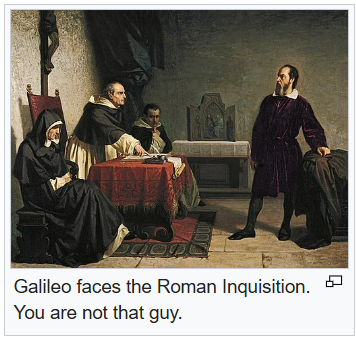
    Image Credit: Galileo gambit. (2018). RationalWiki. https://rationalwiki.org/wiki/Galileo_gambit

    Lots of new ideas are introduced to science all the time. Many of these ideas are accurate and make great contributions to our body of knowledge. At the same time, many don’t hold up to scrutiny and are rejected by the scientific mainstream. Discarding inaccurate ideas is a normal part of the scientific method, and it happens all the time. However, the promoters of a rejected idea don’t always want to admit that their idea is a bad one, and they feel the need to come up with reasons for why their idea is special, no matter how poor the evidence in its favor or how many qualified experts disagree with it.

    Enter the Galileo Gambit, a rhetorical device whose entire purpose is the promotion of rejected ideas (RationalWiki 2018). When an idea promoter uses it, you can expect them to say something like this:

    “Scientists won’t accept the fact that I have proof that the earth is flat! Well, they laughed at Galileo too, and look how that turned out for them!”

    The clear implication is that science as an institution is dogmatic and closed-minded. Scientists won’t accept firm evidence in favor of a belief you hold, but this means you are probably right! All great scientific discoveries were initially rejected, but over time, the enlightened public and a brave few intellectuals came around to the correct way of thinking and forced those stubborn scientists to accept the truth!

    Arguments that rely on the Galileo Gambit most often use Galileo as an example of the oppressed discoverer of revolutionary information, hence the name, but other famous historical figures may also be used. Ignaz Semmelweis, who advocated for doctors to wash their hands before delivering babies, is also a favorite name drop, since his ideas were not accepted until after his death (RationalWiki 2018). In addition, promoters may refer to Pasteur, Einstein, Mendel, and anyone else whose work was not recognized immediately upon publication or faced even mild critique or disapproval from the scientific community.

    The basic idea behind the Galileo Gambit seems reasonable at first, especially since people who use it are often able to recite long lists of persecuted geniuses such as the above figures. However, there are serious flaws in this type of argument, and it acts as a smoke screen to distract you from the fact that the “persecuted” idea is probably too weak to speak for itself. Here are five reasons, in order of increasing severity, for why you should not take a Galileo Gambit argument at face value.

    1. A Misplaced Persecution Complex

    Before we get into the logical and scientific minutiae, there’s something relevant to discuss about the circumstances of Galileo’s story: He wasn’t persecuted by scientists. Despite the fact that the Galileo Gambit is used to complain about science and its practitioners, Galileo’s big conflict was actually with the Catholic Church (RationalWiki 2018, Wikipedia Contributors 2019).

    The dispute that became known as the Galileo Affair started when Galileo published a book called The Starry Messenger in 1610, which gave details of observations he had made while studying the solar system through telescopes. Some of this data, such as the phases of Venus, provided support for heliocentrism, the idea that the sun is located at the center of the solar system and the planets, including Earth, revolve around it. Heliocentrism had first been proposed by Nicolaus Copernicus, but Galileo was its most open promoter.

    At the time, the official church doctrine on the subject supported geocentrism, a model that held that Earth was located at a fixed point in the center of the universe and that the sun, stars, and other planets revolved around it. This view was based on the opinions of ancient Greek philosophers and a literal reading of the Bible. The Roman Inquisition, after hearing about The Starry Messenger and Galileo’s private debates with church officials on the topic, declared in 1616 that heliocentrism was heretical. Galileo was ordered not to continue promoting his ideas and evidence, and a ban was set on heliocentric books. However, he defied the ban in 1632 by publishing a new book, Dialogue Concerning the Two Chief World Systems, that was clearly in favor of heliocentrism. As a result, Galileo was tried the following year for suspicion of heresy and sentenced to house arrest, which he remained under for the rest of his life.

    In contrast, most contemporary scientists agreed with Galileo’s claims once they had the chance to look through their own telescopes and see what he had seen. Even scientists with religious affiliations, such as a group of Jesuit astronomers, accepted that his observations were strong evidence for heliocentrism. Criticism from the scientific community tended to discuss minor points or express small caveats in approval of the conclusions that Galileo had drawn from his work. For instance, an astronomer named Christopher Clavius responded that he didn’t believe there could be mountains on the moon, a critique unrelated to heliocentrism (Wikipedia Contributors 2019).

    This is a minor but important point to consider when weighing the merits of the Galileo Gambit. What institution is the user arguing against, and how well does it really fit the charge of being hostile to new ideas? Religion tends to change slowly, if at all, so the argument that people unreasonably rejected Galileo’s ideas can be applied to the actions of religious leaders in this situation. It does not, however, apply to science, which is constantly changing, highly democratic, and accepting of many new ideas.

    1. Even Galileo Wasn’t Right About Everything

    One idea that Galileo promoted around the time of the heliocentrism debate was his belief that ocean tides were caused by Earth’s motion (Wikipedia Contributors 2019). This made sense to him, but it later turned out to be completely false; tides are actually caused by the gravitational pull of the moon. Galileo also believed in astrology and created horoscopes as a side job, and he refused to accept Kepler’s evidence that planetary orbits have the shape of ellipses, instead believing that they were circles (New York Times 2025, Gardner 1957). Galileo held and promoted a great number of ideas, but he is known primarily for heliocentrism today.

    Plenty of other prominent scientists have promoted bad ideas. In fact, there is a well-known phenomenon in which inaccurate or pseudoscientific hypotheses are supported by Nobel Prize winners! “Nobel Disease” (AKA “Nobelitis”) is something like an inverse impostor syndrome (Felton 2025). Instead of feeling insecure in their achievements and worrying that they are frauds, the awarding of a Nobel Prize seems to encourage prizewinners to consider themselves experts on a wide variety of topics, including areas they have no experience or training in and are therefore not qualified to issue advice on. Nobel Disease has led otherwise intelligent figures to endorse a significant range of inaccurate ideas with effects ranging from the scary (eugenics, lobotomies, and AIDS denialism) to the bizarre (astrology, parapsychology, and the belief that Vitamin C will prevent all diseases) to the amusing (one prizewinner believed that he had been visited by a talking raccoon riding a motorcycle).

    These faults are not exclusive to Galileo or to Nobel Prize recipients, but they demonstrate an important fact about the nature of science: No individual person has all the answers or is correct all the time, so science cannot rely on the opinions of a single person or even a group of authorities. By upholding a few people as misunderstood geniuses, the Galileo Gambit fails to recognize that these people won acceptance of their ideas because they were able to support said ideas with quality evidence. The fact that a person was right before has no bearing on the accuracy of whatever new idea they are promoting, hence each new idea must be proven just as old ideas were. The claim that all of a person’s ideas must be 100% accurate because they are an expert or because they were correct in the past is an argument from authority and fails a basic reality check.

    1. Failure to Distinguish Between Valid and Invalid Criticism

    A significant problem with the Galileo Gambit lies not in its theoretical premise or qualities, but in how people use it in practice. In theory, scientists are just as capable as any other group of engaging in persecution of ideas that they dislike or people that they enjoy having power over. In the real world, however, most ideas that science rejects are rejected due to valid scientific criticism, and there is a clear difference between criticism and persecution.

    When an idea is proposed (to science, the general public, or both), it will face plenty of arguments against it. In general, science-based criticism by people knowledgeable about a subject is valid, while criticism motivated by ideology or bias is not. The case of Einstein’s proposal of relativity is great at illustrating the difference, especially since Einstein is often held up as an example of someone who promoted a revolutionary idea and attracted criticism from scientists despite being right. Here’s what happened: Einstein proposed his theories of Special Relativity and General Relativity in 1905 and 1915, respectively, and they were not immediately accepted and incorporated into the field of physics (Wikipedia Contributors 2019). The early relativity deniers even included three scientists who had won Nobel prizes in physics. Sounds like a clear-cut case of evil scientists rejecting the ideas of a genius because he challenged their knowledge, right? However, this narrative falls apart when one considers that two of those three Nobel prize winners were Nazis and the third had won his prize in an area of physics that had nothing to do with relativity (Hansson, 2017). These critiques, though made by scientists, were clearly not scientific because they were probably motivated by antisemitic ideology (Einstein was Jewish) and compromised by a lack of expertise in the specific subject area. So although Einstein can be described as a persecuted genius, much of the criticism he received was unscientific, and hence not supportive of the Galileo Gambit. In addition, after an early period of disagreement and debate, the vast majority of scientists were won over to Special Relativity by the 1920s and General Relativity by the 1960s (Wikipedia Contributors 2019). There are no major physicists today who are relativity deniers.

    Despite there being a clear delineation between valid and invalid criticism, and despite scientific and professional criticism being valid, users of the Galileo Gambit indiscriminately reject all criticism regardless of its merits. This is exactly the wrong way to approach disagreement; if someone issues a reasonable critique of your idea, you need to address that critique by revising or even discarding the idea. It’s perfectly fine to ignore criticism that takes the form of personal attacks, illogical complaints, or denialism, or criticism that is made by an unqualified person, but brushing aside serious issues with your idea won’t help get it accepted and will instead work against you. It’s much more difficult to persuade people that your idea has merit if you refuse to address obvious problems!

    One more point: It’s worth noting that an idea promoter’s personality or manner of promotion may invite criticism, and thus discourage people from accepting the idea because they find the promoter repugnant rather than because of persecution or objections to the idea itself. Galileo was genuinely persecuted, but he also had a habit of insulting people who disagreed with him, and he alienated powerful figures who might have been willing to help him in his conflict with the Inquisition. A new pope, Urban VIII, had been elected after Galileo’s first trial and was initially sympathetic to him, even granting him limited permission to publish heliocentrist works, but their relationship crashed and burned upon the publication of Dialogue Concerning the Two Chief World Systems (Wikipedia Contributors 2019). The Pope pressured Galileo to include the church’s position in the book, which was written in the format of a fictional debate between a heliocentrist character, a mediator character, and a geocentrist character. The premise sounds neutral and inoffensive, but Galileo consistently portrayed the heliocentrist character as intelligent and heroic and the mediator as wise and fair, while the clownish geocentrist was given the name “Simpleton.” Throughout the book, the heliocentrist arguments are hailed as the best and most rational, while Simpleton’s arguments are all portrayed as stupid and ape the Pope’s position on the heliocentrism/geocentrism debate. This mocking led Pope Urban to believe that Galileo was caricaturing him, and he reacted poorly, banning the Dialogue and not offering support for Galileo during his heresy trial. Galileo would probably have been in trouble regardless of how he presented his argument, but he could have written the book in a less provocative manner. What if the Dialogue had resembled a real debate, in which well-reasoned arguments and solid evidence are supposed to lead to a win, rather than having an incompetent opponent? What if Galileo had crafted a plot in which the geocentrist character is won over by the strength of the evidence for heliocentrism? What if all the characters had considered the religious arguments for geocentrism, thought them through, and then calmly decided that such arguments were insufficient or that acceptance of heliocentrism did not conflict with being a good Christian?

    Sometimes, respectfully communicating one’s ideas is enough to avoid criticism of them, and criticism is a crucial component of the Galileo Gambit. Indeed, criticism is the part of the Galileo Gambit is supposed to prove the user’s correctness. If the promoters of inaccurate ideas did not make their arguments in an arrogant or provocative manner, might they face as much criticism as they do? And if they face no criticism, how could they argue that being persecuted makes them correct? This leads us to the next issue.

    1. Hypocrisy and Double Standards

    In the world of the Galileo Gambit, any idea with mainstream acceptance must be wrong if opposed by a minority idea, including ideas that were previously persecuted, disbelieved, or ignored but ultimately won people over. This means that whether an idea is “right” is based on the number of people who believe it, not how strong the evidence is in its favor, whether it can stand up to testing, or how closely it matches real-world observations. The logical endpoint of this premise is a world where “reality” is constantly in flux, as ideas gain acceptance by a majority of people, only to magically become wrong the instant a smaller group of people or even a single person decides to think something different. Needless to say, this isn’t how the world works.

    In addition to this obvious pitfall, users of the Galileo Gambit often apply a heavy double standard to any conflicts between their ideas and ideas accepted by science. Since the Galileo Gambit is based on the premise that any resistance to an idea is proof that it is correct, surely that means that facing no criticism means an idea is wrong? Nope! If an idea is not criticized by scientific authorities (generally due to scientists considering the idea to be so obviously inadequate that it’s not worth the time and effort it would take them to debunk it), the promoter will claim that this also proves them correct. In other words, there is no scenario in which the promoter will admit that he or she may be wrong. Harsh criticism and no criticism at all are made to appear equally supportive of the idea’s veracity.

    The inverse of such a gaping logical hole appears in the promoter’s treatment of mainstream science, especially fields or facts that oppose their own treasured ideas. Since their idea (by their logic) is unfalsifiable and therefore can never be disproved under any circumstances, it follows that whatever scientific evidence contradicts it will always be inadequate and is automatically inferior to what the promoter thinks. The promoter dismisses science out of hand and treats it as if it has no way to prove itself – the same unfair attitude that the promoter accuses scientists of holding!

    The situation worsens the more this hypocrisy is interrogated. Users of the Galileo Gambit charge scientists with engaging in persecution and controlling what ideas are accepted by the general public, but apparently it’s perfectly reasonable for them to do the same thing. After all, most people who promote pseudoscientific ideas via appeals to the public are not doing so because ordinary people can validate the scientific aspects of their claims. Rather, these idea promoters are engaging in a cynical attempt to win support of their ideas without having to actually prove themselves correct, because they know ordinary people are more likely to fall for fallacious claims and rhetorical dodges than experts are. If someone tries the Galileo Gambit on you, keep in mind that they’re insulting your intelligence!

    Furthermore, by the standards of these idea promoters, scientists face more persecution than the promoters do. In addition to being under metaphorical fire by every Galileo Gambit user under the sun attempting to force public acceptance of their quack ideas, scientists and scientific ideas have faced a disturbing number of attacks from many corners of society, especially in recent years. Anti-science influencers, companies selling bogus supplements and unproven drugs, and even governments peddling pseudoscientific policy all work to undermine science, misrepresent its positions, and deny its benefits to the people who could benefit from it most. During the COVID-19 pandemic, scientists who participated in good-faith efforts to find treatments and vaccines and communicate the science behind them to the public were rewarded with online harassment, bullying from popular politicians, and even death threats (Nogrady 2021). Some scientists required bodyguards to protect them from physical attacks from people who didn’t accept the science behind disease and inoculation. These actions go far beyond the debunking, dismissal, and refusal to publish that users of the Galileo Gambit complain about. Again, according to the gambit, the greater resistance an idea faces, the more correct it is likely to be. Thus, by users’ own logic, scientific ideas are the correct ones, because scientists face much more persecution than people who promote vaccine conspiracies, flat Earth theories, and climate change denialism. Yet no matter how often the news runs stories on the prevalence of science denialism or the risks faced by scientists when taking an action as simple as publicly claiming that science is real, anyone who uses the gambit will maintain no matter what that the suffering of science promoters is invalid and that pseudoscience promoters, conspiracy theorists, and misinformation peddlers are the real victims.

    1. Reliance On the Association Fallacy

    The book in my hand is a story about an action hero and its cover is blue; therefore, all blue books must have action hero protagonists. That restaurant has great food and amazing customer service, so all restaurants in the same chain must be of similar quality. My neighbor likes to garden and is mean to me, so all people who have a gardening hobby must be jerks.

    What is wrong with the above statements?

    If you said, ”the logic they use,” you are correct! At its core, the Galileo Gambit relies on faulty logic, specifically a flaw known as the Association Fallacy. The structure of the fallacy goes like this (RationalWiki 2018):

    A is X and Y. (Galileo was persecuted, and he was right.)

    B is X. (I am persecuted.)

    Therefore, B is Y. (I am right.)

    The fallacy lies in assuming that the fact that two things are alike in one way means they are the same in all ways. Translated to the Galileo Gambit, it invites the user to assume that they are correct solely because they resemble, in a single way, a famous historical figure who turned out to be correct. The problem, of course, is that similarity in one way does not guarantee that two things will be alike in any other respect. Two people who like to garden may have similar personalities, but given that humans are so diverse and that everyone has unique experiences, worldviews, and environments, the odds that you could pick two gardeners at random and discover that both of them hate you are small. In the same way, people who claim persecution in an attempt to identify themselves with Galileo cannot rely on that statement alone. To truly be like Galileo, they must also prove themselves correct as he did, with scientific evidence. This second criterion reveals the fatal flaw of the Galileo Gambit: users are desperate to be considered scientific and identify themselves with Galileo to further this goal, but the entire purpose of deploying the Galileo Gambit is to conceal the fact that they cannot produce any scientific evidence in their favor.

    What about people who really did resemble Galileo in both ways? How did Semmelweis, Einstein, and others who were both persecuted and correct react to the news of their rejection by the establishment? Such individuals are rare to begin with; after all, despite the claims of the Galileo Gambit, science doesn’t usually reject worthy ideas. From the examples we have, though, it seems that when someone knows that they have an important idea that needs to be shared with the world and is being unfairly held back, their first course of action is to . . . not compare themselves to Galileo. When faced with a setback, true persecuted geniuses continue to argue the merits of their work based on the evidence they have collected, because they know their evidence is strong enough to merit consideration. They don’t need to rely on the Galileo Gambit to get their views accepted.

    Consider Semmelweis’ story. In the 1840s, he began keeping statistics on the incidence of puerperal fever, a devastating infection contracted by women who had just given birth (RationalWiki 2023, Zoltán 2019). Semmelweis observed that new mothers contracted the fever and died at a much greater rate when they gave birth while attended by doctors and medical students than when they gave birth in the presence of midwives, and he kept detailed records on many cases. His breakthrough came after a friend attended an autopsy of a woman who had died of puerperal fever, cut his hand on a surgical instrument, and died of an identical disease. Semmelweis theorized that doctors were transmitting small particles that caused illness to the women they examined from the corpses they autopsied and suggested that doctors wash their hands prior to assisting with the births. (In this time period, doctors frequently performed autopsies and then attended births soon afterward.) He began washing his hands before delivering babies and required that his subordinates also do so, while continuing to keep track of the health of each mother in his hospitals. Soon, infection and mortality rates plummeted in multiple maternity wards that Semmelweis oversaw, and they remained high in hospitals that did not require hand washing. However, upon hearing about Semmelweis’ data and experiences, other doctors refused to believe his ideas or follow his advice. They didn’t want to believe that their hands could be dirty and acted as if Semmelweis had personally insulted them. Despite the rejection, he continued to argue for antiseptic practices based on his evidence, which was genuinely strong. Semmelweis fought for handwashing until his death (caused by an infection), and he did not do so by using the Galileo Gambit. Within a few decades, the state of medicine began to change, and other scientists and doctors who had been inspired by him began to promote the germ theory of disease and advocate for hygienic practices in health care. Today, Semmelweis is remembered as a pioneer of medical statistics.

    Semmelweis’ example can be seen as a template for how things really go when a worthy idea is rejected by the establishment. In the first place, such worthy ideas are based on solid scientific evidence, and their proponents have made a good-faith effort to request scientific acceptance and display how well they fit observed phenomena in the real world. Generally, the rejection of an accurate idea happens as a result of non-scientific attitudes or the state of a field that is just starting to become scientific. The promoter may feel discouraged by the setback, but he or she almost never copes by attacking science or indulging their delusions of grandeur. Instead, they emphasize the merits of the evidence for their hypothesis, ask for additional consideration, and continue to engage with science and the scientific community.

    References:

    Bhatia, A., Paris, F., & Taylor, R. (2025, September 7). Your Zodiac Sign Is 2,000 Years Out of Date. Nytimes.com; The New York Times. https://www.nytimes.com/interactive/2025/upshot/zodiac-signs.html

    Felton, J. (2025, August). What Is “Nobel Disease”, And Why Do So Many Prizewinners Go On To Develop It? IFLScience. https://www.iflscience.com/what-is-nobel-disease-and-why-do-so-many-prizewinners-go-on-to-develop-it-80240

    Galileo gambit. (2018). RationalWiki. https://rationalwiki.org/wiki/Galileo_gambit

    Gardner, M. (1957). Fads & Fallacies in the name of Science : the curious theories of modern pseudoscientists and the strange, amusing and alarming cults that surround them. A study in human gullibility. Dover.

    Hansson, S. O. (2017). Science denial as a form of pseudoscience. Studies in History and Philosophy of Science Part A, 63, 39–47. https://doi.org/10.1016/j.shpsa.2017.05.002

    Ignaz Semmelweis. (2023). RationalWiki. https://rationalwiki.org/wiki/Ignaz_Semmelweis

    ‌Nogrady, B. (2021). “I hope you die”: how the COVID pandemic unleashed attacks on scientists. Nature, 598(7880), 250–253. https://doi.org/10.1038/d41586-021-02741-x

    Sternberg, R. J., Roediger, H. L., & Halpern, D. F. (2007). Critical thinking in psychology. Cambridge University Press.

    Wikipedia Contributors. (2019, March 6). Galileo affair. Wikipedia; Wikimedia Foundation. https://en.wikipedia.org/wiki/Galileo_affair

    Wikipedia Contributors. (2019, March 3). Theory of relativity. Wikipedia; Wikimedia Foundation. https://en.wikipedia.org/wiki/Theory_of_relativity

    Zoltán, I. (2019). Ignaz Semmelweis | Biography & Facts. In Encyclopædia Britannica. https://www.britannica.com/biography/Ignaz-Semmelweis
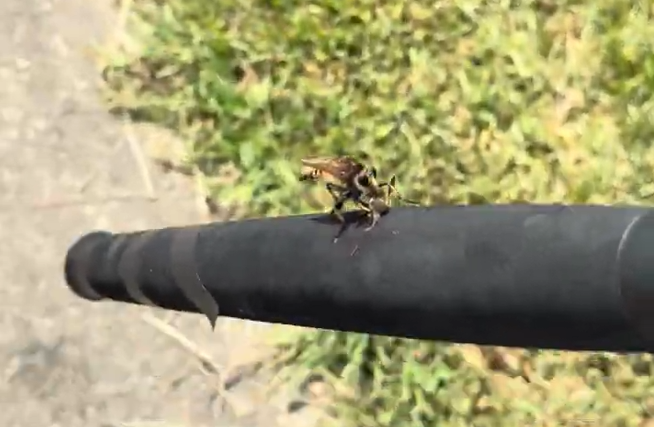
  • Forged in Fire: The Discovery of Bronze

    Introduction:

    Imagine living in a world where your toughest tool could shatter against a rock. For early human communities, stone, bone, and wood tools were the limits of technology until people discovered metals could be made stronger with fire. For societies used to only simple tools, a remarkable material reshaped societal and economic structures: bronze, the alloy of tin and copper. An alloy is a mixture of at least two metals that differs in properties from the metals it is made out of. When copper and tin was first alloyed, bronze was harder, easier to cast, and more durable than its original components. The discovery of bronze was more than just a new metal for tools and weapons, but an impactful change in trade networks, power structures, and artisanal traditions.

    Uncovering the Origin of Bronze:

    Bronze was not simply “discovered” one day. Scientists and archaeologists have spent decades researching how bronze was the result of incremental innovations in smelting, alloying, and forging during a time of great social and economic change. It is genuinely agreed upon amongst researchers that bronze was first discovered around 3300 BCE in Anatolia, Mesopotamia, and Iran, before spreading across Central Asia and then to the Mediterranean and Europe. One study from Central Asia shows that the sourcing of copper and tin was deeply involved in trade and cultural exchange (Berger et. al., 2023). Scientists are still researching to uncover how bronze was first made, and what it meant to the early-age civilizations.

    What Scientists Are Doing:

    Researchers in the archaeometallurgy field are digging in ancient smelting sites and analyzing the chemical and isotopic fingerprints of these early bronze materials. An isotopic fingerprint is essentially a geological signature. Metals from different regions may have slightly different isotope ratios than naturally occurring isotopes. Scientists measure these isotope ratios to match artifacts to the places their materials originally came from. 

    At the Khirbat Hamra Ifdan copper metal-production site in Southern Jordan, scientists have discovered an extensive copper smelting, alloying, and casting system dating all the way back to 3600 BCE – 2000 BCE (Levy et. al., 2002). Researchers found furnace remains and unfinished metal pieces at this site, supporting that this location had large-scale industrial production. This serves as one of the earliest examples of industrial metallurgy. 

    Another study at the Bactria-Margiana Archaeological Complex (BMAC) in Central Asia found that tin and lead isotopes at this site changed over time. The earlier metal objects used Iranian tin pieces, while later objects used Tian Shan (mountain range) sources, which was determined by analyzing the isotopic fingerprints of these metals (Berger et. al, 2023). This shift in metal sources shows that trade networks expanded over centuries as communities adapted their technology based on what tin sources were accessible or politically controlled. These early metal and bronze creations have left behind chemical fingerprints for scientists to encode. 

    Impact:

    A forged bronze ax or sword not only offered increased functionality, but also an elevated social status. Metal smiths became significantly more vital to society, allowing trade to spread for the supply of tin and distribution of bronze to far away places.

    However, there were many challenges associated with the discovery of bronze. Tin is relatively scarce, so long-distance and dangerous trading was necessary for the alloying of bronze. Copper smelting was also difficult for the time due to the high temperatures it required. Archaeological research from the Polish Przybyslaw region allowed researchers to simulate the difficult process of how craftsmen poured the molten bronze, shaped it, and controlled the cooling (Garbacz-Klempka et. al., 2022). These simulations showed that artisans used controlled airflow and clay molds to regulate the temperature during casting, which are advanced techniques requiring practical skill and knowledge all before formal metallurgical science even existed. 

    Conclusion: 

    The discovery of bronze paved the way for many more innovations through developed trade, specialized crafts, and new social hierarchies. Scientific research in archaeometallurgy, particularly through isotopic analysis, allows for the recreation of history. Many aspects of the early bronze discovery and usage are debated, especially how and where copper and tin were extracted, the innovation of bronze marked a new era for human development. 

    References:

    Berger, D., Kaniuth, K., Boroffka, N., Brügmann, G., Kraus, S., Lutz, J., Teufer, M., Wittke, A., & Pernicka, E. (2023). The rise of bronze in Central Asia: New evidence for tin and copper source dynamics. Frontiers in Earth Science, 11, 1224873. https://www.frontiersin.org/journals/earth-science/articles/10.3389/feart.2023.1224873/full 

    Levy, T, E. (2002). Early Bronze Age metallurgy: A newly discovered copper manufactory in southern Jordan. Antiquity, 76(292), 425-437, https://www.cambridge.org/core/journals/antiquity/article/early-bronze-age-metallurgy-a-newly-discovered-copper-manufactory-in-southern-jordan/B857CC0B56441B8FD7D31FB92616108A 

     Garbacz-Klempka, A., Piękoś, M., Perek-Nowak, M., Kiełbus, A. (2002). Reconstruction of the Late Bronze Age Foundry Process in Greater Poland: Analyses and Simulations. Archives of Metallurgy and Materials, 67(3), 1125-1136. https://www.imim.pl/files/archiwum/Vol3_2022/43.pdf

  • A Spritz of Sperm Whale

    When you think of perfume, what kinds of ingredients come to mind? Some people may think about flowery scents like rose, cherry blossom, or jasmine. Others may think of sweet notes vanilla, cinnamon, or honey. For some, the note “ambergris” may come to mind, but what is it? It can be described as a unique, musky scent with hints of the ocean. The original scent is actually derived from the intestines of sperm whales. How in the world would part of an animal’s digestive system end up in a perfume bottle?

    History of Ambergris

    According to the Smithsonian Museum, ambergris is a waxy substance that can only be found in the bowels of sperm whales, and it can only be collected if the whale regurgitates or defecates it (Brito, Jordão & Pierce, 2016). In other words, the scent comes directly from sperm whale intestines, where food is digested and turned into waste. The idea of the substance coming from intestines can certainly be off-putting. After all, the substance comes from the same place that feces are made in the whale. 

    Despite such an unappealing origin, ambergris was actually beloved throughout history. It was used by a multitude of cultures, ranging from Egypt to Europe. Ancient Egyptians burned the substance as incense to ward off evil spirits, Arabic regions used it as medicine, and some people in medieval Europe even consumed it in luxury dishes (Olson, 2024). Evidently, ambergris had many different uses throughout history. It was even described to have a sweet, musky scent with “notes of tobacco, sandalwood, and ocean” that got better with age (Olson, 2024). Thus, it makes sense that the fatty gold somehow found its way into the perfume industry. 

    Animal Products in Perfume

    At first glance, hearing about animal parts in perfume may sound alarming. However, animal products were commonly used in perfumes before chemists could synthetically recreate those scents. For instance, many common perfumes found in beauty stores will often have “musk” listed as one of the key notes. Musk actually comes from a sac in the musk deer, which is then removed and excreted to make perfume. (Fortneau, 2004). Thus, it was not necessarily a strange practice to implement the secretions of different animals into perfume. In fact, the same ambergris was originally used in Chanel No.5, utilizing the ambrein alcohol found within ambergris to help enhance the other scents within the perfume (Olson, 2024). 

    Is it Still Used Today?

    If there are any perfumes that contain the scent of ambergris in modern times, chances are the scent is synthetic. This is due to the fact that whale poaching is now illegal in most countries. In fact, it is illegal to even sell the ambergris in certain countries because the sperm whale is considered an endangered species due to the over hunting of the animal in the past (Olson, 2024). In order to emulate the same scent while keeping wildlife safe, chemists have found ways to replicate similar scents to those made with animals synthetically. 

    For instance, it was previously discussed that the scent “musk” originally came from the musk deer. However, it would likely cause harm to the population if the deer were to be hunted to satiate the demand of the perfume industry. Thus, chemists can replicate the scent by creating synthetic compounds that are chemically similar to what gives each note its specific scent. For musk, the main component that gives it its scent is called muscone. This was replaced by “musk Baur”, a scent that was discovered by Albert Baur when experimenting with trinitrotoluene (TNT) and “tert-butylhalides” to create new explosives (Fortneau, 2004). Today, chemicals like musk Baur are used much more often because they are much cheaper than hunting the animal themselves.

    This way, endangered species can be kept safe from hunting, while people can still enjoy the scents they love – even if they do come from the innermost parts of a whale.


    References

    Brito C, Jordão VL, Pierce GJ. (2016). Ambergris as an overlooked historical marine resource: its biology and role as a global economic commodity. Journal of the Marine Biological Association of the United Kingdom. https://doi.org/10.1017/S0025315415000910 

    Fortneau, AD. (2004). Chemistry Perfumes Your Daily Life. Journal of Chemical Education. American Chemical Society. https://doi.org/10.1021/ed081p45 

    Olson, D. (2024). The Mystery of Ambergris. Smithsonian National Museum of Natural History. https://ocean.si.edu/ocean-life/marine-mammals/mystery-ambergris 

  • The Uncanny Valley – An Exploration of How Humans Perceive AI

    Have you ever seen a humanoid design that looks just off? Whether it’s the subtle placement of facial features, an abnormal glint in the eyes, or even just a subconscious lurking feeling that something’s not right, you’ve likely experienced the sensation often described as the uncanny valley.  


    What is the uncanny valley?

    The concept of the uncanny valley was first introduced in the early 1970s by a robotics professor, Masahiro Mori. Mori describes the term as an irregular representative of a linear relationship, stating, “as robots appear more humanlike, our sense of their familiarity increases until we come to a valley.” (Mori et al., 1970) This ‘valley’ he refers to is a point in the relationship between human ‘likeness’ and familiarity in which familiarity plummets before increasing again. Mori designed a graphical relationship indicating this phenomenon, which can be viewed in the image below. This dynamic can be even further exacerbated by attentional human-like cues added, such as movement or touch sensation (Mori et al., 1970). 


    (Original diagram created by Masahiro Mori, who coined the uncanny valley term in the early 70s.) Source: Wikimedia Commons [https://commons.wikimedia.org/w/index.php?curid=2041097]


    The actual origin of the uncanny valley is a question sought after and theorized on by many researchers. A few common hypotheses about its origin have been proposed though. Some examples that will be further discussed below are categorization uncertainty and perceptual mismatch. Unfortunately these hypotheses and actual root of the phenomenon is under researched area, making it difficult to tie a definitive cause (Kätsyri et al., 2025). 


    Categorical perception deals with one’s predisposition to better perceive something if it distinctly falls into a mental category. This causes things felt to fall into discrete categories to be highlighted in their uniqueness, and those that remain similar to have an understated emphasis on difference (Goldstone & Hendrickson, 2009). The hypothesis is that a cognitive dissonance is created when the uncanny valley is reached in a humanoid design. Essentially, at this stage, there is a difficulty in the mental categorization process, with ambiguity in the design making it hard to determine if the figure falls into the ‘human’ category or the ‘robot/inhuman’ category. This uncertainty is thought to bring the discomforting feeling described by the effect (Kätsyri et al., 2025).


    Another hypothesis is rooted in the idea of perceptual mismatch. This theory follows a similar line of reasoning to the categorization uncertainty hypothesis, being that the uncanny valley effect is thought to be brought on by a feeling of discomfort that arrives by the brain’s difficulty to discern something. In this case, it relates to the perceptual confusion brought along by something with high human likeness with a feature that is inhuman or artificial in appearance. The discrepancy between a primarily human perception and an identifying feature that is misaligned with that is thought to create the uncomfortable feeling of uncanniness (Kätsyri et al., 2025). 


    Uncanny Valley and AI

    As time has gone on, the general public has witnessed the rapid development of technology. With our world’s rising implementation of artificial intelligence (AI) run programs, generative technologies, and interfaces, the question arises, how does this concept intersect with AI? Can the uncanny valley phenomenon expand beyond visual design?


    A recent study explores these perceptions in action and how it affects user interaction and emotional responses. Deepali Kishnani, a student at MIT, employed an experimental structure that examined text interactions between participants and 3 variables – a bot engineered to be ‘human-like’, a bot engineered to be ‘uncanny-like’, and a human for control. After conversing with one of the 3, the participant ranked the system on anthropomorphism, animacy, likeability, perceived intelligence, and safety (Kishnani, 2025). 


    Based on the rating and analysis of the results, it was concluded that there is evidence that the uncanny valley is present in text-based interaction, as the ‘uncanny-like’ bot was consistently rated lowest on all dimensions. Findings also revealed that people are having an increasingly more difficult time distinguishing human interaction from AI interactions, as 60% of participants in the human control group incorrectly identified their chat companion as AI (Kishnani, 2025).


    With the now confirmed presence of possible uncanny valley in AI chatbot interactions, an additional question of how it influences trust from users arises. Another study explores this concept, seeking how the anthropomorphism of AI systems induces concern into the patron, instigating fear of human-natured negative actions onto the inhuman bot (Kim et al., 2024). This study specifically introduces a concept known as ‘uncanny valley of the mind,’ which focuses more on human-like intentions rather than human-like appearance. They suggest that the uncanny valley of the mind is brought on when a chatbot is perceived to have human-like mentalites (also known as a ‘digital mind’), they will also possess human-like intentions- such as the ability to misuse information (Kim et al., 2024).


    To test this phenomenon, researchers created 2 chatbots that could be accessed through facebook messenger, one ‘anthropomorphized’ and one ‘non-anthropomorphized.’ Through a series of interactions, the bot asked for personal information and later synthesized either an ad containing that information or a generic ad without it. Interestingly, when the anthropomorphized bot presented the user with a personalized ad, participants reported increased privacy concerns. This effect was not present in the non-anthropomorphized ads, regardless of it being the personalized or non-personalized ad. With this being said, it was determined that higher anthropomorphism in chatbots decreases consumer trust/likelihood to purchase a product when personal information is included in the pitch (Kim et al., 2024).


    What Does this Mean for the Future of AI?

    It seems that as the days go on, more applications of AI are created and present in a multitude of functions. As implementations into features like writing programs, customer service, and ad-personalization grows, opportunity for distrust in these systems increases along with it. The research above proves that the uncanny valley can seep into perceptions of these AI powered systems, so how will producers handle this realization?


    In my opinion, there are two ways this industry can progress to mediate this issue from a psychological standpoint. Either producers will make efforts to develop AI systems that are less uncanny and more perceptual humans or consumers will begin to gravitate away from trust. Historically both of these things have occurred in product development and examples regarding the uncanny valley can even be observed. 


    A great exemplification of both of these mediations is the design of ‘Sonic the Hedgehog’ in the 2020 film rendition. When the first trailer released, fans of the franchise were horrified by the uncanny design of their beloved main character. Sonic, a very cartoonish character, had been adapted to his life action role by combining realistic CGI texturing and a flurry of human-like features on a very non-human creature. The uproar after the release was instant, with many fans taking to social media to detest the movie and state their refusal to endorse it. (Alexander, 2020) This is an example of the consumers gravitating away from trust. Producers were then forced to change the design to be more appealing and cartoonish, exemplifying the need for producer design in a way that is more appealing to consumers. 


    The true outcome of how AI develops can only be told by time. Until then, be a critical consumer. Do you find yourself experiencing a lurking, unsettling, off feeling when chatting with AI systems?


    References:

    Alexander, B. (2020, February 17). How “Sonic the Hedgehog” avoided death by Twitter with a dramatic, game-saving redesign. USA Today. https://www.usatoday.com/story/entertainment/movies/2020/02/13/sonic-the-hedgehog-movie-redesign-how-backlash-made-character-better/4730593002/

    Goldstone, R. L., & Hendrickson, A. T. (2009, December). Categorical perception. WIREs Cognitive Science. https://wires.onlinelibrary.wiley.com/doi/10.1002/wcs.26

    Kim, W., Ryoo, Y., & Choi, Y. K. (2024). That uncanny valley of mind: When anthropomorphic ai agents disrupt personalized advertising. International Journal of Advertising, 1–30. https://doi.org/10.1080/02650487.2024.2411669

    Kishnani, D. (2025, March 7). The uncanny valley: An empirical study on human perceptions of AI-generated text and images. The Uncanny Valley: An Empirical Study on Human Perceptions of AI-Generated Text and Images. https://dspace.mit.edu/handle/1721.1/159096

    Kätsyri, J., Förger, K., Mäkäräinen, M., & Takala, T. (2025, November 1). A review of empirical evidence on different uncanny valley hypotheses: Support for perceptual mismatch as one road to the valley of eeriness. Frontiers. https://www.frontiersin.org/journals/psychology/articles/10.3389/fpsyg.2015.00390/full#B19

    Mori, M. (1970). The Uncanny Valley. https://www.almendron.com/tribuna/wp-content/uploads/2018/01/morunc.pdf 

  • How Science is Reinventing What it Means to “Stay Cool”

    Introduction:

    On a hot July day, what you wear to stay cool matters. There are common remedies to help you stay cool: wearing cotton and light colors to allow for air circulation and light reflection. Some textiles, like wool, insulate heat to help you stay cool during the winter months and others, like polyester, prevent sweat from absorbing into its fibers. As global temperatures rise and daily heat records are broken more often, these traditional “summer” fabrics can only do so much to keep you cool because of their one big drawback: they trap the body’s infrared radiation induced heat (Tang, 2025).

    The body is always emitting infrared radiation, but this radiation typically is let off into the air. However, fabrics like wool, polyester, and cotton, absorb or reflect this radiation back to your body and trap heat. This problem is exactly what scientists studying radiative cooling textiles hope to combat (Yu et al., 2025). 

    What Scientists are Doing:

    Researchers are reengineering textiles at the molecular level to design radiative cooling textiles that release the infrared radiation the body lets off instead of reflecting it back to the body like traditional textiles (Tang, 2025). These thermoregulating textiles focus on the movement of heat and light through fibers rather than just controlling airflow and moisture retention. Through the careful design of specific polymers, coating fibers, and embedding of nanoparticles, how radiation interacts with fabric can be manipulated. For example, some of these textiles have been made from engineering polyethylene that reflects visible light but is transparent to infrared radiation, allowing for heat to escape from the body (Yu et al., 2025). 

    Outside of science labs, early prototypes of these thermal textiles are being tested by research teams and companies. Specifically, several research teams, like brrro and IRCool textiles at Stanford University, are testing radiative cooling textiles that appear to lower body temperature by a few degrees even in the direct sun, which is a major development as extreme heat events become more common (Yu et al., 2025). Additionally, these thermal textiles are being tested for use as athletic wear and for architectural purposes (Tang, 2025). 

    Not Quite Cool Enough, Yet:

    Despite major developments in the use of these thermal textiles, there are still several challenges that textile researchers are facing. One of the major problems is that polyethylene, the main polymer being used in these thermal textiles, is difficult to recycle, receiving criticism from environmental activists (Tang, 2025). Additionally, these polymers are difficult to dye due to their amorphous structure, limiting their aesthetic uses in industry. While radiative cooling textiles offer a promising improvement in keeping you cool in the warmer months, their presence remains primarily in the researching and prototype phases rather than the mass-market clothing industry (Yu et al., 2025). 

    Conclusion:

    As temperatures continue to rise, the fabrics we wear have an ever important role in keeping us cool and safe. Radiative cooling textile advancements show how science intersects design to create clothing that works with the body’s heat flow for maximized comfort and functionality. While there is a long road ahead of these textiles becoming commercially available, their innovation marks a step towards cooler clothing. 

    References:

    Tang, B. (2025). Recent progress in the development of radiative cooling textiles. Nanomanufacturing, 5(2), 22. https://www.mdpi.com/2673-7248/5/2/22 

    Yu, Z., Zhang, L., & Li, Y. (2025). Next-generation passive cooling textiles for personal thermal management. Nano Research Energy, 4(1), 713-725. https://link.springer.com/article/10.1007/s40820-025-01713-4