Category: today i learned (til)

  • The Marine Colonizers: Lionfish

    Introduction:

    As I scrolled through YouTube to look for something to watch, I came across a Short (the term for the vertical, short-form video format on YouTube). The short was of a free diver swimming through a kelp forest and using a tool to scoop up all the sea urchins into a gigantic net. For some reason, I was instantly mesmerized by the video. I think it’s because 1) I think the ocean is awesome, and 2) the sounds of the video felt almost like ASMR. I went down the rabbit hole that day and watched the rest of this user’s content (sea urchin harvesting). There was something so satisfying about watching him gather a netful of sea urchins and use his tool to crack one open for the nearby fish. It appears the diver and the native fish have developed a symbiotic relationship: the fish leads the diver to the sea urchins, and the diver opens sea urchins for the fish to feast on. Watching all these videos made me wonder, “Is this really the only way we can control sea urchin populations, and what happened that caused the situation to get this bad?”

    I knew for a long time about the lionfish problem. Funnily enough, YouTube started recommending lionfish videos to me. The diver uses a harpoon to impale lionfish and then places them in a bin. So then that made me think, “Is gathering these invasive species the only method of managing their populations?” It doesn’t seem that effective to me.

    How are lionfish so successful as invasive or non-native species?

    Background

    Lionfish, Pterois miles and P. volitans, are native to the warm waters of the Indian and Pacific Oceans, and were introduced to South Florida’s coastal waters about 30 years ago (Norton & Norton, 2021). These fish are actually the first non-native marine fish introduced to the US’s Atlantic Coast and the Caribbean (Morris and Akins, 2009). They were common reef predators in the Indian and Pacific Oceans, so, with no predators to keep their populations in check, South Florida’s Atlantic coast provided the perfect conditions for these lionfish to thrive (Norton & Norton, 2021). Climate change also plays a role in the rise of lionfish in the Atlantic Ocean: the increase in ocean temperatures extends the lionfish territories north and south (Norton & Norton, 2021). Another leading cause of the success of lionfish establishing their populations is believed to be their broad diet, making them ecological generalists (Côté and Smith, 2018). From 2004 to 2010, lionfish populations rose drastically, increasing from 23% to 40% of the total predator biomass in the ecosystem (Green et al., 2012). By studying lionfish stomach content, researchers have found that “90% of the prey consumed by lionfish were small-bodied reef fishes from 42 species. Between 2008 and 2010, the combined body mass of these 42 species declined by 65%” (Green et al., 2012).

    Control Efforts

    Lionfish’s venomous spines provide effective protection against predators, but lionfish control programs have started across the Caribbean, which may successfully reduce the effects of lionfish at local scales within high-priority areas, such as Marine Protected Areas and fish nursery habitats (Green et al., 2012). The most common form of lionfish control is culling by locals or during organized tournaments (Côté and Smith, 2018). Numerous studies have shown that regular culling at target sites could significantly reduce populations and promote the recovery of native prey populations (Côté and Smith, 2018). Lionfish sizes have decreased due to targeted culling in various regions (del Rio et al., 2023). Unfortunately, not only is culling costly and physically demanding, but for culling to be effective, the amount of lionfish removed must be high: e.g., “35-65% annually at large spatial scales” (Côté and Smith, 2018). Another mitigation strategy is found in gastronomy—we collect lionfish recreationally or commercially for human consumption (Côté and Smith, 2018). It turns out, lionfish are delicious and nutritious (Morris et al., 2011b). Unfortunately, relying on native predators, particularly big groupers, is insufficient in controlling lionfish populations (Côté and Smith, 2018). One reason is that native predators aren’t as abundant as they used to be, and so these populations don’t consume lionfish enough to be effective (Paddack et al., 2009; Sadovy de Mitcheson et al., 2013). Researchers have thought of training native predators to consume lionfish (Diller et al., 2014). However, further research has found that training predators is unrealistic, so low predation on lionfish isn’t due to native predators being unaware that they could consume lionfish, but because of lionfish’s defenses against predators (the venomous spines) (Côté and Smith, 2018).

    Conclusion

    Based on the existing research, I would argue that introducing or developing lionfish as a potential food source for humans could aid in controlling lionfish populations. I think it’s super important that we educate people about the environmental problems of non-native species inhabiting ecosystems, and the efforts we can make to restore balance. I would think that research in mitigating lionfish effects on ecosystems would help in further research of non-native or invasive species in other habitats too!
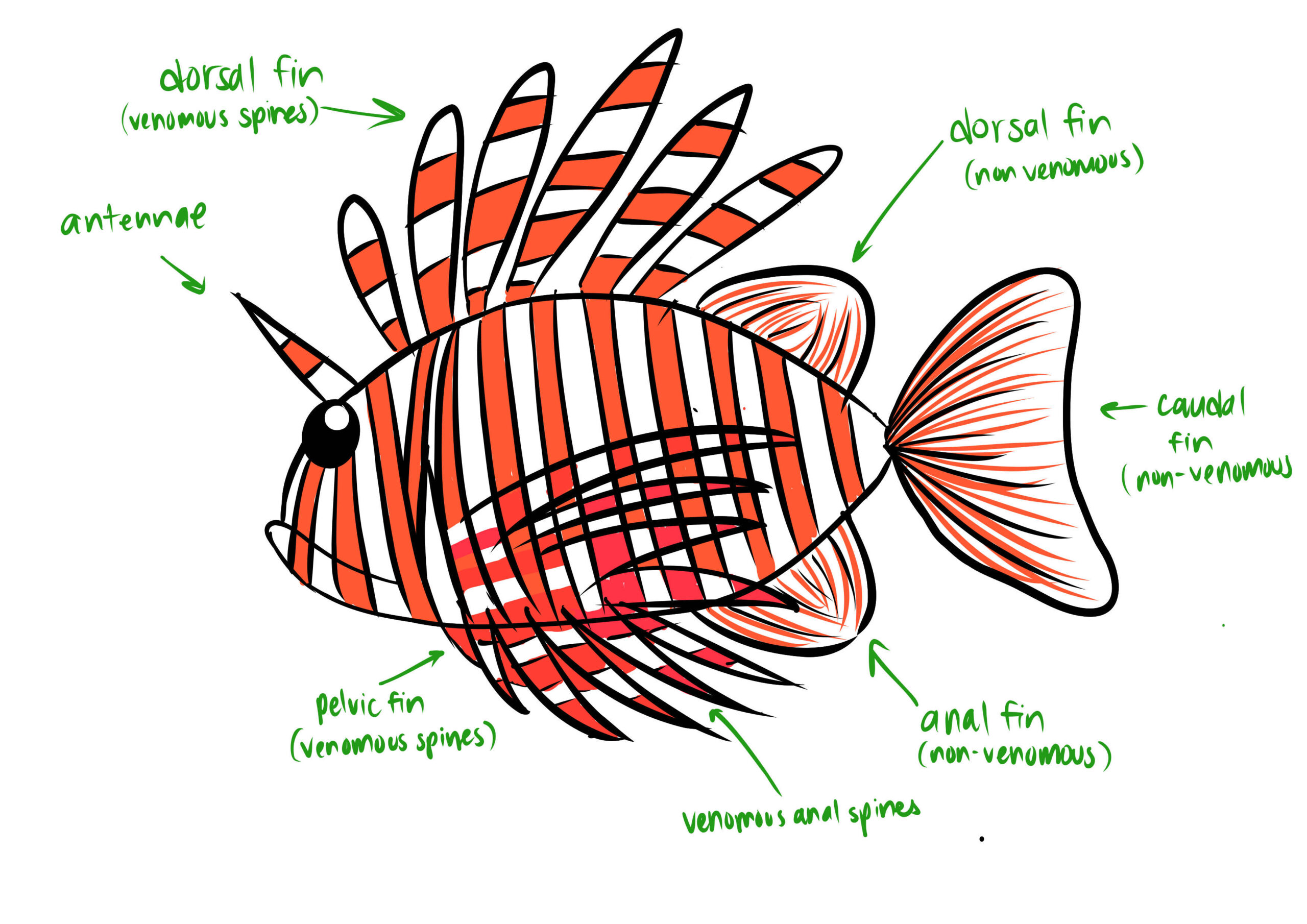
    My attempt in drawing a lionfish! I’ve also labeled different parts of the fish.


    Sources:

    Côté, I. M., & Smith, N. S. (2018). The lionfish pterois sp. invasion: Has the worst‐case scenario come to pass? Journal of Fish Biology, 92(3), 660–689. https://doi.org/10.1111/jfb.13544

    del Río, L., Navarro-Martínez, Z. M., Cobián-Rojas, D., Chevalier-Monteagudo, P. P., Angulo-Valdes, J. A., & Rodriguez-Viera, L. (2023). Biology and ecology of the lionfish                     pterois volitans/pterois miles as invasive alien species: A Review. PeerJ, 11. https://doi.org/10.7717/peerj.15728

    Diller, J. L., Frazer, T. K. & Jacoby, C. A. (2014). Coping with the lionfish invasion: evidence that naïve, native predators can learn to help. Journal of Experimental Marine Biology and Ecology 455, 45–49.

    Green, S. J., Akins, J. L., Maljković, A., & Côté, I. M. (2012). Invasive lionfish drive Atlantic coral reef fish declines. PLoS ONE, 7(3). https://doi.org/10.1371/journal.pone.0032596

    Morris, J. A., & Akins, J. L. (2009). Feeding ecology of invasive lionfish (pterois volitans) in the Bahamian Archipelago. Environmental Biology of Fishes, 86(3), 389–398. https://doi.org/10.1007/s10641-009-9538-8

    Morris, J. A. Jr., Thomas, A., Rhyne, A. L., Breen, N., Akins, L. & Nach, B. (2011b). Nutritional properties of the invasive lionfish: a delicious and nutritious approach for controlling the invasion. AACL Bioflux 4, 21–26.

    Norton, B. B., & Norton, S. A. (2021). Lionfish envenomation in Caribbean and Atlantic Waters: Climate change and invasive species. International Journal of Women’s Dermatology, 7(1), 120–123. https://doi.org/10.1016/j.ijwd.2020.05.016

    Paddack, M. J., Reynolds, J. D., Aguilar, C., Appeldoorn, R. S., Beets, J., Burkett, E. W., Chittaro, P. M., Clarke, K., Esteves, R., Fonseca, A. C., Forrester, G. E., Friedlander, A. M., García-Sais, J., González-Sansón, G., Jordan, L. K. B., McClellan, D. B., Miller, M. W., Molloy, P. P., Mumby, P. J., Nagelkerken, I., Nemeth, M., Navas-Camacho, R., Pitt, J., Polunin, N. V. C., Reyes-Nivia, M. C., Robertson, D. R., Rodríguez Ramírez, A., Salas, E., Smith, S. R., Spieler, R. E., Steele, M. A., Williams, I. D., Wormald, C., Watkinson, A. R. & Côté, I. M. (2009). Recent region-wide declines in Caribbean reef fish abundance. Current Biology 19, 590–595.

    Sadovy de Mitcheson, Y., Craig, M. T., Bertoncini, A. A., Carpenter, K. E., Cheung, W. W. L., Choat, J. H., Cornish, A. S., Fennessy, S. T., Ferreira, B. P., Heemstra, P. C., Liu, M., Myers, R. F., Pollard, D. A., Rhodes, K. L., Rocha, L. A., Russell, B. C., Samoilys, M. A. & Sanciangco, J. (2013). Fishing groupers towards extinction: a global assessment of threats and extinction risks in a billion dollar fishery. Fish and Fisheries 14, 119–136.

    /*! elementor – v3.17.0 – 08-11-2023 */
    .elementor-widget-image{text-align:center}.elementor-widget-image a{display:inline-block}.elementor-widget-image a img[src$=”.svg”]{width:48px}.elementor-widget-image img{vertical-align:middle;display:inline-block}
  • Introduction: The Problem with Wet Raincoats

    Introduction: The Problem with Wet Raincoats

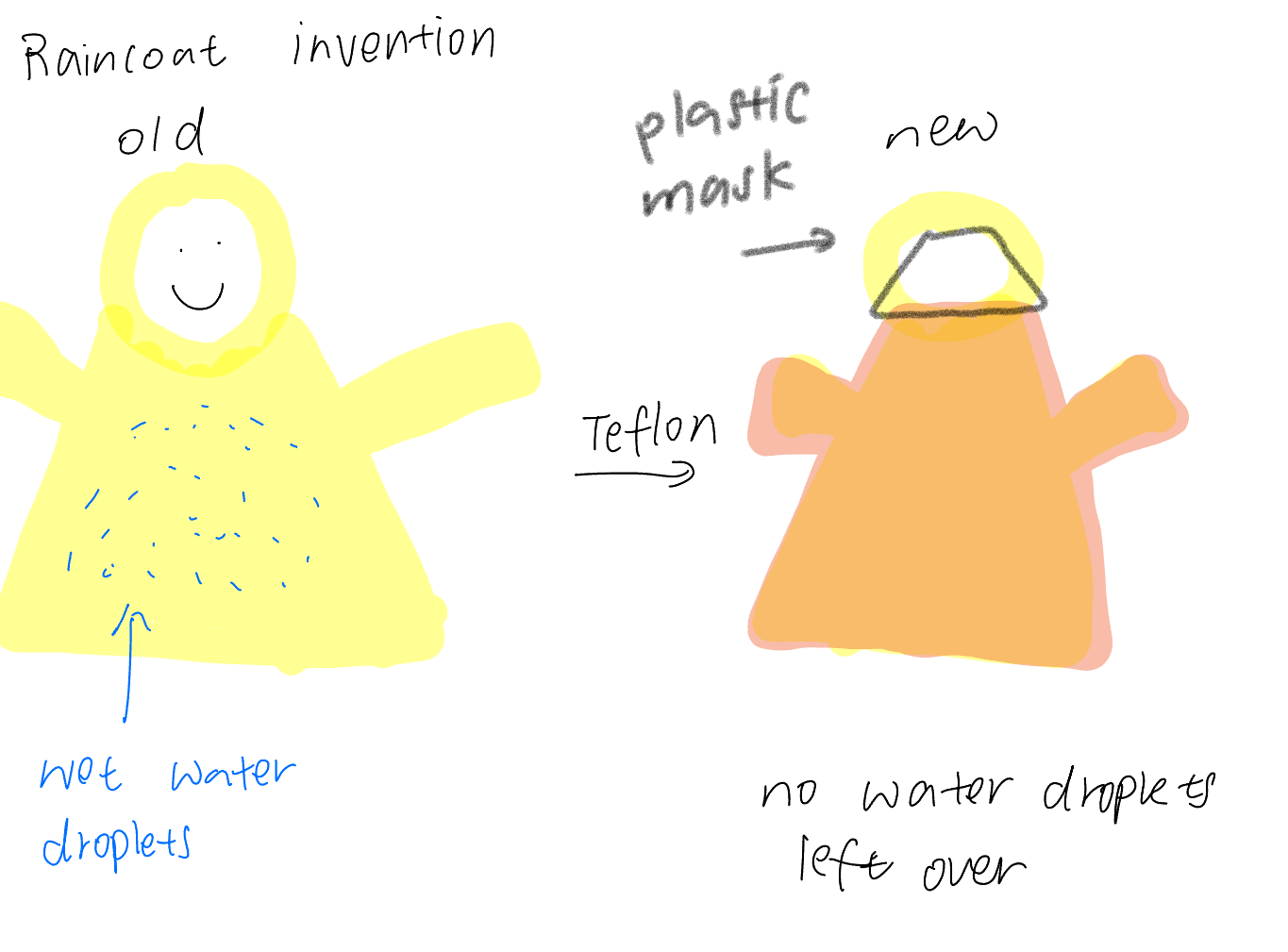
    Imagine walking through rain and not seeing a single wet spot on your raincoat afterward. Most rain jackets protect you from getting soaked, but when the storm passes, you’re often left with dark streaks or damp patches on your clothes. These wet traces come from water that clings to the surface or soaks in slightly, making the coat look and feel less than perfect. Even the usual waterproof materials like nylon and polyester eventually show these marks, especially after you’ve worn them for a while.


    Why Teflon Is Different

    Teflon, also called PTFE, is famous for not letting things stick to it. That’s why you find it in nonstick frying pans and fancy lab gear. For raincoats, what matters is Teflon’s super-low “surface energy.” Think of surface energy as how much a material “wants” to attract water or let it spread. Teflon’s is about 18 millinewtons per meter, which is much lower than most plastics or fabrics. When rain hits Teflon, the water forms round droplets and rolls right off instead of spreading out or soaking in. This happens because the contact angle—the way a droplet meets the surface—is very large, often over 150 degrees. The bigger this angle, the less chance there is for wet marks to form.

    If you zoom in on Teflon with a microscope, you’d see that its smooth surface, or even tiny nano-sized roughness added by plasma treatment, makes it even harder for water to “hold on.” This is similar to how lotus leaves stay clean in the wild—a trick called the “lotus effect”—since water picks up dirt as it rolls away.


    Making the Material

    There are a few ways to give fabric this Teflon power. One is to dip the fabric—usually nylon or polyester—into a liquid PTFE solution. After that, it’s baked at a high temperature so the Teflon layer sticks well. Another method uses a plasma — a kind of energized gas — to roughen the surface of the cloth before a fine Teflon spray is applied. This roughness on the microscopic scale helps water droplets sit up high and roll away easily. A third way uses a thin, expanded Teflon (ePTFE) layer, like you find in Gore-Tex. This ePTFE is full of tiny holes just big enough to let sweat escape but too small for rain, making the coat both waterproof and breathable.


    How It’s Tested

    To see if these new raincoat materials really work, scientists check how water interacts with the surface. First, they measure the “contact angle” by placing a tiny drop of water and seeing how round it stays. If it’s above 150 degrees, that’s a great sign. Next, they tilt the fabric to see at what angle the water starts rolling away. The lower the angle, the more water-repellent it is—ideally less than five degrees. High-speed cameras catch whether any water sticks behind as a trace. There are also tests for how well the fabric breathes, and how the coating stands up to being rubbed or folded, since nobody wants a raincoat that only works when it’s brand new.


    What’s Been Found

    When coated with Teflon, the fabric doesn’t just repel water in the lab—it stays free of wet streaks and dark patches even after you bend it or rub it. Expanded Teflon membranes work well, too, but sometimes a little water gets into stitched seams. Standard raincoat materials, like those with a simple polyurethane or PVC coating, tend to darken or show traces after rain because they let a little water stick or soak in. The Teflon designs solve this.

    However, there’s a tradeoff. If you use a thick layer of PTFE, it can make the fabric nearly airtight, trapping sweat and making you uncomfortable. The best designs mix superhydrophobic coatings with a “breathable” textile underneath, so rain rolls off but you stay cool and dry on the inside.


    Looking Ahead

    New raincoats could do more than keep us dry; they could hide every sign that it ever rained in the first place. That’s what makes Teflon so promising for rainwear. There’s still work to be done, especially in making these materials eco-friendly and finding ways to repair or renew the coatings over years of use. Fabric scientists are trying things like self-healing polymers, special surface patterns made with lasers, and mixing Teflon with safer chemicals to make the ultimate “invisible trace” raincoat.


    References
    Barthlott, W. & Neinhuis, C. (1997). Purity of the Sacred Lotus. Planta 202, 1–8.
    Wilkes, R. W. T. (1976). Surface Energy of PTFE and Its Copolymers. J. Colloid Interface Sci. 55, 29–38.
    Gore Inc. (2022). Understanding ePTFE Membranes. Technical Bulletin.

  • Music Influence in Daily Life

    Have you ever heard that one’s emotions can be greatly influenced by music alone? Music can be used to manipulate the philosophy of a person from a young age. It can calm down or bring discomfort to an adult. Music is encoded into human traditions and cultures. 

    Patriotism in Culture

    It is known that since our ancestors’ time, education has been a fundamental part of the culture to nurture children into responsible and dependable adults. Borea’s area in the left hemisphere of the brain links to language and speech production. This is where music resides, hence music can evoke powerful emotions (Pianka, 2012). Professor Pianka (2012), an evolutionary ecologist, also criticized that music was exploited by leaders to arouse their people into wars, using national anthems to evoke patriotism and inflame tribal instincts. In fact, this does not only apply to soldiers, but also young children and working adults.

    In the book “Patriotism and Nationalism in Music Education”, many music education philosophers agree that music education is a medium of instilling patriotism in children (Hebert & Kertz-Welzel, 2016, p. 11). Take Taiwan for example, national identity is a sensitive issue that is strongly reflected in school curricula. The music curriculum is designed to promote students’ personal and national identities in the new Taiwan (Hebert & Kertz-Welzel, 2016, p. 67). In the past, corrupted politicians wanted to strengthen the relationship between citizens and their own country, which in turn would support their position in power. Fortunately, Hebert and Kertz-Welzel (2016, p. 40) noted that with the lesson from Germany, the time for music education as a means for nationalistic or patriotic education is over.

    In modern days, this situation occurs more in culture than politics. For example, Pianka (2012) suggests sports fans in opposing groups using their team’s theme song to elicit passion is a form of conflict influenced by music.

    Nature in Music

    Aside from childhood education, religion is part of many people’s lives, which feels incomplete without listening to the music and singing. Patrick Whelan, a Harvard Medical School lecturer, suggested that church music “puts everyone in the same emotional space” (Eck, 2024). 

    Whelan suspects this is due to evolutionary biology. Earliest nocturnal mammals had to rely on being hyperfocused and hyperattentive for survival, which likely adapted into live music today (Eck, 2024). The human brain can tag acoustic cues as familiar or unfamiliar. Church attendants have been listening to choir since their childhood, so indeed the music is familiar to them. Eck (2024) stated that “the valence of the music, which signals whether the music feels positive, negative, or somewhere in between, influences the autonomic nervous system (ANS)”, which can also be influenced by the familiarity of the music. This is the reason why a person can feel discomfort from listening to infamous or heavy metal music if they are growing up not familiar with the genre.

    Additionally, a study (Song et al., 2023) revealed that music familiar to nature sounds bring comfort, relaxation, and lower negative mood. The study suggests that despite most people now residing in urban areas, participants are more at rest with nature sounds than urban sounds. Song and others (2023) believe that the reason is due to how the ancestors have long been living with nature, while the accelerated industrialization and urbanization only occur in recent centuries. There’s a suggestion of inheritance involving music familiarity, though family environment can be a larger factor as Whelan suggests.

    Healing of the Brain

    Sometimes, music can be a cure. According to Eck (2024), there is growing evidence that “listening to Mozart’s Sonata for Two Pianos in D Major can reduce the frequency of seizures in some people with epilepsy”. Eck suggested that “by identifying the exact type of music able to provoke a particular cognitive, motor, or emotional response, there could be progress toward healing, improving, or compensating for disrupted brain function in various diseases.” However, further knowledge about this topic requires more research and may not provide concrete evidence in a few upcoming years. 

    Meanwhile, adults deal with a lot of stress nowadays. However, there is a lack of free mental healing resources. Relaxing music would be the best choice for most people. Interestingly, ASMR-triggering music is found to reduce stress equally as relaxing sounds like nature (Paszkiel et al., 2020). Visiting a natural environment is also a good option to relieve stress (Song et al., 2023). Since traveling is not a choice for busy people within cities, nature sounds (in addition to relaxing music) can easily be accessed through various platforms on the Internet.  


    References

    Eck, A. (2024, March). How music resonates in the brain. Harvard Medicine Magazine. https://magazine.hms.harvard.edu/articles/how-music-resonates-brain

    Hebert, D. G., & Kertz-Welzel, A. (2016). Patriotism and nationalism in music education. Routledge.

    Paszkiel, S., Dobrakowski, P., & Łysiak, A. (2020). The impact of different sounds on stress level in the context of EEG, cardiac measures and subjective stress level: A pilot study. Brain Sciences, 10(10), 728. https://doi.org/10.3390/brainsci10100728

    Pianka, E. R. (2012). Can Human Instincts Be Controlled?. Human instincts. http://www.zo.utexas.edu/courses/thoc/HumanInstincts.html

    picryl. (2017). Music melody musical note, music. picryl. Retrieved November 28, 2025, from https://picryl.com/media/music-melody-musical-note-music-93af15. Creative Commons CC0 1.0 Universal Public Domain Dedication license

    Song, I., Baek, K., Kim, C., & Song, C. (2023). Effects of nature sounds on the attention and physiological and psychological relaxation. Urban Forestry & Urban Greening, 86, 127987. https://doi.org/10.1016/j.ufug.2023.127987

  • Yanny or Laurel? The Sound that Divided the Internet


    Yanny or Laurel? The Sound that Divided the Internet

    One chaotic week in 2018, the internet was torn apart by one singular audio clip. Two syllables, repeated over and over, sparked worldwide confusion. I was a voice saying “Yanny” or “Laurel”. If you ask me, I heard Yanny on my first listen, but now I can easily switch between the two (unlike the dress mentioned in one of my previous posts). I am here once again to talk about how the same audio can be interpreted differently by ears around the world, the same way one picture of a dress can be interpreted differently by eyes around the world.

    In my article about “The Dress,” I related the function of our visual system to a camera. I clarified that the eyes do not record everything like a camera, but use context and past experience to interpret visual cues. Similarly, our ears do not hear everything like a microphone. They interpret input based on frequencies and expectations, which can also change as we age.

    Hearing isn’t always believing.

    Sound waves are interpreted by entering the eardrum, travelling to the inner are, and activating hair cells. The auditory cortex in your brain constructs what you hear based on the activation patterns of your hair cells, past experiences, and the sensitivity of your ears, all of which can differ from each individual (Moore 2012).

    When people hear different words in the audio clip, it is caused by the brain forming different perceptions of the same signal, not personal preference.

    The Science Behind It

    The audio clip contains a mixture of frequencies. When analyzed, it was found that there were frequencies at both the low range (400-500 Hz) and high range (2500-300 Hz) in the audio clip (Rosen 2018). People who hear “Laurel” tend to emphasize lower frequencies, while people who hear “Yanny” tend to emphasize high frequencies (Rosen 2018). This is similar to “The Dress,” where people who saw each color set had a different preference for color undertones.

    Presbycusis is a phenomenon that causes people to lose sensitivity to upper ranges of audio frequency as they age, causing a physical variation in how people hear (Gates et. al., 2006). Since “Yanny” is encoded in high-frequency sounds, it is more likely for it to be heard by younger people (like me!).

    Surveys have shown that it was more likely for older adults to hear “Laurel” due to its lower frequencies. These frequencies are more stable throughout one’s lifespan.

    Why does the brain choose one word over the other?

    Top-down processing is when the brain uses existing knowledge and experience to interpret sensory information, instead of letting the sensory information motivate the interpretation. This type of processing is important for interpreting ambiguous sounds such as this one (Hickok & Poeppel, 2007). If your brain is used to certain vowels or speech patterns, you may hear a specific word. For example, more American English speakers heard “Laurel” because the low-frequency format is common in American English, while listeners who spoke a language with a higher-frequency format were more likely to hear ‘Yanny’ (Samuel, 2011).

    What does this reveal?

    Our brain does not perceive all the senses the same way as everyone else! Hearing sounds that are ambiguous forces our brain to guess, and not all brains guess the same way.

    References

    Gates, G. A., & Mills, J. H. (2005). Presbycusis. The Lancet, 366(9491), 1111–1120. https://doi.org/10.1016/S0140-6736(05)67423-5

    Hickok, G., & Poeppel, D. (2007). The cortical organization of speech processing. Nature Reviews Neuroscience, 8(5), 393–402. https://doi.org/10.1038/nrn2113

    Moore, B. C. J. (2012). An introduction to the psychology of hearing (6th ed.). Brill.

    Rosen, J. (2018). The science behind Yanny vs. Laurel: Why we hear what we hear. The Journal of the Acoustical Society of America, 144(1), 62. https://doi.org/10.1121/1.5052025

    Samuel, A. G. (2011). Speech perception. Annual Review of Psychology, 62, 49–72. https://doi.org/10.1146/annurev.psych.121208.131643


  • The Dress that Broke the Internet


    The Dress that Broke the Internet

    I’m sure everyone has heard of this dress before, right? If you are not familiar, the picture of this dress went viral a few years ago because everyone on the internet could not agree whether it was blue and black or white and gold in color. If you ask me, I would say I see white and gold. How is it possible that we all look at the same picture but see completely different colors?

    Seeing isn’t always believing

    But why is this true? Why is everyone seeing this picture differently? Instead of recording the world like a camera, our brain actively interprets what we see using light, context, and past experiences (Foster 2011).  I’m here to talk about the neuroscience behind perceptions and why different people see different colors in the same picture.

    Battle of the Brain

    Studies have shown that there are stark individual differences in how people see color (Lafer-Sousa  2015). For example, how I define “red” is not the same way you define “red.” One specific study looked at which wavelengths of light were recognized in people who looked at the picture of the dress. People who prefer a more illuminating light, like a blue sky, saw white and gold because they were recognizing shorter wavelengths of light. On the other hand, people who favor warm light see blue and black because they see the longer wavelengths of light (Lafer-Sousa 2015).

    Can you see it both ways?

    Now that you know that people see both color schemes, are you able to see the other one? Personally, I am only able to see white and gold. Other people can switch between white & gold and blue & black. The quality of being able to switch between your perceptions is called a multistable image. Most of the people who are able to switch between the two color schemes in this picture have a background in art, so they are well-experienced in different color perceptions (Lafer-Sousa 2017).

    References

    Foster, D. H. (2011). Color constancy. Vision Res, 51(7), 674–700. https://doi.org/10.1016/j.visres.2010.09.006

    Lafer-Sousa, R., Hermann, K. L., & Conway, B. R. (2015). Striking individual differences in color perception uncovered by ‘the dress’ photograph. Current biology : CB, 25(13), R545–R546. https://doi.org/10.1016/j.cub.2015.04.053

    Lafer-Sousa, R., & Conway, B. R. (2017). Journal of Vision, 17(2), 25. https://doi.org/10.1167/17.2.25

  • The Magic of Cake Mix

    When I was first learning to bake, I always wondered what was so special about ready-made mixes. In my mind, cake really wasn’t that complicated. Most cake recipes that I found online always called for some combination of flour, sugar, eggs, salt, and butter. So, why was it that the boxed cake mix always resulted in the same, consistent success, while baking from scratch yielded uncertain results?

    What is in Cake Mix?

    Cake mix is a box of conveniently measured out dry ingredients. All the baker needs to do is add eggs, some kind of fat, like oil, and a liquid, like water or milk. But what exactly makes up those dry ingredients?

    According to the Betty Crocker website, their yellow cake mix consists of quite recognizable ingredients, including flour, sugar, corn syrup, baking soda, and corn starch. These match the ingredients one could think of in a normal recipe. The flour makes up most of the cake, while the sugar and corn syrup are for sweetness. The baker would add in the water, eggs, and fat (vegetable oil) on their own, so the question lies in the rest of the ingredients. 

    The Extra Additives

    The rest of the ingredients of the Betty Crocker yellow cake mix make up less than 2% of the ingredients. However, they are extremely important to the stability of the cake. According to the label, these ingredients are monoglycerides, dicalcium phosphate, sodium stearoyl lactylate, xanthan gum, and cellulose gum. These ingredients are additives that help maintain the texture, stability, and shelf life of the mix. 

      • For instance, dicalcium phosphate is a tasteless, odorless additive that is usually included along with flour. It is meant to break up the ingredients evenly in the baking process and improve the consistency of the flour (Enax et al., 2022).
      • Additionally, sodium stearoyl lactate is an additive that is also used as a stabilizer and emulsifier in processed foods (FAO & WHO, 1996). As a stabilizer, its job is to make sure that the food’s texture and taste maintain their quality during extended times on the shelf. As an emulsifier, its job is to allow ingredients like oil and water to mix together.
      • Xanthan gum is also an ingredient commonly used in both food, polishes, and cleaners. Its job is to act as a stabilizer and thickener in convenience foods. More specifically, its job is to retain moisture in bakery goods and trapping gas in ready-made cake mixes so that they bake better (Katzbauer, 1997). 

    These are just a few of the extra ingredients that make cake mixes as consistent and convenient as they are today. They hold the ingredients together, enhance the taste and texture of the cake, and ensure that the results are similar each time. So, while, yes, cake mix is essentially the same mixture of flour and sugar than one might expect to find in a regular cake, there is a bit of science involved to help make sure it’s a bit easier each time!


    References

    Betty Crocker (n.d.). Betty Crocker Favorites Super Moist Yellow Cake Mix, Holiday Baking, 13.25 oz https://www.bettycrocker.com/products/betty-crocker-baking-and-cake-mixes/yellow 

    Enax, J., Meyer, F., Schulze Zur Wiesche, E., & Epple, M. (2022). On the Application of Calcium Phosphate Micro- and Nanoparticles as Food Additive. Nanomaterials (Basel, Switzerland), 12(22), 4075. https://doi.org/10.3390/nano12224075 

    FAO & WHO. (1996). SODIUM STEAROYL-2-LACTYLATE. Joint FAO/WHO Expert Committee on Food Additives (JECFA) Monographs. https://www.fao.org/fileadmin/user_upload/jecfa_additives/docs/Monograph1/Additive-424.pdf 

    Katzbauer, B. (1997). Properties and applications of xanthan gum. Polymer Degradation and Stability, Vol, 59, Iss. 1–3, https://doi.org/10.1016/S0141-3910(97)00180-8 

    Maehasi, N (2020). My very best Vanilla Cake – stays moist 4 days! https://www.recipetineats.com/my-very-best-vanilla-cake/ 

  • How We Can Detect Forest Fires from Space

    Wildfire seasons are becoming longer and more intense, and the speed at which a fire is detected can determine how much damage it ultimately causes. To improve early detection, researchers and government agencies are turning to an unexpected tool: satellites equipped with advanced thermal sensors and AI-powered alert systems.

    Modern Earth-observation satellites can detect tiny temperature changes on the planet’s surface- sometimes only a few degrees above normal. When a hotspot appears in a remote forest or grassland, the satellite sends the data to a processing center, where algorithms analyze the signal to determine whether it is likely to be a wildfire, a controlled burn, or simply a patch of warm ground. This automated screening filters out false alarms and helps firefighters focus on genuine threats.

    One major advantage of satellite detection is coverage. Traditional lookout towers or reporting systems depend on someone nearby noticing smoke. Satellites, however, pass over the same region several times a day, and some specialized systems- like Europe’s Sentinel satellites or NASA’s FIRMS platform- can relay updates within minutes. In regions that are difficult to access by road, this can mean the difference between a quick response and a fire that grows out of control.

    The technology is also becoming increasingly accessible. Fire agencies, environmental groups, and even school programs now use public satellite dashboards to monitor hotspots in real time. Students studying climate science can open a web browser and watch how temperature, drought, and vegetation patterns influence fire risk across entire continents.

    Still, satellite monitoring has limitations. Heavy clouds, dense smoke, or short revisit times can delay detection. That’s why many regions combine satellite data with drones, ground sensors, and local reporting networks. Together, these tools create a layered system- one that aims to spot fires earlier, respond faster, and ultimately protect more people and ecosystems.

    As climate patterns shift, the need for rapid wildfire detection is only growing. Satellite technology is becoming a crucial part of the solution, offering a high-tech way to monitor the planet and catch fires before they spread.


    Works Cited

    European Space Agency. “Sentinel-3: The Mission.” ESA, 2023, https://www.esa.int/Applications/Observing_the_Earth/Copernicus/Sentinel-3.

    NASA. “FIRMS: Fire Information for Resource Management System.” NASA Earthdata, 2023, https://firms.modaps.eosdis.nasa.gov/.

    NASA. “How NASA Detects Wildfires From Space.” NASA Earth Observatory, 2022, https://earthobservatory.nasa.gov/features/Wildfires.

    Schroeder, Wilfrid, et al. “The New VIIRS 375 m Active Fire Detection Data Product.” Remote Sensing, vol. 6, no. 7, 2014, pp. 7125–7149. MDPI, https://doi.org/10.3390/rs6077125.

    United States Forest Service. “Early Detection of Wildfires Using Satellite Data.” USDA Forest Service, 2021, https://www.fs.usda.gov/research/.

  • The Microscope that can Think by Itself

    Artificial-intelligence technology is beginning to transform one of the oldest tools in science: the microscope. Researchers at institutions such as UCLA and Caltech are developing AI-powered microscopes capable of analyzing samples in real time, flagging unusual cells, and helping scientists diagnose diseases faster and more accurately.

    These advanced systems work by capturing high-resolution images and sending them through trained deep-learning models. When a researcher places a slide under the lens, the AI quickly scans thousands of cells, highlighting features that may indicate infection, cancer, or other abnormalities. Instead of relying solely on painstaking manual examination, scientists can use the AI’s suggestions as a guide, focusing their attention where it matters most.

    Early results have been promising. In several studies, AI-assisted microscopes identified harmful bacteria and subtle cellular changes at speeds that outperform traditional methods. Some algorithms were even able to detect patterns that are difficult for the human eye to notice, offering a powerful complement to expert analysis.

    What makes this technology especially impactful is its potential beyond major research hospitals. Schools, community clinics, and field labs could all benefit from microscopes that combine affordable hardware with intelligent software. Students learning cell biology could see the AI outline abnormal cells as they appear, while clinicians in resource-limited areas could diagnose infections more quickly and with improved accuracy.

    However, researchers emphasize that AI is not replacing human expertise. The algorithms must be trained carefully, and scientists still play a critical role in verifying results and preventing misclassification. The goal is not to remove humans from the process, but to strengthen diagnostic tools and make high-quality analysis more widely accessible.

    As AI continues to advance, the role of the microscope is shifting from simple magnification to intelligent interpretation. This fusion of computation and biology has the potential to accelerate diagnosis, improve education, and bring powerful analytical tools to places that need them most.


    Works Cited

    Ozcan, Aydogan, and Yibo Zhang. “Artificial Intelligence–Powered Optical Microscopy and Its Applications.” ACS Photonics, vol. 6, no. 11, 2019, pp. 2729–2741. American Chemical Society, https://doi.org/10.1021/acsphotonics.9b01029.

    Rivenson, Yair, et al. “Deep Learning Microscopy.” Optica, vol. 4, no. 11, 2017, pp. 1437–1443. Optical Society of America, https://doi.org/10.1364/OPTICA.4.001437.

    Zhang, Yibo, et al. “Pathologist-Level Interpretation of Microscope Images Powered by Deep Learning.” Nature Biomedical Engineering, vol. 3, 2019, pp. 1207–1215. Nature Publishing Group, https://doi.org/10.1038/s41551-019-0362-y.

    Caltech. “AI Microscope Can Help Diagnose Diseases in Real Time.” Caltech News, 3 May 2022, https://www.caltech.edu/about/news/ai-microscope-can-help-diagnose-diseases.

    University of California, Los Angeles (UCLA). “UCLA Engineers Develop AI-Powered Microscope to Automatically Detect Bacteria.” UCLA Newsroom, 12 Mar. 2020, https://newsroom.ucla.edu/releases/ai-microscope-bacteria-detection.

  • How Virtual Reality Makes Science Accessible

    Imagine putting on a headset, picking up a 3D-printed lab tool, and suddenly you’re in a virtual chemistry lab- pouring colorful liquids, watching reactions bubble and swirl, all without spilling a drop. That’s not science fiction anymore. At Arizona State University, researchers have created a “mixed-reality” chemistry lab that blends the real world with the digital one (Arizona State University, 2023).

    In a recent experiment, students used a 3D-printed burette- a tool chemists use for titrations- that connected to a computer simulation. When students turned the real valve, the digital liquid moved in the virtual flask (Amador et al., 2020; Meteor Studio, n.d.). They could watch the chemical reaction happen on screen, just like in a real lab, but with no mess or danger.

    The researchers wanted to see if this new kind of setup actually helped students learn chemistry better. The results were fascinating: students who already had some chemistry experience learned even more with the mixed-reality setup. But beginners, who were still figuring out the basics, did better with the simpler version on a regular computer screen (Johnson-Glenberg et al., 2023). That means the kind of tools we use to learn science might need to match where we are in our learning journey.

    What makes this so exciting is how it could change the way chemistry is taught. Schools that don’t have full lab spaces or expensive equipment could still give students the experience of “doing chemistry,” not just reading about it (Arizona State University, 2023). You can twist a valve, watch molecules react, and understand what’s happening- all while sitting in a classroom or even at home.

    It’s a powerful reminder that chemistry isn’t only about memorizing formulas or mixing real chemicals. It’s about understanding how things work- and technology is opening new ways to do that. Whether you’re a future scientist or just someone curious about how the world works, the chemistry classroom of tomorrow might not look like the one you know today. It might be part real, part virtual, and completely amazing.


    Works Cited

    Johnson-Glenberg, M. C., Yu, C. S. P., Liu, F., Amador, C., Bao, Y., Yu, S., & LiKamWa, R. (2023). Embodied mixed reality with passive haptics in STEM education: randomized control study with chemistry titration. Frontiers in Virtual Reality, 4:1047833. https://doi.org/10.3389/frvir.2023.1047833 

    Amador, C., Liu, F. W., Johnson-Glenberg, M. C., & LiKamWa, R. (2020). Work-in-Progress: Titration Experiment — Virtual Reality Chemistry Lab with Haptic Burette. In D. Economou et al. (Eds.), Proceedings of the 6th International Conference of the Immersive Learning Research Network (iLRN 2020), 363-365. IEEE. https://doi.org/10.23919/iLRN47897.2020.9155209 

    Arizona State University. (2023, October 13). A new class of chemistry experiments. ASU News. Retrieved from https://news.asu.edu/20231013-discoveries-new-class-chemistry-experiments 

    Meteor Studio, Arizona State University. (n.d.). Mixed Reality Virtual Titration Experiment. Retrieved from https://meteor.ame.asu.edu/projects/titration/ 


  • Secrets Of The Skin: A Hidden Ecosystem

    Every system in our body is connected, and every process in it is affected by all others. When two processes affect each other in a bidirectional manner, they are called axes. Scientists have recently looked into the gut-skin-brain axis, or the connection between your gut and skin health and your psychological well-being.

    It is commonly known that your gut has its own microbiome, consisting of bacteria that help us digest our food. Less people know that there is a similar microbiome on your skin. Right now, there are thousands of different species of bacteria, fungi, viruses, and other microorganisms living in symbiosis on the surface of your skin. The word microbe usually comes with a negative connotation, making you think of disease or parasites, but the microbes both on our skin and in our gut are vital to our health. Having an unbalanced gut microbiome, or being in dysbiosis, is often associated with various skin conditions, such as eczema, psoriasis, rosacea, or acne (Wiginton 2025).

    The skin makes for a very harsh environment. It is dry and we are constantly shedding skin cells, which makes it a less than ideal place for a microbe to live. But many species have adapted to be able to handle life on the skin, and most have preferred locations on the body as well. Some bacteria prefer somewhere warm, such as the armpit or foot, whereas others thrive somewhere oily, like our face. These microbes actually work as part of our immune system. Our skin is our largest organ and prevents pathogens from entering our body. The microbes that thrive on our skin like the harsh environment, and help keep it so. Other harmful microbes often cannot survive in these conditions, and sometimes are even attacked by our skin’s microbes (Byrd et al. 2018).

    The link between the gut microbiome and our psychological well-being has been well established as bidirectional, meaning they affect each other. Dysbiosis, or an imbalance, in the gut has been linked to depression, anxiety, and autism. On the other hand, stress can alter our gut microbiome and make us more susceptible for gastrointestinal disorders. Studies have even shown which bacteria, Cutibacterium, show the strongest link to our psychological well-being (Tyson-Carr et al. 2025).

    Recently, proof has been found of a triple axis, the gut-skin-brain axis. Probiotics are living microorganisms in our gut and have been found to play a part in our immune system. These microbes in the gut help our immune cells distinguish between harmful and beneficial microorganisms. Bacteria in the gut also release molecules that have anti-inflammatory effects on the skin. Studies have shown that taking probiotics benefits your gut microbiome, which in turn benefits our immune system, creating a snowball effect that can be beneficial towards our skin health and psychological well-being. Probiotics have even been proven to improve some chronic inflammatory skin diseases, such as psoriasis by increasing certain microbe species in the gut (Abdi et al. 2024).


    Wiginton, K. (2025). What Is the Skin Microbiome? WebMD. https://www.webmd.com/skin-problems-and-treatments/skin-microbiome

    Byrd, A. L., Belkaid, Y., & Segre, J. A. (2018). The human skin microbiome. Nature Reviews Microbiology, 16(3), 143–155. https://www.nature.com/articles/nrmicro.2017.157

    Tyson-Carr, J., Leng, J., Scott, M., Adams, S., Hoptroff, M., Murphy, B., Fallon, N., Paterson, S., Thomas, A., Giesbrecht, T., & Roberts, C. (2025). Body site-specific associations between human skin microbiome composition and psychological wellbeing. British Journal of Dermatology, 193(Supplement 2), ii6–ii14. https://academic.oup.com/bjd/article/193/Supplement_2/ii6/8140349

    Abdi, A., Oroojzadeh, P., Valivand, N., Sambrani, R., Lotfi, H. (2024). Immunological aspects of probiotics for improving skin diseases: Influence on the Gut-Brain-Skin Axis. Biochemical and Biophysical Research Communications, 702. https://www.sciencedirect.com/science/article/pii/S0006291X24001682