Category: Articles

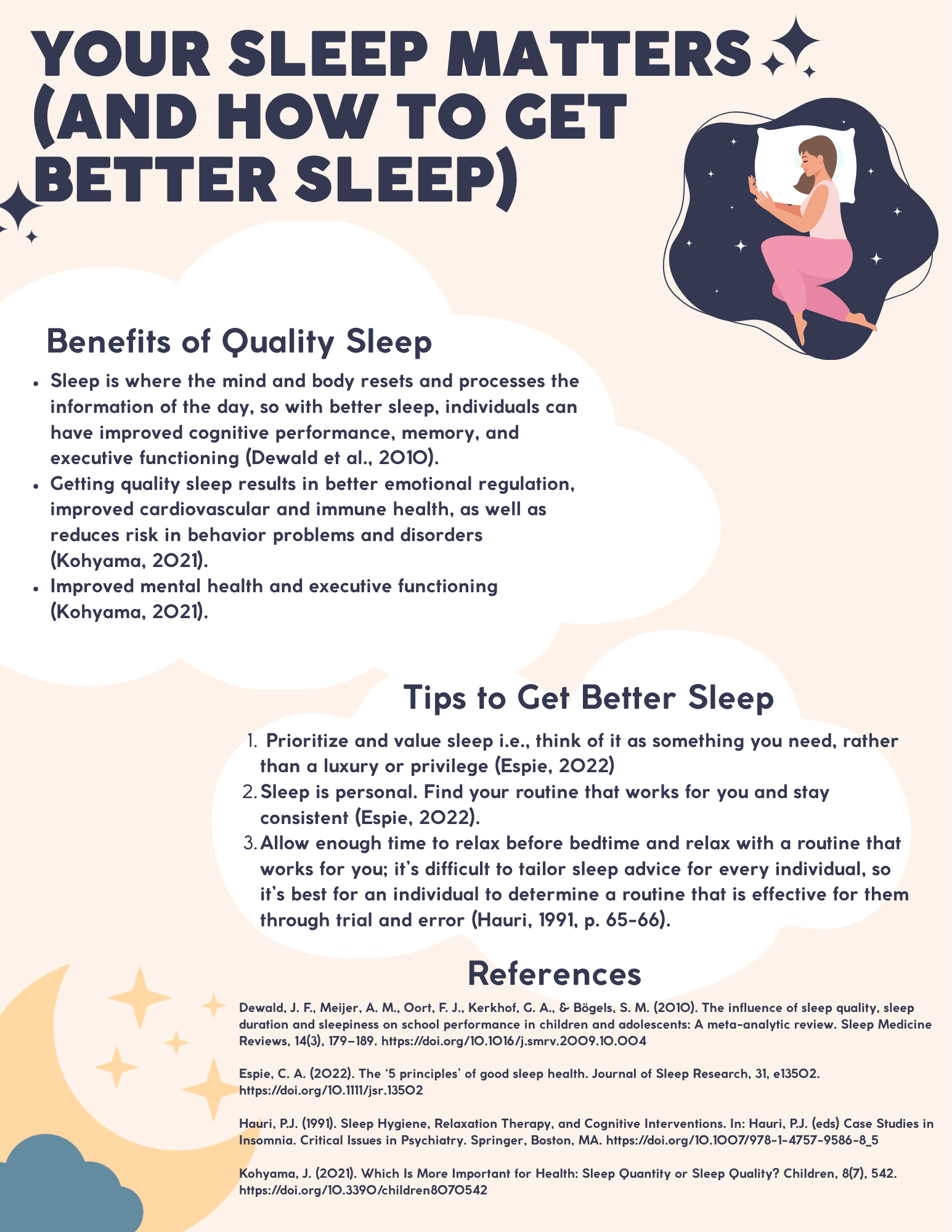
  • Your Sleep Matters (and how to get better sleep)

    Scroll for text-only version!

    Benefits of Quality Sleep

    • Sleep is where the mind and body reset and process the information of the day, so with better sleep, individuals can have improved cognitive performance, memory, and executive functioning (Dewald et al., 2010).
    • Getting quality sleep results in better emotional regulation, improved cardiovascular and immune health, as well as reduces the risk of behavior problems and disorders (Kohyama, 2021).
    • Improved mental health and executive functioning (Kohyama, 2021).

    Tips to Get Better Sleep

    • Prioritize and value sleep i.e., think of it as something you need, rather than a luxury or privilege (Espie, 2022)
    • Sleep is personal. Find your routine that works for you and stay consistent (Espie, 2022).
    • Allow enough time to relax before bedtime and relax with a routine that works for you; it’s difficult to tailor sleep advice for every individual, so it’s best for an individual to determine a routine that is effective for them through trial and error (Hauri, 1991, p. 65-66).

    References

    Dewald, J. F., Meijer, A. M., Oort, F. J., Kerkhof, G. A., & Bögels, S. M. (2010). The influence of sleep quality, sleep duration and sleepiness on school performance in children and adolescents: A meta-analytic review. Sleep Medicine Reviews, 14(3), 179–189. https://doi.org/10.1016/j.smrv.2009.10.004

    Espie, C. A. (2022). The ‘5 principles’ of good sleep health. Journal of Sleep Research, 31, e13502. https://doi.org/10.1111/jsr.13502

    Hauri, P.J. (1991). Sleep Hygiene, Relaxation Therapy, and Cognitive Interventions. In: Hauri, P.J. (eds) Case Studies in Insomnia. Critical Issues in Psychiatry. Springer, Boston, MA. https://doi.org/10.1007/978-1-4757-9586-8_5

    Kohyama, J. (2021). Which Is More Important for Health: Sleep Quantity or Sleep Quality? Children, 8(7), 542. https://doi.org/10.3390/children8070542

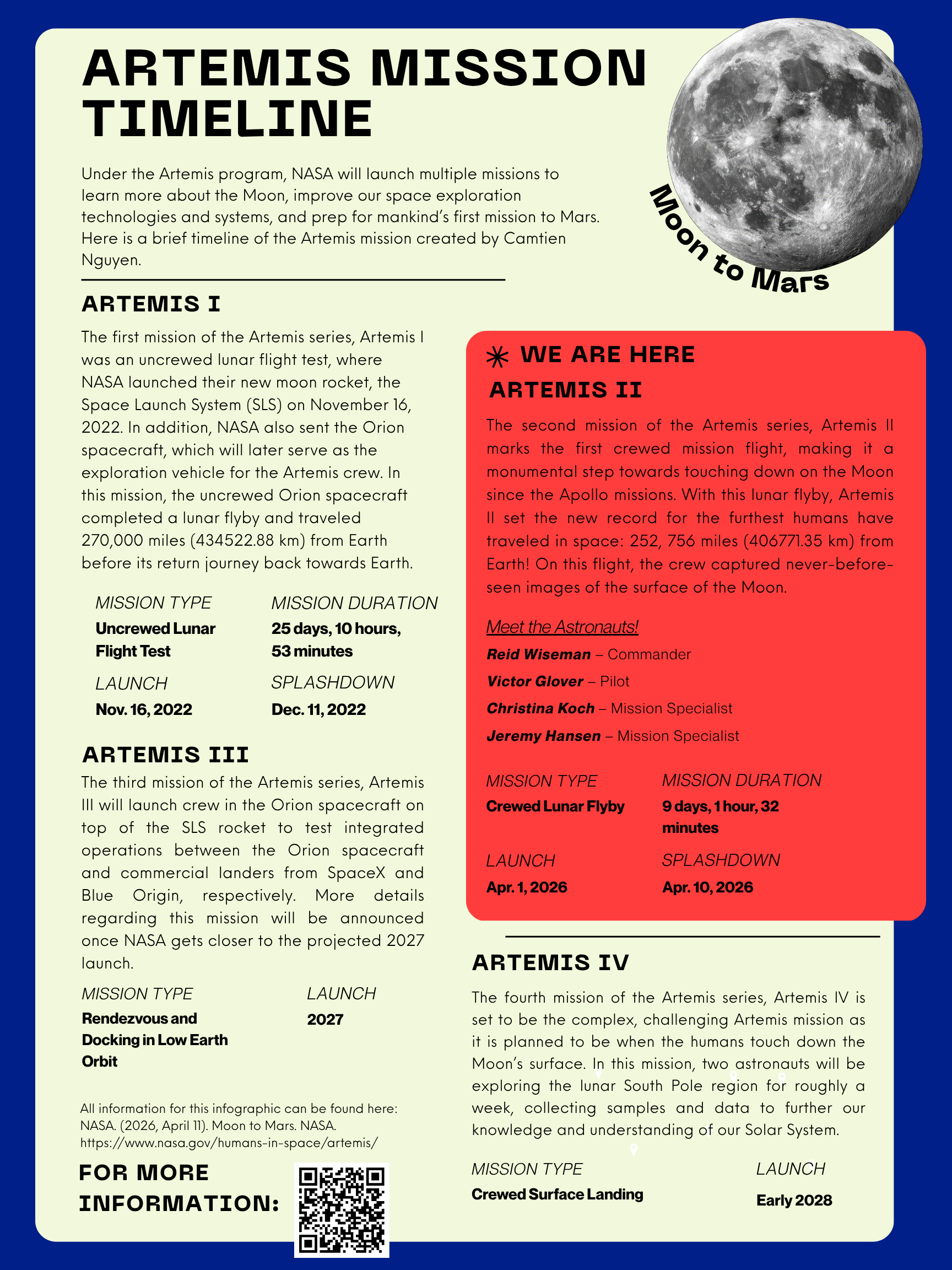
  • From The Moon to Mars! (Artemis Mission Timeline)

    To revive human exploration into deep space, it’s only natural that we learn more about our Moon before we venture further out of our Solar System. It’s been 50 years since we’ve sent astronauts into deep space, so these Moon missions will help scientists and engineers to develop and improve current infrastructures and systems for deep space travel (Creech et al., 2022). By studying geology and collecting samples from the Moon’s surface, we can learn more about “planetary processes, the impact history of our Earth-Moon system, and the history of our Sun” (Creech et al., 2022).

    I attached an infographic that I made for the Artemis mission. All the information on this infographic can be found on NASA’s website!

    References:

    Creech, S., Guidi, J., & Elburn, D. (2022). Artemis: An overview of NASA’s activities to return humans to the Moon. 2022 IEEE Aerospace Conference (AERO), 1–7. https://doi.org/10.1109/aero53065.2022.9843277

    NASA. (2026, April 11). Moon to Mars. NASA. https://www.nasa.gov/humans-in-space/artemis/

  • War of the Apes: Chimpanzee Civil War and the Evolution of Conflict

    Conflict and civil war have been an ever-constant presence in humanity, but they are not uniquely human phenomena. For the first time, researchers have described in detail the way that a chimpanzee group fissioned—or split—into two groups. Notably, the members of one group then began to violently attack the other group, killing chimpanzees that had been their groupmates only a few years ago.

    Some background: conflict and warfare in animals

    Human warfare is driven by a variety of factors, including our ability to readily develop cultural groups that then form strong ingroup attachments and outgroup hostility (Efferson et al., 2008). In other words, we readily form groups and show favoritism towards people who we consider to be also in the same group, while we are much less favorable towards people who we view as not in the group. Cultural differences can then become a driver of conflict.

    However, culture—language, social norms, ethnicity, religion, ideology, etc.—are distinctively human concepts. Nonhuman animals that also live in social groups, such as lions and wolves, can also have lethal, humanlike “wars” over issues like territory (Mosser & Packer, 2009; Cubaynes et al., 2014). Such animals notably do not have cultural markers in the same way humans do, and their conflicts are definitively driven by other factors, which can provide some insight into how group conflicts have evolved.

    But what about conflict that emerges from within a group? Somehow, ingroup morphs into outgroup. This happens in humans, but social animals can also experience permanent divisions in their groups, where the original group splinters into two distinct groups. Those divisions often occur mainly because of environmental reasons, such as competition over food, and the two groups formed after the split typically do not attack and kill each other (Sandel et al., 2026).

    One notable exception to this is a group of chimpanzees at Gombe, Tanzania, which permanently split into two groups in the 1970s. Males from one group, over the course of four years, killed all six males and one female in the other group. This is exceedingly rare—estimated to only occur roughly once every 500 years—and exactly how and why it happened is unclear: researchers at the time provided food to the chimpanzees, and certain details of the split are unclear due to their limited observations of the primates (Langergraber et al., 2014; Sandel et al., 2026).

    Chimp civil war

    Chimpanzees (Pan troglodytes), along with bonobos (Pan paniscus), are the closest animal relatives we humans have. Chimpanzees live in social groups, with males staying in the same social group for their entire lives, occasionally venturing out to attack other groups and expand their own territory (Mitani et al., 2010). Male chimpanzees mainly attack and kill male chimpanzees in other groups, but lethal violence can also erupt between chimpanzees in the same group, as seen with the Gombe group (Wilson et al., 2014). As such, studying their social behaviors may lend insight into our own.

    In their study published in 2026, Aaron Sandel and colleagues analyzed data from a group of over 200 chimpanzees, known as the Ngogo chimpanzees, in Kibale National Park, Uganda. Starting from 1998, the researchers tracked the movements of the Ngogo chimpanzees by recording the interactions the of the adult male chimpanzees of the group. Initially, from 1998 until 2014, the Ngogo chimpanzees were one cohesive group, with chimpanzees living, patrolling, feeding, and mating together. Subgroups of the main group existed, with a Western cluster and a Central cluster, but on average every year, almost a third of the chimpanzees would switch between the clusters, and almost half the infants conceived were by chimpanzees from different clusters.

    But this began to change in 2015, which would be the first sign of the fission of the Ngogo group. The group suddenly began to polarize. Chimpanzees in the Western cluster interacted more with each other and less with chimpanzees in the Central cluster, and vice versa. The clusters also increasingly stayed in only their region of the territory and began actively avoiding each other. After this year, infants were also only conceived by males and females in the same group.

    In 2016, the two clusters began to patrol their own territories, guarding against the other group, and in 2017, the two groups had increasingly hostile and violent encounters. In 2018, Ngogo chimpanzees permanently split into two groups, the Western group and the Central group.

    After this fission, despite consisting of less individuals, the Western group would regularly perform territorial patrols into the Central group’s territory, killing at least six adult males. In 2021, the Western group also started attacking infants, killing at least 14.

    It’s worth mentioning again that only a few years ago, these chimpanzees were all members of one cohesive group. This is emphasized in this one example highlighted by the researchers. In 2015, a group of Ngogo males, including three future Western males and one future Central male, patrolled together and showed friendly social interactions, such as embracing each other for reassurance. In 2019, a group of Western males, including the same three males, attacked and killed the Central male that they patrolled with less than 4 years prior.

    Why did this happen?

    The researchers proposed a few reasons why this fission happened.

    First, the original Ngogo group consisted of almost 200 individuals, and many males. With this large group, maintaining relationships with all the other chimpanzees in the group is impossible, and the large number of males in the group (30) meant that there was increased competition between the male chimpanzees.

    Additionally, a new alpha male rose to power in the group in 2015, at the same time the group began to polarize. Although both the previous alpha male and the new alpha male were part of the Central group, this change could have increased the instability and tension of the group.

    Lastly, the split may have been caused in part by deaths of certain chimpanzees who acted as important nodes in the network of relationships in the group. The deaths of those chimps may have weakened relationships across the group and facilitated the fission. For example, in 2014, just before the beginning of the polarization, five adult males and one adult female died. In 2017, as the group was already beginning to divide, 25 chimpanzees in the group died in an epidemic, including an adult male that was one of the last individuals that connected the two groups. The deaths of these individuals could have weakened the relationships between the two clusters, effectively helping cleave the original Ngogo group into the Central and Western group.

    What does this mean?

    According to the researchers, this violence is notable because it shows us how aggression and group identity forms in chimpanzees and how group conflicts develop in the absence of cultural factors.

    Typically, as male chimpanzees stay in the same group their entire lives, they behave aggressively towards strangers. However, as the attacks described were towards chimpanzees they already knew, it shows that group identity in chimpanzees can be flexible and is controlled by other factors, beyond just familiarity.

    This study also describes how relationship dynamics can play a major role in group conflicts. Although not to the scale of human wars, this “civil war” between the Ngogo chimpanzees shows how a major group conflict can stem from the dissolution of relationships between individuals. If the right (or rather wrong) relationships are broken, the unity of a group may also soon be in jeopardy, even without cultural factors like ethnicity and religion.

    The fission of the Ngogo chimpanzees can feel like an omen of our future as humans, forever violent and marked by splintering factions. But it’s worth remembering that we humans are capable of violence but also of empathy. Even comparatively violent, conflict-prone chimpanzees show empathetic actions. Chimpanzee bystanders of a fight will go to comfort the losing chimp afterwards, and chimps can also show reconciliatory behaviors after a fight, such as holding hands, embracing, or kissing (De Waal, 2012; De Waal, 2000).

    As James Brooks notes in his 2026 perspective article on the study, we can also turn to look at our other, equally close great ape relative, the bonobo. Once thought to be a subspecies of chimpanzees, bonobos are much more peaceful: even though bonobos live in social groups, the groups do not violently interact. Bonobos not only form cooperative relationships within their own groups but also with individuals from other groups (Samuni & Surbeck, 2023). Lastly, even though bonobo groups can permanently split, it doesn’t result in the violence seen in the Ngogo fission. A group of bonobos in Wamba, Democratic Republic of the Congo permanently split almost 50 years ago, but continue to peacefully coexist (Brooks, 2026; Kuroda, 2023).

    Overall, this study shows that conflict emerges even in the absence of cultural markers—instead, a key factor of group conflict might lie in the way social relationships form, are maintained, and break down. As such, this can also be reversed, as those basic social processes might also be a way to approach conflict resolution. By better understanding the way in which a group splits into warring factions, we can also make headway into understanding how to prevent and resolve such instances from occurring in ourselves.

    Indeed, as the researchers state in the closing of their paper, “it may be in the small, daily acts of reconciliation and reunion between individuals that we find opportunities for peace.”

    Writing by Joyce Ma

    Picture by © Giles Laurent, gileslaurent.com, License CC BY-SA, CC BY-SA 4.0, https://commons.wikimedia.org/w/index.php?curid=134376811


    References

    Brooks, J. (2026). Civil war among wild chimpanzees. Science, 392(6794), 146–147. https://doi.org/10.1126/science.aeg6719

    Cubaynes, S., MacNulty, D. R., Stahler, D. R., Quimby, K. A., Smith, D. W., & Coulson, T. (2014). Density‐dependent intraspecific aggression regulates survival in northern Yellowstone wolves (Canis lupus). Journal of Animal Ecology, 83(6), 1344–1356. https://doi.org/10.1111/1365-2656.12238

    De Waal, F. B. M. (2000). Primates–A natural heritage of conflict resolution. Science, 289(5479), 586–590. https://doi.org/10.1126/science.289.5479.586

    De Waal, F. B. M. (2012). The antiquity of empathy. Science, 336(6083), 874–876. https://doi.org/10.1126/science.1220999

    Efferson, C., Lalive, R., & Fehr, E. (2008). The coevolution of cultural groups and ingroup favoritism. Science, 321(5897), 1844–1849. https://doi.org/10.1126/science.1155805

    Kuroda, S. (2023). From the Early Days of Bonobo Research. In Bonobos and People at Wamba: 50 Years of Research (pp. 25–37). https://doi.org/10.1007/978-981-99-4788-1_2

    Langergraber, K. E., Rowney, C., Schubert, G., Crockford, C., Hobaiter, C., Wittig, R., Wrangham, R. W., Zuberbühler, K., & Vigilant, L. (2014). How old are chimpanzee communities? Time to the most recent common ancestor of the Y-chromosome in highly patrilocal societies. Journal of Human Evolution, 69, 1–7. https://doi.org/10.1016/j.jhevol.2013.12.005

    Mitani, J. C., Watts, D. P., & Amsler, S. J. (2010). Lethal intergroup aggression leads to territorial expansion in wild chimpanzees. Current Biology, 20(12), R507–R508. https://doi.org/10.1016/j.cub.2010.04.021

    Mosser, A., & Packer, C. (2009). Group territoriality and the benefits of sociality in the African lion, Panthera leo. Animal Behaviour, 78(2), 359–370. https://doi.org/10.1016/j.anbehav.2009.04.024

    Samuni, L., & Surbeck, M. (2023). Cooperation across social borders in bonobos. Science, 382(6672), 805–809. https://doi.org/10.1126/science.adg0844

    Sandel, A. A., He, Y., Ren, J., Kei, Y. L., Lee, K. C., Clark, I. R., Reddy, R. B., Negrey, J. D., Birungi, C., Apamaku, B. A., Kanweri, D., Kalunga, D., Aliganyira, C., Ramírez-Amaya, S., Nakayima, P., Katumba, R., Kamugyisha, B., Acosta-Florez, D., Van Boekholt, B., . . . Mitani, J. C. (2026). Lethal conflict after group fission in wild chimpanzees. Science, 392(6794), 216–220. https://doi.org/10.1126/science.adz4944

    Wilson, M. L., Boesch, C., Fruth, B., Furuichi, T., Gilby, I. C., Hashimoto, C., Hobaiter, C. L., Hohmann, G., Itoh, N., Koops, K., Lloyd, J. N., Matsuzawa, T., Mitani, J. C., Mjungu, D. C., Morgan, D., Muller, M. N., Mundry, R., Nakamura, M., Pruetz, J., . . . Wrangham, R. W. (2014). Lethal aggression in Pan is better explained by adaptive strategies than human impacts. Nature, 513(7518), 414–417. https://doi.org/10.1038/nature13727
  • Color, Emotions, and Filmmaking

    I’m making a short film! I’m taking Video Production (LMC3406) this semester, and it’s been an absolute blast! To be completely honest, it was the class I looked forward to the most every week. I love how human the filmmaking process is, and I found a lot of fulfillment working with my classmates and bringing our individual visions to life with one short film each lab (class).

    The final project for the class is to write, produce, and direct a short film about whatever we want (minimum 2 mins, maximum 10 mins). Since pre-production, I’ve wanted to write a story that’s relatable, whimsical, and simple/practical to execute, because I wasn’t sure I would be able to recruit enough people and/or schedule/organize filming around several people’s schedules. My short film is based on my own story. It follows two characters, my boyfriend and I, on an aquarium date! Even though I was more interested in cinematography than writing a complex story, I felt my short film could use a bit more substance, so towards the end, the two characters share this conversation about the fear of the future and living life fully. 

    For this film, I wanted it to feel nostalgic, wholesome, heartwarming, and bittersweet. I wanted the viewer to feel comforted and hopeful. While I’m not done editing my short film, I can show a comparison with stills and how color can change the mood of a scene. 

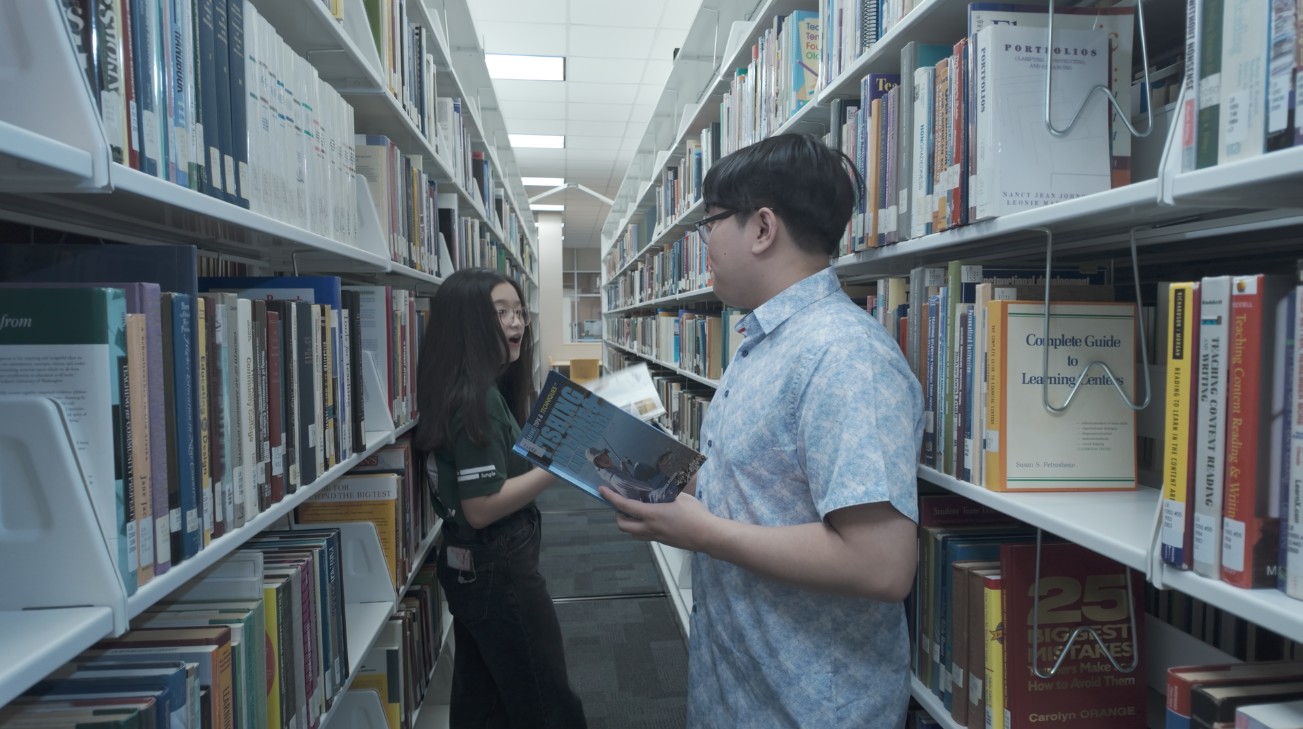
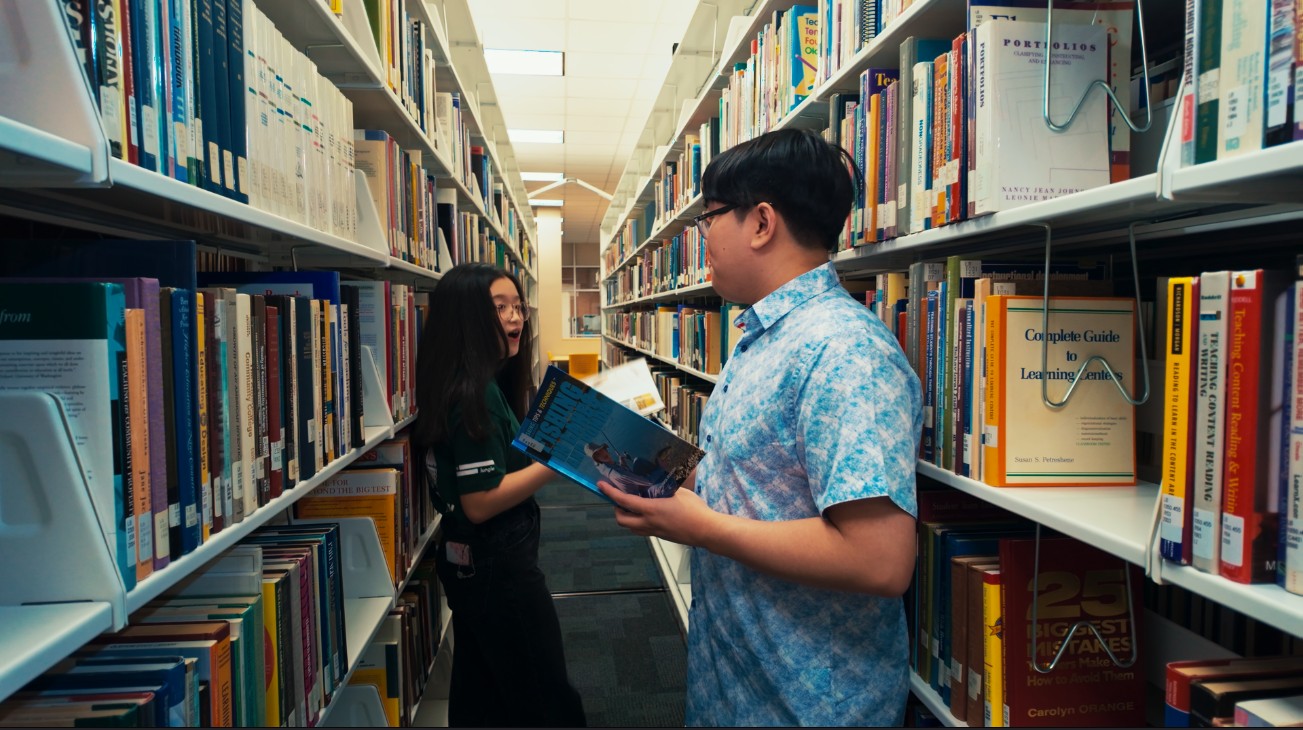
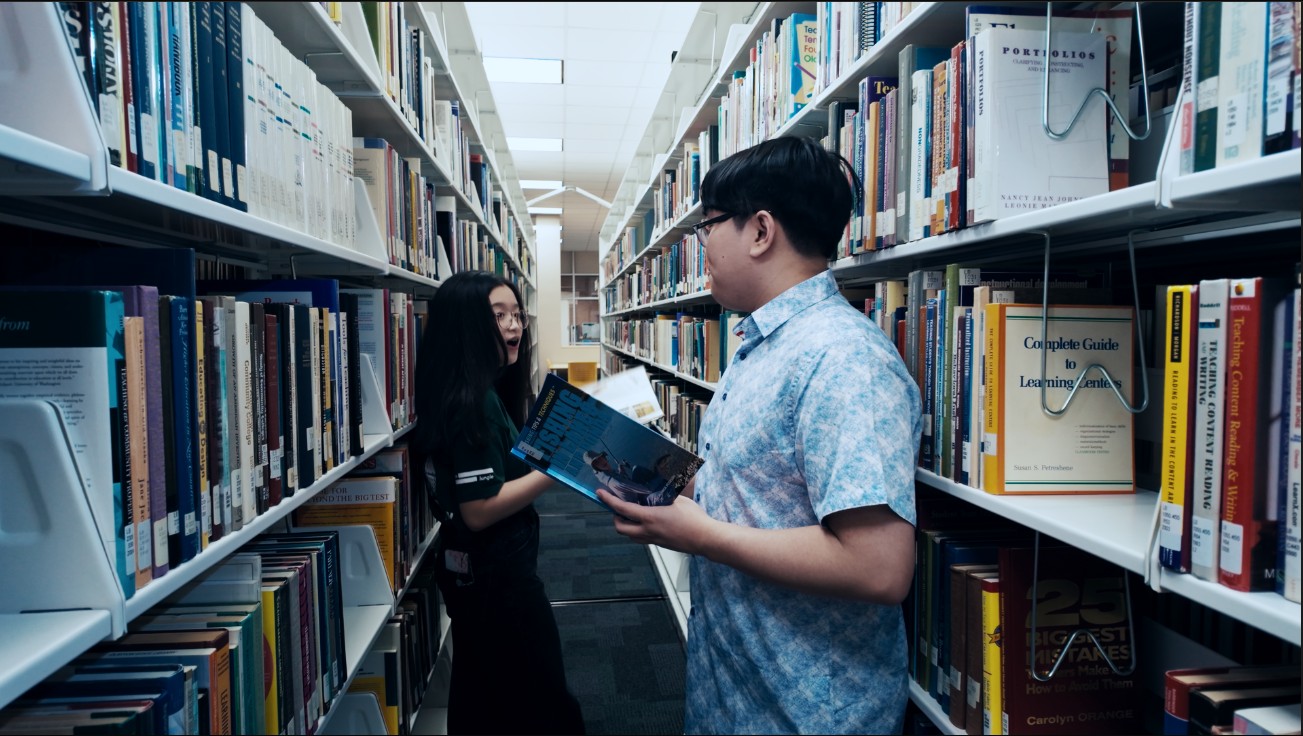
    These are some screenshots from Davinci Resolve, the video-editing software I’m using to film my project, and what you see here is the log footage and two color-graded versions of the log footage. 

    Screenshot of log footage from my short film
    Colograde Ver 1
    Colorgrade Ver 2

    In the first color-graded version, the scene is more warm-toned. The colors are vibrant, the yellows and oranges are strong and visible, whereas with the second color-graded version, the scene is more cool-toned. The colors there lean more blue, the skin appears pale, and the scene is less saturated and devoid of color. 

    Two researchers conducted a comprehensive systematic review of the results from 132 empirical articles on color-emotion connections. For instance, warm colors such as yellow and orange were “linked to positive and high arousal emotions (e.g., happiness, pleasure, fun, excitement, surprise)” (Jonauskaite & Mohr, 2025). In some studies, blue was found to be linked to positive (“comfort, happiness, relaxation”) and negative (“sadness”) emotions (Jonauskaite & Mohr, 2025). According to a different study, brighter and more saturated colors were found to be more pleasant than desaturated colors (Pazda et al., 2024).

    The colors of a scene can greatly affect the mood and evoke certain emotions. The next time you watch a show or movie, pay attention to the choice of colors and the possible intentions behind it!

    References:

    Jonauskaite, D., & Mohr, C. (2025). Do we feel colours? A systematic review of 128 years of psychological research linking colours and emotions. Psychonomic Bulletin & Review, 32(4), 1457–1486. https://doi.org/10.3758/s13423-024-02615-z

    Pazda, A. D., Thorstenson, C. A., & Fetterman, A. K. (2024). Colorfulness influences perceptions of valence and arousal. Journal of Experimental Psychology: General, 153(1), 145–158. https://doi.org/10.1037/xge0001484
  • Turning a Creature into a Cute Character Design

    If your Instagram discover page is full of posts from digital artists like mine is, there’s a decent chance you may have come across posts by an artist named Feefal (@feefal). Feefal is a very popular illustrator on Instagram, with 1.2 million followers and most of their posts gaining tens of thousands of likes and hundreds of thousands of views on Reels. Feefal describes herself as a lover of biology and cute women, which is reflected in the subject matter of the bulk of her illustrations. For example, one of her pinned posts, and the first post of hers I came across in 2023, can be described as “plant, animal, and fungi cells but they’re personified as women.”

    There are many artists who do the same types of illustrations as Feefal where they turn creatures, objects, or even vague ideas into a personified character design. As someone with an interest in both biology and drawing, I wanted to try my own hand at creating an illustration where I turn a creature into a character. 

    In keeping with my theme about sea creatures from my previous post, I chose to base my character design on Pelagia noctiluca, a species of jellyfish that is referred to by many common names, the most popular being “mauve stinger”. A fun nickname I’ve also seen for it is the “purple people eater” (yes, like the song).

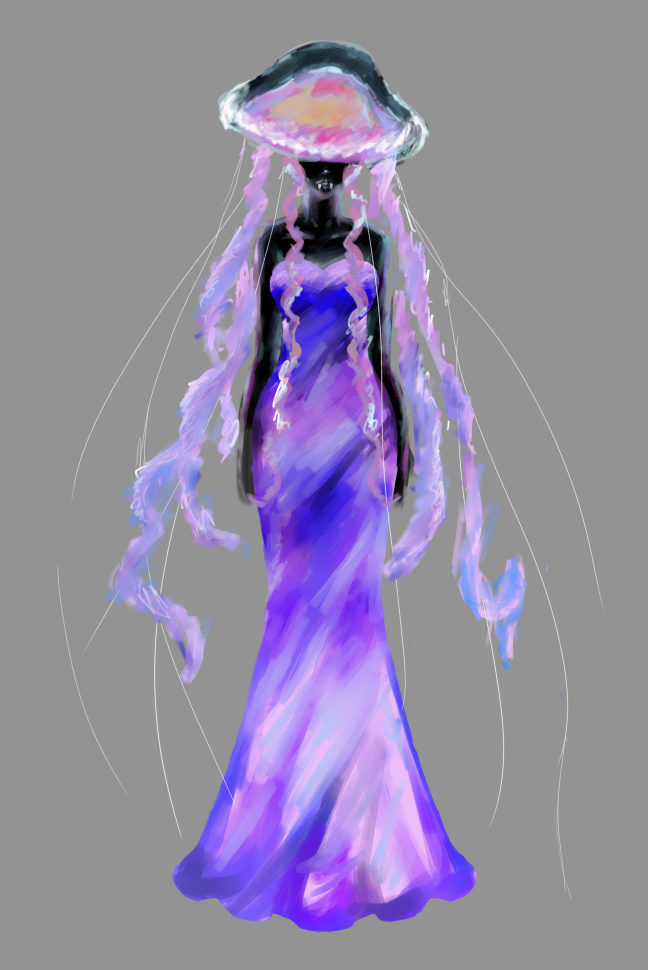
    Taking both morphology and cool facts I read about them into account, this is what I came up (with with the help of my boyfriend, who asked to help and I couldn’t refuse):

    Illustration by Priyanka Singh and Kojo Ching

    This is the part where I explain my design decisions while telling you cool facts about P. noctiluca. 

    • Hat: Obviously, this is meant to represent the bell, or umbrella, of the jellyfish. It is the main body of the jellyfish where the tentacles branch off from. A jellyfish’s mouth lies in the center of the underside of its umbrella, surrounded by oral arms (we’ll get to those in a second) (Macpherson & Gordon, 2023). You’ll notice that jellyfish have no eyes, so I made the bell-hat cover her eyes. I accept criticisms of this choice as lazy, as I basically just draw a jellyfish on this woman’s head. But will you dare tell her it’s not a look?
    • Dress: Along with the hair-tentacles coming out from the “hat”, this is supposed to be somewhat evocative of the tentacles of the jellyfish with its flowy nature. The mermaid dress silhouette is also supposed to evoke a nautical theme. The mauve stinger has two types of tentacles: thin, string-like ones called statocysts and thicker, frilly ribbon-like ones called oral arms. It has 8 statocysts and 4 oral arms. Statocysts are used for sensing movement and orienting the jellyfish. Oral arms extend from the mouth, contain nematocysts, and aid in prey capture (Macpherson & Gordon, 2023). The sting of a mauve stinger is somewhat severe, although there have not been any fatalities due to their stings (Mariottini et al., 2008).
    • Skin: The skin and the dark parts around the cap are supposed to represent the semi-translucent, soft body of the jellyfish, with the darkness being the ocean showing through.
    • Sharp teeth: I took some creative liberties with this part. No, jellyfish don’t have razor-sharp fangs. Instead, this is supposed to represent the purple people-eater’s predatory nature. They’re said to be opportunistic predators that mainly feed on small phytoplankton, although they can eat prey of various sizes. They can even eat over 1.5 times their body weight in a day. (Larson, 1987). Don’t worry, at least they don’t actually eat people!


    References:

    Macpherson, D., Gordon, D. (2023). Jiggling Jellyfish: a guide to the jellyfish of New Zealand. (Version 2). National Institute of Water and Atmospheric Research (NIWA). 

    Mariottini, G.L., Giacco, E., Pane, L. (2008). The Mauve Stinger Pelagia noctiluca (Forsskål, 1775). Distribution, Ecology, Toxicity and Epidemiology of Stings. A Review. Mar. Drugs, 6(3): 496-513. doi: 10.3390/md20080025

    Larson, R.J. (1987). A Note on the Feeding, Growth, and Reproduction of the Epipelagic Scyphomedusa Pelagia noctiluca (Forskal). Biological Oceanography, 4(4). 

  • Origami 101

    What is Origami?

    Origami does not originate from a sole inventor, it was crafted over centuries by many different hands for various ceremonial purposes in Japan and even China (Robinson, 2026). The word we use today, origami, is derived from the Japanese words ori which means folded and kami which translates to paper. While paper itself was first developed in China before spreading to Japan, folding paper into decorative and symbolic forms became especially refined in Japanese culture over time. Early uses of folded paper included religious ceremonies, gift wrapping, and formal exchanges, where presentation held great meaning.

    Fast forwarding centuries, today origami is seen worldwide. A simple YouTube search nowadays can teach even the newest of the new how to craft an origami chameleon, like how I learnt! What was once a traditional practice has now grown into a global hobby, mathematical practice, and even an area of scientific research.


    Math, Science, and Folds

    It comes to no surprise when we see the intricate works by masterful artists, that the art within folding comes from mathematical roots. For example, take the common fold that basically all origami pieces start with: the square piece of paper folded diagonally corner to corner and then along the sides, top to bottom and left to right. These folds create lines of symmetry and reference points that help guide more intricate folds later on. Mathematically, these folds create either a valley or mountain based on the value of the angle between the two adjacent planes created by the fold (Kunz, 2024). A valley fold bends inward like a “V,” while a mountain fold rises outward like a mountain. By combining these two simple fold types in different orders, locations, and sizes, folders can create highly detailed animals, flowers, and geometric structures. 

    Additionally, origami also has strong roots in more of a geometric application of math, with many models and folds often relying on fractions, bisectors, symmetry and so much more. In the scientific world, origami has received its share of the spotlight from inspiring compact folded solar panel designs for satellite use to shaping medical stents used in patients. 


    My Folds and Why I do it

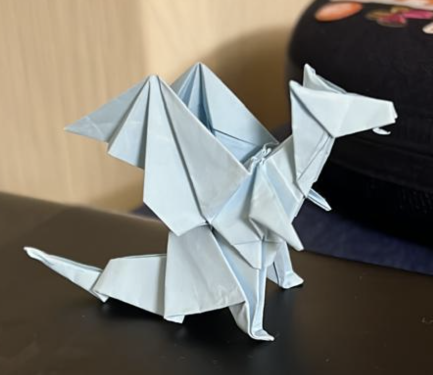
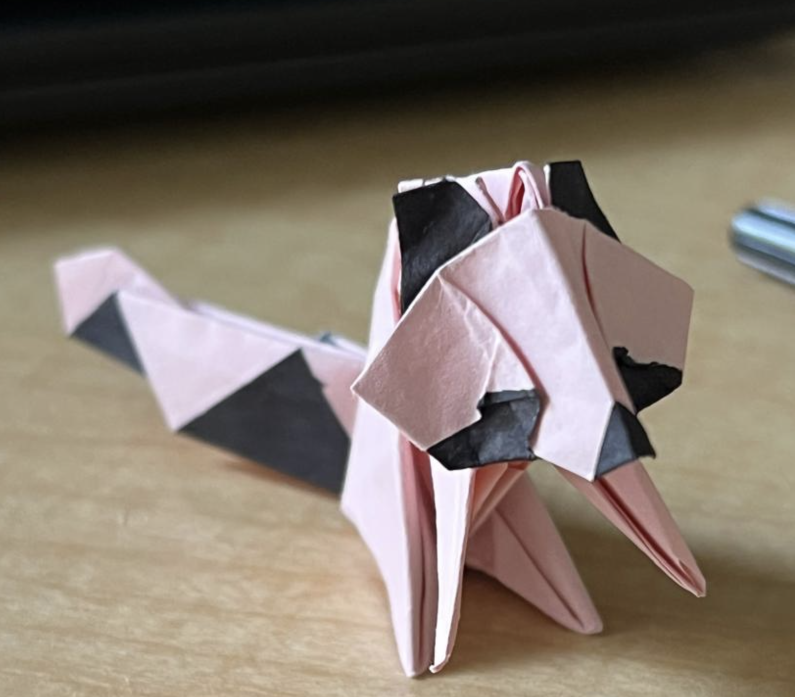
    My goal when folding is simple: just don’t make it ugly. I find my inspiration, to recreate art through online tutorials, to be fueled by the passion and creativity of others. I folded the blue origami dragon below to surprise one friend, and the raccoon for another. I trace my folding skills back to one main motivation: wanting my creations to be as perfect as possible for the people around me. I have made plenty of lousy folds, but never when I feel a real sense of purpose behind them. When I fold for someone else, I tend to care more, focus more, and try as hard as I can. I am happy to say I will keep carrying on origami traditions. Mine may not be embedded in ceremonial, mathematical or even scientific purposes, but they still come from a place of creativity, curiosity, and humanity.

    References

    Origami created and photographed by Kristina Siju

    Origami with Jo Nakashima. (2021, September 14). ORIGAMI CHAMELEON (Jo Nakashima ). YouTube. https://www.youtube.com/watch?v=if7iSuzNn38

    Nakashima, J. (2015). Origami Dragon (Jo Nakashima) [YouTube Video]. In YouTube. https://www.youtube.com/watch?v=kUsxMXwCW8A

    Muneji Fuchimoto ORIGAMI CHANNEL. (2020, December 8). 「折り紙」アライグマ(racoon origami)の折り方. YouTube. https://www.youtube.com/watch?v=X2FYuvt-U80

    Geometry – Ancient geometry: abstract and applied. (n.d.). Encyclopedia Britannica. https://www.britannica.com/science/geometry/Ancient-geometry-abstract-and-applied

    Thesis, B., Kunz, C., & Cannas Da Silva, A. (2024). Mathematics of Origami. https://people.math.ethz.ch/~acannas/Student_Papers/BSc_Theses/2024_bsc_kunz_mathematics_of_origami.pdf

  • How to make glow in the dark cells

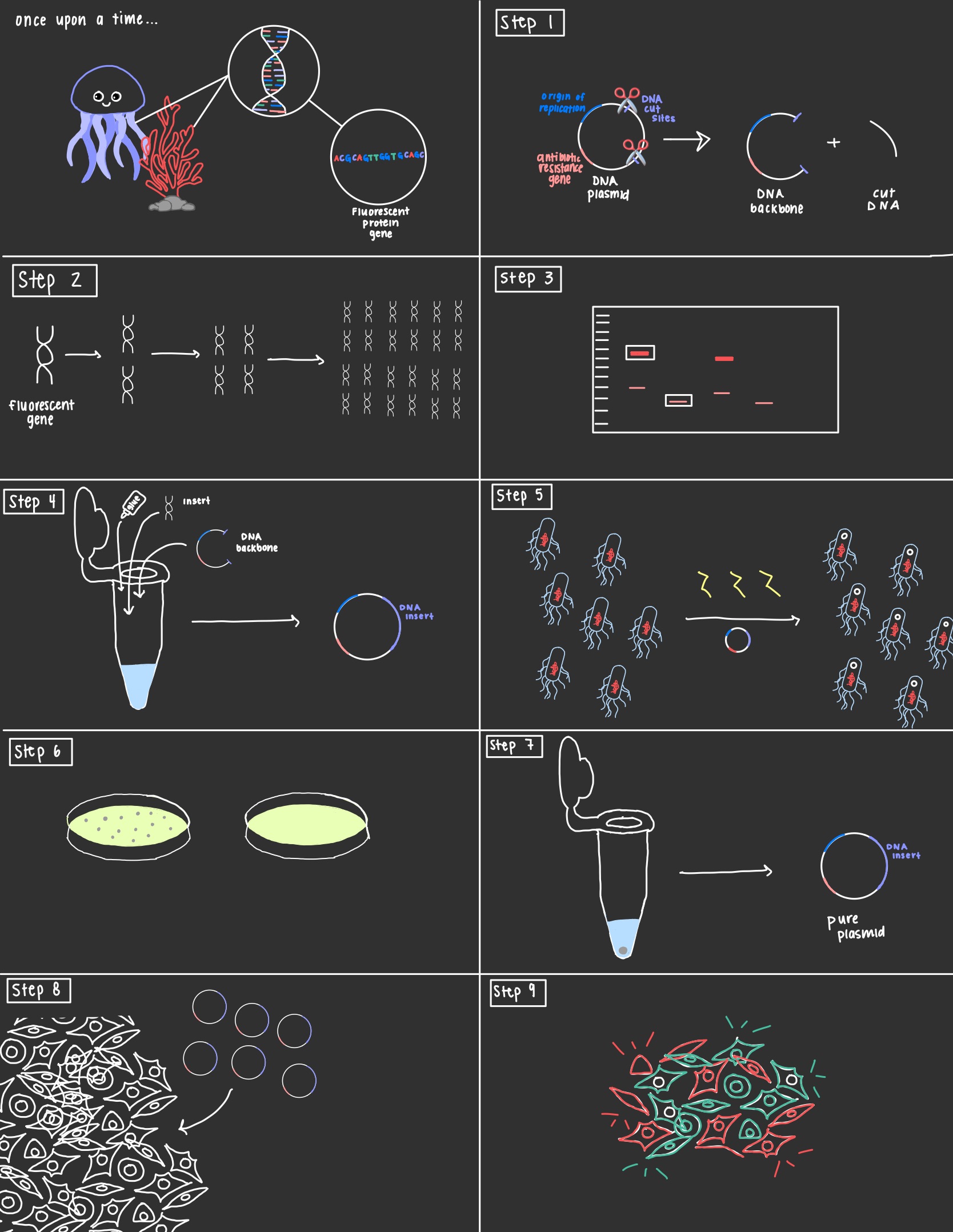
    While these cells don’t technically glow in the dark, scientists have found ways to make cells fluorescent which means they glow when exposed to radiation such as UV light. When a cell has specific ions or proteins fluorescent proteins bind to these small molecules and make the cell appear as if it’s glowing. 

    These special proteins were first discovered in animals like jellyfish and plants like coral. Scientists were able to isolate the genes that were responsible for producing the fluorescent proteins and using a technique called molecular cloning can insert the DNA into our cells of choice. 

    Step 1: The first step is to choose a plasmid, a circular piece of DNA found in bacteria. The plasmid chosen must have an origin of replication where DNA replication begins, a gene for antibiotic resistance, and DNA cut sites. Restriction enzymes are proteins that act as molecular scissors and cut the plasmid at specific cut sites. This turns the circular plasmid DNA into a linear piece of DNA. 

    Step 2: This isn’t always necessary, but the fluorescent gene can be amplified using a technique known as polymerase chain reaction. In a PCR the DNA undergoes cycles of denaturation, annealing, and elongation where the DNA is first turned into single stranded DNA, then the primer tells the DNA where to start extending, and then finally the DNA is extended. At the end of each cycle the amount of DNA is doubled leading to millions of copies of DNA within an hour. 

    Step 3: By this point, we have our amplified PCR DNA and our plasmid DNA that has been cut to produce the backbone and pieces of cut DNA. In order to separate the backbone plasmid from the cut piece we will use gel electrophoresis. A gel electrophoresis separates DNA by size by passing an electric current through a gel containing DNA. Because DNA is negatively charged it will migrate towards the positively charged terminal of the gel with the smaller pieces traveling further than the larger pieces. Because our backbone is larger than the cut DNA, when the pieces separate we can cut out the band closer to the top, and purify it to get rid of the gel leaving just the DNA. 

    Step 4: It’s finally time to glue our DNA pieces together, and the key player is a protein known as DNA ligase. DNA ligase will be added to a tube with our DNA backbone and insert. Following a ligation reaction a plasmid will be re-formed that contains our original backbone with the fluorescent gene inserted in. 

    Step 5 and Step 6: The next two steps are crucial for ensuring that the final product is pure plasmid. This is important because the DNA ligase can make mistakes and may glue backbones together, fail to add in the insert, etc. In step 5 the plasmid is inserted into bacterial cells, usually e-coli cells through a heat shock. Once the bacteria take up the plasmid they are plated onto agar plates containing antibiotics and allowed to grow. Remember the three things every plasmid needs to include (hint: it’s an antibiotic resistance gene)? This is because when the cells are plated only those that have a fully formed plasmid will be able to grow. 

    Step 7: Now we can select a bacterial colony from our plate and using a process known as miniprep isolate the plasmid DNA from these cells. 

    Step 8: The plasmid DNA can then be introduced into your cells of choice. There are many techniques to accomplish this but a common one is called calcium phosphate transfection. 

    Step 9: TA-DA! Your cells should now glow under the right conditions! 

    Sources:

    Ashwini, M., Murugan, S.B., Balamurugan, S. et al. Advances in molecular cloning. Mol Biol 50, 1–6 (2016). https://doi.org/10.1134/S0026893316010131

    Tsien RY. The green fluorescent protein. Annu Rev Biochem. 1998;67:509-44. doi: 10.1146/annurev.biochem.67.1.509. PMID: 9759496.
    cover image created using canva
  • Lament of a Musician’s Hearing

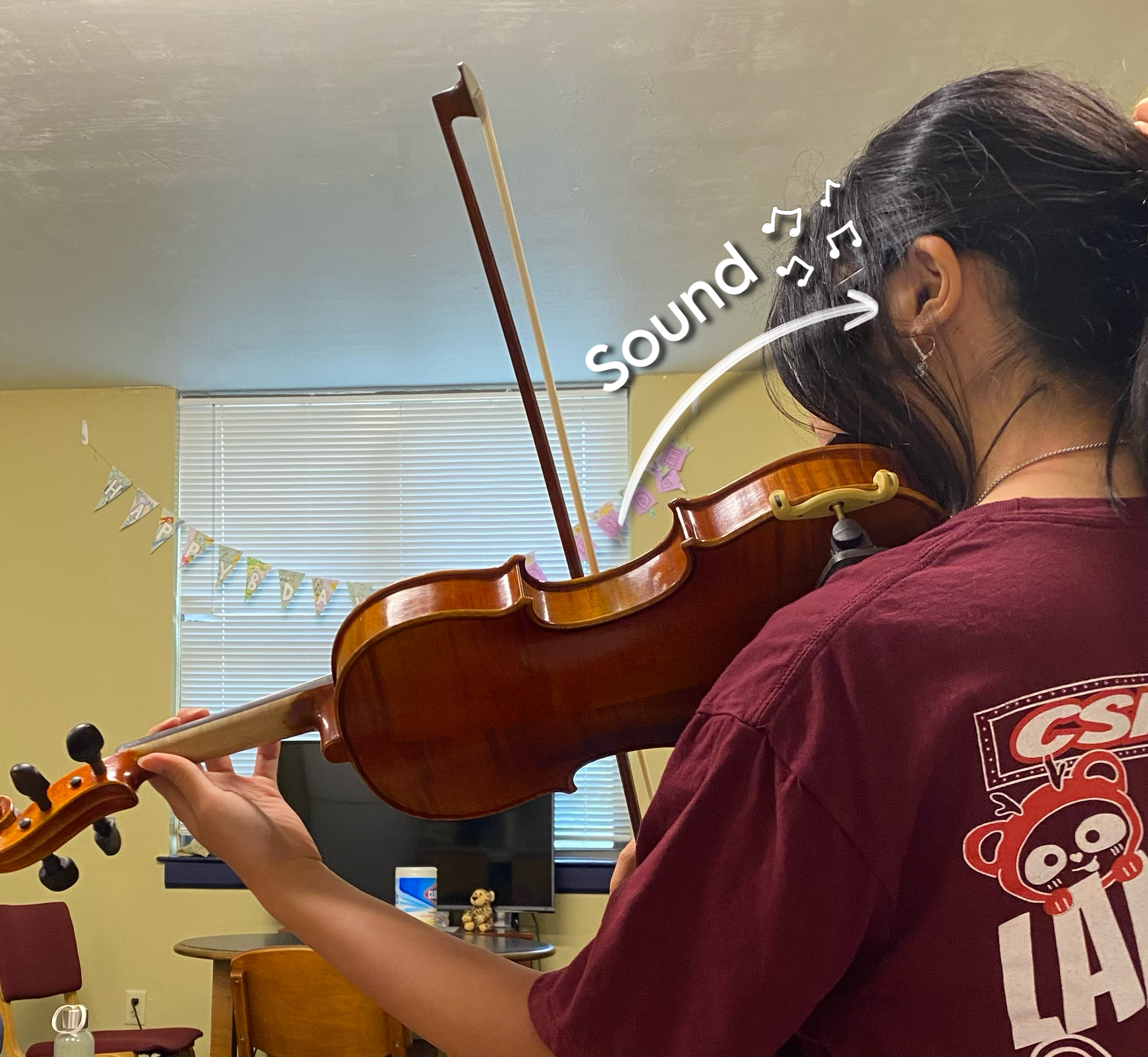
    Cover image was taken by the author and edited in Picsart.

    Sometimes, what is most important to us is what we take for granted. For a musician, that is their hearing, although most of us don’t take many steps to preserve it, often going to rehearsal or lessons without any form of hearing protection. For a school musician, this means going a few hours a week being exposed to loud noises without any way to block them, and for a professional, this duration is even longer. If we don’t want to lose our hearing to the piercing sound of a piccolo in our ears, it’s possible we might have to make some changes to the way we rehearse.

    Hearing Loss in Musicians Compared to Other Professions

    Some might question whether playing an instrument actually increases hearing loss or if there is a larger outside factor at play. To investigate this, a study was conducted comparing the hearing loss of people with a variety of different backgrounds and found that professional musicians were 3.51 times more likely to have noise induced hearing loss and 1.45 times more likely to have tinnitus (Schink et al., 2014), which suggests that the job that someone works in has a large impact on that person’s hearing. This makes sense considering the significant amount of time the average adult spends working. Musicians tend to get the short end of the stick here as a good portion of that time is spent listening to loud music, which oftentimes when playing is right in your ear.

    Source: taken by author and edited in Picsart.

    Reducing Ear Damage

    Since the consequences of continued exposure to loud noise can become severe over time, it is important to take steps in order to prevent excessive damage. First and foremost, musicians should be aware of the risks that long periods of practice can have on their hearing; they should be able to watch for warning signs and know what safe sound levels are (85 dB TWA (time-weighted average) for eight hours in one day, which is around the noise level of a food blender, heavy traffic, busy restaurant, or movie theater (How Loud Is 85 Decibels | What Does 85 DB Sound Like, 2021)). It is also beneficial to get an audiogram and have access to a sound-level meter to make sure you aren’t exceeding the safe sound levels (Chesky, 2008). Also, most students have some sort of hearing protection device or HPD (around 69% percent according to one study) that they can use during rehearsal to block some of the sound (Olson et al., 2016).

    Source: (Lowery, 2023)

    The Great Balance

    If the measures to be taken are seemingly so obvious and simple, why aren’t they more common? Even if the resources are readily available, it turns out that protecting one’s hearing still comes with its downsides. According to several music students, even though there are clear advantages to using things like HPDs, such as hearing preservation, reduction in noise exposure, and the ability to play longer without taking breaks, there are also significant disadvantages to consider like decreased auditory perception, issues with communication, less comfort, and many reported improved performance when not using HPDs (Olson et al., 2016). The goal of an ensemble is to make music that sounds good (well, and have fun, hopefully), so naturally, the musicians in an ensemble would not want to sacrifice their sound to protect their hearing, which is something they might not even be conscious of because damage happens gradually.

    So how do we balance the desire to play well with the desire not to go deaf before we get old? Perhaps this will be a question better answered in the future, maybe even by someone reading this article, and we’ll have a device that still lets us hear everything we need to without all of the damage. Maybe we’ll have a way to reverse hearing loss that’s as easy as drinking medicine to cure a cold. But for now, while maybe not during performances, we can just do what we can, however little it may seem, to protect one of our precious senses. We only have five, after all.

    References

    Chesky, K. (2008). Preventing Music-Induced Hearing Loss. Music Educators Journal, 94(3), 36–41. https://www.jstor.org/stable/4623689

    How Loud Is 85 Decibels | What Does 85 dB Sound Like. (2021, November 18). Decibel Meter App | Best Digital Sound Level Meter for Your Smartphone. https://decibelpro.app/blog/how-loud-is-85-decibels/

    Lowery, K. (2023). How to choose the best hearing protection [Online Image]. In audibel.com. https://www.audibel.com/preventative-care/the-best-hearing-protection/

    Olson, A. D., Gooding, L. F., Shikoh, F., & Graf, J. (2016). Hearing Health in College Instrumental Musicians and Prevention of Hearing Loss. Medical Problems of Performing Artists, 31(1), 29–36. JSTOR. https://www.jstor.org/stable/48714485

    Schink, T., Kreutz, G., Busch, V., Pigeot, I., & Ahrens, W. (2014). Incidence and relative risk of hearing disorders in professional musicians. Occupational and Environmental Medicine, 71(7), 472–476. JSTOR. https://www.jstor.org/stable/43869897

  • The Symptom Gap for Women with ADHD: The Hidden Signs Behind Anxiety, Depression, and Late Recognition

    Attention Deficit Hyperactivity Disorder, more commonly known as ADHD, is historically known as a neurodevelopmental disorder that interferes with daily function and development through inattention, hyperactivity, and impulsivity. However, this definition is largely based on how ADHD has been studied and recognized in men rather than in women. Today, in schools, homes, and medical settings, researchers and clinicians are paying closer attention to how ADHD presents differently in women and girls because so many have gone undiagnosed for years. Women often experience ADHD symptoms that are more masked, internalized, and frequently misdiagnosed (Littman & Wagenberg, 2023; Platania et al., 2025; Stibbe et al., 2020). Especially when undiagnosed, ADHD can cause several disruptive and antisocial behaviors over the lifespan of patients, ranging from substance abuse and work absenteeism to criminality, further contributing to the socioeconomic burden of the disease (Stibbe et al., 2020). Misdiagnosis can change the trajectory of one’s life, and it changed mine. 

    I grew up in an immigrant home where struggling academically was not a choice. As an adolescent, I often did badly when I was left to complete tasks without my mother’s supervision. My mother would get upset, indicating that I needed to “grow up.” Fast forward to high school: I got diagnosed with anxiety and depression because of experiences that I had been going through, even though I still became my class’s salutatorian. Therapy was not resolving my overbearing amount of anxiety and depression. I would always ponder when I would stop feeling so awful. I got to college, where life became centered around self-accountability and doing well, and I genuinely could not function because I could not concentrate on anything. This past year, I got diagnosed with ADHD after years of appearing high-functioning, meaning I would work under high stress while my mental health suffered as a result. It all finally made sense to me. 

    I went undetected for 20 years of my life as a woman due to the stigma and diagnostic gap between how ADHD presents in men and in women. I struggled so much as a woman being held up to high expectations while not understanding why my brain would not function the way I wanted it to. You must be wondering, how could this even happen? One major reason is that, in classrooms, clinics, and even at home, ADHD in women often does not look like the version people expect. Mental health conditions can be misdiagnosed quite frequently, even though they are often the main expressive behaviors in women’s ADHD symptoms. Men are more likely to experience externalizing disorders, such as substance or alcohol abuse, antisocial personality disorder, and conduct disorder, while internalizing disorders, such as anxiety, depression, somatic symptoms, and bulimia, are more common in women (Littman & Wagenberg, 2023; Martin et al., 2018; Platania et al., 2025). 

     Symptom masking has become quite common among women with ADHD (Marschall, 2026; Platania et al., 2025). Women, including myself, often have a greater tendency to internalize their struggles, as we are often told that it is our “hormones” or something that can be left to be resolved by ourselves. Since men exhibit more defining features of ADHD that have been researched based on adolescent and male populations, they are more likely to get symptom relief through medication at a younger age than women (Littman & Wagenberg, 2023; Platania et al., 2025). 

    As mentioned earlier, hormones play a completely different role in gender symptom manifestations, yet this is often overlooked. Across different stages of life and in healthcare settings, this can make women’s ADHD even harder to recognize. A premenstrual girl with ADHD presenting to a clinician as insecure, anxious, and despondent can appear confident, effective, and hopeful a week later, after menstruation commences (Littman & Wagenberg, 2023; Quinn & Madhoo, 2014). Several women around me who have been diagnosed with ADHD have discussed the major highs and lows they have and how they feel like they are “going insane.” However, often they get directed to the idea of having PMDD or other menstrual-hormone associated disorders compared to ADHD. Women with ADHD exhibit high rates of premenstrual syndrome, premenstrual dysphoric disorder, severe postpartum depression, and climacteric symptoms when compared with their neurotypical peers (Quinn & Madhoo, 2014). 

    Today, researchers believe there is a need to develop a new edition of the DIVA-5 designed to better capture ADHD manifestations in women and girls, and examining gender differences in populations with and without ADHD could deepen our understanding of how ADHD manifests across genders (Platania et al., 2025). If clinicians had been better equipped to recognize these signs earlier, I may have understood myself sooner and spent less of my life believing I simply was not enough as an individual. Closing the symptom gap for women with ADHD is not just about improving diagnosis; it is about ensuring that more girls and women are understood, supported, and treated before being detrimentally impacted long-term. 


    References: 

    Davies, W. (2014). Sex differences in attention deficit hyperactivity disorder: Candidate genetic and endocrine mechanisms. Frontiers in Neuroendocrinology, 35(3), 331–346. https://doi.org/10.1016/j.yfrne.2014.03.003  

    Littman, E. B., & Wagenberg, B. (2023, July 26). Gender differences in ADHD and their clinical implications. Psychiatric Times, 40(7). https://www.psychiatrictimes.com/view/gender-differences-in-adhd-and-their-clinical-implications  

    Marschall, A. (2026, March 31). ADHD masking harms neurodivergent women at work. ADDitude. https://www.additudemag.com/neurodivergent-women-in-workplace-adhd-masking/  

    Martin, J., Walters, R. K., Demontis, D., Mattheisen, M., Lee, S. H., Robinson, E., Als, T. D., Brikell, I., Ghirardi, L., Larsson, H., Sullivan, P. F., Thapar, A., Neale, B. M., & Andreassen, O. A. (2018). Sex-specific manifestation of genetic risk for attention deficit hyperactivity disorder in the general population. Journal of Child Psychology and Psychiatry, 59(8), 908–916. https://doi.org/10.1111/jcpp.12874  

    Platania, N. M., Starreveld, D. E. J., Wynchank, D., Beekman, A. T. F., & Kooij, J. J. S. (2025). Bias by gender: Exploring gender-based differences in the endorsement of ADHD symptoms and impairment among adult patients. Frontiers in Global Women’s Health, 6, Article 1549028. https://doi.org/10.3389/fgwh.2025.1549028  

    Quinn, P. O., & Madhoo, M. (2014). A review of attention-deficit/hyperactivity disorder in women and girls: Uncovering this hidden diagnosis. The Primary Care Companion for CNS Disorders, 16(3), Article PCC.13r01596. https://doi.org/10.4088/PCC.13r01596  

    Ramtekkar, U. P., Reiersen, A. M., Todorov, A. A., & Todd, R. D. (2010). Sex and age differences in attention-deficit/hyperactivity disorder symptoms and diagnoses: Implications for DSM-V and ICD-11. Journal of the American Academy of Child & Adolescent Psychiatry, 49(3), 217–228.e3. https://doi.org/10.1016/j.jaac.2009.11.011  

    Stibbe, T., Huang, J., Paucke, M., Ulke, C., & Strauss, M. (2020). Gender differences in adult ADHD: Cognitive function assessed by the test of attentional performance. PLOS ONE, 15(10), e0240810. https://doi.org/10.1371/journal.pone.0240810 

  • Health and Houseplants

    Recently I have been completely obsessed with houseplants. For a whole month, I bought a new plant every week. I bought them fertilizer, new pots, anything I could to keep them healthy and growing. When I fill up my water bottle, I know my plants will be drinking more of it than me. But why? Was this craze fueled by a desire for a better oxygenated indoor life? Or to somehow resolve the everyday stress of student life? Turns out, it was probably a combination of both.

    Houseplants and The Physical Environment

    You may already know that humans inhale O2  and exhale CO2 . You may also know that plants intake CO2 and output O2. This makes humans and plants the perfect pair! It turns out that too much CO2 is harmful for us too! Short term, too high a concentration of CO2 can cause sore throat, coughing, shortness of breath, and dry eyes. Long term, it has even been linked to obesity (Gubb, 2018). Another issue our indoor environments present for us is lower than optimal humidity, which plants can also work to solve! (Gubb, 2018) Low humidity can cause skin and eye irritation, dry sinuses, and increased flu transmission (Gubb, 2018). While it’s hard to say exactly how much plants offset these effects due to the negative impact on plant gas exchange rates from being indoors, we do know that plants help combat these issues. 

    Houseplants and Psychology

    Believe it or not, houseplants can help support your mental health too! According to one study, people in offices with plants were more attentive to tasks (Yeo, 2020). Another study showed that plants promote creativity, reduce stress levels, and create positive feelings and comfort (Yeo, 2020). These are huge benefits for something as cheap and low maintenance as a house plant.

    My Experience With Plants

    When it really comes down to it, these are definitely not the real reasons for my houseplant craze, but they are real effects of it. Just having them around (and giving them names), has given me something else to care for in my day to day life, much like a pet. This is something I think a lot of college students, and many others, are missing from their lives. For me personally, my window faces the sunrise. Having plants who are reliant on that sun in the morning has helped me get out of bed to open my blinds for them. They also give me something to focus on: I’ve gotten into the habit of checking on each one before bed every night to see if I notice anything. For them, it’s to make sure I catch things like yellowing leaves that could indicate a need for something early. But for me, it’s become a sort of ritual, or part of my routine before bed. I feel like this has helped me get to sleep faster. For anyone reading this, I would encourage you to try it out yourself. Maybe start with one little plant, something easy like a succulent, and develop your own rituals around it. See how it helps you!

    References

    Gubb, C., Blanusa, T., Griffiths, A., & Pfrang, C. (2018). Can houseplants improve indoor air quality by removing CO2 and increasing relative humidity? Air Quality, Atmosphere & Health, 11(10), 1191–1201. https://doi.org/10.1007/s11869-018-0618-9

    Yeo, L. B. (2020). Psychological And Physiological Benefits Of Plants In The Indoor Environment: A Mini And In-Depth Review. International Journal of Built Environment and Sustainability, 8(1), 57–67. https://doi.org/10.11113/ijbes.v8.n1.597