Category: Articles

  • Astrophysics, Loving Science, and Inspiring: An Interview with Dr. Storchi Bergmann

    Dr. Thaisa Storchi Bergmann is a Brazilian female astrophysicist whose work on LINER-type galaxies is shaping the way we currently look at space. My team, Hidden Figures, decided to do a youtube video about her life and her accomplishments as a scientist, to spread awareness on prominent women scientists in their field.

    When the Hidden Figures team sent Dr. Storchi Bergmann sent an email disclosing the video we made for her, we were not expecting to receive such a response back. We were actually able to set up a time and date to interview her to pick this Astrophycisist’s mind over a video call. We had three interviewers: Maria Del Rosario Garcia-Chilla, Kyungsoo “Kevin” Kim, and myself: Isabella Beeco.


    Beeco: “In past interviews, you mentioned liking science since you were a kid, but what made you interested in science while growing up? Did it come from a family or role model, or was it a love you discovered on your own?”


    Storchi Bergmann: “I think I discovered more on my own and maybe I also was lucky to have good teachers. My science teachers were always good, and then I think this had an influence on why I like to do science. I think you guys mentioned in the video already that I had a small lab that I assembled with the help of my father. My father was an accountant and saw that I liked science, so he helped me build a small lab. He would buy my microscopes and solutions for chemical reactions. He would support me and buy materials for me. He was very supportive, but it was more my own desire and my good science teachers.” 


    Garcia-Chinchilla: “Your article on Galaxy NGC 1097 in 1993 marks an important discovery of a black hole in a LINER-type galaxy. Can you take us back to that day and tell us about what you saw and your work life?”


    Storchi Bergmann: “By the time that I began to work on active galaxies, actually I did my thesis on active galaxies, and at that time it was the late 80s. I finished my Ph.D. in 1987. At that time, we had the idea that these active galaxies that had bright emission lights from the nucleus were the ones that had the black hole. So I was interested in those galaxies, partially because I wanted to understand and observe the black holes. And over the years, with the launch of the space telescope it became more clear that not only the active galaxies have black holes, but most galaxies that had a center concentration of mass, because there are a few galaxies that are very diffused and don’t have a central bulge. For example, the milky way has a bulge so it has a black hole because it has a dense structure of stars. But for example, the Magellanic clouds that are neighbors to our galaxy, are diffused or irregular galaxies, and these ones, we don’t see evidence of black holes, so far. So it looks like most of these big galaxies, like the Milky Way and M87 Galaxy, that we looked at had a black hole in the center. I used a different method in my research paper than the Hubble uses. Hubble looks at the gas and the monument of stars. The Hubble would be able to see more because the view of the Hubble is much better at spatial resolution. So one point over the surface of the earth, because you are above the atmosphere, instead of seeing one point you see many many points, so you can see a structure inside the points that you see in a round base telescope. The resolution points .05 while the telescope without the new optics we have now is 1. So, it is 20 times better now. Inside this one second, the Hubble had 400 points (400 times more). They could see the velocity of the stars when you observe inside these regions increases much more than you would expect if there wasn’t anything there. If it was only stars, then you would expect a small increase in the velocity. But with a black hole, there is a high increase in the velocity in the stars due to the gravitational pull of the black hole. In order to see the pull of this black hole, you have to be very very close to the black hole. When the Hubble was launched, it could observe nearby galaxies that were not active and saw blackholes in those inactive galaxies.


    By 1990, this idea was getting more clear that not only the active galaxies had black holes, but also other inactive galaxies. So, when I published my paper, Galaxy NGC 1097 had a LINER nucleus that was something that people were not sure if it was a black hole or an inactive nucleus. SO when I showed the broad emission lines from the doppler effect, it showed that there was gas rotating at velocities at 1000 rotations per second, the only option was that it could be a black hole pulling this gas down. So I saw gas emission, I could calculate the velocity, and the only explanation was that it was a black hole. Still, there was this idea that only active galaxies had black holes, so I showed that they didn’t need to be active. It was interesting because it was a transient event, because people had observed it before, but didn’t see this. So I observed it at the moment where the nucleus captured a star and disrupted it.”


    Beeco: “What has been the focus of your research recently?” 


    Storchi Bergmann: “Now we have this idea, that most systems have black holes, and models of galaxy evolutions show that if you only use gravity, dark matter, and bionic matter that you see, you would build an even expansion of the mini-verse, you would have galaxies that would be too big. The conclusion is, how do we avoid making galaxies bigger than what we see. When we look at the galaxies we see that there is a limit to the size of a galaxy, but this limit is not well explained. So we had to put some feedback, and this feedback then attributed to a black hole in the center would capture matter, then become an active nucleus, then the black hole when the matter is captured it produces Slite when the disk gets hot and out force, which is a forceful ejection of matter. So you see some energy coming from the surrounding region of the black hole, and this energy pushes mass away and a galaxy grows by adding more mass. If you have some feedback effect that pushes some matter away, you can avoid making the galaxy too big. The idea is that in the evolution of a galaxy the black holes form together at the beginning of the universe, and eventually there are some phases when the galaxies are active when the gas is captured by the black hole, making an accretion disk and shines and pushes gas. The evolution of the galaxies at the beginning of the universe 13.7 billion years ago, the galaxies were born 13.4 billion years ago, and apparently, the black holes were formed with the universe. There is a feedback effect for when the black hole captures matter, and then the galaxies become so big. This feedback is predicted by the models but is also seen in nature. A few years ago, I was more worried about how the gas arrives at the center, which\ is an important physical problem because it has to lose some momentum to go into the black hole. So I worked a bit on this, and now I am working on the feedback processes. Can we see this feedback? Because the models see some feedback is coming to visualize the galaxies as they are. I am calculating this feedback. But right now, I am seeing a little less feedback than we need. On the other hand, I am doing only optical studies and maybe I need to do other methods, like other wavelengths. Optical studies only show you ionized gas, but we should also look at neutral and molecular gas. We are interested in looking at molecular gas because lots of galaxies have an abundance of this in the center of their galaxy. This molecular gas is best observed by radio wavelengths like with the Alma Telescope. I am trying to map these feedbacks because we need the feedback to reproduce the galaxies as it is. Does nature support these recipes? I am looking to see if the observations replicate what these models need. On the other hand, we need to look at other gas phases and look at the changes of the accretion disks. 

    I am also doing the same things with other objects as well. The other project is what is the effect of the black hole when it is active in the evolution of the galaxy: the feedback effect.”


    Beeco: “Was there a moment in your career where you realized that this was the perfect job for you?”


    Storchi Bergmann: “It was when I was a teenager preparing to go to college, I was not sure what I was going to be in my profession. So I chose architecture, actually, and took the exams. I was lucky that the physics institute was near the architecture institute, and we had a physics course for architects, and we would go to the physics institute for classes. Every Time I went there I would look at the labs, and then my love for science from my childhood and teenage years came back to my mind, and I was like ‘What am I doing in architecture? I want to be a scientist.’ I think that was an enlightening moment. I never had much of a role model in science; I just did it because I liked it. My role model was actually a cousin, two years older, who loved architecture so I chased after hers. But then I realized that that was her dream and not mine. I thankfully realized it soon enough and changed majors after 6 months at the architecture institute. I think that was the moment.”


    Garcia-Chinchilla: “Are there any women you worked with that you think deserve more recognition? If so, who?”


    Storchi Bergmann: “Well I would say that my advisor is one of them, Miriani Pastoriza. She is an Argentinian woman who came to Brazil and founded the Extragalactic Astronomy group. She began the group. When I arrived at my institute for my Ph.D., she was the only one who could advise me on astronomy, which was interesting and she arrived one year before me. She had some political issues; she was almost arrested in Argentina, and she came to Brazil and found this job before she did her Ph.D., using her largest telescope at the time in Argentina, the big 2.5m telescopes in Argentina Cordoba Observatory (before Chile). So she would go even with her baby girl, and she would take her to the telescope because they couldn’t afford any care. She receives some recognition in Argentina and South America, but she deserves worldwide recognition.


    Beeco: “How has changing technology impacted your research?”


    Storchi Bergmann: “I think that the main impact in my research was the beginning of the integral fumes spectrographs. When I began you could either do imaging or spectroscopy, which would isolate a part of the galaxy, but then around 2000 the integral fumes spectrographs came along which combined the ability of imaging and spectrographs. Each pixel of the image had a spectrum graph, it is like 3d. You have a data cube instead of a 2d image. We use it to study the image and take spectrographs of the image, and get it all together. This technology is revolutionizing the study I do, especially for studying the gas flows in space. This is one example that is important. Programming and big databases are now more accessible to look at other observatories’ public data. Your research in the database and see a large enough sample of the data you would use. Of course, technology is always improving, and it is revolutionizing our discoveries. Also, adaptive optics, which the Nobel prize winners used, which shoots lasers that make an image which distorts in the atmosphere they can tell how the deformation should be.”


    Garcia-Chinchilla: “As a teacher and a mother, do you have suggestions that we should implement in schools and universities to increase or maintain interest in science?”


    Storchi Bergmann:  “I think that the kids are already interested in science. We shouldn’t make them lose interest, because it is amazing that when I have given talks at schools, mainly my kid’s schools, I realize that kids from 10 -12 years old are the most interested in science. In terms of interaction and questions, they want to know everything. They ask and ask and ask and ask, and I would get exhausted. For example, I would go to school and give classes to kids in that age range, but 13-14 was a totally different story. Many are looking at themselves and doing other things, and only a couple of them are interested, but when they were ten years old, all of them were interested. So I don’t know what makes them lose this. I don’t have the statistics, but I think that 80% of the kids are interested in science and when they are older it is like 20%. I don’t know if the schools are not interesting enough or they aren’t showing science as if it is not joyful. So I think we have to maybe work better during this age to keep them interested.


    I have a colleague here named Daniela Povoni who is the director of our planetarium, and she has special programs for high school girls. And she is very successful, she makes astronomy activities for everyone to do together. I think there are some interesting activities that are out there that we could work better on.”


    Beeco:  “As someone who is an inspiration to many students in astrophysics, what is some advice you have for them moving forward in their careers?”


    Storchi Bergmann: “If they like and are ready for the subject, well I think it is wonderful. I still love it and there are so many topics that we don’t know about, and those new students could expand the knowledge of astrophysics. The most interesting thing about science to me is that every day you make a new discovery. You are discovering new things and adding knowledge into the world. For me, this is very appealing. So if you want a life of discovery, do research. Astrophysics is very exciting because we leave our little planet earth and look at the universe and the big picture. There are so many things to be discovered out there.


    Another thing is that if you want to be a successful astrophysicist, you have to be good at computing and math. It’s important for you to try to develop this ability even if you don’t have a natural talent. Don’t give up too soon before persevering. Practice practice practice, and you will become good at those things.


    Sometimes, in the past, parents have talked to me because they were worried that their kids were going into fields without many opportunities. They were worried their kids would have to become professors at some universities. And nowadays, some researchers that left the Ph.D. went to work in different fields, a friend of mine went to work at an oil company. Because the major teaches you useful computing skills and mathematics, you can apply yourself to many different fields. Another girl that I know now works in a computing company that works with databases. So I think that in science, you develop so many skills that are desirable in other areas, like big data and computing, and critical thinking. If you want to be a researcher, which I love, you can. But if you change your mind, you can use the things you learned for different careers. This is what I say to calm the parents. Their kids aren’t losing time; they are developing practical skills. Some of my students went to work in the university, to research, or to different industries. I didn’t have a student of mine who didn’t have a good job to go into.”

    Garcia-Chinchilla: “Since you were just talking about your field going into other fields, do you get to collaborate with other professionals, like engineers or chemists? If so, do both fields benefit from working together?”


    Storchi Bergmann: “I, myself, didn’t do this much, but a colleague of mine wanted to do some research and she needed equipment to do this research. She hired some engineers and project scientists to create a group to build things. So, I am more into observing and interpreting data and models, but some people like my colleague enjoy building things and collaborating. And actually, when I visited her and her institute, I got to know a lot of astronomers and a few engineers socially. When I learned about their life and how much they earned, I discovered that engineers earned more than the astronomers at the institute who were in charge, because they had to make all of the equipment the astronomers used. There are some interactions that interact a lot, especially when building instruments and testing them. I think it is common, mainly in institutes. Since I work at a university, I do less of it because the university is more teaching and researching and advising students whereas institutes here don’t teach and they develop infrastructure.”


    Kim: “Since you are now in the leading position in your field of study, and have a lot of students and colleagues. Who was the most unique connection you have made in your profession?”


    Storchi Bergmann: “That is a difficult question. Earlier I mentioned my advisor who I admire very much, but I also admire a lot of my other colleagues. I did, however, have two outstanding students. One was a guy who had a very very large capacity of work. He was the database guy, and he would analyze everything in such a short time. He would finish a problem I gave him within one night and come the next day with it solved. He was my first Ph.D. student, actually. He did so much work, that when he finished the work I gave him, he would work with other professors. Another one was a student I advised in observations. He also wanted to do some modeling. He was really clever in a sense, and he wanted to do some modeling, so he learned by himself how to model. He is now a professor in San Paulo and is still doing his models. These two students really impressed me with their efforts and dedication. I say that I had two outstanding students and my advisor, who faced a lot of adversities. My advisors wouldn’t take excuses from students and were really tough because of what she went through and she is a model to follow. The close collaborators I have worked with are also very admirable. I do not have any idols however, I just recognize clever people.”


     Kim: “Last question: when you switched to astrophysics did you have any moments of doubt? If so, how did you overcome this hesitation.”


    Storchi Bergmann: “I switched from architecture to astrophysics, because I didn’t really think too much into what I wanted to do and ended up picking architecture because my cousin also did. I didn’t research in advance. In our university, we have an astrophysics major and a physics major. The astrophysics major is very similar to the physics one except you take one astrophysics course per semester. So, by the end of 8 semesters, you have 8 disciplines of astrophysics. Some students arrive in astrophysics thinking they will just romanticize astronomy and telescopes but then realize it’s physics and lots of work. Like I would go to the observatory once a semester because I was working so much. Some students think they will just look at the sky every night. You have to read a lot and be informed about the major you want to join and decide if this is what you want. If you don’t read, you will be disappointed. Now we have google, this information is at your fingertips.”

  • The Yellow-Bellied Sapsucker: A Well Traveled Woodpecker

    The Yellow-Bellied Sapsucker: A Well Traveled Woodpecker

    A yellow-bellied sapsucker.
    A yellow-bellied sapsucker.

    The yellow-bellied sapsucker (Sphyrapicus varius) is a woodpecker that has a wide range across North America. In summer, the sapsucker can be found as far north as Alaska, Minnesota, and Nova Scotia and in winter, the birds can be found as far south as much of Central America and the Caribbean. The yellow-bellied sapsucker is migratory — the birds spend the winters in the south, and their summers in the north. This is unusual for woodpeckers. Out of the twenty two woodpecker species found north of Mexico, fifteen of them don’t migrate at all, with many of these species only flying for short distances during their regular activities. This leaves us with seven woodpecker species that do migrate — and of those, the yellow-bellied sapsucker takes the crown for the largest migration range. Interestingly, the sapsuckers do their migratory flying at night.

    Yellow-Bellied Sapsucker Habitat and Diet

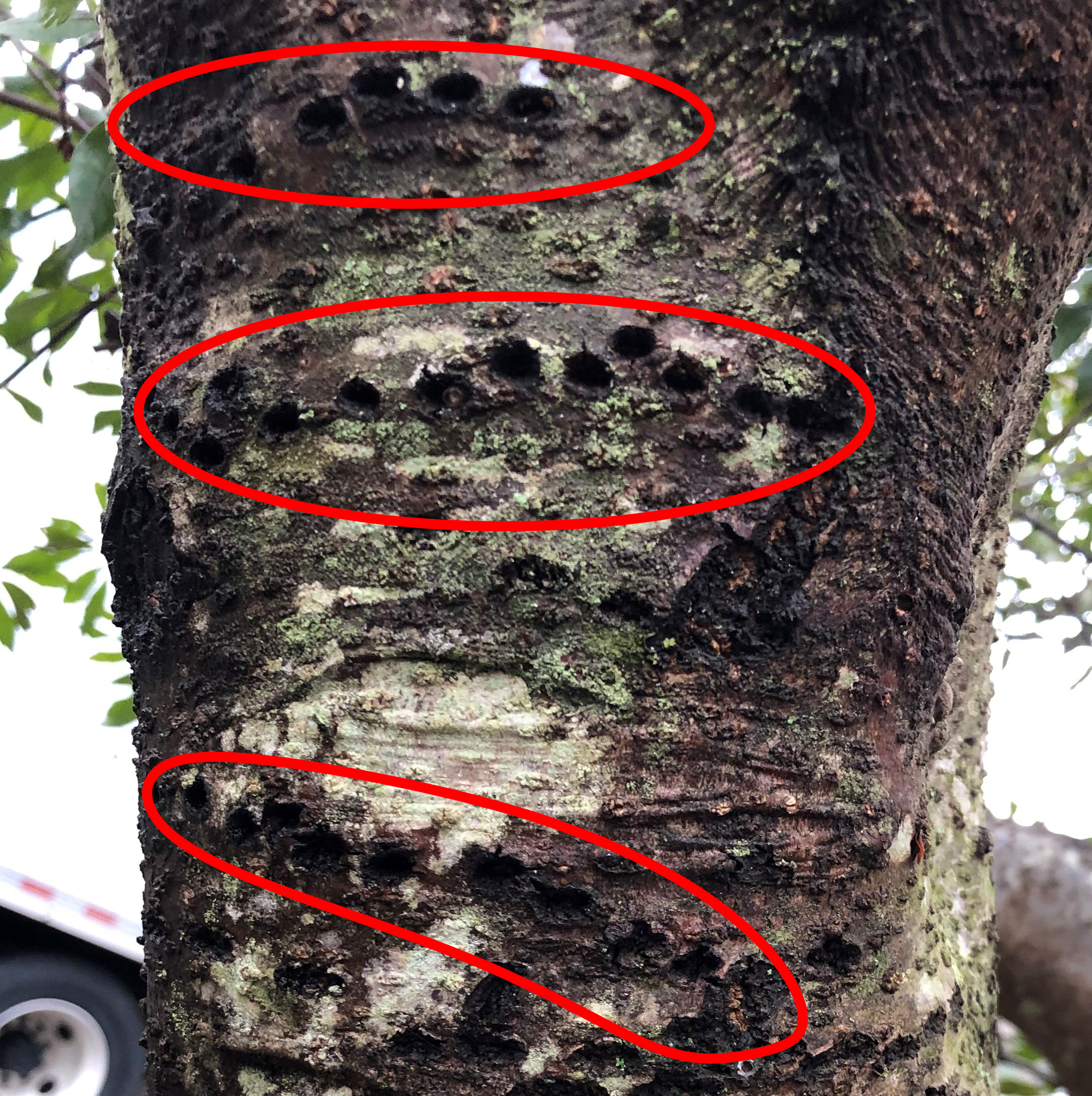
    The yellow-bellied sapsucker is found in forests. Maple forests, aspen forests, and mixed forests are all popular habitats for sapsuckers. Research has shown that maple forests have better outcomes overall for breeding sapsuckers than aspen forests. However, both maple and aspen forests allow sapsuckers to sustain their populations over time. Both of these forests have trees that are good for sap drilling — the yellow-birch in maple forests, and the paper birch in aspen forests. Sap is one of the primary food sources of the yellow-bellied sapsucker (which, given the name, isn’t very surprising). Sapsuckers have a variety of preferences for trees to tap for sap depending on their range. In urban areas of Southern Florida, for example, black olive and tropical almond trees are a preferred source of sap. Yellow-bellied sapsuckers also feed on arthropods (think of spiders, centipedes, insects, and the like), especially while nesting.

    A tree with lines of sapsucker holes.
    Pictured: Sapsucker holes in a tree. Drilling holes in straight lines is typical for them.
    Why are woodpeckers so concussion proof?

    One of the most interesting behaviors woodpeckers exhibit as a group is the tree drilling that they’re named for. A very common question related to this drilling is how do woodpeckers avoid rampant brain injuries due to ramming their heads against trees repeatedly, at high speeds, for ages. Woodpeckers routinely bash their heads into trees at far more than double the acceleration that would concuss humans. While humans are concussed at 300 g of acceleration, woodpeckers have been known to regularly drill into trees at accelerations on the order of 600–1500 g.

    A variety of mechanisms have been proposed to explain the woodpeckers’ resilience to brain injury. There are three primary reasons woodpeckers aren’t all concussed all of the time. The first being their small size. The acorn woodpecker’s brain, for example, has a mass of 2.5 grams. A human brain has a mass of 1400 grams. The woodpecker brain is so much smaller than a human brain that they generate much less force when they smack into the skull. The second limiting factor that protects woodpeckers is the short duration of impact. One of the documented factors that increases the likelihood someone will be concussed is how long their brain is exposed to high acceleration. A woodpecker only drills against a tree for a millisecond or less each time, so their time of impact is very short.

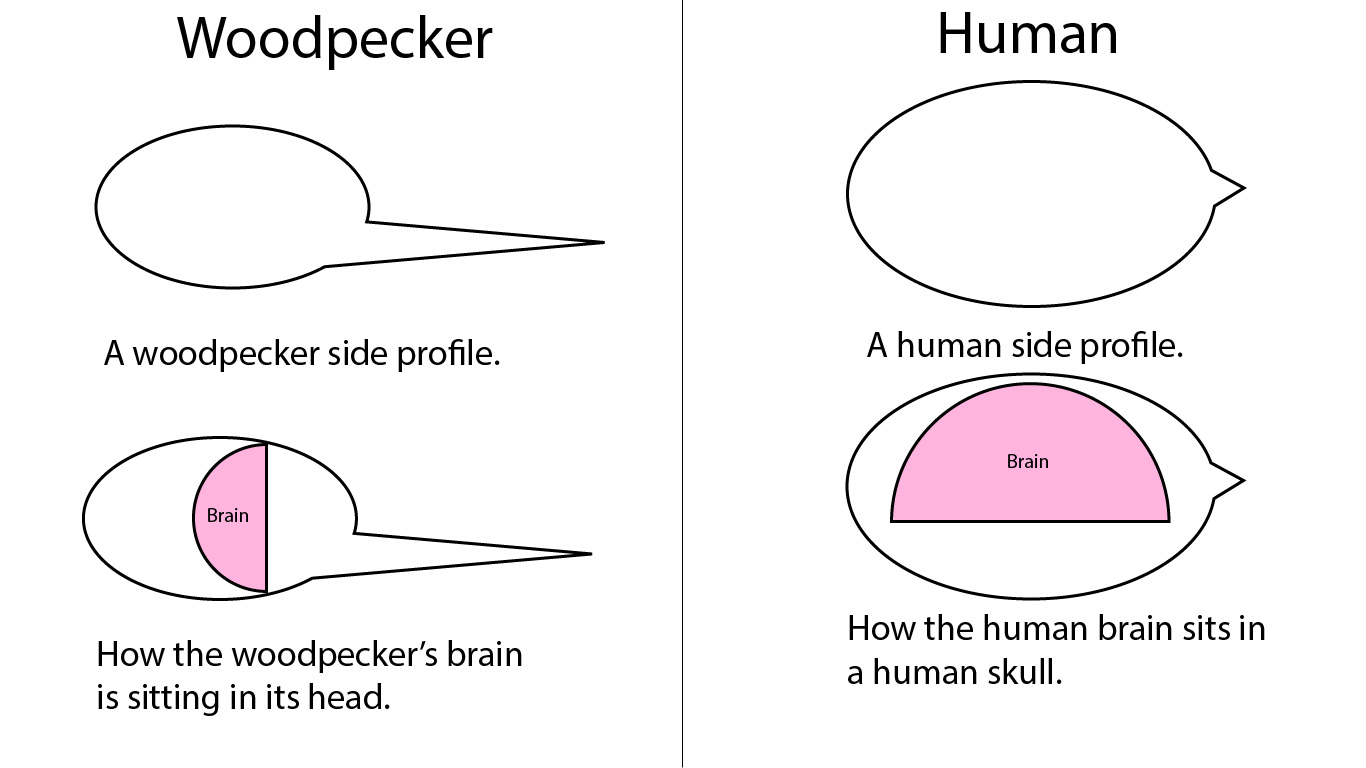
    The last quirk of woodpecker anatomy guarding them from brain injury is how their brain sits in their skull. Both human brains and woodpecker brains are hemispherical (if you cut a globe in half, you will have two hemispheres). If you cut the globe in half at the equator, your top hemisphere is oriented like a human brain is. If it were to go flying forward, only the small portion at the front will hit the skull. This concentrates the impact right around the forehead area. On the other hand, a woodpecker brain is much more like if you had cut your globe from the Arctic to Antarctica, and chose to look at the left section. The large flat side of a woodpecker’s brain rests against the front of their skull. When their brain goes smacking against their skull while they drill, the force is distributed among the largest possible region of their brain. This lessens the impact overall.

    An image illustrating the difference in orientation of a human brain versus a woodpecker brain, as described in the paragraph above.
    Notice the difference in alignment when comparing a human brain to a woodpecker brain.
    A visualization of how the force is more distributed over the woodpecker's brain compared to a human brain.
    Look at how much more relative space the force has to distribute itself on the woodpecker’s brain versus the human brain.
    Ecological Status of the Yellow-Bellied Sapsucker

    Ecologically speaking, the yellow-bellied sapsucker is in a good place to stick around. The International Union for Conservation of Nature (IUCN) has marked the yellow-bellied sapsucker as a species in the “least concern” of going extinct. Despite this, there are still some concerns for the sapsucker, especially as they’re being seen more and more often in urban and suburban areas. Being in areas with humans presents several new challenges for sapsuckers. Flying into windows is one of these concerns. Some research has been done into this phenomenon, known as “window strikes”. One study suggests that migrating birds are at a higher risk of striking windows than year-round resident birds, which poses a threat for migratory birds like the yellow-bellied sapsucker. Another threat to sapsuckers in areas with high human density are pets, domestic cats in particular. Outdoor cats have long been a threat to bird populations, and sapsuckers living in areas with them are no exception. Like many other species, the yellow-bellied sapsucker’s future will be strongly impacted by human activity.

    References

    Diamond, Joshua M, & Ross, Michael S. (2018). Tree selection and foraging height of wintering Yellow-bellied Sapsuckers (Sphyrapicus varius) in an urban environment. The Wilson Journal of Ornithology, 130(4), 932-939.

    Gibson, L. J. (2006). Woodpecker pecking: How woodpeckers avoid brain injury. Journal of Zoology (1987), 270(3), 462-465.

    Kerlinger, P. (2008, April). Sap hunter: why the Yellow-bellied Sapsucker does what most woodpeckers don’t: migrate. Birder’s World, 22(2), 52. https://link.gale.com/apps/doc/A175629258/ITOF?u=gainstoftech&sid=ITOF&xid=177e1123

    Natola, Libby, & Burg, Theresa M. (2018). Population Genetics and Speciation of Yellow-Bellied, Red-Naped, and Red-Breasted Sapsuckers (Sphyrapicus varius, S. nuchalis, and S. ruber). The Journal of Heredity, 109(6), 663-674.

    Sabo, Ann M, Hagemeyer, Natasha D G, Lahey, Ally S, & Walters, Eric L. (2016). Local avian density influences risk of mortality from window strikes. PeerJ (San Francisco, CA), 4, E2170.

    Tozer, Douglas C, Nol, Erica, & Burke, Dawn M. (2011). Quality of mature aspen and maple forests for breeding Yellow-bellied Sapsuckers (Sphyrapicus varius). Canadian Journal of Zoology, 89(2), 148-160.


  • The Evolution from Fossil to Monster

    Humankind as a species is over 200,000 years old. We are travelers, storytellers, and connoisseurs of legends and tales. For thousands of years, mankind has entertained our children and fellow tribesmen with fables and stories of the unknown, the cryptic and the mythological. It is a unifying factor in our world. Every story needs a strong villain to maintain equilibrium and for many, the villain was the monster. From Greek and Roman to Japanese and Native American, fantasy and folklore have been influenced from the history of this planet. All cultures have created monsters to fuel their fears. Either to rationalize the unknown or to provide comfort for themselves, men and women of the past have created these stories for purposes that have been lost to time. Yet, monsters are alive and real today, be it in between a page or in a culture. These beasts came from our imaginations. However, many of these terror-bringers were imagined based on fossils, skeletons, or unknown sightings that frightened the inhabitants of their lands. 

    From tales of creation, to the flood, and even tales of doom, every culture has unifying legends. Some cultures produced monsters so terrifying that they were hidden and lost to time, while some have been immortalized in books, movies, and videogames. The primal fear of the unexplainable had to be justified through something tangible by mankind. Two monsters that have fueled the nightmares of children and men; two giants of terror that were produced from the unknown, can now be explained.  

    THE CYCLOPS:

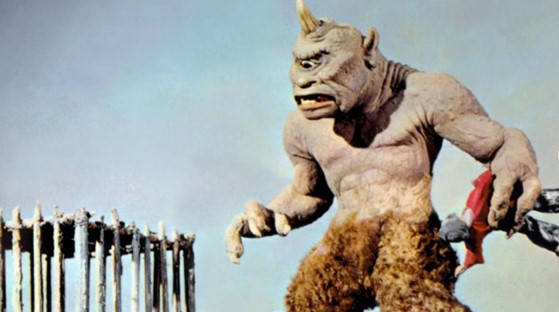
    Cyclops are a cannibalistic giant race bearing a distinct feature: a singular eye in the center of their forehead. Notable cannibals and warriors in Greek mythology, the cyclops were born from the Greek God Poseidon but were cast away because of their grotesque ugliness. In Greek stories and in pop-culture, cyclopes have been used as a formidable opponent to heroes and heroines. The most well known depiction of the cyclops race comes from Homer’s The Odyssey. Other notable depictions have been seen in The Cyclops (1957), Wrath of the Titans (2012), and Tron: The Odyssey (2017). 

    According to Homer, Polyphemus was the cyclops leader on the isle in which Odysseus was stranded on his return home. Polyphemus was a sheep herder and a brutal warrior. During Odysseus’ time on the island, Polyphemus severed a man in half with a single bite and crushed a man in his grasp. A nightmarish scene that captures our fears of these cannibal giants; the infamous cyclops look, from Greek vases to modern day, has endured the test of time.Cyclops from “Seventh Voyage of Sinbad”. Director Nathan Juran

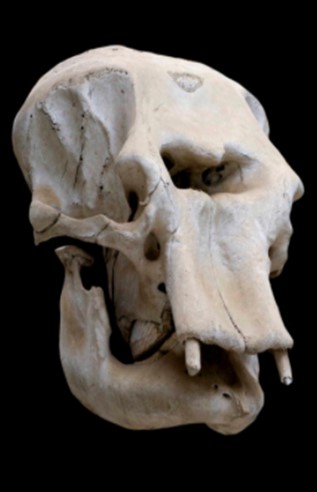
    Their faces look eerily similar to elephant skulls:Elephant Skull. Photo courtesy of Felipe Romao


    These skulls can easily be viewed as a horrific mono-visual monster. Ancient Greece had two different species of elephants roaming the area: The Cyprus Dwarf Elephant and the Cretan Dwarf Mammoth. Such large skulls would have to be supported by tremendous bodies. These skulls sported massive tusks and teeth which were perfect for crunching the bones of men.  

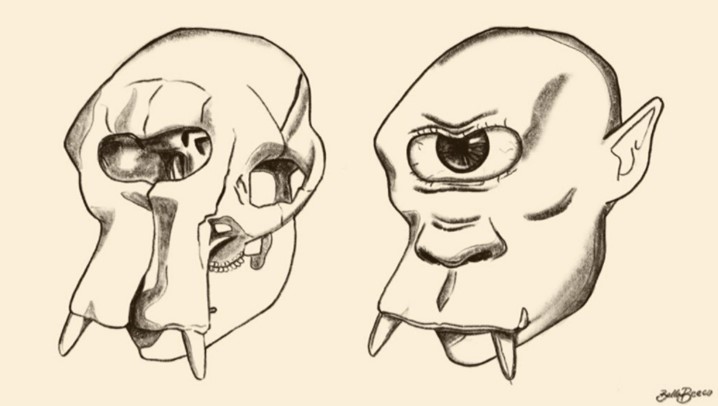
    In the early 20th century, Paleontologist Othenio Abel suggested that the inspiration of cyclops comes from the fossilized skulls of pygmy elephants found in the ancient Greek region. Found on Cyprus, Crete and many other surrounding Grecian islands, these ancient dwarf elephants died around 11,000 BCE. These elephants had a shoulder height of five feet, with an averaged- size femur of over two feet. Anatomically, elephant and human femurs look similar, which is a proposed explanation to the human element of the cyclops. From these basic anatomical parallels, the cyclops could have been born. When the image of the cyclops was mixed with human fear and superstition, the cyclops became the monster we know today: a giant cannibal terror. 


    Courtesy of Bella Beeco
    Elephant Skull transforming into a Cyclops Skull, Courtesy of Bella Beeco

    THE YACUMAMA:

    The Yacumama is a South American tale that derives its nature from the Amazon river. Meaning “The Water Mother” in Peruvian, the tale dates back to that of the Incan civilization in the 13th century. A massive 30 meter serpent monster, the Yacumama had jaws that could swallow a man whole. In her legends, any animal or man that disturbed her waters became her prey. The local indigenous people would blow on conch horns to protect themselves before entering the water, believing the Yacumama would reveal herself if present. 

    South America has many depictions and lore of snakes. The Aztec and Incan civilizations both had powerful gods depicted as these slithering creatures. The Aztecs had Quetzalcoatl who created mankind. The Incas had Amaru who was the water God and protector of the rivers. The legend of the Yacumama can be traced back to the 15th century when it was told to the Spanish Conquistadors. 

    A modern depiction of the Yacumama: 

    Photo of a Yacumama Statue in Parque Tematico Peru. Courtesy of Mike Dreckschmidt

    As anacondas and rivers in South America are mutually inclusive, the pairing of Yacumama and her watery home was natural. South America is home to thousands of rivers including the Amazon, and is home to 169 species of snakes, including the world’s heaviest species: the Green Anaconda. The largest Green Anaconda recorded weighed over 500lbs and was nearly 20 feet long. The longest snake species, the Reticulated Python, which measured over 25 feet long, is not native to South America but is a related species to the Anaconda. While these are the largest snakes ever measured in current day, the largest snake ever found hails from South America: The Titanoboa.

    Titanoboa fossil size model. Courtesy of Darren Pepper

    The Titanoboa fossil found in Colombia created a fear of all ancient snakes. Weighing in at over 2,500 lbs. and reaching up to nearly 50 feet in length, this behemoth snake truly could have swallowed a man whole. This dinosaur-sized serpent could strangle and crush every living organism that came within striking distance until its extinction 56 million years ago. If these snake fossils had been found by natives in South America prior to the official paleontological discovery, a giant water serpent named Yacumama could have certainly been created to explain the phenomena. The Yacumama is possibly an exaggeration of a sighting of a large wild anaconda, or it could have been a fossil based explanation from an earlier find of a titanoboa fossil. A massive serpent, a man eater, and a terrifying hunter from the depths, the Yacumama was definitely a monster that inspired fear, but it is also a monster that can be flushed into explanation. 


    References:

    • Aym, Terrence. “History Mysteries: The Legendary Yacumama, Mysterious Monster of the Amazon.” Salem-News.com, Salem-News.com, 16 Aug. 2010, www.salem-news.com/articles/august162010/monster-amazon-ta.php.
    • Combing, Beach. “Cyclops Origins.” Beachcombing’s Bizarre History Blog, Beachcombing’s Bizarre History Blog, 8 July 2011, www.strangehistory.net/2011/06/07/cyclops-origins/.
    • Dreckschmidt, Mike. “Terrifying Legends of Peru #3: Yacumama and Sachamama.” Traveling and Living in Peru, Peru Exprience S.A.C, 6 Aug. 2020, www.livinginperu.com/terrifying-legends-peru-3-yacumama-sachamama/.
    • “Green Anaconda: National Geographic.” Animals, National Georgraphic, 10 Oct. 2018, www.nationalgeographic.com/animals/reptiles/g/green-anaconda/.
    • Hennings, Julie, and Harry Lynch. “Birth of a Monster.” EarthDate, Burea of Economic Geology, www.earthdate.org/birth-of-a-monster.
    • Juran, Nathan, director. Seventh Voyage of Sinbad. Columbia Pictures, 1958.
    • Pepper, Darren. Titanoboa, Www.prehistoric-Wildlife.com., 2011, www.prehistoric-wildlife.com/species/t/titanoboa.html.
  • Three Dog Star Night (Part 1)

    I am just old enough to remember a time when most textbooks only spoke of exoplanets (i.e. those outside our solar system) in the hypothetical sense, their existence taken as an assumption rather than demonstrable fact, while the question of whether our 8-planet solar system was typical or an anomaly remained a hotly-debated topic. Despite over a century of attempts and subsequent erroneous claims, it wasn’t until 1992 that the first confirmed exoplanet was discovered, two of them as a matter of fact, orbiting the pulsar PSR B1257+12. As surprising as this was to the scientific community, the high likelihood that the planetary pair had formed as the result of a merger between two white dwarfs rather than a collapsing gas cloud meant the world would have to wait another 3 years for the confirmation of a “true” planet orbiting a main-sequence star like the Sun. The discovery ushered in a new era for astronomy and as of November 1st, 2020 there have been a whopping 4,370 exoplanets confirmed in 3,230 star systems. This menagerie of other worlds, ranging from “hot Jupiters” and lava worlds to gas and ice giants and seemingly everything in between stands in stark contrast to the apparently silent heavens, leaving a profound question unanswered:

    “Where is everybody?”

    Despite what many a crackpot relative or internet crank will tell you, humanity is, to the best of our knowledge, completely and utterly alone in a universe so vast it defies comprehension, a contradiction commonly referred to today as The Fermi Paradox. The concept of aliens and the foundations of the Fermi Paradox have been around for a surprisingly long time, entering the Western conscience with the speculation of Epicurean philosophers like Democritus of ancient Greece, who today is famous for the first conception of atoms. From the viewpoint that the world was merely a chance jostling of these atoms, they argued it was not only reasonable, but exceedingly likely that there exist other inhabited worlds similar to our own. To paraphrase the argument: “who ever heard of a single ear of wheat growing alone in a vast, fertile field?”

    Should you happen to see this mentioned on the next episode of Ancient Aliens, it’s worth noting that Democritus’s ideas about “aliens” (and atoms) are not quite as modern as they sound, instead more akin to our modern idea of beings from “parallel universes”, not habitable planets orbiting other stars since the ancient Greeks had no idea what stars and planets actually are, much less orbits. To them, these other worlds existed but were forever inaccessible to us. What’s important is that the core idea, that it’s improbable that life should arise on Earth and only on Earth begins here. Its dismissal by the Aristotelians, who preferred what can be known to what might be and whose influence on Western culture remains to this day, caused such discussion to take a back seat during the early Middle Ages, but the idea remained nonetheless, never being fully dismissed as “impossible” by theologians who were wary of placing what they saw as limits on the omnipotence of the Christian God. Contrary to the popular misconception that discussion of such matters would get one labeled a heretic and burned at the stake, the idea of aliens inhabiting other worlds within our universe that were, at least in theory, accessible to us in some way first arose in the Western world during the late Middle Ages. In his influential work De Docta Ignorantia (1440), Nicholas of Cusa argues that:

    Life, as it exists on Earth in the form of men, animals and plants, is to be found, let us suppose in a high form in the solar and stellar regions. Rather than think that so many stars and parts of the heavens are uninhabited and that this earth of ours alone is peopled – and that with beings perhaps of an inferior type – we will suppose that in every region there are inhabitants, differing in nature by rank and all owing their origin to God, who is the center and circumference of all stellar regions (II, p. 12).

    His work sparked intense discussion among Christian theologians over whether or not such aliens had been “redeemed” and even whether “original sin” would apply to them. After all it was probably a safe assumption that they were not descended from the mythical Adam and Eve.

    The idea stuck around and was eventually taken up by the scientists of the modern era, including the likes of none other than Harlow Shapley who stated in an interview for The Sydney Morning Herald (1959) that:

    The universe has 10 million, million, million suns similar to our own. One in a million has planets around it. Only one in a million million has the right combination of chemicals, temperature, water, days and nights to support planetary life as we know it. This calculation arrives at the estimated figure of 100 million worlds where life has been forged by evolution (p. 5)

    Five months later, Frank Drake performed the first systematic search for extraterrestrial intelligence by monitoring two nearby sun-like stars, 6 hours per day for four months, searching for radio signals around the emission frequency of neutral hydrogen, the most common element in the universe. The reason for this frequency choice is simple: if somebody out there wants their message to be heard, they’ll put it where everyone is already looking. A year later, while preparing to host a meeting for SETI to discuss the future potential of such search efforts, he penned the equation which would bear his name.

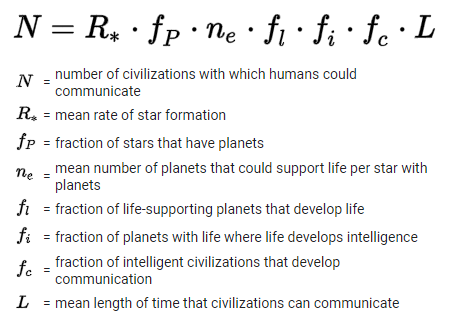
    Though initially conceived as little more than a mathematical conversation piece, The Drake Equation (as it came to be known) at last allowed astronomers to estimate the number of intelligent civilizations within our galaxy, for the first time couching the discussion in numbers rather than idle speculation. The only problem? Nobody had any real idea what any of these numbers actually were. The various numbers proposed at the meeting by Drake and his colleagues as an “educated guess” give a final value somewhere between a minimum of 20 and a maximum of 50,000,000. Such an enormous range perfectly illustrates their aforementioned uncertainty. In the six decades since, the data from countless observations, surveys, and space missions from NASA, ESA, and observatories around the world have finally shed some light on a few of these parameters which, in theory, allow us to narrow down the estimates a bit.

    Mean Rate of Star Formation, R*

    Our first parameter in the Drake Equation is R*, the average rate of star formation. For our purposes here, we are only looking for life within our own galaxy so we will use the rate of star formation in the Milky Way. Calculations from the available data suggest that somewhere between 0.68 and 1.45 solar masses of galactic material goes into making new stars every year. To find the star formation rate, we need to also account for the average mass of new stars using the available empirical data which indicates a value of around two stars per solar mass worth of material. Multiplying these two numbers together gives us a value between 1.5 and 3 new stars per year formed in our galaxy, a value slightly higher than the original 1961 estimate of 1 per year.

    R* = 1.5 – 3

    The Fraction of Stars that have Planets, fp

    As mentioned previously, the exoplanet surveys thus far found 3,230 star systems that contain planets. However this figure only tells us the number of stars that have been found to possess planets, not the fraction of them that do. The total number of stars surveyed is much larger at over half a million. Dividing the two numbers gives a value for fp of less than 1%. At first glance, this looks pretty dismal, but there are some important caveats that we need to account for. The majority of exoplanet discoveries were made using the transit method, which makes continuous observations of a star’s light to look for periodic dimming caused by a planet passing in front of it directly along our line of sight. Our chances of observing such dimming is directly related to the star’s radius (bigger is better) and inversely related to the planet’s orbital distance from its host star (closer is better). Should our line of sight to a given system happen to be anything other than virtually edge-on, the transit method will not detect any planets there, even if there actually are. For those that we are fortunate enough to be observing nearly edge-on, if a planet’s orbit is too wide then it will not pass in front of the star from our perspective, thus there will be no dimming and the planet will go undetected. Finally, if a planet is too small, then the star’s dimming could be too small for our instruments to detect and the planet will go undetected.

    It perhaps seems that we’re out of luck on getting any reasonable estimates, but statistical analysis of the transit data combined with that of surveys using other methods of planet detection such as doppler spectroscopy and gravitational microlensing point towards a conclusion that even the optimists of the 1960’s would consider absolutely astonishing; fp may very well approach 1, far larger than the maximum estimated value of 0.5 made 60 years ago! In other words, it’s possible that nearly every single star in our galaxy has one or more planets!

    fp ≈ 1

    Thus far things are looking better than ever for the potential development of intelligent, detectable civilizations (IDCs) in our galaxy, only deepening the paradox. However from here on our estimates for successive factors in the Drake Equation become increasingly speculative.

    The Fraction of Potential Life-Supporting Planets that Develop Life, fl

    This number is even more difficult to estimate than the previous factor. Our current sample size for life-supporting planets that go on to develop life is 1, with a possibility of 5 more if Mars, Venus, Titan, Europa, and/or Enceladus are eventually found to have or have had life. Some scientists argue that life arises as a rule virtually as soon as conditions are right, so this value should be ‘one’. Others argue it may actually be a freak occurrence even in all the right conditions, so this number should be tiny. In the case of our planet, life appears to have developed as soon as the conditions were right, but any attempt to extrapolate this to other planets contains heavy anthropic bias as our model planet (Earth) was not chosen randomly but rather by the organisms already inhabiting it. There currently is no evidence that abiogenesis occurred more than once on Earth, yet if it were a common phenomenon we might reasonably expect it to have occurred several times. It certainly could have, but all known terrestrial life shares a common origin, meaning if it ever did then those lineages are most likely long gone. If abiogenesis does indeed turn out to be an incredibly rare event, there is still a potential loophole. Remember, we only care about the number of habitable planets that go on to actually develop life, not how that life got there in the first place. It is entirely conceivable that planets, including our own, could have been seeded with microbial life that hitched a ride on a rogue piece of post-collision debris ejected from another already inhabited planet, a hypothesis known as panspermia. A technologically advanced civilization could also choose to do this intentionally in order to spread its genetic family throughout the galaxy. It may sound far-fetched, but humanity already has the capability to do this. Scientists and engineers go to painstaking lengths to sterilize spacecraft in order to avoid unintentionally ‘infecting’ other planets or moons with potentially invasive extremophile Earthlings. The various proposed panspermia hypotheses are a topic that honestly deserve an article all their own, so for now we will wrap things up optimistically and use the original estimate made by Drake and his colleagues back in 1961.

    fl ≈ 1

    You may have noticed we skipped over a factor, the average number of habitable planets per star with planets. Like panspermia, this factor warrants its own discussion and is the subject of part two in this series. Stay tuned!

  • The Undersea Bone Devourer

    Osedax, from the Latin os, oris (bone) and edāx, edācis (devourer), is a genus of undersea worms that consumes bone. A genus (which is more Latin, this time for a family group) is a group of species that are similar. More distantly, the genus Osedax belongs to the family Siboglinidae. Siboglinidae is a family (a level above in the biological categorization hierarchy from genus) composed of segmented worms, all of which have chitin bristles. Chitin is a natural substance that is found in all sorts of bugs, and it’s similar to the material that makes up your fingernails. Another prominent species in this family are the undersea tubal worms that live at the hydrothermal vents at the bottom of the ocean. It turns out there is a surprising amount of diversity of species of undersea bone eating worms. The worms range in size and in behavior. You can find members of the Osedax genus in all seven oceans, and in all sorts of depths (21 – 4000 m). Some of them are generalists, whereas others specialize in large bone deposits often found on the ocean floor. Whalefalls (you can read more about them here: http://chargedmagazine.org/2012/06/whale-fall-2/) are one such source of large bone deposits on the ocean floor.

    Osedax worms were first discovered in 1994. Biologists were initially baffled at what exactly they were. The worms evaded classification until molecular DNA analysis showed that they were related to the tube worms that live in hydrothermal vents on the ocean floor. This breakthrough allowed biologists to finally place the Osedax genus into the Siboglinidae family. Later, fossils were discovered of Osedax worms inhabiting a large, dead reptile, dated to the early-Late Cretaceous period, about 100 million years ago. This led to several revelations about the history of Osedax worms. Firstly, there was now a historical precedent for being generalists, rather than whale specialists. Osedax worms were initially discovered and identified on whale falls, and there was some debate in the scientific community about whether or not they occupied other niches. Well, giant dead reptiles certainly weren’t whales, so this find cleared that up nicely. The fossil finding also illustrates something about the history of Osedax worms and the Siboglinidae family. This finding confirmed an earlier theory that the Siboglinidae family originated somewhere in the mid-Cretaceous period. It also means that the weird bone eating worms under the sea outlasted the dinosaurs, which is neat.

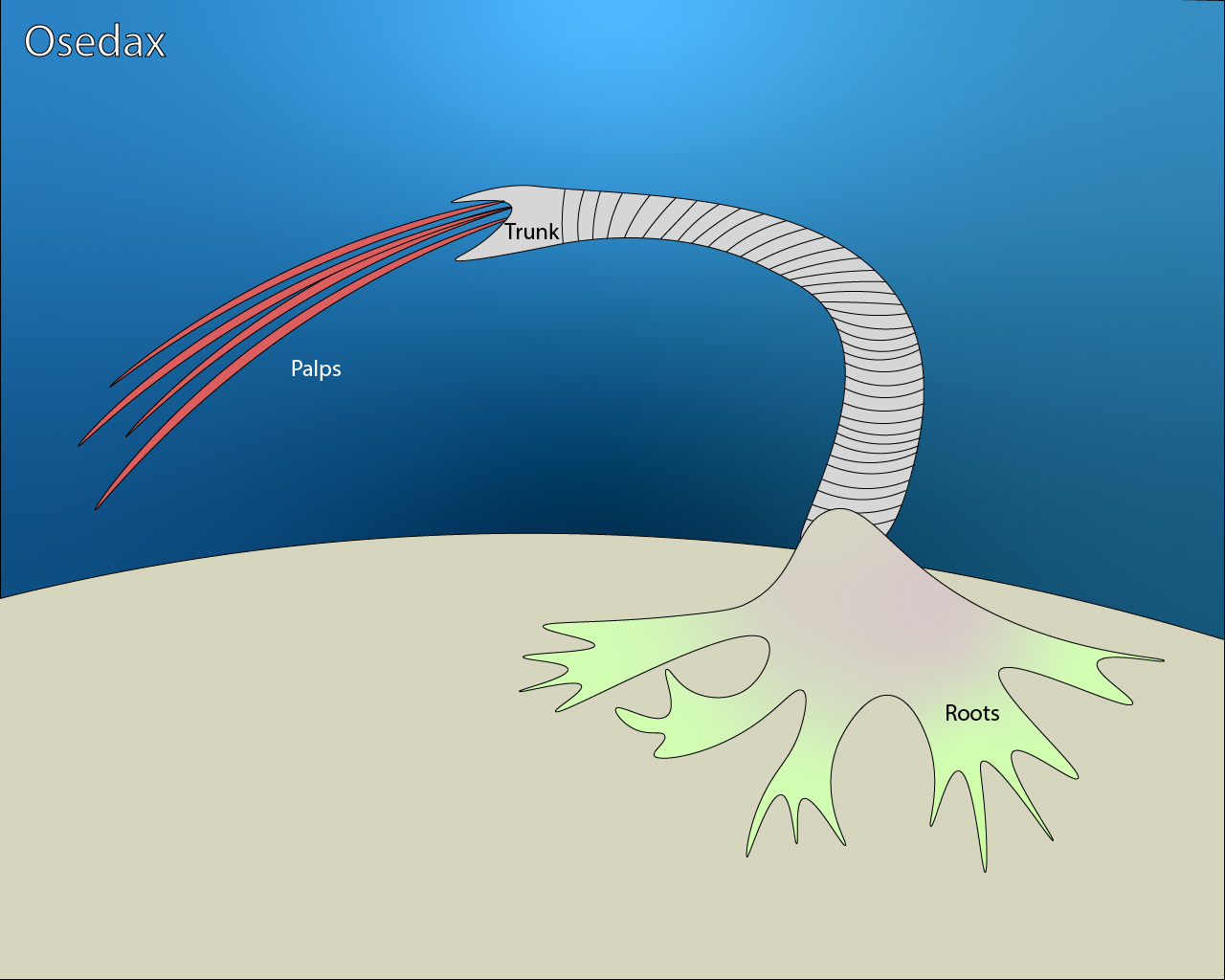
    A labeled illustration of an Osedax worm.
    A labeled illustration of an Osedax worm.

    Physically, Osedax worms are strange looking creatures. Red, string-looking bits float out from one side of the main worm body. On the other side, there are green, root-like structures sticking out back. These roots secrete acids to dissolve the bones where they lodge. Their middle is a white, segmented tube. It doesn’t get any more regular on the inside, either. Osedax worms don’t have a digestive system – they just host a wealth of bacteria inside of them to digest the bones they consume. Another strange thing about the inside of an Osedax worm is that the male worms live inside the females. As in, every picture of an Osedax worm you see will be of a female, as the males are teeny tiny and live inside of the females. Dwarf males, as this phenomenon is called, occurs when the males of a species are much smaller (and usually simpler anatomically) than the females. In species where dwarf males exist, the males typically reside somewhere inside or attached to the female members of the species. Osedax worms are at least as odd as you were expecting worms that ate bones to be, at very least.


    References

    • Smith, Craig R, Glover, Adrian G, Treude, Tina, Higgs, Nicholas D, & Amon, Diva J. (2015). Whale-Fall Ecosystems: Recent Insights into Ecology, Paleoecology, and Evolution. Annual Review of Marine Science, 7(1), 571-596.
    • Rouse, G. W. (2004). Osedax: Bone-Eating Marine Worms with Dwarf Males. Science (American Association for the Advancement of Science), 305(5684), 668-671.
    • Danise, S, & Higgs, N. D. (2015). Bone-eating Osedax worms lived on Mesozoic marine reptile deadfalls. Biology Letters (2005), 11(4), 20150072.
  • The von Neumann Architecture

    The von Neumann Architecture

    Introduction

    Have you ever wondered how your computer works? Who decided that we should use keyboards to tell our devices what to do? And who else later decided that touch screens were cooler much of the time. Much of how we think about computing we currently owe to John von Neumann, who developed the current way of thinking about computers.

    The Von Neumann architecture is a model that was developed in the 1940s by John von Neumann, a physicist and mathematician, who was an early computer researcher. During World War 2, cracking secret codes and the development of nuclear weapons led to an increase in public funding for computer research, as machines could do lots of arithmetic quickly and accurately. Von Neumann would go on to outline a model for building any sort of computer in his The First Draft Report on the EDVAC (the EDVAC being a computer he was working on at the time) that has been the standard for all computing devices since.

    In his model, von Neumann illustrates that a computer should have several main components:

    • Arithmetic Unit
    • Control Unit
    • Memory
    • Input
    • Output

    Flexibility of the Model

    This model is relatively flexible – in his paper, von Neumann mentions that different machines could very well have different capabilities while still being built with all of these components in mind. Computers that use the von Neumann architecture range from very simple (such as the one in your microwave) to the massive supercomputers that have dedicated buildings. The wide scope of computers that fall under the von Neumann model are proof that von Neumann achieved his goal when it came to creating a model that was versatile.

    Components and What They Do

    The control unit, as described by von Neumann, is the part of the computer that keeps track of what is supposed to run when. When you turned on your computer, your PC’s control device (most probably inside of a CPU) queued up the correct start up operations. The purpose of the control unit is to allow a computer to run many different kinds of programs, and switch between them when necessary. While this seems trivial now, the first computers were manually operated. If you wanted a computer to do something different than what it was previously doing, you had to go in and change all of the wires yourself. The conception of a control unit allowed the computer to modify its own hardware and software, allowing a great deal of abstraction for users. Computers being able to modify themselves (and other computers) essentially enables modern computing as we know it, the good (high level programming languages, not swapping about the wires in your desktop) and the bad (it would be impossible to hack a pre-von Neumann computer without performing an elaborate heist operation to change around the wiring yourself).

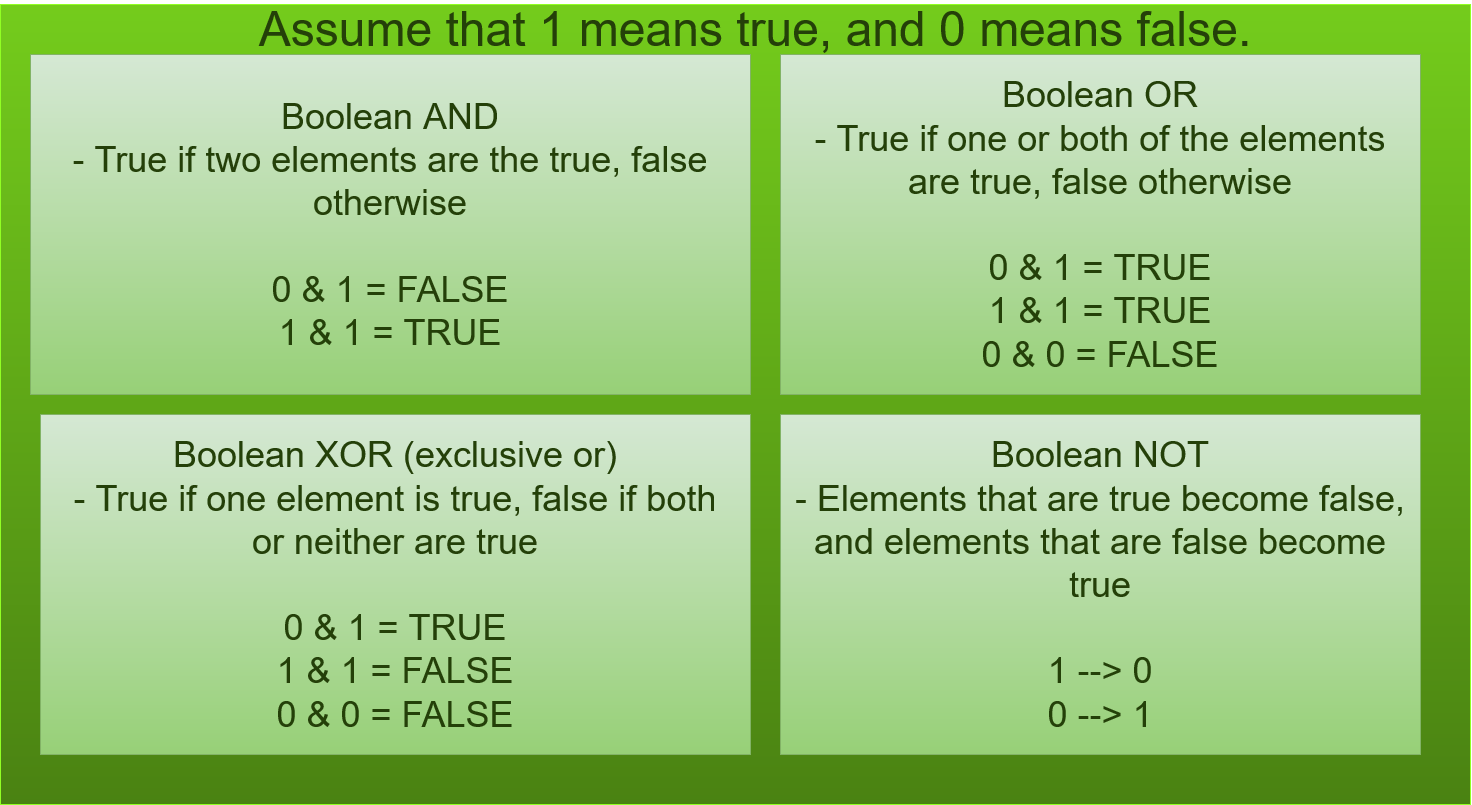
    The arithmetic unit of a computer does the logical processing. Computers were originally designed for doing lots and lots of math, so von Neumann designated an entire component of his model to do that. Despite being called the arithmetic unit, this unit is also responsible for doing logical operations as well. Arithmetic units allow computers to distinguish if two sequences of binary are completely the same (an AND operation), if some of the numbers are the same, or allowing sign flippage.

    The memory component of this model is probably simplest to understand. If we want computers to do work in a useful capacity, they need to be able to remember what we’ve done. Most modern computers have two types of memory. They’ve got long term, slower memory, which is usually kept in the hard drive. Computers also have faster, short term memory. This is typically stored in RAM. Traditionally, RAM memory has been volatile. This means that it is erased when you turn the power off. This is also why you used to lose everything you did on older video games without saving – if you didn’t tell the computer to move your data out of RAM and onto the hard drive, it was just lost.

    The last components of a computer are its input and output components. Input is just how the user puts instructions into a computer. These days, inputs are most often keyboards and/or touch screens, although speakers are becoming more common. Output is how a computer communicates what it’s doing to the user. Most computers have a visual (a screen) and an audio (speakers and/or headphones) component to the output.

    Conclusion

    The von Neumann model for computing has lasted for nearly a century. Pretty much any device that you use will have been built and designed with the von Neumann architecture in mind. That being said, scientists are looking beyond this model for the future. Quantum computing and other innovations may mean we say good bye to the von Neumann architecture.

    References

    Brandl, M. F. (2017). A Quantum von Neumann Architecture for Large-Scale Quantum Computing. (https://arxiv.org/abs/1702.02583)

    Freiberger, P., & Swaine, M. (2016, November 14). Von Neumann machine. Retrieved September 15, 2020, from https://www.britannica.com/technology/von-Neumann-machine

    von Neumann, J. (1945). First draft of a report on the EDVAC. doi:10.5479/sil.538961.39088011475779


  • Making Bad Decisions: The Science of Decision-Making

    MAKING BAD DECISIONS

    Ever wonder why you make such bad decisions. We make around 35,000 decisions every day, and they can’t all be good. There are many perspectives and exercises that we can explore as to why we make certain decisions, and, more importantly, why we think they are right!

    NEUROLOGY AND ECONOMICS?

    Our decision-making process has some innate problems. One of the major goals of neuroscientists is to better understand how information is represented in the brain, and how that information is interpreted and used for decision making. The brain is a powerful organ and requires the most amount of energy within the body. Because the brain performs so many mechanisms simultaneously. The efficient coding hypothesis is the process of the brain making predictions that allow neurons to better interpret and transmit information. Economists have spent many years studying the mechanisms behind irrational choices. With the emergence of books like Freakonomics, economic theory has been applied to a wide array of subjects.

    Exercise #1: Picking a candy bar

    Try this experiment with one of your friends.

    1. Go to the store, and get a variety of different candy bars. Make sure to get your friend’s favorite
    2. Place your friend’s favorite candy bar, and three other candy bars.
    3. Ask your friend to choose one of them. And record their choice.
    4. Now place all of the candy bars you have on the table.
    5. Ask your friend to choose the one they want. And record their choice.
    6. Now place your friend’s first choice and second choice on the table. See if they are the same or different.

    This is an actual experiment that was done to see how people make decisions. When presented with a few options, participants would most often pick their favorite candy bar. However, when presented with over 20, they would often pick a candy bar that was not their favorite. When presented with their two choices, they would wonder why their decision variety between the two scenarios. This variability in decision making is what neuroscientists and economists seek to explore more of.

    IRRATIONAL PSYCHOLOGY AND PHILOSOPHY

    Exercise #2: Sellers and Choosers

    Here is a game you can play with your friend.

    1. There are two mugs, one for you, and one for your friend.
    2. The mug is really nice, but you also have the option to sell it. Write down the price at which you are willing to sell your beautiful mug. You are the seller.
    3. Your friend can have the option of having a mug or the money for the mug. They write down a price they think the mug is worth. They are the chooser. If their price is higher than your price, then they get your mug.

    This exercise is probably pretty confusing, but it shows something pretty cool

    You may be wondering going with this and what it has to do with irrational decision-making.    Here’s the thing,  if we played this a thousands of times and put people in different roles – sometimes the role of Seller and sometimes in the role of a Chooser, we would find people who are in the role fo the seller who place the prices significantly higher than the chooser. This means that if the mug is already yours, thank you think it is worth a lot more than a similar mug that isn’t yours. This showcases the irrational logic that plagues our every decision.

    STUPID TECHNOLOGY

    Technology is currently taking a greater and greater role in our lives. Due to its presence, actions that were previously done analog or by hand, have now been replaced with technical substitutes. This has impacted much of how we make decisions. One of the key components of technology is its ability to collect large amounts of data, which outmatches the brain. But, just like we have difficulties making decisions based on the information gathered by our brain, this problem increases substantially with the data collection done by technology. While on the surface it appears more data available leads to better decisions, research has shown that this is not the case.

    Exercise #3:

    This exercise is simple. You probable are dependent on navigation tools to get you to point A and B. Pick a destination, and without look at provided directions list out the route someone would need to take. The destination very short! Now give this to your friend, and wait for them at the destination. See if the decisions that you made helped them get to the destination!

    IT’S OK, WE AREN’T PERFECT

    Making bad decisions is a part of our life experiences. I find it fascinating that within all our efforts to portray ourselves as rational beings, we are forever consumed by irrational decisions. Hopefully these exercises allow you to explore your decision making mechanisms, and gain new insight on how you think…and all the bad decisions you make!!

    Sources:

    https://dzone.com/articles/technology-and-decision-making-a-complex-relations

    https://www.philosophytalk.org/blog/irrationality-human-decision-making

    https://www.quantamagazine.org/the-neuroscience-behind-bad-decisions-20160823/

  • A World with New Plastic

    THE PROBLEM

    Plastic pollution continues to be a growing environmental issue. Around 79% of plastic is gathered in either landfills or natural environments. Due to its inability to biodegrade, plastic has the power to damage natural resources and wildlife over and over again. Many people aim to recycle, but many plastic products can’t be repurposed due to combined additives. There have been many attempts at creating sustainable alternatives. Researcher at our very own Georgia Institute of Technology are researching ways to utilize crab shells and tree fibers, but few attempts provide actionable solutions that could be integrated into society. What if there was a new way to make plastic eco-friendly?

    WHAT IS PLASTIC?

    Plastic was never made to be recycled! The majority of plastic products are produced using crude oil which consists of polymers (chains of hydrogen and carbon). Once separated into lighter components called “fractions”, it is then separated again into “naphthas”. There are also two main types of plastic: Thermoplastic and Thermosets.  Thermoplastic can be softened when exposed to heat and hardened when cooled. Thermosets are polymers that cannot be changed once molded. Because there are so many different types of plastic with various materials, and specific properties, you can imagine the difficulties that come when trying to contain them in a sustainable way.

    NEW PLASTIC CHANGES EVERYTHING!!

    New Plastic is a new polymer material developed by Lawrence Berkley National Laboratory that has the ability to be recycled continuously! While many thermoplastics can be melted down, the array of additives used in them prevent them from being reused. This is why the majority of plastic is “downcycle”, which means it can’t be used for important utility items.

    However, a new material called polydiketoenamine, or PDK has been developed. With the aid of a highly acidic solution, additives can be separated from their polymer. This leaves behind high-quality monomers that can be “up-cycled”, and be reused for products of importance.

    COULD WE MAKE A NEW PLASTIC WORLD? MAYBE NOT

    New PDK products and applications are being explored by researchers, but could this process even be adopted. Reusing plastic has been deemed not profitable enough for companies, and conventional plastic is one of the cheapest materials to produce. With the other 18 billion pounds of plastic waste still in circulation, trying to sort the PDK plastic from different types of plastic poses even greater systematic problems. There are also many cultural and societal barriers that prevent sustainable change. The typical person doesn’t know which plastic is recyclable or may not even care.  It’s for time to tell if new sustainable practices like New Plastic stand a chance in our modern landscape.

    SOURCES:

    Soderstrom, A. (2018, August 7). Georgia Tech creates sustainable plastic from crab shells, tree fibers. Retrieved from https://www.ajc.com/business/georgia-tech-creates-sustainable-plastic-from-crab-shells-tree-fibers/pWetPwmYUp0BS33wwtk6RI/.

    Daley, J. (2019, May 8). This New Plastic Can Be Endlessly Recycled. Retrieved from https://www.smithsonianmag.com/smart-news/new-plastic-can-be-recycled-endlessly-180972130/.

    Statistics of the Year 2018: Winners announced. (0AD). Retrieved from https://www.statslife.org.uk/news/4026-statistics-of-the-year-2018-winners-announced.

  • Sleep Well: Your Psychological Health Depends On It


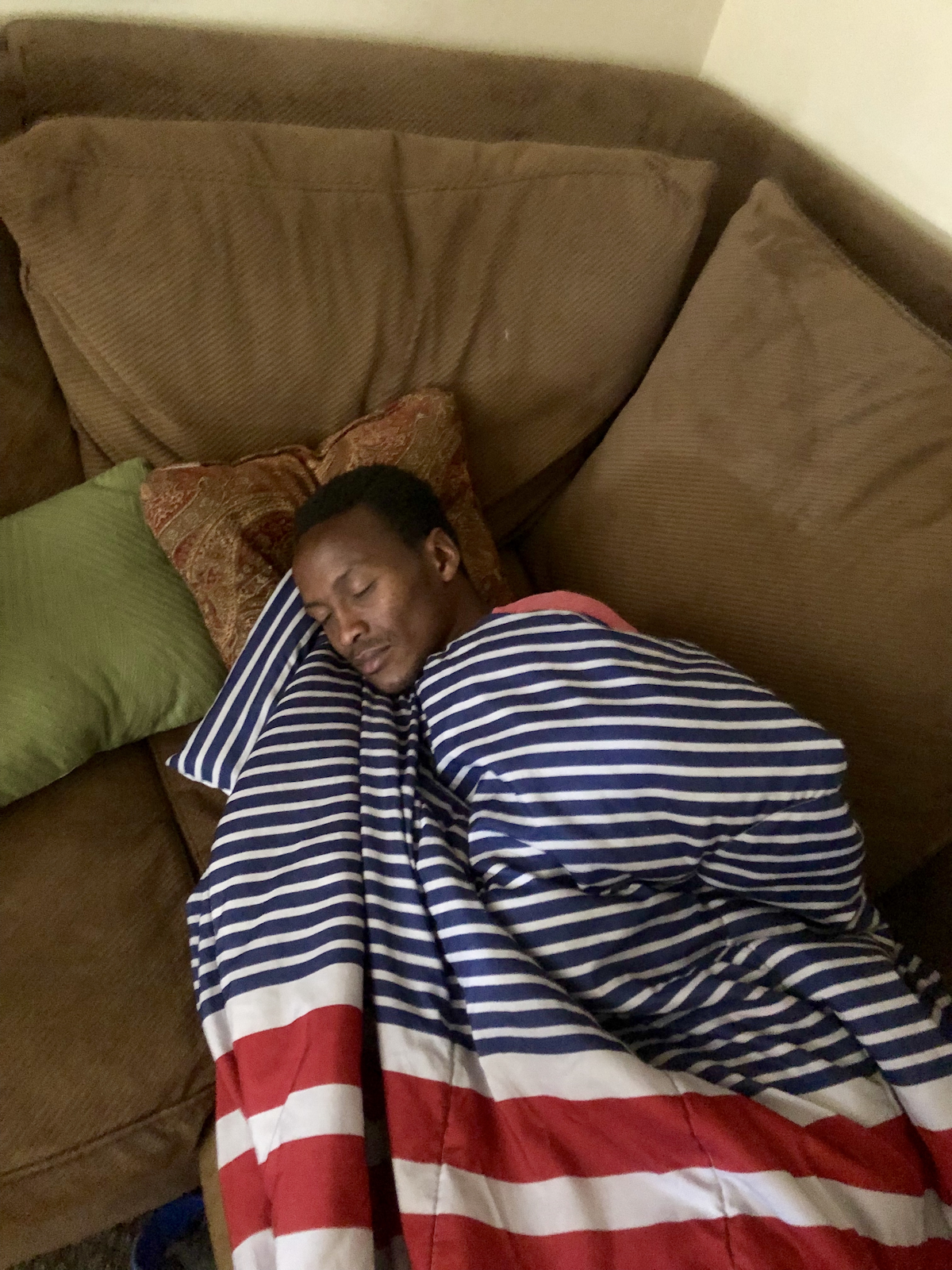
    There is some truth to the phrase “waking up on the wrong side of the bed.” When I don’t sleep very well, I will probably be much more affected by seemingly minor mistakes than other times. For example, I might be particularly self-critical of a research presentation, ruminating on the negative aspects and failing to acknowledge anything positive. The recurrent thought of poorly answering a question might leave me feeling disappointed. In contrast, I will probably fail to retrieve the memories about the questions that were answered well or the clarity of concepts explained. Cognitive neuroscientists have linked poor sleep to poor psychological health at the neural level, particularly involving a brain structure called the amygdala.

    The amygdala is an almond-shaped brain structure that modulates emotional reactivity. When sleep deprived, amygdala function is perturbed and becomes over-reactive during the waking day (1). In other words, sleep deprivation can lead to a heightened sensitivity of the amygdala. For example, your roommate’s incessant pencil tapping that normally seems bearable when not sleep deprived, may be particularly annoying after a night of little to no sleep.

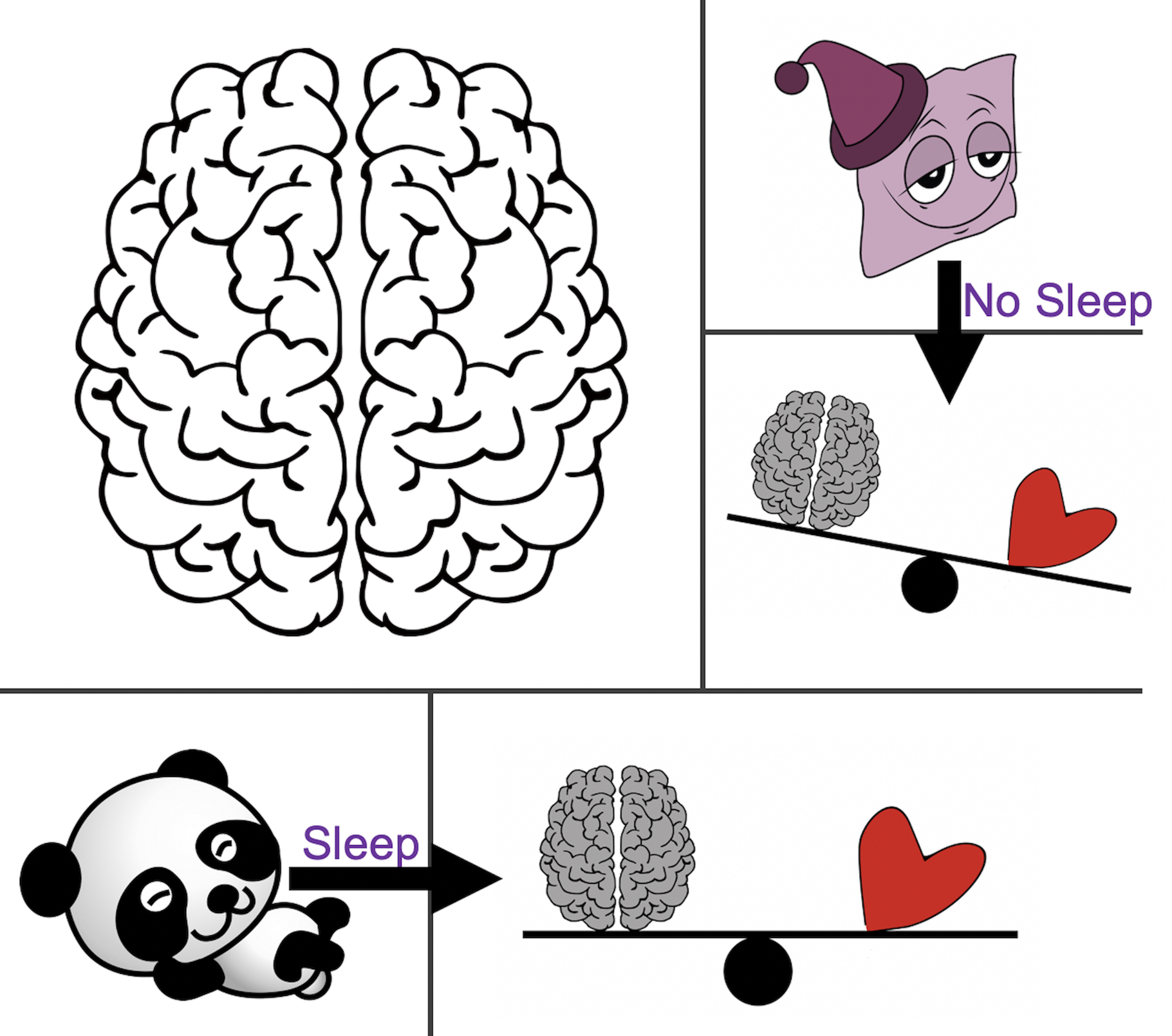
    Sleep deprivation may reduce attentional focus on positive materials.

    Moreover, sleep deprivation may influence emotional memory. For example, researchers gave participants a series of positive, negative, and neutral words to study. They found that those who were sleep deprived remembered fewer positive words than those who were well-rested (1). This suggests that sleep deprivation may reduce attentional focus on positive materials. Furthermore, it has also been found that connectivity between the amygdala and control center of the brain, the prefrontal cortex, is reduced when sleep deprived (2). Reduced feedback from the prefrontal cortex may lead to amygdala overactivity when sleep deprived.

    Sleeping through the night or over several nights gradually reduces one’s response to feel upset when recalling a negative experience.

    Considering that sleep deprivation impairs the ability to remember positive information, it is closely linked with depression. It is thought that obtaining sufficient sleep causes reductions in the emotional response to negative memories by reducing the response of the amygdala. In other words, sleeping through the night or over several nights gradually reduces one’s response to feel upset when recalling a negative experience. For example, after sleeping, you may be able to remember when your first pet passed away, or when you scored poorly on an exam, without feeling emotionally crippled by the memory. Sleep reduces emotional reactivity to memories.

    Experimental research found that sleep deprivation caused a near 30% increase in anxiety symptoms.

    In addition to an increased susceptibility to negative emotion, sleep deprivation is closely linked with anxiety. Indeed, recent experimental research found that sleep deprivation caused a near 30% increase in anxiety symptoms (3). For example, suddenly hearing a loud noise, such as an alarm, leads to fear as an initial reaction. You may feel your heart pound through your chest; your pupils may dilate; and you might look around to locate the noise. However, once you realize that it is only a test for the warning alarm systems, you will quickly resume to your work. However, if you’re sleep deprived, this process may happen a bit more slowly. It may take longer for your brain to process the fact that it’s only a warning alarm. Your increase in heart rate may persist, and you may feel anxious for longer than someone who is not sleep deprived. Thus, anxious feelings will likely be intensified when you are in a sleep-deprived state.

    Failing to sleep intensifies emotional responses at the neural level. Brain structures involved in emotional processing and cognitive control, particularly the amygdala and prefrontal cortex, are functionally altered by sleep deprivation. Although the life of a student is a demanding one, sleep should be prioritized in order to thrive and function with peak psychological health. So if you’re feeling crappy, try getting a good night’s sleep.

    References

    1.Walker, M. P., & van der Helm, E. (2009). Overnight therapy? The role of sleep in

    emotional brain processing. Psychological Bulletin, 135(5), 731–748.

    https://doi.org/10.1037/a0016570

    2.Yoo, S., Gujar, N., Hu, P., Jolesz, F. A., & Walker, M. P. (2007). The human emotional

    brain without sleep – a prefrontal-amygdala disconnect. Current Biology, 17(20), 1–8.

    https://doi.org/10.1016/j.cub.2007.08.007

    3. Anwar, Yasmin. “Chronically anxious? Deep sleep may take the edge off.” Retrieved from: https://news.berkeley.edu/2018/11/06/chronically-anxious/

  • DUIs and Driving While Sleep Deprived: The Dangerous Similarities

    Life as a student can be frustratingly busy at times. In the most difficult periods, you have to complete multiple assignments simultaneously, all the while attempting to maintain a moderately healthy social life. You want to ace your tests, maintain your friendships, and visit your family regularly; maintaining balance among these goals is understandably difficult. When life becomes hectic, you may decide to vary from your typical routine, and one of the health behaviors that is often neglected is sleep.

    Sleep deprivation is a common problem in the US. At least a third of adults don’t obtain more than 7 hours of sleep each night, and this is detrimental to physical, psychological, and cognitive health (CDC, 2016; Watson et al., 2015). Total sleep deprivation, or failing to obtain any sleep in a given night (i.e., “all-nighters”), is common in student populations; students have reported pulling all-nighters more than twice per month (Hershner & Chervin, 2015). This may be especially common during exam times. For example, students sometimes pull all-nighters in preparation for tests. However, these behaviors have consequences at the behavioral and neural level.

    Sleep deprivation tends to increase activation in a control center of the brain, the prefrontal cortex, and this is thought to reflect increased effort to maintain cognitive control (Wilckens, Erickson, and Wheeler, 2012). For example, focusing attention and avoiding distractions may require more effort than when well-rested. Thus, studying all night could lead to undesirable consequences. Not only may students not retain crammed information over long time periods (e.g., weeks, years), but they may also experience dangerous psychomotor impairments (Durmer & Dinges, 2005).

    Researchers have found that driving while sleep deprived is statistically equivalent to driving with a blood alcohol content level of being legally intoxicated.

    Psychomotor impairments related to sleep deprivation directly affect driving ability. Researchers have found that driving while sleep deprived is similar to driving while under the influence. In fact, it is statistically equivalent to driving with a blood alcohol content level of being legally intoxicated. Those who drive while sleep deprived and those who drive while drunk have trouble maintaining their place on the road. They tend to accidentally cross into other lanes and look away from the road more often. Not surprisingly, the injury rate of motor crashes related to drowsy driving and drunk driving is similar.

    As students, we are often warned about the dangers of drunk driving and distracting driving (e.g., texting, talking on the phone), but there is little attention given to the dangers of driving while sleep deprived. The evidence is clear in regards to the importance of obtaining enough sleep for general health and cognitive function. However, if you must miss sleep, please refrain from driving. Instead, call a friend or call another ride. Just as you wouldn’t drive while under the influence, don’t drive while sleep deprived.

    References

    Centers for Disease Control and Prevention. (2016). 1 in 3 adults don’t get enough sleep. Atlanta, GA: US Department of Health and Human Services. Retrieved from https://www.cdc.gov/media/releases/2016/p0215-enough-sleep.html

    Durmer, J. S., & Dinges, D. F. (2005). Neurocognitive Consequences of Sleep Deprivation. Seminars in Neurology, 25, 1996. https://doi.org/10.1055/s-2005-867080

    Hershner, S. D. & Chervin, R. D. (2015). Causes and consequences of sleepiness among college students. Nature and Science of Sleep, 2014(6), 73–84.

    Watson, N. F., Badr, M. S., Belenky, G., Bliwise, D. L., Buxton, O. M., & Buysse, D. (2015). Joint consensus statement of the American Academy of sleep medicine and sleep research society on the recommended amount of sleep for a healthy adult: methodology and discussion. Sleep, 38(6), 591–592.

    Wilckens, K. A., Woo, S. G., Kirk, A. R., Erickson, K. I., & Wheeler, M. E. (2014). Role of sleep continuity and total sleep time in executive function across the adult lifespan. Psychology and Aging, 29(3), 658–665. https://doi.org/10.1037/a0037234