Category: Articles

  • The Ransomware Trust Paradox: How and Why Cybercriminals Want You To Trust Them

    The Ransomware Trust Paradox: How and Why Cybercriminals Want You To Trust Them

    Ransomware is a cybercrime idea as old as the computer itself. The idea is simple: break into a victim’s computer, encrypt all their files, and demand payment for decryption. That being said, the social dynamics at play during this interaction are anything but simple. Generally speaking, the cybercriminal has one goal: to get paid. In order for the victim to pay, they must trust that upon payment they will get their files back. This simple dichotomy gives rise to the Ransomware Trust Paradox

    The Paradox

    The Ransomware Trust Paradox, an idea coined by Max Smeets in April 2025, refers to the idea that inherently untrustworthy individuals or groups engaging in illegal access to often sensitive data must convince their victims of their trustworthiness to meet their ends (Smeets, 2025). This shows a marked difference between ransomware and other forms of both digital and conventional crime. Think about a bank robbery: both the robber and the ransomware operator have the same goal, to make money, but the bank robber is never trusted by the victim. Rather, they achieve their ends by force. What makes this idea so fascinating to me is the lengths ransomware groups will go to to secure trust from victims. To get an idea for this, let’s first look at the first ransomware, and see what is done differently today.

    The First Ransomware

    The story of the first ransomware is an interesting one, to say the least. It was created by Joseph Popp, an evolutionary biologist from Harvard working on AIDS research in the 80s. The malware was distributed by mailing floppy discs to attendees to a WHO conference on, believe it or not, AIDS research (O’Kane et al., 2018). Popp was quickly found and arrested, and while no one knows why he did this, his idea led to the creation of an entirely new criminal enterprise in ransomware. In premise, Popp’s ransomware worked on the same basic principle of ransomware today: infect a computer, encrypt everything, and demand payment for it back, but there were several key differences between Popp’s ransomware and modern ransomware. For one, his ransom note (the message telling victims what is happening and what they should do about it) was primitive and nowhere near visually appealing. On top of that, payment was asked to be sent to a PO Box in Panama (O’Kane et al., 2018). There was no clear indication of who the money was being sent to, or how sending cash to Panama would allow one to get their files back. Put yourself in the shoes of a researcher in the 80s. You probably wouldn’t pay in this situation, right? 

    Ransomware Today

    These days, there are plenty of ransomware groups following in Popp’s footsteps taking various approaches to gaining trust. One ransomware group, Darkside, states plainly in their ransom note that they are here to make money, and if they did not return on their promise to decrypt their victim’s data, no one would pay them going forward (Smeets, 2025). This approach is backed by psychology. Studies have shown that, when marketing to a customer, companies that state their intentions plainly are more likely to gain trust (Dayal, 1999). This extends to the ransomware domain because ransomware operators are also trying to gain trust to receive payment. Another group, BlackCat, engages in anonymous “press releases” to clear up rumors about themselves. In this instance, various news outlets had misattributed attacks to BlackCat, and their “press release” attempted to clarify that they were not making any purely malicious attacks, their sole purpose was to make a deal and return the encrypted data (Smeets, 2025). Another vector of trust groups have exploited rests in User Interface (UI) design. Studies show that just changing the UI in a payment portal increased the number of users who shared their contact information by 31.3% (Yashimi, 2020). This demonstrated that interfaces based on familiar items or other interfaces makes people more likely to give up information (Yashimi et al., 2020). During Conti’s time operating as a ransomware group, they exploited this by using a professional looking ransom note, and sleek payment portals that made victims feel like they were completing a legitimate business transaction. There are many other strategies too, including providing 24/7 customer support, and referring to victims as “customers” (Smeets, 2025).

    How Much Damage Does Ransomware Cause?

    While it is hard to know exactly how much ransomware is costing year over year, many estimates exist. One estimate from the FBI placed ransomware at a market worth of 200 million USD, with one ransomware family (Cryptowall) totalling 18 million USD in losses in the US alone (O’Kane et al., 2018). How much ransomware operators are asking for in one attack varies by the operator and sometimes by the estimated worth of data encrypted. One company, Symantec, put average ransoms around 679 USD, with some as large as 6285 USD (O’Kane et al., 2018). This of course varies with the price of bitcoin, which is the most popular way for operators to demand payment (Huang et al., 2017). But who is paying these large ransoms? Turns out that, according to a study by Huang et al., 74.5% of Cerber (another family of ransomware) targets were residential. Because these numbers were based on internet service providers, this means that most targets used residential routers, so likely households. While the study is limited in scope due to these numbers being only related to one family of ransomware, these numbers are striking. While only somewhere between 1% and 3% of victims pay the ransom (O’Kane et al., 2018), one can easily see how lucrative the ransomware business is. 


    Overall, the Ransomware Trust Paradox is a theory that I find fascinating, the idea that criminal enterprises engaging in explicitly untrustworthy activities are exploiting trust to meet their ends is something never seen in the criminal world before the introduction of ransomware. Tracing ransomware from its roots reveals the importance of this paradox in the operations of modern ransomware groups, and helps us think about how to better defend against them. Going forward, individuals and corporations can use this idea to make better value judgments when they are hit by ransomware, and better understand how to defend themselves against it. 


    References

    Dayal, S., Landesberg, H., & Zeisser, M. (1999). How to build trust online. Marketing Management, 8(3), 64. Retrieved from https://www.proquest.com/scholarly-journals/how-build-trust-online/docview/194194113/se-2

    Huang, D. Y., Aliapoulios, M. M., Li, V. G., Invernizzi, L., Bursztein, E., McRoberts, K., Levin, J., Levchenko, K., Snoeren, A. C., & McCoy, D. (2018, May 1). Tracking Ransomware End-to-end. IEEE Xplore. https://doi.org/10.1109/SP.2018.00047

    O’Kane, P., Sezer, S., & Carlin, D. (2018). Evolution of ransomware. IET Networks, 7(5), 321–327. https://doi.org/10.1049/iet-net.2017.0207

    Shutterstock. (2024). Ransomware. In Ransomware explained: How it works and how to remove it.

    Smeets, M. (2025). The Ransomware Trust Paradox. https://virtual-routes.org/wp-content/uploads/2025/04/Virtual-Routes-Pharos-Report-Series-No.-2.pdf

    Yashmi, N., Momenzadeh, E., Taghipour Anvari, S., Adibzade, P., Moosavipoor, M., Sarikhani, M., & Feridouni, K. (2020). THE EFFECT OF INTERFACE ON USER TRUST; USER BEHAVIOR IN E-COMMERCE PRODUCTS. Proceedings of the Design Society: DESIGN Conference, 1, 1589–1596. https://doi.org/10.1017/dsd.2020.103

  • Has Plastoline made gasoline renewable and free?

    Has Plastoline made gasoline renewable and free?

    @naturejab is a content creator who’s claimed to be able to recycle plastic into a fuel dubbed “plastoline” using solar-powered microwave pyrolysis for free. Having amassed over 76 million views on his flagship TikTok video1(that is, the one pinned to the top of his account), Julian Brown has his share of both fervent supporters who claim he’s revolutionizing the fuel industry and needs to hide from the government(see comment section), and skeptics who claim he’s “selling snake oil”.2

    @naturejab

    Making Gasoline for Free by Using Plastic and Solar Energy 🤙⛽️

    ♬ original sound – Julian Brown

    Being a chemist, I’m not the type to take him for his word, that is, without the presence of reproducible analytical data confirming that he’s actually made what he says he’s made (which is nowhere to be found on any of his social media or on his personal website). But with plastic waste harming the ocean and planet at levels prompting international collaboration,3 part of me really wanted to believe that he had found a novel solution. 

    This article jabs into the nature of Brown’s venture by analyzing this pinned video in comparison with the literature surrounding the science: both what is promising about his project, and where his promises fail. And we get to learn some organic chemistry along the way!  

    So where does gas typically come from?

    Gasoline and other fuels are derived from distillation, the process of heating a mixture in order to separate compounds based on molecular weight, of natural gas and crude oil (the gas and oil that comes straight out of the ground). Natural gas and crude oil are mixtures of molecules primarily comprised of carbon and hydrogen (aptly referred to as hydrocarbons). Heating crude oil until vaporization in a specialized distillation apparatus (like the one shown below), allows it to cool and condense into its constituent parts, more specialized hydrocarbon mixtures.5 For example, gasoline is one of these mixtures, consisting of hydrocarbons between 4 and 12 carbons in length.4

    Diagram of a fractional distillation column from chemistry textbook
    Fractional Distillation Column, sourced from OpenStax Chemistry5

    What does this have to do with plastic?

    Many of the molecular mixtures separated out of crude oil can be (almost) used as fuel in various contexts. However, much of the mixture is separated into something that, well, can’t. Chemists probably worked day and night to try to turn this waste product into something profitable for their companies, but it wasn’t until 1951, when two chemists from Phillips Petroleum discovered a relatively easy way to transform propene into polypropylene, that the material plastic was born.6

    The (basic) chemistry of plastics

    We can describe plastic as a kind of molecule called a polymer (from the Greek poly-, meaning many, and –mer, meaning part). In the case of polypropylene, the “-mers” or as we say in chemistry, monomers (mono meaning one, and -mer also meaning parts) are propene, derived from a petroleum waste product: the gas propane.

    Basic reaction scheme describing how propane transforms into polypropylene

    Using some chemical sorcery beyond the scope of this article (but definitely worth looking into if you’re interested), we can prompt these monomer subunits to link together to form massive polymers—in our case, chains of hydrocarbon monomers from 50-1000 monomers long, creating the class of materials we know as plastics. 

    Many chemistry careers later, we have a wide variety of molecules derived from these original hydrocarbon chains that are used as materials in clothes, food packaging, cars, toys, electronics—you name it! And in context, this is seemingly awesome. We now have a material that can be used in both durable and delicate creations, one that won’t succumb to the elements, one that can last for hundreds of years7…. wait a second…

    The Problem with Plastics

    Millions of tons of plastic have been created, and the millions that have been discarded following industrial and consumer use are not readily biodegradable. This has unfortunately led to harming of both aquatic and terrestrial life, including, as scientists have discovered, humans.8

    So how do we get rid of them?

    To avoid killing the planet and everything on it, scientists got to work developing methods to break down these persistent polymers.9 Remember how when we originally created this plastic, we created chains of hundreds to thousands of monomers? Well, what if we took the plastic polymer, and heated it enough to vaporize and break down into smaller chains, made of only a few carbons? 

    This is the idea behind 

    Pyrolysis

     A synthesis of the Greek prefix “pyr-” meaning heat or fire, and “-lysis” meaning “loosening”. 10 And in our case, we’d be “loosening” some of the bonds in this polymer by applying energy to them through heat, creating smaller hydrocarbon chains. So simply burning the plastics already dumped into landfills seems like it could be a solution to combat waste. Unfortunately, this has been shown to create persistent, toxic, products adding to the environmental harm of plastic.11

    But under a vacuum, harnessing and carefully distilling crude hydrocarbon mixtures (like we did to the crude oil earlier) created by pyrolysis has been shown to yield fuel-like compounds  (4-12 carbon hydrocarbons).12

    And although the technology has not been applied on an industrial scale as of yet, using a continuous reactor setup using microwave radiation instead of traditional heating methods has been shown to be a less energy-intensive (and thus better for the environment) way to break down a variety of plastic polymers in this way.13 And funnily enough, continuous microwave reactor pyrolysis is the technique Julian Brown uses to create Plastoline– his plastic-derived fuel. 

    The Plastoline Process

    Upon inspection, Brown’s process appears to be legitimate– that is, it appears to align with continuous microwave pyrolysis reactors shown in scientific literature13.

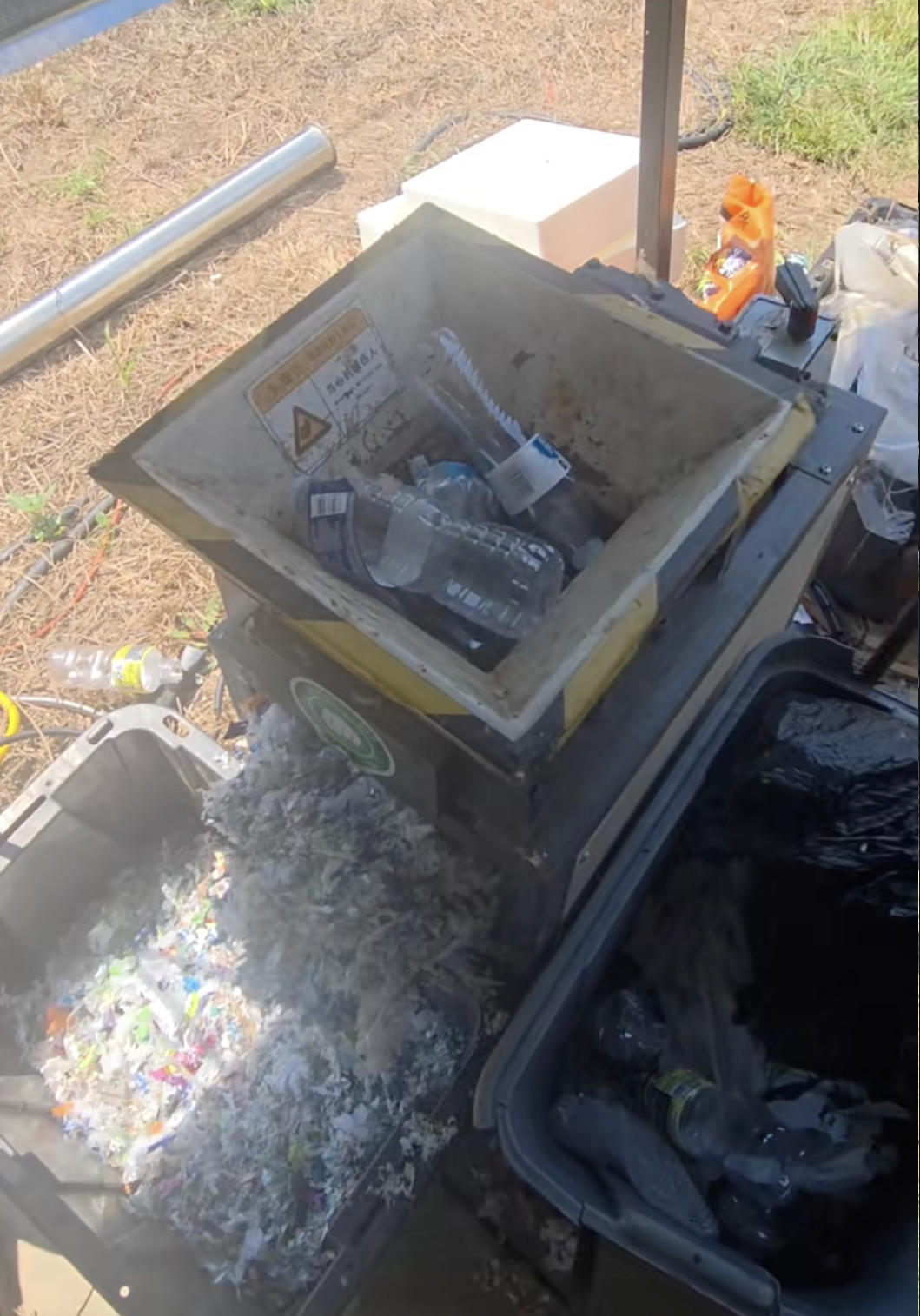
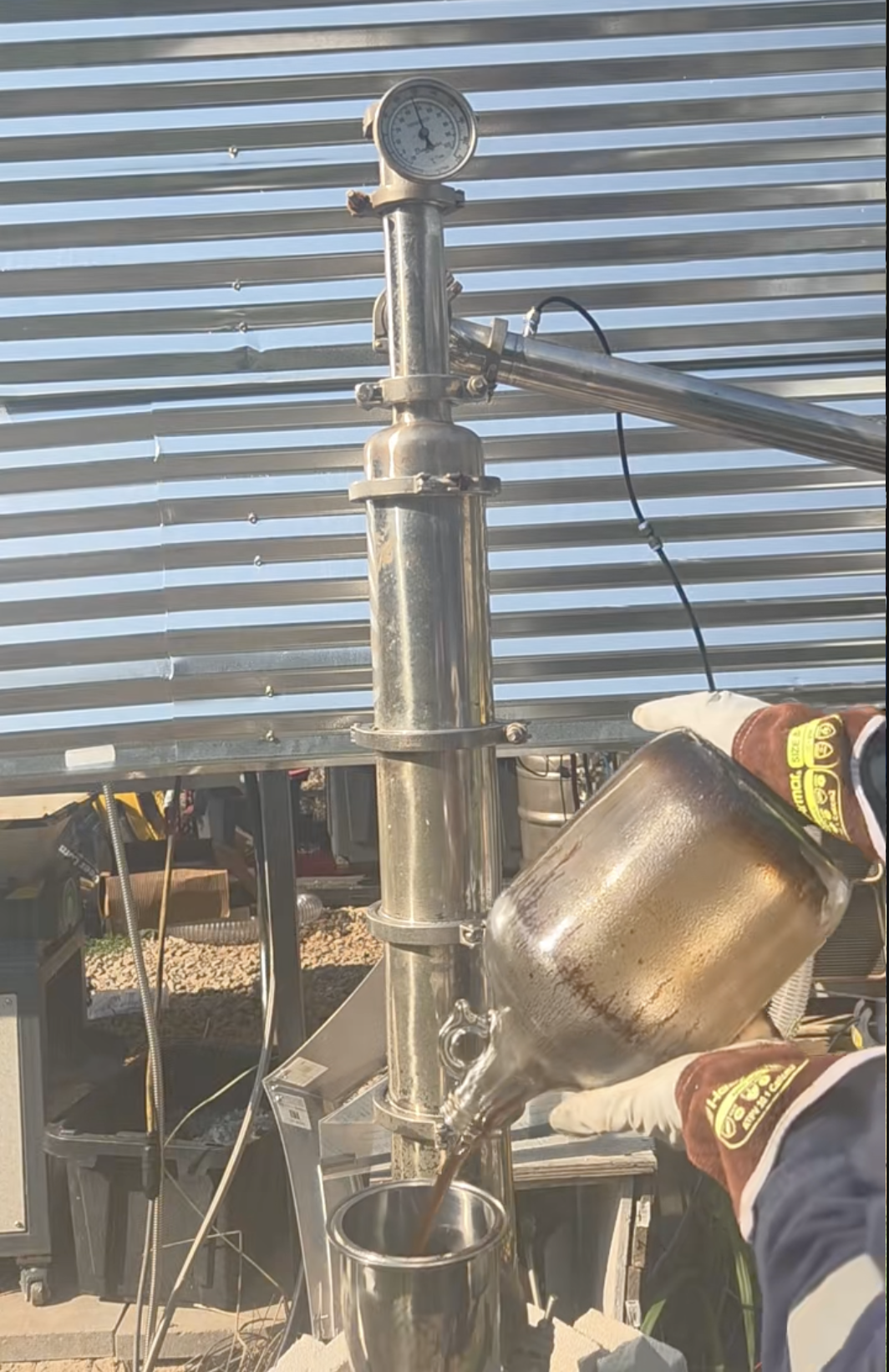
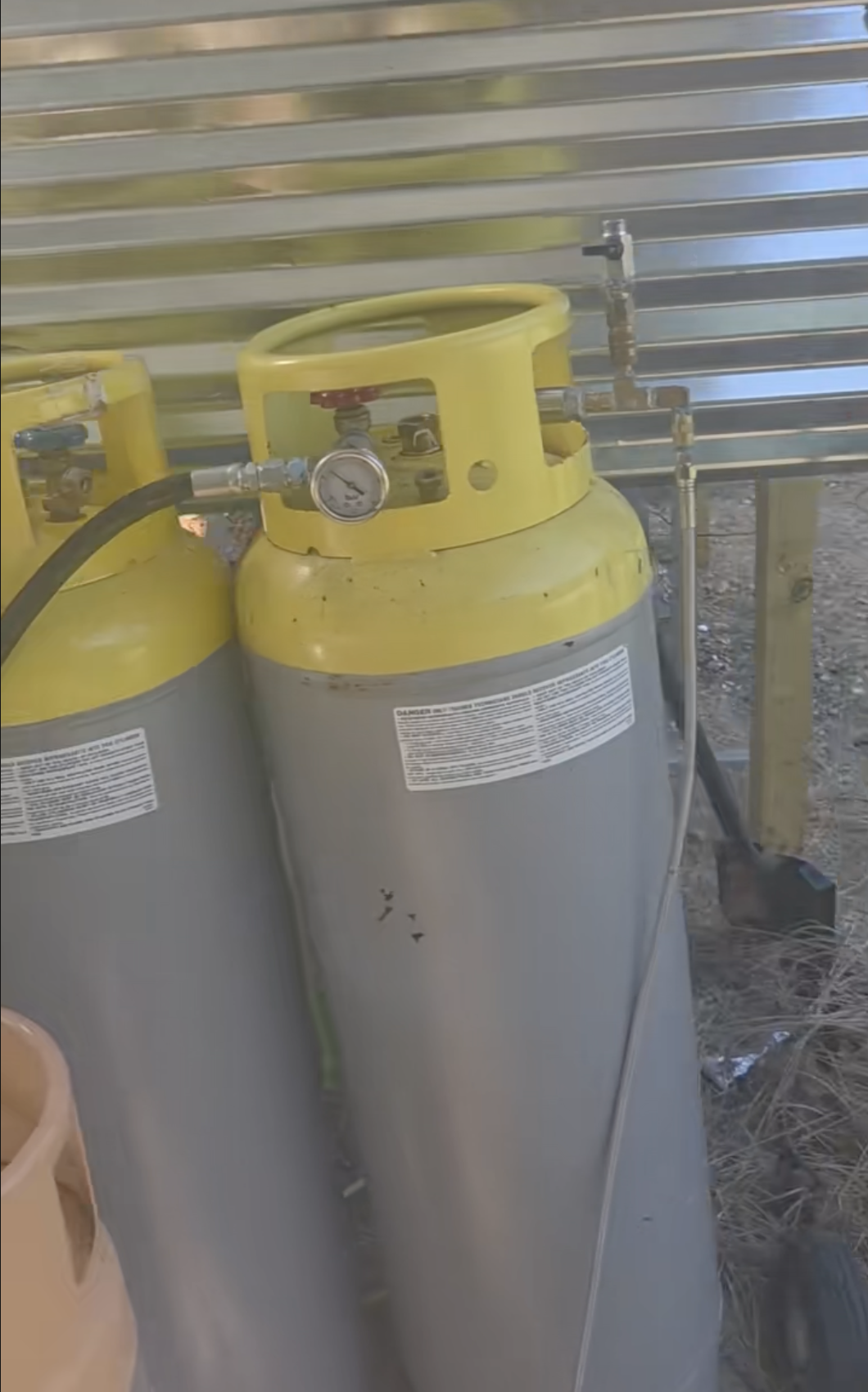
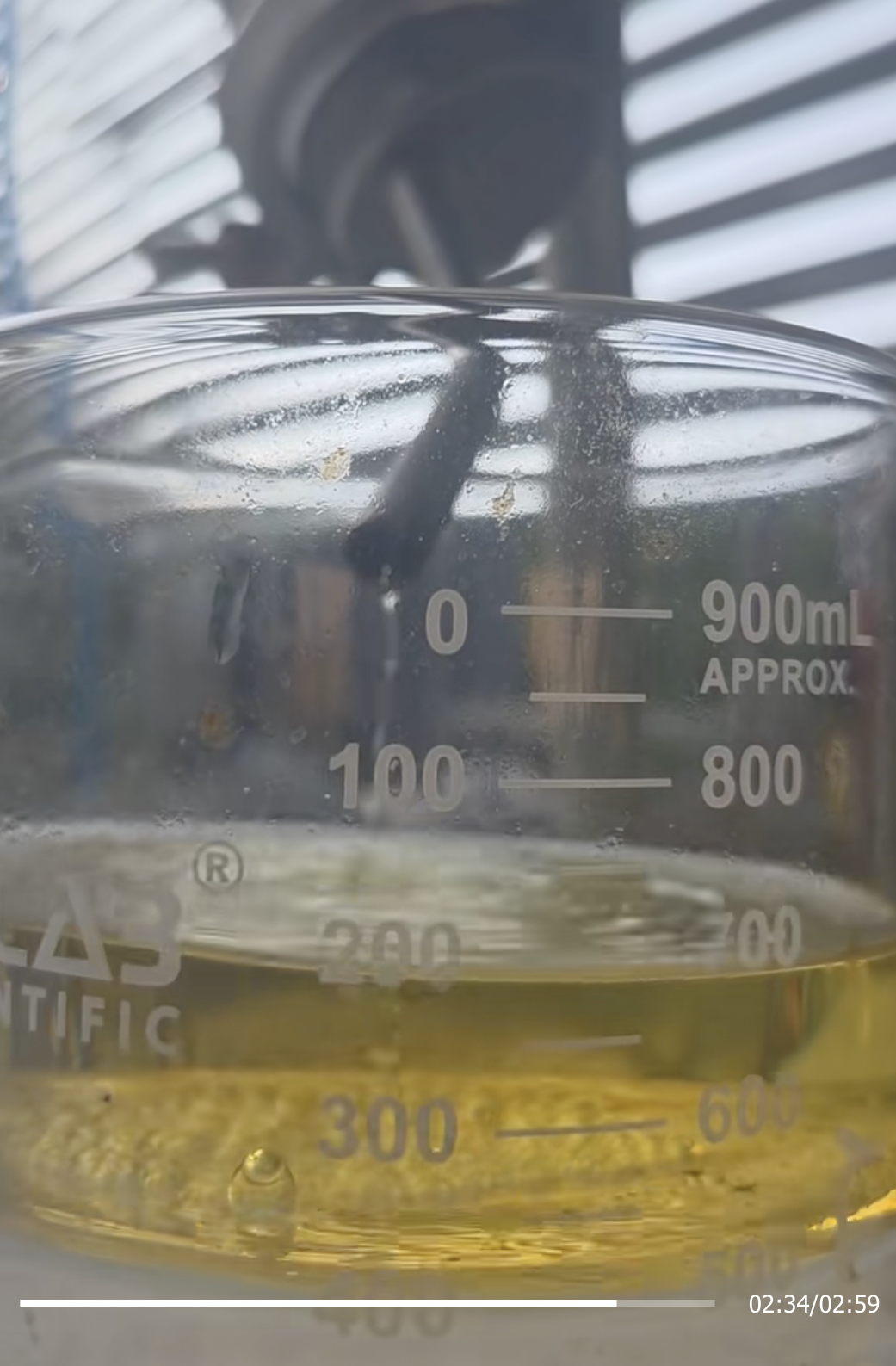
    From left to right, these frames I grabbed from the video1 illustrate:

    1. the manual breakdown of a variety of plastic  materials
    2. their addition to the reactor and subsequent vaporization
    3. collection of crude material from under vacuum (the pump is displayed beneath his right hand)
    4. distillation of crude material
    5. using propane(??)(non-renewable natural gas, -1 environmentally friendly points)
    6. and distilling some liquid over (at an unknown and unshown temperature)

    What is the quality like?

    When tested with an ‘octane rater’ on camera, with a model I found on Amazon14 (with zero reviews), the product receives an octane rating of 110. Assuming then, that this is in fact gasoline, that’s pretty great. Octane rating is a given fuel’s resistance to spontaneous combustion under high temperature and pressure, where a higher rating means a fuel is less likely to spontaneously combust and can thus be used in nicer, more powerful engines.15

    Plastoline? Or Plastolies?

    So is Brown’s Plastoline the future of fuel? To be honest, I don’t think so, at least not yet. While his setup appears promising and aligns at least physically with those appearing in the scientific literature, the lack of analysis of the resulting product means he could just be lying, as much as I personally don’t want to believe that. Apart from that, we are missing a lot of data that could tell us about the energy and chemical efficiency of this project, i.e. if it’s a viable solution for refining fuel from plastic in an environmentally-friendly manner. For example, we don’t know how much plastic-burnt waste product is being leaked into the atmosphere around his setup.

    The gasoline you put in your car also contains many additives meant to increase the lifespan of your engine and help it run more smoothly4, which Plastoline, as a purported refined hydrocarbon mixture, does not contain (but possibly could in the future, with some modifications).

    As a human being, I’m excited by the work that Brown is doing (along with millions of others), and I think it’s super cool that he’s created this whole setup, including welding his own reactor together, entirely in his parents’ backyard. More recent work of his shows him modifying minivans with jet engines to get a vehicle to supposedly run off of Plastoline, which is at the very least, really entertaining. But as a scientist, until I see some legit analysis come out of this project, I have to remain skeptical. 

    Citations

    1. naturejab. (2023, June 7). TikTok video [Video]. TikTok. https://www.tiktok.com/@naturejab/video/7548988444844870942?is_from_webapp=1&sender_device=pc&web_id=7519262020723688973
    2. Reddit. (2013, March 15). Is naturejab on YT real? Reddit. https://www.reddit.com/r/chemistry/comments/1d4jf3c/is_naturejab_on_yt_real/
    3. United Nations Environment Programme. (n.d.). Plastic pollution. https://www.unep.org/plastic-pollution
    4. National Center for Biotechnology Information. (n.d.). Gasoline hydrocarbons. In Chemistry, manufacturing, and use of gasoline. https://www.ncbi.nlm.nih.gov/books/NBK594140/#:~:text=The%20typical%20composition%20of%20gasoline%20hydrocarbons%20is:,*%20Upper%2Dcylinder%20lubricants%20*%20Detergents%20*%20Dyes
    5. OpenStax. (n.d.). 20.1 Hydrocarbons. In Chemistry 2e. https://openstax.org/books/chemistry-2e/pages/20-1-hydrocarbons
    6. American Chemical Society. (n.d.). Polypropylene: A landmark in chemistry. https://www.acs.org/education/whatischemistry/landmarks/polypropylene.html
    7. American Chemistry Council. (2010, March 17). History of plastics [Archived page]. https://web.archive.org/web/20100317004747/http://www.americanchemistry.com/s_plastics/doc.asp?CID=1571&DID=5972
    8. Welden, N. A. (2020). The environmental impacts of plastic pollution. In M. J. Castaldi (Ed.), Plastic waste and recycling: Environmental impact, societal issues, prevention, and solutions (pp. 195–222). Academic Press. https://doi.org/10.1016/B978-0-12-817880-5.00008-6
    9. Ellis, R. J., & El-Shall, M. S. (2020). Pyrolysis of polymers: Mechanisms and products. In M. J. Castaldi (Ed.), Polymer pyrolysis: Fundamentals and applications (pp. 123–145). Elsevier. href=”https://www.sciencedirect.com/science/chapter/edited-volume/pii/B9780128178805000086″>https://www.sciencedirect.com/science/chapter/edited-volume/pii/B9780128178805000086
    10. Zhang, H., & Wang, X. (2019). Catalytic thermal degradation of plastics. In Y. Sun & T. Wang (Eds.), Advanced polymer recycling (pp. 201–225). Elsevier. https://www.sciencedirect.com/science/chapter/edited-volume/pii/B9780128131404000133
    11. Online Etymology Dictionary. (n.d.). Pyrolysis. https://www.etymonline.com/word/pyrolysis
    12. Nature Catalysis. (2025). Sustainable chemical recycling of plastics. Nature Catalysis, 8(2), 101–110. https://www.nature.com/articles/s44407-025-00015-8
    13. Nature Scientific Reports. (2024). Plastic waste conversion via catalytic pyrolysis. Scientific Reports, 14, Article 71958. https://www.nature.com/articles/s41598-024-71958-3
    14. Oktis. (n.d.). Oktis portable analyzer: Instructions and product info. Amazon. https://www.amazon.com/%D0%BE%D0%BA%D1%82%D0%B8%D1%81-Oktis-Portable-Analyzer-Instructions/dp/B0FJ6DV2PF
    15. Kolb, D. (2010). Polymer recycling techniques. JSTOR, 27(2), 45–63. https://www.jstor.org/stable/44468563?seq=3
  • The Mystical World of Gluten Free Labeling – is it Lying?

    Odds are, as a consumer you’ve likely glanced at a food label in your lifetime. Though, for some, more than a quick glimpse is necessary, as the intricate details can be the difference between health or illness. This really applies to any allergy, as ingredients and wording can easily veil allergens. Specifically, this can be a regular practice for those avoiding gluten, as just a microscopic amount can have macroscopic repercussions. 


    What is gluten?

    Gluten is a protein found in wheat, primarily present as gliadin and glutenin. Synonymous proteins are present in rye as secalin, barley as hordein, and oats as avenins (Biesiekierski, 2017). Gluten is used as an umbrella term to describe each of the proteins, as each behave and interact in similar ways. Most commonly found in breads, pastas, and other dough based products, gluten acts as a binding agent. This means its presence impacts texture, elasticity, and even taste (Biesiekierski, 2017). These factors cause gluten to be found in less obvious products like seasonings, dressing, and even the remoistenable seal of an envelope. 


    To be or to not be free of gluten

    With the possibility of gluten being present in so many different forms, tracking its presence is crucial for those trying to avoid it. As declared by the Food and Drug Administration, for something to be labeled gluten free it must meet specific criteria to be considered not misbranded. The official ruling defines ‘gluten free’ as an item that doesn’t have a gluten containing grain, is not derived from a gluten containing grain, and an item with less than 20 parts per million of gluten (ppm) (Food and Drug Administration, 2013). The parts per million decree is pertinent when a gluten containing grain has been specifically adapted to contain not gluten. It essentially means that for every 1,000,000 grams of a substance, less than 20 of them are able to actually contain gluten. This microscopic amount pales in comparison to a single bread crumb or speck of flour, causing issue to another form of gluten possession, cross contamination. 


    Items naturally free of gluten such as meat or rice cannot confidently be deemed gluten free due to cross contamination. Cross contamination occurs when one substance is unknowingly transferred to another, in this case that substance is gluten. Transfer of gluten from a containing substance to supposedly gluten free product can happen at any point in the development process of a product (Damasceno et al., 2024). A single speck of wheat flour would be enough to contaminate a gluten free product. This means shared equipment, such as a conveyor belt holding glutenous food being used on a gluten free product could easily result in the surpassing of the 20 ppm maximum.


    External Certifications

    Beyond just an FDA approved gluten free marking on a product, there are many different types of certifications that may each follow their own thresholds for what is considered gluten free. Globally, these 3rd party certification processes vary in their guidelines to be included, with different organizations such as Beyond Celiac’s ‘Gluten-Free Certification Program’, Gluten Intolerance Group’s ‘Certified Gluten Free’ Stamp, or National Celiac Association’s gluten free certification. Each of these listings require different ppm of gluten, with one even having a maximum of 5 ppm, which is significantly lower than the FDA regulation (Dennis, 2018). The certifications can provide more comfort to consumers avoiding gluten, as they require more extensive testing of the products to confirm their gluten ppm. While the FDA decree sets limits for a company to legally consider its product gluten free, it does not necessarily require the manufacturer to test the product to confirm that (Thompson & Simpson, 2014). 


    How to Read a Label – A Guide from First Hand Experience

    As someone with Celiac Disease, with its only treatment being a strict gluten free diet, over the past 9 years of my diagnosis I’ve learned a few tricks along the way. Most notably, I would say being a conscious consumer has been the most impactful thing for my safety when selecting food items. If a product does not have a specific certification, meaning it is  just generally labeled gluten free or has no label at all, my first step is to read the ingredients. In my experience, there are a few specific keywords to look out for. In the process of scanning an ingredient list, if I notice words like wheat, barley, malt, or rye, off the bat the product can be considered not gluten free. Additionally, gluten can be hidden in certain ingredients like corn syrups, oats, yeasts, and some seasonings. These items aren’t inherently glutenous, but particular processes may make them unsafe. 


    In some cases, a search online is beneficial for me as well. Frequently, even though a label does not guarantee an item to be gluten free, the company will disclose on their website that their products are free of gluten. Oftentimes, the company will not officially disclose anything due to concern for cross contamination. The actual extent to which this is possible though varies by company. This is where the list at the bottom of a product saying ‘may contain wheat’ is notable. For some, ‘may contain’ could mean direct use of shared equipment, but for others it’s a disclaimer that the factory also makes gluten items. Research or contact with the company is sometimes the best option as it clarifies this uncertainty, and allows for a decision by the consumer depending on the extent of the allergy/sensitivity. Lastly, an item cannot just be deemed gluten free if it lacks a note saying it ‘contains wheat’, as that does not ensure it does not contain barley or rye, which are also gluten containing grains. 


    References

    Biesiekierski, J. R. (2017, February 28). What is gluten? – biesiekierski – 2017 – Journal of Gastroenterology … Wiley Online Library. http://onlinelibrary.wiley.com/doi/10.1111/jgh.13703/full

    Damasceno, R. P. B., Zandonadi, R. P., Mendes, M., Cunha Junior, L. C., Raposo, A., Teixeira-Lemos, E., Chaves, C., & Farage, P. (2024, April 18). Risk of gluten cross-contamination due to food handling practices: A mini-review. MDPI. https://www.mdpi.com/2072-6643/16/8/1198

    Dennis, M. (2018). Third Party certification of Gluten Free Foods. BIDMC of Boston. https://www.bidmc.org/centers-and-departments/digestive-disease-center/services-and-programs/celiac-center/celiacnow/nutrition-and-the-gluten-free-diet/label-reading/third-party-certification-of-gluten-free-foods

    Food and Drug Administration. (2013, August 5). Food Labeling; Gluten-Free Labeling of Foods. Federal Register – National Archives. https://www.federalregister.gov/documents/2013/08/05/2013-18813/food-labeling-gluten-free-labeling-of-foods

    Thompson, T., & Simpson, S. (2014, October 1). A comparison of gluten levels in labeled gluten-free and certified gluten-free foods sold in the United States. Nature News. https://www.nature.com/articles/ejcn2014211 

  • How To Prove That You Are Psychic

    Throughout history, many people have claimed to be able to perform amazing feats that defy science and logic. Such claims continue today in many different flavors. There are claims of dowsing, psychic spoon bending, telekinesis, miracle healing, telepathy, x-ray vision, contacting the dead, electricity detection, cloud moving, and much, much more. When a person claims to have amazing abilities, usually one of two things happen. The person’s story is laughed off or ignored by the public, or they are seen as legitimate, gain a significant following, and make lots of money from public demonstrations of their powers. Both scenarios have an interesting common element: A deliberate exclusion of science. Many news reports that cover alleged psychics, for instance, maintain a skeptical tone but avoid mentioning the fact that psychic powers have not been proven to exist. On the opposite end of the public belief spectrum, people who fully believe in the reality of superpowers brush aside little things like the laws of physics and are always ready with an explanation of how their favorite psychic is not obligated to prove that their powers are real. This phenomenon of silence on the intersection of science and superpowers begs the question of how a person with superpowers could scientifically prove them to be real.

    Luckily, we don’t have to speculate about this topic. There is a clear pathway for an individual with psychic or paranormal powers to prove themselves and gain scientific acceptance of the existence of their abilities. If you are such an individual, read on for a list of dos and don’ts that will help you on your quest for scientific acceptance.

    Do work with experts to investigate your ability

    One of the harshest realities of proving the existence of superpowers is that public acceptance means nothing. Large numbers of people routinely fall for fake psychics, political propaganda, and Nigerian prince emails. The number of people who believe in your powers does not constitute strong evidence in your favor. What you actually need is the acceptance of experts who have education and experience in a field of study that is closely related to your claims. Willingness to have an expert test your powers will earn you goodwill with the scientific community, and participating in an experiment designed by someone with knowledge of the workings of science increases the likelihood of acceptance of your powers if you pass the test. If you are telekinetic or psychic, go find a physicist or psychologist and ask them about testing your powers. If you can alter the brightness of a lightbulb, approach an expert in electricity. If you have the power to make someone urinate with your mind (yes, a person has claimed to have this ability), ask a doctor or medical researcher. Expertise comes in many forms; professional magicians are a frequently overlooked group of experts on superpowers. Since magicians make their living by fooling people, they are experts in distraction, deception, and performing the seemingly impossible on command. If you can demonstrate an ability that a magician cannot replicate with magic tricks, it greatly lessens the likelihood of fraud on your part.

    Now, most individual scientists and magicians have busy schedules and may not be available to test your claims. However, there are a few professional groups that hold contests or challenges related to unusual abilities (Wikipedia Contributors 2025). Generally, the way the challenges work is that if someone is able to demonstrate superpowers under scientific testing conditions and passes both a preliminary demonstration and a final test, they will win scientific recognition of their ability and a monetary prize. One of the most prominent is held by the Center for Inquiry Investigations Group. The CFIIG’s Paranormal Challenge invites people with superpowers to participate in a two-part test of their abilities and offers a $500,000 prize to winners (Kreidler 2012). (A smaller $5,000 amount is also available to anyone who refers a winner to the CFIIG.) To accept the challenge, an applicant simply fills out an online application. Once the application is received, the CFIIG contacts the applicant to ask for further details and negotiate a testing protocol that both parties can agree on.

    Don’t refuse to be tested by skeptics

    The inverse of the first piece of advice is obvious, and yet it is frequently ignored. Don’t refuse tests of your powers! Science relies on repeated testing to prove the existence of any particular phenomenon, so anything that cannot be tested will not be accepted by science. This is a fact that most public psychic mediums choose to ignore. (James Randi, a famous magician, once offered a million-dollar prize to psychics who could prove their powers to him, but the most famous psychics of his day, including Uri Geller and Sylvia Browne, never took up the challenge [Higginbotham 2014].) Since a person who publicly claims to have amazing powers has nothing to lose and much to gain by getting tested, refusal makes one look suspicious at best and intentionally deceptive at worst.

    Here’s a quick primer on how an experiment works. The gold standard for many areas of science is replicable experiments that are both controlled and double blinded. A “control” in an experiment is a factor that is kept the same throughout the test; it helps establish that the test procedure is working properly. (You may remember the “C” bar on a COVID-19 at-home test, which signaled that the test was invalid if it did not appear.) In addition, the use of experimental controls helps reduce the effects of chance and any variables other than the one being tested. For example, in a test of the ability to move clouds across the sky, a participant would focus on a single cloud and move it to a certain part of the sky or near a particular landmark that had been decided on before the start of the test. The researchers could keep track of the wind speed and weather at the location of the cloud mover and schedule the test for a date when low winds and no significant changes in weather are forecasted.

    A double blinded experiment is one in which neither the participant nor the researcher knows crucial information about the condition or treatment that the participant receives until after the test ends. Blinding is very important in scientific research, as there are many areas of study in which the expectations of the people involved can bias results and reduce the accuracy of experiments, including paranormal research. For a person who claims to be able to predict future events, such as knowing the next playing card in a deck, an example of double blinding would be measures to keep the deck hidden and random. The researcher could replace old cards and shuffle the deck before each trial, then remove a new card from the deck and present it to the participant facedown on a table. The participant would then predict the card’s number and suit without having any information about it. Because the researcher would also be unable to see the card, they would not be able to accidentally give away any hints via body language, facial expressions, or other gestures. Furthermore, the constant replacement of cards and reshuffling of the deck would mean that the participant would not be able to make guesses that were informed by the knowledge of which cards had already appeared. In a scenario like this one, correct predictions are much more likely to be due to a genuine paranormal skill than in a situation in which, say, the cards weren’t replaced and the participant could have made accurate predictions via card counting.

    Finally, all established facts in science must be replicable. This criterion is simple: If an experiment produces certain results, and someone else later runs the same experiment with the same protocol, it should produce similar results to the original. Groups of studies are more reliable than single ones, since the effects of chance and poor experimental design become diluted as the topic is studied more. Moreover, the replication of results by people who are unconnected to the original researcher reduces the likelihood of experimenter bias. Replicability is why many paranormal contests ask participants to successfully complete two tests to win. If a participant is able to demonstrate a superpower multiple times on demand in well-designed experiments, researchers can be significantly more confident in deeming the results to be truly due to the claimed power and not a statistical fluke.

    Demonstrating a willingness to complete scientific tests includes not refusing controls, blinds, or repeats. The actions of one applicant to the CFIIG Paranormal Challenge, Toni M., provide an excellent example of what not to do when creating test protocol and performing demonstrations. Toni initially suggested that the CFIIG should simply take her at her word that she could perform miracle healings, exorcise demons, and speak to the dead. When informed that testimony was not sufficient and that she needed to be tested, she responded, “OK so this means no lol thank you i guess [errors in original text]” (Underdown 2022). Months later, after reapplying, negotiating, and receiving suggestions for test protocol, Toni reversed course and agreed to a demonstration in which she would determine the birth dates of eight dead people from photographs. All parties agreed that she only needed to determine months and days of birth, not years. However, she failed to show up for the preliminary demonstration three times, resulting in weeks of delays. When Toni finally attended, she told CFIIG personnel that she was confident in her abilities and would be able to correctly identify each birth date, but turned out to be incorrect on all eight people. If you are ever within reach of scientific acceptance of your powers, don’t reject rigorous testing or fail to keep your appointments. Such behavior will draw the suspicion of the people who are investigating your ability, make you look lazy and entitled, and give the impression that you want to be given scientific acceptance without having to put in the work to provide evidence.

    Do create a specific claim that can be tested in a practical manner

    A frequent problem relating to the scientific acceptance of unusual abilities is that the claim cannot be tested. There are a number of pitfalls that can make a claim untestable. Sometimes a person has a claim that is very vague. (“I can send thoughts to people.” Can you send words, images, or both? How lengthy or complex can they be? Do you need to sit close to a person, or can you send them thoughts from a distance?) Once in a while, a claim is unfalsifiable, meaning that it is so arbitrary and expansive that it can never be proven wrong under any circumstances. (“I am capable of remote viewing – describing a given location that I have never seen with my eyes.” In these cases, even the most vague and common details can count as a hit, such as the statement that one can see grass, trees, and fields of crops when challenged to describe a particular farm.) Occasionally, a claimed superpower is not tested because an experiment would be too dangerous for participants. (According to Jim Underdown, one of the main investigators for the CFIIG, a man once tried to enter the Paranormal Challenge with the claim that he could stop bullets with his mind. Underdown’s legal consultant immediately nixed the test [Center for Inquiry 2024].)

    To avoid these issues, work with researchers to craft a specific claim about a single ability. If you have more than one power, they can each be tested in separate experiments. Think about the questions that you might be asked. If you can predict the future, what kinds of events can you predict? If you can move objects with your mind, how far? If you can sense electricity, do you see, hear, feel, or smell it? Does your ability work under any circumstances, or do you need certain conditions to use it? How much time does it generally take for you to get results? Do you need particular items or other participants for a demonstration? Answering these questions can both help you learn more about your powers and aid in creating a test that you are sure is both fair and a good demonstration.

    Don’t ignore the realities of mental illness

    On the CFIIG’s Paranormal Challenge application webpage, there is a section labeled “Please Read Before Applying.” It includes a video and few paragraphs for people who apply to the challenge with the claim of telepathy. Here is the most important excerpt.

    “If your telepathic claim involves hearing voices that those around you don’t hear, reading other people’s thoughts, or believing others can hear your thoughts, please consider the following:

    What you are experiencing is consistent with recognized illnesses of the mind that are known to cause symptoms like what you are experiencing. Conditions like schizophrenia and other disorders are not paranormal ability, they are chemical imbalances in the brain, and there may be treatment available to help you.” (CFIIG 2012)

    This warning touches on an important issue that is relevant to the scientific testing of psychic abilities: mental health. Although the majority of paranormal believers and people who believe they have unusual powers are not mentally ill, there are specific alleged abilities that include symptoms of mental illness. If you (or someone you know who claims to have such abilities) experience these symptoms, it’s important to get checked by a licensed professional, even if only to check off an alternative explanation for your powers.

    The presence of mental illness also has significant implications for certain social dynamics in situations where unusual abilities are involved. There are cases where a person is both mentally ill and is encouraged in their belief of their powers by the people around them, raising the possibility of abuse and exploitation. The CFIIG once tested a young man named Phillip L. who claimed that he had clairaudience, the ability to hear sounds from very far away and even through soundproof barriers (Kreidler 2011). Phillip participated in a preliminary demonstration in which he attempted to listen in on words and phrases that were spoken by a person in a room a floor above him. After he proved unable to tell what they were saying, the CFIIG interviewed him and discovered that he had been diagnosed with schizophrenia, and that his parents and church had directed him to stop taking his medication. This scenario is extremely concerning. Instead of supporting him and encouraging him to stay in treatment, Phillip’s community likely misled or pressured him into the belief that he was clairaudient, which is unlikely to help him and could cause him significant harm. At best, this was a misguided attempt at using religion to erase a real and serious medical condition. At worst, Phillip’s parents were focused on earning monetary benefits from his “powers,” either by receiving the $5,000 referral award or by controlling the way Phillip spent his own prize money. If you are ever in such a situation, recognize the red flags and get out!

    Despite the problematic nature of mental illness in testing superpowers, the CFIIG has a rule that they will not refuse to test a person due to mental illness (or any altered state of mind, including intoxication)(Center for Inquiry 2024). After all, if psychic powers or paranormal abilities truly do exist, there is no reason why a person could not have a mental illness in addition to such an ability, and it is not the CFIIG’s place to give unsolicited diagnoses. Nonetheless, anyone who believes they have a superpower or knows someone who does should know the relevant facts and be prepared to rule out mental health as an explanation.

    Do remain open to scientific and alternative explanations for your powers

    Not every amazing power will turn out to be real. In fact, to this day, no one has ever successfully demonstrated such an ability under scientific testing conditions. Therefore, the odds of your particular power being a genuine paranormal ability are very low. This isn’t a bad thing, but it does mean that you should be willing to explore alternative hypotheses.

    Sometimes, a proposed superpower is actually an ordinary human ability or a byproduct of known physics. The CFIIG once received an application from a Jon G., who claimed to be able to “circumvent Newton’s Laws of Motion” (Underdown 2020). As evidence, Jon sent in a video showing a glass top that spins counterclockwise, then stops, turns clockwise, and then reverses again and spins counterclockwise once more. The video surprised CFIIG personnel, and they asked Jon to add controls and brainstormed various ways of cheating, but these measures did not affect the top’s motion in repeated experiments. Finally, they called in some physics experts, who told them that a slight tilt in the table and an irregular top shape would produce the effect. The CFIIG was able to create a top of their own and replicate the three turns, demonstrating that the effect that Jon observed was unlikely to be due to any superpowers on his part.

    Another possible explanation for many superpowers is the Dunning-Kruger Effect, a psychological phenomenon in which a person believes they are much more skilled or competent than they actually are (Wikipedia Contributors 2025). The amusing event that inspired the original research on this topic was a series of 1995 bank robberies. Two men named McArthur Wheeler and Clifton Johnson robbed two Pittsburgh banks at gunpoint, and for some reason, they didn’t seem to take any measures to hide their faces or disguise themselves. They were caught relatively quickly due to the fact that their faces were visible on security camera footage. When asked for an explanation for their apparent lack of precautions, the men claimed that they had covered their faces with lemon juice to make themselves invisible to cameras and were shocked when they saw photos of themselves that had been taken from the camera footage. Wheeler said that he had even tested their theory by putting lemon juice on his face and photographing himself and claimed that he hadn’t appeared in the resulting photo. (This result probably occurred due to bad film or user error.) The fact that the robbers were willing to bet their freedom on the paranormal properties of lemon juice demonstrates how easy it is to become overconfident in oneself, no matter how outlandish or nonsensical one’s ideas are.

    There are a host of other physics, psychological, and statistical nuances that produce results similar to many alleged psychic powers, too many to list here. However, they all demonstrate the same facts: That our perception, memory, and reasoning are flawed, and that it is entirely possible for ordinary people to believe that they have supernatural powers or have witnessed an unexplainable event when nothing out of the ordinary actually happened. These phenomena have fooled countless individuals, from Nobel Prize winners and powerful heads of state to average Joes. It’s perfectly plausible that you may have been tricked as well, and that doesn’t mean you are unintelligent or not observant; it just means that you are human.

    Don’t make excuses for failure

    One last piece of advice: If your abilities are tested and fail, don’t try to make excuses or ask for extra opportunities. Agreeing to a test means confirming that you believe you are capable of successfully completing the tasks involved. Success in a test provides evidence that your powers are real, and failure is evidence against their existence. If you refuse to admit this fact in the event of failure, your claims become unfalsifiable and you will not gain scientific acceptance.

    The case of Natasha Demkina illustrates this fact well. Hailed by believers as “the girl with X-ray eyes,” the 17-year-old claimed to be able to see inside peoples’ bodies well enough to identify organs and make medical diagnoses (Hyman 2005). She alleged that she could see through a person’s clothing (though not through cloth screens, for some reason) and diagnose via photographs as well as in person. There were plenty of people willing to offer anecdotal evidence in her favor, but she did not participate in any formal tests until the Discovery Channel became interested in making a program about her story.

    Natasha was tested in 2005 by the Center for Inquiry, the CFIIG’s parent organization, as part of the material for the television program. The issue in Natasha’s claim (and any claim involving medical diagnoses) was that it’s possible to know a person’s medical information via means other than X-ray vision. As a result, the test included measures to prevent the following phenomena:

    • Good Luck and the Texas Sharpshooter Fallacy: It’s easy to claim high accuracy when only your best results are reported. Natasha had given diagnoses for so many people by the time she agreed to be tested that she had a high probability of being surprisingly accurate in at least a few cases just by luck. Her supporters then argued that her powers were real by publicizing those “accurate” cases and downplaying or ignoring instances in which she turned out to be wrong. To prevent this fallacy from coming into play during the test, the CFI personnel simply kept track of all of her stated diagnoses, whether they were accurate or not.
    • Post Hoc Hypotheses: An experiment rarely yields relevant information if a specific hypothesis and test criteria aren’t constructed beforehand. A major issue in the testimony in favor of Natasha’s ability was that no one ever took the time to craft hard rules for what counted as “accurate” diagnoses and what counted as “inaccurate” ones. This failure meant that Natasha could make any reasonably likely diagnosis and clients and supporters would decide after the fact that everything she said was correct. If Natasha told a person that they had a health issue in an area of the body where they were suffering or that they had previously experienced difficulty with, they would claim that she successfully detected a problem that they knew all along was a significant health issue. If Natasha told them that they had a disease or injury in a part of the body that they had not had problems with, on the other hand, she would be credited with discovering a brand new health issue that had mysteriously escaped the notice of both the client and their doctor. The CFIIG’s test dodged this issue by settling on specific test criteria for clear-cut medical issues, and they enlisted test volunteers who had known internal medical conditions. Natasha agreed that she would view the volunteers and write down her diagnoses for the absence or alteration of organs, since such conditions were easy to verify. (The test was even made easier because the CFIIG gave her test papers asking for certain organs: Heart, skull, esophagus, lung, hip, appendix, and one control volunteer with no changes to any of these body parts. Each paper included an anatomical diagram in addition to a written prompt.) In addition, all parties agreed on the bar for success beforehand. If Natasha was able to successfully identify the organ status of five or more of the seven volunteers, the test would be considered evidence in favor of her claimed superpower.
    • Cueing and Reinforcing Feedback: When hearing about Natasha from her supporters, one can easily fall into the trap of assuming that her readings were made in a vacuum and that her accurate diagnoses “just can’t be explained” by anything other than a genuine psychic power. In reality, Natasha frequently interacted with her clients, and those interactions included both verbal exchanges and nonverbal communication such as eye movements, facial expressions, and body language. This context posed a major challenge, because any communication, no matter how subtle, could give Natasha clues about a person’s health. If they asked her to look at their heart, for example, she would easily be able to diagnose a heart problem by simply guessing common issues associated with that organ. Furthermore, a person’s appearance and the nonverbal information they communicated (unconscious on the part of the communicator and sometimes even the receiver) were also likely to make a difference in diagnosis. Limping, posture, breathing, and many other actions all hint at the state of a person’s health, and an interested expression or a nod would indicate that Natasha’s predictions were close. Even the situation would have given Natasha information; after all, most people who came to see her did so because they were already sick or injured. To eliminate the effect of cues and feedback, the volunteers were given opaque glasses to wear to obscure their eye movements. They were also instructed not to speak to Natasha and to stand still and keep their hands at their sides or in their pockets during the test. As a further control measure, the test was double blinded, so that the personnel who conducted the test were ignorant of each volunteer’s medical conditions and could not give any cues to Natasha or to her interpreters.

    Natasha seemed to do everything correctly. She and her supporters negotiated with the CFIIG and developed a test protocol that everyone agreed on. The CFIIG was satisfied with the scientific rigor of the test, Natasha confirmed that it was within her power to complete and pass it, and the Discovery channel was happy to get a scientific demonstration on video. On the day of the test, Natasha showed up early. She asked clarifying questions about the organs she was going to look for and spoke up for herself in an instance where she was uncomfortable with the testing environment. She took as much time as she needed to make predictions that she felt certain were accurate.

    Ultimately, she correctly identified the people with metal staples from a heart surgery, part of a lung removed, a hip replacement, and no medical conditions, but these four correct predictions fell below the test’s threshold of 5/7 accuracy. In addition, Natasha failed to correctly identify the people with a metal plate in their head, a shortened esophagus, and a missing appendix. All of those conditions should have been extremely obvious and easy to spot if she truly had the ability to see their organs. After learning that she had failed, she asked the test personnel for permission to diagnose them in the hopes of getting an extra chance to prove her powers (Skolnick 2005). When one tester, Andrew Skolnick, consented, she informed him that he had problems in an astonishing eleven different organs and body parts! Skolnick did not have any of these conditions, and amazingly, despite the massive number of his organs that Natasha claimed were diseased, she missed all seven of the medical issues that Skolnick truly had been diagnosed with.

    Despite the reasonable test measures, Natasha’s supporters immediately began complaining. The test had been too hard; the winning grade was too restrictive; the CFIIG had intentionally manipulated the protocol to discredit Natasha and prevent her from winning! Natasha herself claimed that four out of seven was close enough and that the test should have been declared a success. The CFIIG responded to these grievances by noting that Natasha and her supporters had co-written the test protocol and agreed that she was capable of passing the test under scientific conditions. Furthermore, since people were relying on Natasha’s diagnoses to make real-life medical decisions (and paying her their real-life money in the process), didn’t she have a responsibility to disclose to her clients the fact that her accuracy was barely higher than 50%? Incorrect medical diagnoses can cause serious harm; people may deal with unnecessary stress and fear, take superfluous medication with unwanted side effects, and undergo invasive tests and even surgeries that they don’t need to. Natasha’s publicly claimed accuracy rates were close to 100%, which no doubt attracted clients and led many people to believe in her powers. Those people had the right to know that her powers had not been proven and weren’t as accurate as they thought.

    The complaints also induced the CFIIG to take a closer look at the volunteers whose conditions had been correctly identified and at the test as a whole. On further inspection, the appearance of multiple volunteers whose status had been accurately predicted by Natasha could have served as clues as to their health status. The man with the staples in his heart was the oldest volunteer and looked the most ill out of everyone in the group. In contrast, the volunteer who Natasha correctly identified as having no medical issues was the youngest and looked the healthiest. Furthermore, Natasha and her interpreters and supporters had ignored protocol on multiple occasions during the test. As a result of their early arrival, they had been able to view two of the volunteers walking into the building via a flight of stairs, which could have given Natasha clues to whether either of those people had the hip replacement. Later, during the test, Natasha’s interpreter Svetlana Skarbo announced in front of the volunteers (in English) that Natasha was looking for the person with part of a lung removed. This act increased the possibility of that volunteer giving cues to Natasha, since they would now have known that Natasha was looking for them at that time. Finally, Skarbo broke the rules again by pulling out her cell phone and sending messages during the test despite the protocol’s ban on use of electronic devices in the testing room.

    The results of this second look at the test are devastating to the case for Natasha’s powers. The fact remains that Natasha did not pass the test, and now it seems that her accurate diagnoses were not made with the aid of any supernatural abilities. Furthermore, a person very close to Natasha may have tried to cheat by communicating with outside parties as Natasha was deciding on the diagnoses. If Natasha really had X-ray vision, she shouldn’t have needed clues from a person’s appearance or behavior to diagnose them, and would have given correct diagnoses for all seven volunteers. Her complete failure even when given an extra attempt under much looser conditions is the icing on the cake. The most likely conclusion, considering the evidence, is that Natasha either has no superpowers, or her powers are so weak that her diagnoses are no more accurate than a coin flip. In either case, it was disingenuous for her and her supporters to claim near-perfect accuracy with medical diagnoses, and makes the fact that she charged money for her readings look like an outright scam. The irony of all this is that the CFIIG wouldn’t have reexamined the test or allowed her to attempt to diagnose their people if Natasha and her supporters hadn’t tried to force acceptance of her claims despite her failure.

    Ultimately, scientific testing of psychic powers is a complicated venture, but a necessary one. Public claims of paranormal abilities currently encourage a wide variety of anti-scientific beliefs and discourage critical thinking and requests for solid evidence. This atmosphere allows people to be taken advantage of by paranormal scams, expensive “psychic” demonstrations, and medical misinformation. Scientific testing of such abilities helps clear the air and establish whether they truly work or not, while demonstrating the principles behind science and showing how facts are tested in the real world. It’s also possible, though not very likely, that there are a few people in the world with genuinely extraordinary abilities. Their existence would be extremely important for science, and experts from a wide variety of fields would be able to learn a lot by testing them and exploring how their powers worked. If this is the case, we can only hope that one of these individuals plucks up the courage to seek scientific acceptance. Will it be you?

    References:

    Center for Inquiry. (2024, August 9). Sci vs. Psi: Testing Superpowers | Jim Underdown on Skeptical Inquirer Presents. YouTube. https://www.youtube.com/watch?v=k0139t6nEvs

    Higginbotham, A. (2014, November 7). The Unbelievable Skepticism of the Amazing Randi. The New York Times. https://www.nytimes.com/2014/11/09/magazine/the-unbelievable-skepticism-of-the-amazing-randi.html

    Hyman, R. (2005, May). Testing Natasha. Skeptical Inquirer. https://skepticalinquirer.org/2005/05/testing-natasha/

    Kreidler, M. (2011, February). Phillip Lee | CFI Investigations Group. Cfiig.org. https://cfiig.org/phillip-lee/

    Kreidler, M. (2012, April 8). The CFIIG Paranormal Challenge | CFI Investigations Group. Cfiig.org. https://cfiig.org/paranormal-challenge/

    Underdown, J. (2022, August 26). Deciphering the Dead | CFI Investigations Group. Cfiig.org. https://cfiig.org/deciphering-the-dead/

    ‌Underdown, J. (2020, September 15). Top Physics | CFI Investigations Group. Cfiig.org. https://cfiig.org/top-physics/

    Wikipedia Contributors. (2025, August 17). 1995 Greater Pittsburgh bank robberies. Wikipedia; Wikimedia Foundation.

    Wikipedia Contributors. (2025, May 22). List of prizes for evidence of the paranormal. Wikipedia; Wikimedia Foundation.

  • Don’t Fall for the Galileo Gambit

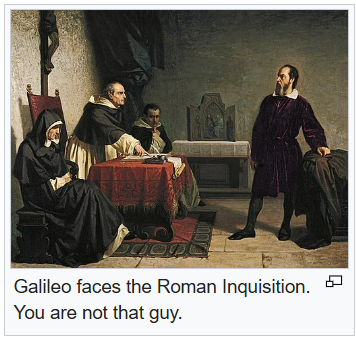
    Image Credit: Galileo gambit. (2018). RationalWiki. https://rationalwiki.org/wiki/Galileo_gambit

    Lots of new ideas are introduced to science all the time. Many of these ideas are accurate and make great contributions to our body of knowledge. At the same time, many don’t hold up to scrutiny and are rejected by the scientific mainstream. Discarding inaccurate ideas is a normal part of the scientific method, and it happens all the time. However, the promoters of a rejected idea don’t always want to admit that their idea is a bad one, and they feel the need to come up with reasons for why their idea is special, no matter how poor the evidence in its favor or how many qualified experts disagree with it.

    Enter the Galileo Gambit, a rhetorical device whose entire purpose is the promotion of rejected ideas (RationalWiki 2018). When an idea promoter uses it, you can expect them to say something like this:

    “Scientists won’t accept the fact that I have proof that the earth is flat! Well, they laughed at Galileo too, and look how that turned out for them!”

    The clear implication is that science as an institution is dogmatic and closed-minded. Scientists won’t accept firm evidence in favor of a belief you hold, but this means you are probably right! All great scientific discoveries were initially rejected, but over time, the enlightened public and a brave few intellectuals came around to the correct way of thinking and forced those stubborn scientists to accept the truth!

    Arguments that rely on the Galileo Gambit most often use Galileo as an example of the oppressed discoverer of revolutionary information, hence the name, but other famous historical figures may also be used. Ignaz Semmelweis, who advocated for doctors to wash their hands before delivering babies, is also a favorite name drop, since his ideas were not accepted until after his death (RationalWiki 2018). In addition, promoters may refer to Pasteur, Einstein, Mendel, and anyone else whose work was not recognized immediately upon publication or faced even mild critique or disapproval from the scientific community.

    The basic idea behind the Galileo Gambit seems reasonable at first, especially since people who use it are often able to recite long lists of persecuted geniuses such as the above figures. However, there are serious flaws in this type of argument, and it acts as a smoke screen to distract you from the fact that the “persecuted” idea is probably too weak to speak for itself. Here are five reasons, in order of increasing severity, for why you should not take a Galileo Gambit argument at face value.

    1. A Misplaced Persecution Complex

    Before we get into the logical and scientific minutiae, there’s something relevant to discuss about the circumstances of Galileo’s story: He wasn’t persecuted by scientists. Despite the fact that the Galileo Gambit is used to complain about science and its practitioners, Galileo’s big conflict was actually with the Catholic Church (RationalWiki 2018, Wikipedia Contributors 2019).

    The dispute that became known as the Galileo Affair started when Galileo published a book called The Starry Messenger in 1610, which gave details of observations he had made while studying the solar system through telescopes. Some of this data, such as the phases of Venus, provided support for heliocentrism, the idea that the sun is located at the center of the solar system and the planets, including Earth, revolve around it. Heliocentrism had first been proposed by Nicolaus Copernicus, but Galileo was its most open promoter.

    At the time, the official church doctrine on the subject supported geocentrism, a model that held that Earth was located at a fixed point in the center of the universe and that the sun, stars, and other planets revolved around it. This view was based on the opinions of ancient Greek philosophers and a literal reading of the Bible. The Roman Inquisition, after hearing about The Starry Messenger and Galileo’s private debates with church officials on the topic, declared in 1616 that heliocentrism was heretical. Galileo was ordered not to continue promoting his ideas and evidence, and a ban was set on heliocentric books. However, he defied the ban in 1632 by publishing a new book, Dialogue Concerning the Two Chief World Systems, that was clearly in favor of heliocentrism. As a result, Galileo was tried the following year for suspicion of heresy and sentenced to house arrest, which he remained under for the rest of his life.

    In contrast, most contemporary scientists agreed with Galileo’s claims once they had the chance to look through their own telescopes and see what he had seen. Even scientists with religious affiliations, such as a group of Jesuit astronomers, accepted that his observations were strong evidence for heliocentrism. Criticism from the scientific community tended to discuss minor points or express small caveats in approval of the conclusions that Galileo had drawn from his work. For instance, an astronomer named Christopher Clavius responded that he didn’t believe there could be mountains on the moon, a critique unrelated to heliocentrism (Wikipedia Contributors 2019).

    This is a minor but important point to consider when weighing the merits of the Galileo Gambit. What institution is the user arguing against, and how well does it really fit the charge of being hostile to new ideas? Religion tends to change slowly, if at all, so the argument that people unreasonably rejected Galileo’s ideas can be applied to the actions of religious leaders in this situation. It does not, however, apply to science, which is constantly changing, highly democratic, and accepting of many new ideas.

    1. Even Galileo Wasn’t Right About Everything

    One idea that Galileo promoted around the time of the heliocentrism debate was his belief that ocean tides were caused by Earth’s motion (Wikipedia Contributors 2019). This made sense to him, but it later turned out to be completely false; tides are actually caused by the gravitational pull of the moon. Galileo also believed in astrology and created horoscopes as a side job, and he refused to accept Kepler’s evidence that planetary orbits have the shape of ellipses, instead believing that they were circles (New York Times 2025, Gardner 1957). Galileo held and promoted a great number of ideas, but he is known primarily for heliocentrism today.

    Plenty of other prominent scientists have promoted bad ideas. In fact, there is a well-known phenomenon in which inaccurate or pseudoscientific hypotheses are supported by Nobel Prize winners! “Nobel Disease” (AKA “Nobelitis”) is something like an inverse impostor syndrome (Felton 2025). Instead of feeling insecure in their achievements and worrying that they are frauds, the awarding of a Nobel Prize seems to encourage prizewinners to consider themselves experts on a wide variety of topics, including areas they have no experience or training in and are therefore not qualified to issue advice on. Nobel Disease has led otherwise intelligent figures to endorse a significant range of inaccurate ideas with effects ranging from the scary (eugenics, lobotomies, and AIDS denialism) to the bizarre (astrology, parapsychology, and the belief that Vitamin C will prevent all diseases) to the amusing (one prizewinner believed that he had been visited by a talking raccoon riding a motorcycle).

    These faults are not exclusive to Galileo or to Nobel Prize recipients, but they demonstrate an important fact about the nature of science: No individual person has all the answers or is correct all the time, so science cannot rely on the opinions of a single person or even a group of authorities. By upholding a few people as misunderstood geniuses, the Galileo Gambit fails to recognize that these people won acceptance of their ideas because they were able to support said ideas with quality evidence. The fact that a person was right before has no bearing on the accuracy of whatever new idea they are promoting, hence each new idea must be proven just as old ideas were. The claim that all of a person’s ideas must be 100% accurate because they are an expert or because they were correct in the past is an argument from authority and fails a basic reality check.

    1. Failure to Distinguish Between Valid and Invalid Criticism

    A significant problem with the Galileo Gambit lies not in its theoretical premise or qualities, but in how people use it in practice. In theory, scientists are just as capable as any other group of engaging in persecution of ideas that they dislike or people that they enjoy having power over. In the real world, however, most ideas that science rejects are rejected due to valid scientific criticism, and there is a clear difference between criticism and persecution.

    When an idea is proposed (to science, the general public, or both), it will face plenty of arguments against it. In general, science-based criticism by people knowledgeable about a subject is valid, while criticism motivated by ideology or bias is not. The case of Einstein’s proposal of relativity is great at illustrating the difference, especially since Einstein is often held up as an example of someone who promoted a revolutionary idea and attracted criticism from scientists despite being right. Here’s what happened: Einstein proposed his theories of Special Relativity and General Relativity in 1905 and 1915, respectively, and they were not immediately accepted and incorporated into the field of physics (Wikipedia Contributors 2019). The early relativity deniers even included three scientists who had won Nobel prizes in physics. Sounds like a clear-cut case of evil scientists rejecting the ideas of a genius because he challenged their knowledge, right? However, this narrative falls apart when one considers that two of those three Nobel prize winners were Nazis and the third had won his prize in an area of physics that had nothing to do with relativity (Hansson, 2017). These critiques, though made by scientists, were clearly not scientific because they were probably motivated by antisemitic ideology (Einstein was Jewish) and compromised by a lack of expertise in the specific subject area. So although Einstein can be described as a persecuted genius, much of the criticism he received was unscientific, and hence not supportive of the Galileo Gambit. In addition, after an early period of disagreement and debate, the vast majority of scientists were won over to Special Relativity by the 1920s and General Relativity by the 1960s (Wikipedia Contributors 2019). There are no major physicists today who are relativity deniers.

    Despite there being a clear delineation between valid and invalid criticism, and despite scientific and professional criticism being valid, users of the Galileo Gambit indiscriminately reject all criticism regardless of its merits. This is exactly the wrong way to approach disagreement; if someone issues a reasonable critique of your idea, you need to address that critique by revising or even discarding the idea. It’s perfectly fine to ignore criticism that takes the form of personal attacks, illogical complaints, or denialism, or criticism that is made by an unqualified person, but brushing aside serious issues with your idea won’t help get it accepted and will instead work against you. It’s much more difficult to persuade people that your idea has merit if you refuse to address obvious problems!

    One more point: It’s worth noting that an idea promoter’s personality or manner of promotion may invite criticism, and thus discourage people from accepting the idea because they find the promoter repugnant rather than because of persecution or objections to the idea itself. Galileo was genuinely persecuted, but he also had a habit of insulting people who disagreed with him, and he alienated powerful figures who might have been willing to help him in his conflict with the Inquisition. A new pope, Urban VIII, had been elected after Galileo’s first trial and was initially sympathetic to him, even granting him limited permission to publish heliocentrist works, but their relationship crashed and burned upon the publication of Dialogue Concerning the Two Chief World Systems (Wikipedia Contributors 2019). The Pope pressured Galileo to include the church’s position in the book, which was written in the format of a fictional debate between a heliocentrist character, a mediator character, and a geocentrist character. The premise sounds neutral and inoffensive, but Galileo consistently portrayed the heliocentrist character as intelligent and heroic and the mediator as wise and fair, while the clownish geocentrist was given the name “Simpleton.” Throughout the book, the heliocentrist arguments are hailed as the best and most rational, while Simpleton’s arguments are all portrayed as stupid and ape the Pope’s position on the heliocentrism/geocentrism debate. This mocking led Pope Urban to believe that Galileo was caricaturing him, and he reacted poorly, banning the Dialogue and not offering support for Galileo during his heresy trial. Galileo would probably have been in trouble regardless of how he presented his argument, but he could have written the book in a less provocative manner. What if the Dialogue had resembled a real debate, in which well-reasoned arguments and solid evidence are supposed to lead to a win, rather than having an incompetent opponent? What if Galileo had crafted a plot in which the geocentrist character is won over by the strength of the evidence for heliocentrism? What if all the characters had considered the religious arguments for geocentrism, thought them through, and then calmly decided that such arguments were insufficient or that acceptance of heliocentrism did not conflict with being a good Christian?

    Sometimes, respectfully communicating one’s ideas is enough to avoid criticism of them, and criticism is a crucial component of the Galileo Gambit. Indeed, criticism is the part of the Galileo Gambit is supposed to prove the user’s correctness. If the promoters of inaccurate ideas did not make their arguments in an arrogant or provocative manner, might they face as much criticism as they do? And if they face no criticism, how could they argue that being persecuted makes them correct? This leads us to the next issue.

    1. Hypocrisy and Double Standards

    In the world of the Galileo Gambit, any idea with mainstream acceptance must be wrong if opposed by a minority idea, including ideas that were previously persecuted, disbelieved, or ignored but ultimately won people over. This means that whether an idea is “right” is based on the number of people who believe it, not how strong the evidence is in its favor, whether it can stand up to testing, or how closely it matches real-world observations. The logical endpoint of this premise is a world where “reality” is constantly in flux, as ideas gain acceptance by a majority of people, only to magically become wrong the instant a smaller group of people or even a single person decides to think something different. Needless to say, this isn’t how the world works.

    In addition to this obvious pitfall, users of the Galileo Gambit often apply a heavy double standard to any conflicts between their ideas and ideas accepted by science. Since the Galileo Gambit is based on the premise that any resistance to an idea is proof that it is correct, surely that means that facing no criticism means an idea is wrong? Nope! If an idea is not criticized by scientific authorities (generally due to scientists considering the idea to be so obviously inadequate that it’s not worth the time and effort it would take them to debunk it), the promoter will claim that this also proves them correct. In other words, there is no scenario in which the promoter will admit that he or she may be wrong. Harsh criticism and no criticism at all are made to appear equally supportive of the idea’s veracity.

    The inverse of such a gaping logical hole appears in the promoter’s treatment of mainstream science, especially fields or facts that oppose their own treasured ideas. Since their idea (by their logic) is unfalsifiable and therefore can never be disproved under any circumstances, it follows that whatever scientific evidence contradicts it will always be inadequate and is automatically inferior to what the promoter thinks. The promoter dismisses science out of hand and treats it as if it has no way to prove itself – the same unfair attitude that the promoter accuses scientists of holding!

    The situation worsens the more this hypocrisy is interrogated. Users of the Galileo Gambit charge scientists with engaging in persecution and controlling what ideas are accepted by the general public, but apparently it’s perfectly reasonable for them to do the same thing. After all, most people who promote pseudoscientific ideas via appeals to the public are not doing so because ordinary people can validate the scientific aspects of their claims. Rather, these idea promoters are engaging in a cynical attempt to win support of their ideas without having to actually prove themselves correct, because they know ordinary people are more likely to fall for fallacious claims and rhetorical dodges than experts are. If someone tries the Galileo Gambit on you, keep in mind that they’re insulting your intelligence!

    Furthermore, by the standards of these idea promoters, scientists face more persecution than the promoters do. In addition to being under metaphorical fire by every Galileo Gambit user under the sun attempting to force public acceptance of their quack ideas, scientists and scientific ideas have faced a disturbing number of attacks from many corners of society, especially in recent years. Anti-science influencers, companies selling bogus supplements and unproven drugs, and even governments peddling pseudoscientific policy all work to undermine science, misrepresent its positions, and deny its benefits to the people who could benefit from it most. During the COVID-19 pandemic, scientists who participated in good-faith efforts to find treatments and vaccines and communicate the science behind them to the public were rewarded with online harassment, bullying from popular politicians, and even death threats (Nogrady 2021). Some scientists required bodyguards to protect them from physical attacks from people who didn’t accept the science behind disease and inoculation. These actions go far beyond the debunking, dismissal, and refusal to publish that users of the Galileo Gambit complain about. Again, according to the gambit, the greater resistance an idea faces, the more correct it is likely to be. Thus, by users’ own logic, scientific ideas are the correct ones, because scientists face much more persecution than people who promote vaccine conspiracies, flat Earth theories, and climate change denialism. Yet no matter how often the news runs stories on the prevalence of science denialism or the risks faced by scientists when taking an action as simple as publicly claiming that science is real, anyone who uses the gambit will maintain no matter what that the suffering of science promoters is invalid and that pseudoscience promoters, conspiracy theorists, and misinformation peddlers are the real victims.

    1. Reliance On the Association Fallacy

    The book in my hand is a story about an action hero and its cover is blue; therefore, all blue books must have action hero protagonists. That restaurant has great food and amazing customer service, so all restaurants in the same chain must be of similar quality. My neighbor likes to garden and is mean to me, so all people who have a gardening hobby must be jerks.

    What is wrong with the above statements?

    If you said, ”the logic they use,” you are correct! At its core, the Galileo Gambit relies on faulty logic, specifically a flaw known as the Association Fallacy. The structure of the fallacy goes like this (RationalWiki 2018):

    A is X and Y. (Galileo was persecuted, and he was right.)

    B is X. (I am persecuted.)

    Therefore, B is Y. (I am right.)

    The fallacy lies in assuming that the fact that two things are alike in one way means they are the same in all ways. Translated to the Galileo Gambit, it invites the user to assume that they are correct solely because they resemble, in a single way, a famous historical figure who turned out to be correct. The problem, of course, is that similarity in one way does not guarantee that two things will be alike in any other respect. Two people who like to garden may have similar personalities, but given that humans are so diverse and that everyone has unique experiences, worldviews, and environments, the odds that you could pick two gardeners at random and discover that both of them hate you are small. In the same way, people who claim persecution in an attempt to identify themselves with Galileo cannot rely on that statement alone. To truly be like Galileo, they must also prove themselves correct as he did, with scientific evidence. This second criterion reveals the fatal flaw of the Galileo Gambit: users are desperate to be considered scientific and identify themselves with Galileo to further this goal, but the entire purpose of deploying the Galileo Gambit is to conceal the fact that they cannot produce any scientific evidence in their favor.

    What about people who really did resemble Galileo in both ways? How did Semmelweis, Einstein, and others who were both persecuted and correct react to the news of their rejection by the establishment? Such individuals are rare to begin with; after all, despite the claims of the Galileo Gambit, science doesn’t usually reject worthy ideas. From the examples we have, though, it seems that when someone knows that they have an important idea that needs to be shared with the world and is being unfairly held back, their first course of action is to . . . not compare themselves to Galileo. When faced with a setback, true persecuted geniuses continue to argue the merits of their work based on the evidence they have collected, because they know their evidence is strong enough to merit consideration. They don’t need to rely on the Galileo Gambit to get their views accepted.

    Consider Semmelweis’ story. In the 1840s, he began keeping statistics on the incidence of puerperal fever, a devastating infection contracted by women who had just given birth (RationalWiki 2023, Zoltán 2019). Semmelweis observed that new mothers contracted the fever and died at a much greater rate when they gave birth while attended by doctors and medical students than when they gave birth in the presence of midwives, and he kept detailed records on many cases. His breakthrough came after a friend attended an autopsy of a woman who had died of puerperal fever, cut his hand on a surgical instrument, and died of an identical disease. Semmelweis theorized that doctors were transmitting small particles that caused illness to the women they examined from the corpses they autopsied and suggested that doctors wash their hands prior to assisting with the births. (In this time period, doctors frequently performed autopsies and then attended births soon afterward.) He began washing his hands before delivering babies and required that his subordinates also do so, while continuing to keep track of the health of each mother in his hospitals. Soon, infection and mortality rates plummeted in multiple maternity wards that Semmelweis oversaw, and they remained high in hospitals that did not require hand washing. However, upon hearing about Semmelweis’ data and experiences, other doctors refused to believe his ideas or follow his advice. They didn’t want to believe that their hands could be dirty and acted as if Semmelweis had personally insulted them. Despite the rejection, he continued to argue for antiseptic practices based on his evidence, which was genuinely strong. Semmelweis fought for handwashing until his death (caused by an infection), and he did not do so by using the Galileo Gambit. Within a few decades, the state of medicine began to change, and other scientists and doctors who had been inspired by him began to promote the germ theory of disease and advocate for hygienic practices in health care. Today, Semmelweis is remembered as a pioneer of medical statistics.

    Semmelweis’ example can be seen as a template for how things really go when a worthy idea is rejected by the establishment. In the first place, such worthy ideas are based on solid scientific evidence, and their proponents have made a good-faith effort to request scientific acceptance and display how well they fit observed phenomena in the real world. Generally, the rejection of an accurate idea happens as a result of non-scientific attitudes or the state of a field that is just starting to become scientific. The promoter may feel discouraged by the setback, but he or she almost never copes by attacking science or indulging their delusions of grandeur. Instead, they emphasize the merits of the evidence for their hypothesis, ask for additional consideration, and continue to engage with science and the scientific community.

    References:

    Bhatia, A., Paris, F., & Taylor, R. (2025, September 7). Your Zodiac Sign Is 2,000 Years Out of Date. Nytimes.com; The New York Times. https://www.nytimes.com/interactive/2025/upshot/zodiac-signs.html

    Felton, J. (2025, August). What Is “Nobel Disease”, And Why Do So Many Prizewinners Go On To Develop It? IFLScience. https://www.iflscience.com/what-is-nobel-disease-and-why-do-so-many-prizewinners-go-on-to-develop-it-80240

    Galileo gambit. (2018). RationalWiki. https://rationalwiki.org/wiki/Galileo_gambit

    Gardner, M. (1957). Fads & Fallacies in the name of Science : the curious theories of modern pseudoscientists and the strange, amusing and alarming cults that surround them. A study in human gullibility. Dover.

    Hansson, S. O. (2017). Science denial as a form of pseudoscience. Studies in History and Philosophy of Science Part A, 63, 39–47. https://doi.org/10.1016/j.shpsa.2017.05.002

    Ignaz Semmelweis. (2023). RationalWiki. https://rationalwiki.org/wiki/Ignaz_Semmelweis

    ‌Nogrady, B. (2021). “I hope you die”: how the COVID pandemic unleashed attacks on scientists. Nature, 598(7880), 250–253. https://doi.org/10.1038/d41586-021-02741-x

    Sternberg, R. J., Roediger, H. L., & Halpern, D. F. (2007). Critical thinking in psychology. Cambridge University Press.

    Wikipedia Contributors. (2019, March 6). Galileo affair. Wikipedia; Wikimedia Foundation. https://en.wikipedia.org/wiki/Galileo_affair

    Wikipedia Contributors. (2019, March 3). Theory of relativity. Wikipedia; Wikimedia Foundation. https://en.wikipedia.org/wiki/Theory_of_relativity

    Zoltán, I. (2019). Ignaz Semmelweis | Biography & Facts. In Encyclopædia Britannica. https://www.britannica.com/biography/Ignaz-Semmelweis

  • How Ink Becomes Art

    A Brief History of Tattooing

    Tattoos have been part of history for thousands of years, serving as cultural markers, expressions of identity, and art. There are many methods of tattooing, such as stick and poke with a mallet and needle and machine tattoo guns. While styles and meanings have changed, one question many people may have is how do tattoos actually work?

    The Permanence of Tattoos

    The nature of tattoos lies in the body’s response to injury and pigment. In essence, tattoos are an open wound when first done. When a tattoo needle pierces the skin, it inserts pigment into the dermis, the second layer of skin that lies beneath the outer epidermis, which is composed mainly of the cell called keratinocytes. Unlike the epidermis, which renews itself every few weeks, a process called skin turnover, the dermis remains relatively stable, allowing ink to stay in place (Magnum Tattoo Supplies, 2024).

    Macrophages, a type of immune cell, rush to the area to absorb the foreign ink particles. Some of these macrophages remain in the dermis with the ink trapped inside, while others die, releasing the pigment again and restarting the cycle. This immune response is important for the tattoo’s visibility and permanence (Mimzi Pma, 2023).

    Skin Layers and Needle Depth

    Tattooing requires precise depth control. The epidermis, which sheds over time, cannot hold ink permanently. If the needle deposits pigment too shallowly, the ink will fade as the skin regenerates. On the other hand, if the needle penetrates too deeply into the hypodermis (subcutaneous fat layer), it can cause a “blowout”. This is a smudged or blurry effect as ink disperses into fat tissue and can cause scarring (Mykhalevych, 2025).

    Daemon, a practicing tattoo artist, explains: “Needle depth is kind of complex depending on the type of skin you’re tattooing and how thick the skin is in certain types of the body… you can tell when you’re going too deep when you see the ink starts to bleed into the vein.” In hand-poked methods, she relies on feeling and auditory cues like a soft “pop” to gauge correct penetration depth.

    Pigment Chemistry: What’s in Tattoo Ink?

    Tattoo inks are composed of pigments in a carrier solution. Black ink commonly contains carbon or iron oxide. White inks may use titanium dioxide, which can cause allergic reactions in some people. Lastly, colored pigments vary widely. Red often contains mercury sulfide or azo dyes, while greens and blues may include copper-based compounds (Miranda, 2019).

    Some inks use organic pigments, especially in vegan or eco-conscious formulations. These pigments can be less stable and may break down faster. Moreover, different skin tones and types can influence how pigments appear and heal. As Daemon notes, “Certain ink might not show up as well on darker skin types… and sometimes ink or healing products can cause mild skin reactions.”

    Healing and Aftercare

    A fresh tattoo is an open wound, vulnerable to infection and irritation. The aftercare process is crucial to both healing and the tattoo’s long-term appearance. As Daemon emphasizes, “Don’t touch it, don’t scratch it… [because] you’re going to pick the scab off and the ink is going to fall out with it.”

    She recommends gentle cleansing with unscented soap, using a thin layer of ointment, and limiting sun exposure. New technologies like second skin bandages offer a breathable barrier during the healing process but must be used with care to avoid excess moisture buildup. Additionally, moisturizing remains important even after healing, as dry skin can cause fading and distortion.

    Aftercare is not only about preventing infection but preserving the artwork. “It’s a piece of art,” Daemon says. “Taking care of it and taking care of yourself will make it look super good.”

    Concluding Remarks

    Tattooing is a combination of biology, chemistry, and craftsmanship. From understanding skin anatomy to mastering pigment behavior and immune responses, both science and skill are important aspects in the art of tattooing. As tattoos continue to grow in popularity and cultural significance, so too does our scientific appreciation for them.


    Sources Cited

    Mykhalevych, Alina. (2025). “Physico-Technical Basis for Needle Depth Control in Fine Line Technique”, Universal Library of Innovative Research and Studies; 2(1): 01-06. DOI: https://doi.org/10.70315/uloap.ulirs.2025.0201001.

    Kapoor, Sky. (2021, October 31). From machines to macrophages: Breaking down the science of tattooing. The Varsity. https://thevarsity.ca/2021/10/31/science-of-tattooing/

    mimzipma. (2023, July 5). The science of tattooing—Mimzipma. https://mimzipma.com/science/

    Miranda, M. D. (2019). Tattoos and tattoo inks: Forensic considerations. WIREs Forensic Science, 2(1), e1360. https://doi.org/10.1002/wfs2.1360

    The science behind why and how are tattoos permanent. (2024, February 12). Magnumtattoosupplies. https://www.magnumtattoosupplies.co.uk/blogs/article/the-science-behind-why-and-how-are-tattoos-permanent

    Weiß, K. T., Schreiver, I., Siewert, K., Luch, A., Haslböck, B., Berneburg, M., & Bäumler, W. (2021). Tattoos – more than just colored skin? Searching for tattoo allergens. JDDG: Journal der Deutschen Dermatologischen Gesellschaft, 19(5), 657–669. https://doi.org/10.1111/ddg.14436

  • Mind the Tentacles: How Octopuses Outsmart Scientists (and Aquariums)

    Mind the Tentacles: How Octopuses Outsmart Scientists (and Aquariums)

    When you first think of an octopus, you’re probably picturing an animal with 8 tentacles floating around in the ocean. As unseeming these creatures may seem, they are one of the smartest animals in the ocean! Octopuses have a nervous system, which controls their movements, thought processes, memory, and more (Carls-Diamante, 2022). Octopuses are said to have two brains – one in their head and a complex net of massive nerves in each of their tentacles (Carls-Diamante, 2022). About 2/3 of an octopus’ nerves are in their tentacles, and this allows each tentacle to act independently or jointly with the others (Shamilyan et al., 2021). Let’s explore the capabilities and intelligence of an octopus!


    Flexibility:

    Octopuses use their flexibility in the natural environment to escape and hide from predators by squeezing into very tight spaces. For example, scientists have put a small octopus in a jar with a closed screw-lid. The challenge for the octopus was to escape the jar from the inside, which the octopus managed to do using its incredible flexibility (Mather, 2021). Since octopuses are immensely flexible, some octopuses have managed to escape from aquarium tanks by opening the top lid! In addition to their amazing flexibility, they have several other surprising abilities to survive in the wild.


    Camouflage:

    Octopuses are known for their abilities to blend in with their surroundings by changing their color to match that of their surroundings (Young, 2023). This ability to camouflage into their surroundings is a key survival mechanism to prevent predators from spotting them. However, octopuses also use their color-changing abilities to communicate with each other (Young, 2023). An octopus’ color changes based upon its mood and can be used to warn other octopuses of potential danger (Carls-Diamante, 2022). Octopuses often go on hunting trips together, but how do they remember their way back home? That’s where their navigational memory comes in!


    Spatial and Navigational Memory:

    Octopuses make their homes in holes in the seabed or coral reefs. They go on long hunting trips for food, often for days or weeks at a time for long distances before returning back home. They frequently take different paths home each time they go hunting, indicating they have incredible spatial memory on how to return home (Carls-Diamante, 2022). In addition, some octopuses have been seen putting rocks near their home as an identifier, like how people put numbers outside their homes or apartments to identify which residence is theirs (Carls-Diamante, 2022). Octopuses are more like humans than we originally thought!


    In conclusion, octopuses are amazingly intelligent ocean creatures whose wit should not be underestimated. They are able to escape closed spaces using their flexibility, change colors at will to disguise themselves or communicate with other octopuses, and use spatial memory to identify where their homes are. Next time you go to an aquarium, check out the octopuses and see their tricks in action!


    Citations:

    Carls-Diamante, S. (2022). Where Is It Like to Be an Octopus? Frontiers in Systems Neuroscience, 16. https://doi.org/10.3389/fnsys.2022.840022

    Mather, J. (2021). Octopus Consciousness: The Role of Perceptual Richness. NeuroSci, 2(3), 276–290. https://doi.org/10.3390/neurosci2030020

    Shamilyan, O., Kabin, I., Dyka, Z., Kuba, M., & Langendoerfer, P. (2021, June 1). Octopuses: biological facts and technical solutions. IEEE Xplore. https://doi.org/10.1109/MECO52532.2021.9459727

    Young, N. (2023, December 27). Exploring Problem-Solving Skills through the Octopus Mind – West Coast Centre For Learning. West Coast Centre for Learning. https://www.wccl.ca/problem-solving-skills/

  • Resilience in Ruin: Continuity of Cancer Care in Times of Crisis

    When a slow, devastating illness collides with the speed and chaos of disaster, the consequences can be dire. Cancer demands constancy—structured protocols, timed treatments, uninterrupted care. Disasters, on the other hand, dismantle. They disrupt and displace, often without warning. As floods rise and conflicts erupt, what becomes of the cancer patient whose chemotherapy is scheduled for tomorrow? Or the child awaiting biopsy results? These questions are no longer hypothetical—they are urgent. We live in a world in which climate-induced events, pandemics, and political instability are increasingly common, and yet cancer care systems remain woefully unprepared (Meara et al., 2015). More alarmingly, disaster preparedness plans globally tend to focus heavily on trauma and communicable diseases, leaving chronic illnesses like cancer out of the picture (Spiegel et al., 2018). This gap in planning and policy is not just an oversight—it is a failure that costs lives. Cancer does not wait. It does not decelerate in times of emergency, and thus our response systems must be re-engineered to reflect that urgency.

    Throughout history, the story is tragically familiar. In West Africa during the 2014–2016 Ebola outbreak, already-strained healthcare systems collapsed under the weight of contagion. Oncology units shuttered. Diagnostics were suspended. It is estimated that cancer diagnoses dropped by more than half—not because the disease disappeared, but because access to care did (Lal et al., 2020). During the COVID-19 pandemic, the narrative repeated. Nearly 1.5 million cancer surgeries were postponed or canceled globally in the first phase alone, creating a backlog that continues to impact patients today (COVIDSurg Collaborative, 2020). The disruptions extended beyond surgical delays: patients missed chemotherapy cycles, radiotherapy sessions were halted, and research trials were suspended. Even long after the initial waves subsided, patients continued to face delays due to workforce shortages, overwhelmed hospitals, and financial strain. In low-income countries, the effects were particularly acute—many patients never returned to care at all (Hanna et al., 2020). For diseases where timing can determine survival, such delays are nothing short of devastating.

    Not all disasters make global headlines. In Haiti, the slow erosion of healthcare capacity due to political instability has silently decimated oncology care. The country has only one radiotherapy machine, often out of service due to power outages or mechanical failure (IAEA, 2021). Few outside the region know that patients are sometimes forced to travel to the Dominican Republic—an international journey that requires money, paperwork, and time most do not have. In Ukraine, following the 2022 invasion, radiation oncology centers were damaged by shelling, not as deliberate attacks on health services, but as collateral in broader infrastructure strikes. Linear accelerators were damaged, and hospitals had to triage power between radiotherapy equipment and ventilators. These cascading failures don’t just interrupt care—they erase it.

    Why is cancer care so fragile in the face of crisis? Unlike many medical disciplines, oncology depends on a convoluted web of components: technology, personnel, pharmaceuticals, and precise timing. Sophisticated machines like PET, MRI, and CT scanners are fixed and highly location-bound. Radiation therapy requires specialized shielding and uninterrupted electricity. Chemotherapy drugs often demand cold-chain logistics and exact calibration. When disasters strike—whether they be cyclones or armed conflict—these systems do not adapt; they fracture (Beddoe, 2019). Health workers are reassigned to trauma units. Oncology wings are converted into ICUs. Supply chains buckle under logistical bottlenecks. Medications expire in warm storage rooms. The loss of a single link can compromise the entire therapeutic chain.

    Additionally, health information systems often crash, wiping out records, imaging histories, and continuity plans. Paper records, still common in many parts of the world, are destroyed by flooding or lost in evacuation. Digital systems, where they exist, may lack redundancy or cloud backup (Chan et al., 2022). In such fragile architectures, resilience isn’t just a buzzword—it is a literal matter of life and death.

    The price for this failure is rarely paid by the wealthy or politically protected. Rather, the toll is borne by those already standing at society’s margins. It is the refugee with no address, no insurance, and no voting rights. The woman in a remote village with cervical cancer whose screening was never completed. The child born into the shadow of war, whose swollen lymph nodes go ignored until too late. In Syria, Sudan, Gaza, and beyond, cancer becomes the silent casualty of humanitarian disaster (El Saghir et al., 2018). These patients are not just neglected; they are erased from the narrative.

    In Lebanon, where millions of Syrian refugees reside, a cancer diagnosis for a non-citizen can be a de facto death sentence due to high costs and lack of access to specialized care (Saab et al., 2019). In Yemen, where humanitarian funding has been slashed, cancer patients are reportedly turning to unproven herbal remedies in desperation. These lives are marginalized not only by disaster but by the systems built to respond to disaster. The harm is not accidental—it is structural.

    Less discussed are the internal migrants—those displaced not across borders, but within their own country. After floods in Pakistan displaced over 30 million people in 2022, many oncology patients were unable to access urban hospitals.

    Temporary shelters set up for the displaced did not include oncology services. In the United States, Hurricane Maria’s destruction of Puerto Rico’s infrastructure led to cancer patients being airlifted to mainland hospitals—but only those with Medicaid portability or private insurance could access care. Disaster response often assumes temporary needs. But cancer care is not temporary. It cannot be paused and resumed without consequence.

    Can we truly plan for the unpredictable? Can we outpace disaster with foresight? The answer, increasingly, is yes. The key lies in data-driven prediction. Artificial intelligence and climate modeling can forecast hotspots of disaster exposure, layered with population health maps to anticipate where cancer care will likely be disrupted. Rwanda, for example, has implemented a national telemedicine network that connects rural health centers with oncology specialists, ensuring continuity of consultation even when physical access is compromised. These are not theoretical innovations—they are operational strategies that can be scaled globally. Predictive algorithms can also identify patients most at risk of losing care continuity, enabling pre-disaster outreach and medication stockpiling. This is anticipatory medicine—a shift from treating the aftermath to engineering the future.

    Decentralization is another pillar of resilience. Cancer care must move beyond capital cities and elite hospitals. In India, the expansion of mobile cancer screening and treatment units has proven effective for reaching underserved populations (Pramesh et al., 2014). In Kenya, Project ECHO connects rural clinicians with top oncology experts in real time, democratizing expertise and shrinking the urban-rural divide (Strother et al., 2021). In the Philippines, emergency response plans now incorporate considerations for cancer patients, including medication supply reserves. These models not only deliver care—they redefine what care infrastructure looks like.

    Technology can serve as a lifeboat when all else fails. In Rwanda, Zipline drones ferry medical supplies including cancer medications across impassable terrain. In Bangladesh, solar-powered healthcare facilities ensure that diagnostics and treatments can continue even after grid failures during cyclones. Electronic health records with cloud backups ensure that a displaced patient’s oncology file can travel with them, digitally intact, across regions (Guleria & Dua, 2021). These innovations aren’t luxuries; they are future standards. Health systems must invest not just in gadgets but in technology ecosystems that are climate-resilient, secure, and scalable.

    For all this progress, the most urgent questions are moral. Who is accountable when patients fall through the cracks? When pharmaceutical embargoes block cancer treatments in war-torn nations, who intervenes? When governments prioritize military spending over oncology units, who is held responsible? (UNDRR, 2015). These are not just questions of policy—they are tests of our ethical architecture. Global health law must evolve to classify cancer care as a protected service during crisis, much like food and shelter. This includes safeguarding cancer infrastructure under international humanitarian law and establishing international corridors for drug delivery in conflict zones (Lancet Commission on Global Access to Pain Control and Palliative Care, 2018; Singh et al., 2020).

    The WHO’s Global Initiative for Childhood Cancer shows what coordinated international action can achieve. But such initiatives must expand in both scope and binding authority. Cancer must be built into every emergency preparedness and response framework. Countries must be incentivized—perhaps even mandated—through funding structures and international law to protect cancer services during disaster. Civil society must demand this from their leaders. Humanitarian response teams must include oncologists and palliative care specialists. Cancer cannot be an afterthought.

    This is not just about survival—it is about justice. Continuity of cancer care in the face of disaster is a barometer of our civilization. It is a reflection of how we value life, dignity, and equity. The crises ahead—climate displacement, antimicrobial resistance, economic collapse—will test us even more deeply. If we are not ready, we will repeat the same pattern of delay, death, and denial. But if we choose to be ready—if we design for disruption, plan for pain, and invest in resilient care—we can ensure that no diagnosis becomes a death sentence simply because the ground shook, the skies opened, or the sirens wailed. The next disaster is coming. The question is not if—but whether we will meet it with courage or complacency.


    References

    Beddoe, A. M. (2019). Elimination of cervical cancer: Challenges for developing countries. E-cancer Medical Science, 13, 975. https://doi.org/10.3332/ecancer.2019.975

    Chan, E. Y. Y., Huang, Z., Lo, E. S. K., Kim, J. H., Hung, K. K. C., & Shaw, R. (2022). Digital health in the management of non-communicable diseases during and after disasters: A systematic review. International Journal of Environmental Research and Public Health, 19(5), 2777. https://www.mdpi.com/1660-4601/19/5/2777

    COVIDSurg Collaborative. (2020). Elective surgery cancellations due to the COVID-19 pandemic: Global predictive modelling to inform surgical recovery plans. British Journal of Surgery, 107(11), 1440-1449. https://doi.org/10.1002/bjs.11746

    El Saghir, N. S., Soto Pérez de Celis, E., Fares, J. E., & Sullivan, R. (2018). Cancer care for refugees and displaced populations: Middle East conflicts and global natural disasters. American Society of Clinical Oncology Educational Book, 38, 433-440. https://ascopubs.org/doi/10.1200/EDBK_201365

    Guleria, R., & Dua, S. (2021). e-Health in India: Challenges and opportunities. Journal of Family Medicine and Primary Care, 10(1), 151-154. https://www.jfmpc.com/article.asp?issn=2249-4863;year=2021;volume=10;issue=1;spage=151;epage=154;aulast=Guleria

    Hanna, T. P., King, W. D., Thibodeau, S., Jalink, M., Paulin, G. A., Harvey-Jones, E., O’Sullivan, D. E., Booth, C. M., Sullivan, R., & Aggarwal, A. (2020). Mortality due to cancer treatment delay: Systematic review and meta-analysis. BMJ, 371, m4087. https://www.bmj.com/content/371/bmj.m4087

    International Atomic Energy Agency (IAEA). (2021). Directory of radiotherapy centres. IAEA. https://www.iaea.org/resources/databases/dirac

    Lal, A., Erondu, N. A., Heymann, D. L., Gitahi, G., & Yates, R. (2020). Fragmented health systems in COVID-19: Rectifying the misalignment between global health security and universal health coverage. The Lancet, 397(10268), 61-67. https://www.thelancet.com/journals/lancet/article/PIIS0140-6736(20)32228-5/fulltext

    Lancet Commission on Global Access to Pain Control and Palliative Care. (2018). Alleviating the access abyss in palliative care and pain relief—an imperative of universal health coverage: The Lancet Commission report. The Lancet, 391(10128), 1391-1454. https://www.thelancet.com/journals/lancet/article/PIIS0140-6736(17)32513-8/fulltext

    Meara, J. G., Leather, A. J., Hagander, L., Alkire, B. C., Alonso, N., Ameh, E. A., Bickler, S. W., Conteh, L., Dare, A. J., Davies, J., Mérisier, E. D., El-Halabi, S., Farmer, P. E., Gawande, A., Gillies, R., Greenberg, S. L., Grimes, C. E., Gruen, R. L., Ismail, E. A., … & Yip, W. (2015). Global Surgery 2030: Evidence and solutions for achieving health, welfare, and economic development. The Lancet, 386(9993), 569-624. https://www.thelancet.com/journals/lancet/article/PIIS0140-6736(15)60160-X/fulltext

    Pramesh, C. S., Badwe, R. A., Borthakur, B. B., Chandra, M., Raj, E. H., Kannan, T., Kalwar, A., Kapoor, S., Malhotra, H., Nayak, S., Rath, G. K., Sagar, T. G., Sebastian, P., Sarin, R., Shanta, V., Sharma, S. C., Shukla, S., Vijayakumar, M., Vijaykumar, D. K., … & Sullivan, R. (2014). Delivery of affordable and equitable cancer care in India. The Lancet Oncology, 15(6), e223-e233. https://www.thelancet.com/journals/lanonc/article/PIIS1470-2045(14)70117-2/fulltext

    Saab, R., Jeha, S., Khalifeh, H., Zahreddine, L., Bayram, L., Merabi, Z., Abboud, M. R., Muwakkit, S., Tarek, N., Haidar, C., Fahd, M., El Solh, H., Al-Ahmari, A., Al-Sweedan, S., Al Sudairy, R., Jastaniah, W., Amayiri, N., Sultan, I., Ghandour, K., … & Al-Rawas, A. H. (2019). Displaced children with cancer in Lebanon: A sustained response to an unprecedented crisis. Cancer, 124(7), 1464-1472. https://acsjournals.onlinelibrary.wiley.com/doi/full/10.1002/cncr.31273

    Singh, T., Sharma, S., & Nagesh, S. (2020). Socio-economic impact of COVID-19 pandemic in India. International Journal of Pervasive Computing and Communications, 16(4), 309-319. https://www.emerald.com/insight/content/doi/10.1108/IJPCC-06-2020-0053/full/html

    Spiegel, P., Khalifa, A., & Mateen, F. J. (2018). Cancer in refugees in Jordan and Syria between 2009 and 2012: Challenges and the way forward in humanitarian emergencies. The Lancet Oncology, 15(7), e290-e297. https://www.thelancet.com/journals/lanonc/article/PIIS1470-2045(14)70067-1/fulltext

    Strother, R. M., Asirwa, F. C., Busakhala, N. W., Njiru, E., Orang’o, E., Njuguna, F., Skiles, J., Carter, J., Mega, A., & Kaspers, G. J. (2021). AMPATH-Oncology: A model for comprehensive cancer care in sub-Saharan Africa. Journal of Cancer Policy, 19, 100282. https://www.sciencedirect.com/science/article/pii/S2213538321000424

    United Nations Office for Disaster Risk Reduction (UNDRR). (2015). Sendai framework for disaster risk reduction 2015-2030. UNDRR. https://www.undrr.org/publication/sendai-framework-disaster-risk-reduction-2015-2030


  • Escape the Elements: How to Create a Science-Themed Escape Room

    Escape rooms are a fun way to bond with others and put your critical thinking skills to the test! An escape room is a game where people are ‘locked in’ a room and must find a way out by finding clues and solving puzzles (Cambridge Dictionary, 2025). Escape rooms are popular because they are wonderful social bonding experiences where teams of people must work together to get out of the room.

    In the past few years, several schools and universities started using educational escape rooms as an alternative method to teach students different subjects, ranging from math, history, science, and other subjects! One study had 62 students in Spain learn mathematical topics through an escape room model and found that it reduced learning anxiety while increasing motivation and learning achievement (Fuentes-Cabrera et al., 2020). Another study had 528 elementary school students go through either a virtual escape room or other digital game-based learning activities and found that the students preferred the digital escape room because it lead to higher collaboration and stronger motivation to learn among the students (Vidergor, 2021).

    During my time at Georgia Tech, I’ve created two separate science-themed escape rooms from scratch with my friends and ran them both four times collectively. We had a lot of fun, and I learned so much about escape rooms – both making and playing them – in the process. I think escape rooms are a wonderful way for people to learn and apply their knowledge while being in a fun environment and bonding with people around them who share the same interests. There are many escape room templates online that you can use, but I want to make this guide if you want to make your own customizable escape room that tailors to your audience. In this guide, I’ll share some tips about making an escape room from scratch as well as some of my own experiences.


    Step 1: Choose a Theme and a Storyline

    Choose a theme based upon your intended audience. For example, my intended audience was college students who were in different science majors, so I incorporated elements (pun intended) from as many science fields as I could. If you are making an escape room for your biology class, make the room biology themed.

    Once you have a theme, create a storyline about why they are in the room. Maybe an evil scientist is creating a formula to destroy the world, and they must figure out the formula to stop them! Maybe the room is part of a colony on Mars that lost power and communication with Earth and the crew (participants) need to work together to restore the colony’s original functions so they can get back, but they must do it quickly because oxygen levels are depleting fast! The more interesting the storyline, the more interested your players will be. The sky’s the limit with your storyline but ensure that it matches with the theme of the room and add in a specific reason for the time limit (e.g. oxygen levels depleting within the hour on the Mars colony). Both escape rooms I held involved an evil magician who performed strange alchemy experiments, and the participants were playing as detectives who got trapped inside the evil magician’s hideout. Be as creative as you want with your storyline!


    Step 2: Determine a Game Flow Plan

    Choose how you want your puzzles to be organized. Do you want your puzzles to be connected to each other linearly or do you want multiple puzzles that can be solved separately from each other?

    I organized my puzzles into 5 puzzle sets with a final number at the end of each set. Each set had 3 to 4 puzzles that had to be solved in order but sets themselves could be solved independently of each other. For example, puzzle A1 had to be solved to unlock puzzle A2, but puzzle B1 could be solved without needing to solve A1. For the participants to escape, there was a final door code (found by writing all the numbers at the end of each set in a specified order on a whiteboard).

    It’s up to you on how you want your puzzles to be organized, but it’s beneficial to have each puzzle lead to something else (unless it’s a red herring puzzle in which it will lead nowhere).


    Step 3: Design Puzzles

    Once you have your puzzle outline down, it’s time to make the puzzles! There are a variety of puzzle types you can choose from. This list below is not extensive, but these are some of the puzzle types I used:

    • Hiding secret messages in documents (letters, posters, newspaper clippings, etc.) by using CAPTIALS, bolding, italicizing, and underlining specific letters or words
      • If you want to make it more complex, you can use bolding and italicizing to create two different messages – one is a real message that leads to the next puzzle while the other message is a funny red herring but doesn’t lead to anything.
    • Locking items in boxes, cabinets, etc.
      • You can buy lock boxes from a store or you can punch holes into cardboard boxes and attach combination locks to them.
      • There are a variety of locks you can use: number locks, letter locks, among others.
    • Ciphers
      • Caesar cipher (each letter is shifted by a fixed amount)
      • Morse code (using dots and dashes for letters and numbers) – requires a key
      • Atbash cipher (alphabet is reversed; A becomes Z, B becomes Y, etc.)
      • Braille (using raised dots or gem stickers to form numbers or words) – requires a key
      • Pig Pen cipher (alphabet letters are replaced with parts of a grid or by a set of symbols) – requires a key
    • Putting a sequence of events in order which reveals a code
    • Counting the number of colored objects drawn on a board to reveal a code

    There are many other puzzle methods you can use, but keep your intended audience in mind as you determine which puzzles to use. Try to avoid making your puzzles too complex or else your audience may not understand how to solve them which can lead to immense frustration.


    Step 4: Determine How to Integrate Puzzles into Room

    Once you make the puzzles, determine where you want to hide them! They can be hidden in locked places (boxes, cabinets, etc.) or they can be hidden in plain sight (e.g. a letter with a hidden message sitting on a table in the open). I recommend writing down the locations of each puzzle in your answer key, so setting up the room will be much easier (and you can find puzzles that you’ve hidden away in case you forget).

    If your puzzles are interconnected with one another, determine how you’ll ensure they must solve the previous puzzle before continuing to the next one. I usually locked up the next puzzle in the sequence and participants would have to solve the previous puzzle to get the code for the lock.

    Additionally, use props to bring the room to life! Use props related to the theme and storyline you’re doing for your escape room, and they don’t have to be expensive props. You can either use things you already have, make props, or buy props to bring the escape room to life. The more props you use, the more immersive the experience will be!


    Step 5: Test and Adjust Puzzles (If Possible)

    It is beneficial to test your puzzles and/or your entire room with people who are not doing the escape room (if you can) prior to your official date. A puzzle that is easy for you to understand may be difficult for someone else to understand, so testing out your puzzles ensures that the puzzles are not too complicated for your intended audience.


    Step 6: Run the Escape Room!

    You’ve done all the hard work in making the escape room, so now it’s time for the big day!

    Some tips from my experience:

    • Make sure to either have an answer key or have the answers memorized in case the participants need help
    • Start setting up early! Make sure to have at least an hour or two hours for set up based upon how complex the room will be (more puzzles and decorations/props = more set up time)
      • Remove as many items as you can that are not related to the escape room to avoid confusion
    • Make sure to state the rules prior to participants starting the escape room (These are the ones I used but you can add more)
      • There is only key or code per lock
      • Don’t break the ceiling, walls, or any delicate furniture/technology
      • Don’t stand on the furniture
      • Don’t need to dig through the trash cans
      • You write using paper/pencils or whiteboards
      • They have X amount of time to escape (usually 45-60 minutes but ours lasted 2 hours because we had a complex set up)


    Making an escape room can be daunting, but it’s an amazing adventure at the end of the day! It’s a rewarding experience for players and can be a fun educational experience where participants can learn while bonding with their peers.

    Thanks for reading!


    Bibliography

    Cambridge Dictionary. (2025, January 29). escape room. @CambridgeWords. https://dictionary.cambridge.org/us/dictionary/english/escape-room

    Fuentes-Cabrera, A., Parra-González, M. E., López-Belmonte, J., & Segura-Robles, A. (2020). Learning Mathematics with Emerging Methodologies—The Escape Room as a Case Study. Mathematics, 8(9), 1586. https://doi.org/10.3390/math8091586

    How to Make an Escape Room at Home: DIY Guide. (2024). Escapely. https://escapely.com/how-to-make-an-escape-room/

    Vidergor, H. E. (2021). Effects of digital escape room on gameful experience, collaboration, and motivation of elementary school students. Computers & Education, 104156. https://doi.org/10.1016/j.compedu.2021.104156

  • The Ethics of AI in Medicine: Can Algorithms Replace Doctors?

    Artificial intelligence (AI) is no longer a futuristic concept confined to research labs—it is embedded in the present and is reshaping the medical world in profound ways. From interpreting X-rays and CT scans with pinpoint precision to forecasting disease risk and suggesting treatment options, AI has quickly established itself as a powerful force in modern healthcare. Its speed and accuracy often surpass those of human doctors, offering clear benefits in diagnostics, efficiency, and cost. However, these advancements come with ethical dilemmas that demand close examination. As machines begin to assume roles once reserved for trained physicians, we must ask: Can—and should—algorithms replace doctors? And if we let them, how do we ensure fairness, accountability, and humanity in the delivery of care?

    The appeal of medical AI is undeniable. In 2019, a deep learning model developed by Google Health demonstrated an ability to detect lung cancer in CT scans more accurately than six board-certified radiologists. The AI achieved this by analyzing hundreds of thousands of imaging data points, learning to recognize subtle patterns that human eyes might miss (Ardila et al., 2019). Tools like this are being introduced in hospitals around the world, where they assist in tasks ranging from reading mammograms to diagnosing diabetic retinopathy. According to a report by McKinsey & Company, AI could generate up to $100 billion annually in savings across the U.S. healthcare system by streamlining administrative work, accelerating clinical decision-making, and improving patient outcomes (McKinsey, 2020). Given rising healthcare costs and physician burnout, these gains are attractive to both hospitals and policymakers.

    But despite the promising performance of AI in medicine, significant ethical challenges remain. The first, and arguably most urgent, is bias. AI systems are only as good as the data they are trained on, and that data often reflects the deep inequities already present in healthcare systems. A 2019 study published in Science revealed that an algorithm used by millions of patients across the United States underestimated the health needs of Black patients by nearly half. This was because the algorithm used past healthcare spending as a proxy for illness severity, a flawed metric that ignored the systemic barriers many patients of color face when accessing care (Obermeyer et al., 2019). As a result, Black patients received less care—not because they were healthier, but because the system failed to see them clearly. This case is not isolated; other studies have found similar patterns of underdiagnosis and undertreatment when AI models are trained on non-representative datasets.

    Another pressing ethical concern is accountability. In traditional clinical settings, doctors are held responsible for their decisions. They must explain their rationale, justify treatment plans, and, when necessary, answer to patients, institutions, and courts. But with AI, the decision-making process becomes opaque. Most advanced machine learning systems—particularly deep neural networks—operate as ‘black boxes,’ making predictions without offering clear explanations. When these systems err, it’s unclear who should be held accountable: the developer who built the model, the healthcare institution that implemented it, or the physician who relied on its recommendations. According to a 2021 report by the U.S. Food and Drug Administration (FDA), regulatory frameworks are still in development, particularly for AI systems that continuously learn and update after deployment (FDA, 2021). Without clear legal standards, patients who are harmed by AI-driven errors may find it difficult to seek justice or even understand what went wrong.

    The lack of transparency in AI decision-making also raises concerns about informed consent. Informed consent is a cornerstone of ethical medical practice—it ensures that patients understand and agree to their care plans. But when decisions are made by algorithms that neither patients nor clinicians fully understand, how can consent be truly informed? A study published in The Lancet Digital Health argues that as AI systems become more involved in care, healthcare providers must develop new protocols to explain not just medical options, but the role and limitations of AI in the process (Morley et al., 2020). If patients are unaware that an AI is influencing their diagnosis or treatment—or if they do not understand the implications—they may be making decisions without full understanding, violating their autonomy.

    Beyond bias and accountability, there is a deeper concern: the potential loss of human connection in healthcare. Medicine is not just about science; it is also about relationships, empathy, and trust. A 2022 survey by the AMA found that over 80% of patients believe that a strong relationship with their doctor is critical to their health outcomes (AMA, 2022). Doctors not only interpret data—they read body language, offer emotional support, and provide continuity of care. These are aspects of medicine that AI, no matter how sophisticated, cannot replicate. An algorithm can analyze a heart rate trend, but it cannot notice the anxiety in a patient’s voice or offer comfort during a terminal diagnosis. If AI becomes the default decision-maker, we risk reducing patients to data points and care to computation.

    However, the goal of integrating AI into medicine is not necessarily to replace doctors—but to augment them. When thoughtfully designed and ethically implemented, AI can be an invaluable assistant. It can take on time-consuming tasks like sorting lab results, triaging patient records, or flagging high-risk cases, allowing clinicians to spend more time with their patients. A study published in Nature Medicine supports this collaborative model, showing that physicians using AI-assisted tools made more accurate diagnostic decisions than either AI or humans alone (Topol, 2019). This suggests that the future of medicine doesn’t belong to AI or doctors—it belongs to both. The question is how to ensure that this collaboration works in a way that protects ethical standards and centers the patient’s well-being.

    To achieve this balance, several changes are needed. First, developers must ensure that AI is trained on diverse, representative data. This includes not only demographic diversity but also data reflecting various healthcare systems, cultural backgrounds, and comorbid conditions. Second, transparency and explainability must be built into AI design. Algorithms used in healthcare should be able to provide understandable reasoning behind their recommendations so that doctors and patients can question and interpret their output. Third, regulatory bodies must develop robust legal frameworks for AI in medicine, including rules for post-deployment monitoring, auditability, and liability assignment. Finally, medical education must evolve. Doctors need to be trained not only to use AI tools, but to critically evaluate them—understanding when to trust the machine and when to override it.

    In conclusion, the integration of AI into medicine offers enormous potential. It promises faster diagnoses, reduced errors, and broader access to high-quality care. But it also introduces serious ethical challenges that cannot be ignored. Bias, accountability, transparency, and the erosion of human connection are not side issues—they are central to the future of ethical, patient-centered care. As we design and deploy these systems, we must ensure that they serve all patients equitably, support rather than supplant clinicians, and maintain the humanity at the heart of medicine. AI can be a transformative force—but only if we are equally committed to the ethics that guide its use. The future of healthcare is not about choosing between man or machine—it’s about finding the right way for both to work together.


    References

    American Medical Association. (2022). Patient Trust and the Doctor-Patient Relationship in the Digital Age. https://www.ama-assn.org

    Ardila, D., Kiraly, A. P., Bharadwaj, S., et al. (2019). End-to-end lung cancer screening with three-dimensional deep learning on low-dose chest computed tomography. Nature Medicine, 25(6), 954–961. https://doi.org/10.1038/s41591-019-0447-x

    McKinsey & Company. (2020). How artificial intelligence will impact healthcare. https://www.mckinsey.com

    Morley, J., Machado, C. C. V., Burr, C., Cowls, J., Joshi, I., Taddeo, M., & Floridi, L. (2020). The ethics of AI in health care: A mapping review. Social science & medicine (1982), 260, 113172. https://doi.org/10.1016/j.socscimed.2020.113172

    Obermeyer, Z., Powers, B., Vogeli, C., & Mullainathan, S. (2019). Dissecting racial bias in an algorithm used to manage the health of populations. Science, 366(6464), 447–453. https://doi.org/10.1126/science.aax2342

    Topol, E. J. (2019). High-performance medicine: the convergence of human and artificial intelligence. Nature Medicine, 25(1), 44–56. https://doi.org/10.1038/s41591-018-0300-7

    U.S. Food and Drug Administration. (2021). Artificial Intelligence/Machine Learning (AI/ML)-Based Software as a Medical Device (SaMD) Action Plan. https://www.fda.gov/media/145022/download