Category: Articles

  • Kiki vs. Bouba: A Psychological Phenomenon


    Begin by taking this fun quiz! –> Are These More “Bouba” Or “Kiki”? (buzzfeed.com)

    Were you among the majority that named the spiky figure Kiki and the round figure Bouba? It seems that this is the case for many individuals. This question of “Kiki or Bouba” emerged with the famous psychological experiment conducted by neuroscientist V. S. Ramachandran and Edward Hubbard (Ramachandran and Hubbard, 2001). They asked American and Tamil Speakers to match one of the names to each of the two figures. The results were overwhelmingly the same; enough so to have a significant meaning. However, the real question now is, “Why?”

    There are many theories to answer this specific question. The three that rise to the top are the linguistic, semantic, and perceptual hypotheses (Chen et al., 2021). The linguistic point of view theorizes that this is a result of the sensory-motor connections that humans make when learning speech. The semantic approach, on the other hand, highlights that people may have speech associations to certain meanings. Lastly, the perceptual hypothesis looks into the features of sounds, such as varying frequencies, in relation to the connections people make to those shapes. These hypotheses continue being tested in various ways to narrow down the potential cause of this fascinating effect.

    On a similar note, have you ever associated a certain sound with a color or a number with a texture? When reviewing the literature of this phenomenon, a common term that is brought up is synesthesia. This term refers to the phenomenon that occurs when one particular sense is stimulated, but an individual actually experiences another sense (Huang, 2019). For example, hearing music but seeing colors as a result, or associating certain numbers to different colors. The reason this phenomenon is closely associated with the Kiki-Bouba Effect is because some scientists believe that the same underlying cognitive mechanisms take place for both (Ramachandran and Hubbard, 2001).

    However, the Kiki-Bouba Effect is not just relevant to shapes and sounds as many studies have branched out and broadened this topic to other senses in recent years. For example, one study looks at different tastes in association with the Kiki-Bouba shapes (Bremner et al., 2012). Here it was found that taste and shape do not translate in the same way across cultures.

    Although this may be very fun to think about… many people bring up other potential explanations and there are even some who doubt the veracity of the original conclusions found. One example is the debate on the shapes of the words and the actual shapes. This can be seen in the more “pointy” look of the letters used to spell Kiki compared to the more “rounded” letters used to spell Bouba.

    Another concept brings up the idea of the frequency that a shape that looks like that would make if it were to break in relation to the associated Kiki-Bouba names. For example, a more jagged item would have a higher-frequency noise when dropped, which would correlate to the higher frequency emitted by the word “Kiki.” This could be related to the idea of onomatopoeias, which are words that sound like the thing they are describing.

    With all of this in mind, all current research on this phenomenon is in the stage of finding out why this occurs. By answering that question, much could be unlocked. For one, it would reveal a fundamental component of understanding human perception. In knowing this, we could possibly even create robots that can perceive the world like we do!


    Bibliography:

    Abe, K. A. (2015, April 10). Are these more “Bouba” or “kiki”? BuzzFeed. Retrieved from https://www.buzzfeed.com/keijiroabe/are-these-more-bouba-or-kiki-17wkb. 

    Bremner, A. J., Caparos, S., Davidoff, J., de Fockert, J., Linnell, K. J., & Spence, C. (2013). “Bouba” and “kiki” in Namibia? A remote culture make similar shape–sound matches, but different shape–taste matches to Westerners. Cognition, 126(2), 165–172. https://doi.org/10.1016/j.cognition.2012.09.007 

    Chen, Y.-C., Huang, P.-C., & Spence, C. (2021). Global shape perception contributes to crossmodal correspondences. Journal of Experimental Psychology: Human Perception and Performance, 47(3), 357–371. https://doi.org/10.1037/xhp0000811

    Huang, H. (2019, June 28). What’s the neuroscience behind the Bouba/Kiki Effect? NBB in Paris. Retrieved from https://scholarblogs.emory.edu/nbbparis/2019/06/28/whats-the-neuroscience-behind-the-bouba-kiki-effect/

    Ramachandran V, Hubbard E (2001) Synaesthesia—A Window Into Perception, Thought and Language

  • Where do Great Blue Herons catch their snacks?

    A picture of a great blue heron. The heron is standing on the edge of a pond.

    Introduction

    Great blue herons are part of the Ardea genus, which is a genus of birds that includes the herons, egrets, and bitterns. These birds are typically pretty large in size, with lengths usually greater than 80–100 cm. You’re most likely to find members of this genus in wetlands and other partially aquatic habitats.

    Feeding Behavior

    Great blue herons are carnivores, and they eat a variety of aquatic, semi-aquatic, and terrestrial prey. Their diet consists of predominantly fish, but they will eat pretty much anything that they can catch in their beaks. Fish are supplemented by amphibians, reptiles, small ground mammals, and even other birds. Great blue herons catch smaller prey in the jaws at the back of their beak, although they prefer to stab larger prey with their beaks.

    There are 38 total feeding behaviors that have been recorded by members of the Ardea family. Each species in this genus uses multiple feeding methods — they’re creative hunters. Twelve of these strategies have been observed in great blue herons. The most commonly observed feeding behavior for the great blue heron is standing and waiting, where the heron simply stands still and waits for its prey to come to it. Herons also will move slowly, either through the water or through a field, in search of prey. More dramatically, the great blue heron will occasionally plunge-dive, diving down quickly and with force, to catch its prey. A particularly interesting feeding behavior of the great blue heron is to stick its bill in the water, and vibrate it. The underwater vibrations create ripples, attracting fish and other aquatic prey.

    Habitat

    Great blue herons prefer to live in wetlands, especially when nesting. Rather than nesting alone, great blue herons nest in colonies. Colony nesting is particularly common for birds that live in aquatic environments. Colonies can have over 500 nests (so easily over a thousand birds) all relatively close together. For large scale habitats and especially for colony nesting, great blue herons have preferences for certain types of habitats over others. The lacustrine wetlands is a particular favorite of Illinois great blue herons. Lacustrine wetlands are any wetland or deepwater area that has these three characteristics:

    1. Located in a valley/depression in the ground
    2. Lacking trees, shrubs, and other plant life that covers more than 30% of the area
    3. At least 20 acres in surface area

    Biologists believe that herons may prefer this biome for their habitats due to the easy access to their preferred prey of small bodied vertebrates. Additionally, large wetlands tend to be isolated from human activity, which great blue herons tend to avoid if possible.

    References

    Combs, B. P. (2021). Great Blue Heron Forages for Fish by Bill-Vibrating. Western North American Naturalist, 81(2), 280–284. https://doi.org/10.3398/064.081.0213

    Gibbs, J. P., & Kinkel, L. K. (1997). Determinants of the Size and Location of Great Blue Heron Colonies. Colonial Waterbirds, 20(1), 1–7. https://doi.org/10.2307/1521757

    Knight, E. C., Vennesland, R. G., & Winchester, N. N. (2016). Importance of Proximity to Foraging Areas for the Pacific Great Blue Heron (Ardea herodias fannini) Nesting in a Developed Landscape. Waterbirds, 39(2), 165–174. https://doi.org/10.1675/063.039.0207

  • The Good, the Bad, and the … Imaginary?

    The Good, the Bad, and the … Imaginary?

    Working as a camp counselor, I was once yelled at by one of the children. As I went to sit down, a blood-curdling scream erupted from one of the students named Katie. My face went pale white and I stopped mid-squat. I mustered up the will to ask her what was wrong and she frantically said “You were about to sit on Mr. Snuffles!” After realizing that Mr. Snuffles was actually her imaginary friend, I calmed down, apologized to the chair I was about to sit on, and moved to a different seat.

    Just like little Katie, many children create imaginary comrades to play with. These so-called imaginary friends are exactly what they sound like – an interpersonal relationship or camaraderie created by the mind that exists only in the imagination. Now although this may sound odd, it is an incredibly common psychological and social phenomenon that occurs in about 37% of children by the time they reach age 7 (Kennedy-Moore, 2013). Additionally, many may believe that talking to a fictitious creation as if they were real sounds like behavior that would be exhibited by someone that is troubled, however, this is not at all the case for these children and there is no cause for concern should a child have this type of relationship.

    Now you may be asking yourself, why do only some children have imaginary friends while others never do? What makes those children different? Or even, why are these friends even created in the first place?  Well, based on the existing research in this area (and there’s a lot of it!), there are some patterns observed to answer these questions which will be further expressed in this article, some of which are very surprising!

    So, What Types of Children Have Imaginary Friends?

    In terms of the answer to what type of children create imaginary friends, there are several different components that have been researched from which certain conclusions have been drawn. First, we look at gender: it has been said that females are more likely to have imaginary friends (Hoff, 2011). In addition, there have actually been differences between the types of friends created by females as opposed to males. For example, females are more likely to have imaginary comrades that are inferior to them and that need to be cared for and nurtured, whereas males were more likely to have imaginary friends that they idealize, such as superheroes (Hoff, 2011). One potential explanation for this could be that females have a natural tendency for being ‘motherly,’ unlike males.

    Another pattern detected among those that have imaginary friends compared to those that don’t was seen in the number of siblings or the order in which they were born. One study found that those that are either the firstborn in their line of siblings, or are an only child are more likely to create imaginary relationships (Gleason et al., 2003).

    There are also other factors, such as personality or emotional state, that could affect whether a child forms an imaginary relationship or not. Several studies looked into creativity levels of a child to see if this could be a potential factor. It was wondered whether ‘gifted’ children that displayed higher levels of creativity were more likely to form such friendships and it was found that that was in fact the case (Seiffge-Krenke, 1997). Another study gave a group of children two different creativity assessments and found, once again, that those that did have imaginary companions scored much higher on both of the measures of creativity (Hoff, 2011).

    Moreover, whether the self-image that a child holds could affect their likelihood to have imaginary friends can be focused on. One study looked at this in-depth and concluded that although some of the data indicated a lower self-image for those children that did have imaginary friends, the data was not significant enough to make any concrete decisions (Hoff, 2011). This means that it is not necessarily true that lower self-image would be related to imaginary companions in childhood.

    With all of this being said, it can be concluded that those that are more likely to form imaginary relationships are females, those that are firstborns or only children, and those that are more creative.

    But Why?

    Now, here there are many components that can be analyzed, such as social development, friendship, and even other theories of psychology that come into play.

    The reason for these friendships that most people will come up with is that these children lack social development and need imaginary friends to cope and fill in that gap. However, the complete opposite has actually been found! It has been said that being able to develop another being within their imagination is actually a symptom of developing social intelligence (Volpe, 2019). With this comes the idea of ‘ Theory of Mind,’ which involves understanding another individual’s beliefs, knowledge, emotions, intentions, and being able to use this to navigate social situations (Thompson, 2017). With this in mind, for a child to create an imaginary friend, they must be able to conceptualize beliefs and actions that are independent and different from their own which would indicate social intelligence based on the idea of Theory of Mind.

    Another concept that could explain this phenomenon is the self-determination theory which can be defined as a theory of personality and motivation based on how an individual interacts with their social environment (Legault, 2017). This theory consists of three fundamental psychological needs – competence, relatedness, and autonomy – which an imaginary friend can fulfill (Volpe, 2019). More specifically, competence can be seen when children assume dominance or leadership over their companion. Then, we can see relatedness in the same way that it is displayed in ordinary friendships with real children as they find levels to relate to each other on. Lastly, autonomy is displayed when these children incorporate their imaginary friend into a situation in order to exert a sense of control and manipulation; for example, insisting that their friend be served a plate at dinner (Volpe, 2019).

    The next and most basic idea is that these companionships are simply fulfilling a child’s need for friendship. An interesting take on this idea was observed in one study that looked at the relationships between personified inanimate objects among children compared to their imaginary friends. This study found that personified objects occurred when a new toy was acquired and was typically a nurturing relationship, whereas the bond formed with imaginary friends were more so sociable and friendly and were viewed as fulfilling a need for friendship (Gleason et al., 2003).

    All in all, the “why” of such relationships cannot be fully answered as the points discussed are not universal to all children with these friendships and are not an indicator of greater intelligence either. In general, however, development of social intelligence, a need for friendship, and the fulfillment of social needs based on the theory of self-determination are all plausible explanations for this phenomenon.

    So… Are They Bad?

    The short answer is no. Should you encounter an imaginary friend, there is no reason to discourage this behavior as it is a sign of proper social development. It can be healthy to play along and not usurp control of this friend as it is important that the child has control. It is of course okay to lay down the law should behaviors become too disruptive, however, there’s no reason to try to get rid of that child’s ‘special friend’ as it could be a sign of healthy social development.


    References

    Gleason, T. R. (2002). Social provisions of real and imaginary relationships in early childhood. Developmental Psychology, 38(6), 979-992. doi:10.1037/0012-1649.38.6.979

    Gleason, T. R., Sebanc, A. M., & Hartup, W. W. (2000). Imaginary companions of preschool children. Developmental Psychology, 36(4), 419-428. doi:10.1037/0012-1649.36.4.419

    Hoff, E. V. (2005). Imaginary companions, creativity, and self-image in middle childhood. Creativity Research Journal, 17(2-3), 167-180. doi:10.1080/10400419.2005.9651477

    Kennedy-Moore, E. (2013, January 31). Imaginary friends. Retrieved from https://www.psychologytoday.com/us/blog/growing-friendships/201301/imaginary-friends

    Legault, L. (2017). Self-Determination theory. Encyclopedia of Personality and Individual Differences, 1-9. doi:10.1007/978-3-319-28099-8_1162-1

    Seiffge-Krenke, I. (1997). Imaginary companions in adolescence: Sign of a deficient or positive development? Journal of Adolescence, 20(2), 137-154. doi:10.1006/jado.1996.0072

    Thompson, B. (2017, July 03). Theory of Mind: Understanding others in a social world. Retrieved from https://www.psychologytoday.com/us/blog/socioemotional-success/201707/theory-mind-understanding-others-in-social-world

    Volpe, A. (2019, July 30). Why kids invent imaginary friends. Retrieved from https://www.theatlantic.com/family/archive/2019/07/why-do-kids-have-imaginary-friends/594919/

  • Red-Shouldered Hawks

    Red-Shouldered Hawks

    A red-shouldered hawk, a mid-sized hawk with red-orange feathers on its shoulders and chest.

    Introduction

    The red-shouldered hawk (Buteo lineatus) is a raptor that is found in forests throughout North America. Year round, the red-shouldered hawk is found throughout much of the Eastern and Midwestern United states. During their breeding season, they can be found in both the northeastern and western United States as well as part of Atlantic Canada. They also have a non-breeding range in Mexico, where they are found for some parts of the year. Red-shouldered hawks can be identified by their medium size and reddish-brown feathers on their chests and shoulders. Hawks from the western part of their range tend to be a deeper red than those found in the eastern part. As for their wings, the feathers are banded black and brown from the underside, with black and red being predominant on the outside. Their tails are also banded, which is another identifying trait of the species.

    Sexual Dimorphism in Red-shouldered Hawks

    Red-shouldered hawks do show some sexual dimorphism in their appearance. Sexual dimorphism occurs when males and females of the same species show different traits on average, such as average size and weight. Mass is one of the traits that is sexually dimorphic for red-shouldered hawks. Females are larger than males, with the average male being only 85% of the mass of the average female. Researchers recently have tried to establish other ways of determining the sex of red-shouldered hawks morphologically. Determining sex by morphology is used by biologists to guess at the sex of an animal without needing to check for sure with DNA testing. Sex determination based on morphology is more convenient than determining sex based on molecular testing, and can be done by biologists in the field without access to DNA testing equipment. Other features of red-shouldered hawks that are sexually dimorphic are toepad length, length of secondary feathers, bill length, mass, and wing chord length. However, mass remains the most reliable way to morphologically determine the sex of a red-shouldered hawk.

    Diet and Habitat of the Red-shouldered Hawk

    The diet of the red-shouldered hawk is mostly made up of small mammals, lizards, snakes, and amphibians, and these hawks typically live in riparian forests. Riparian forests are forests that are on or near the bank of a river or stream. There is evidence that the composition of the red-shouldered hawk’s diet varies depending on where in their range they are living. One study split red shouldered-hawks into two groups. The first group was the northern hawks, which live above 38o N latitude. This is the latitude line passing just south of Charlottesville, VA, and through Lexington, KY. Interestingly, northern hawks preferred more mammalian prey and less amphibian prey. The opposite was true for southern hawks. Researchers noticed that diets were more mammalian in drier conditions, whereas hawks that lived in wetter conditions relied more on invertebrate and amphibian prey. It’s possible that hawks that live in drier areas will be less affected by wetland degradation than hawks in wetter areas.

    Nesting Preferences of the Red-shouldered Hawk

    Where red-shouldered hawks choose to nest is another area of interest for researchers. Typically, red-shouldered hawks prefer to nest in large tracts of mature forest, although they can also be found in more fragmented forested areas, such as those found in suburban areas. One study found that nests were more likely to be located near a lake or treeless wetland than not. Nests were also more likely to be near a trail or stream than not for both cases. Researchers believe that open trails might make good hunting grounds for the hawks, without trees and underbrush to hide prey. We can guess similarly about hawks’ proximity to lakes and treeless wetlands. The lack of trees gives hawks easier access to their prey, which they detect primarily via eyesight. Red-shouldered hawks’ positive association with wet areas is a well known feature – amphibians make an important component of the diet of the red-shouldered hawk, especially while nesting.

    References

    Cheryl R. Dykstra, Herman L. Mays Jr, Jeffrey L. Hays, Melinda M. Simon, & Ann R. Wegman. (2012). Sexing Adult and Nestling Red-Shouldered Hawks Using Morphometrics and Molecular Techniques1. Journal of Raptor Research, 46(4), 357–364. https://doi.org/10.3356/JRR-11-84.1

    Brad N. Strobel, & Clint W. Boal. (2010). Regional Variation in Diets of Breeding Red-Shouldered Hawks. The Wilson Journal of Ornithology, 122(1), 68–74. https://doi.org/10.1676/09-071.1

    Landenberger, James F, Roosa, Dean M, Stravers, Jon W, Ehresman, Bruce, & Patterson, Rich. (2013). The Raptors of Iowa. University of Iowa Press.

    James E. Woodford, Carol A. Eloranta, & Anthony Rinaldi. (2008). Nest Density, Productivity, and Habitat Selection of Red-Shouldered Hawks in a Contiguous Forest. Journal of Raptor Research, 42(2), 79–86. https://doi.org/10.3356/JRR-07-44.1

    Red-shouldered Hawk Overview, All About Birds, Cornell Lab of Ornithology. (2019). allaboutbirds.org. https://www.allaboutbirds.org/guide/Red-shouldered_Hawk/

  • The Unbeatable Antibody Squad #1: Covid-19

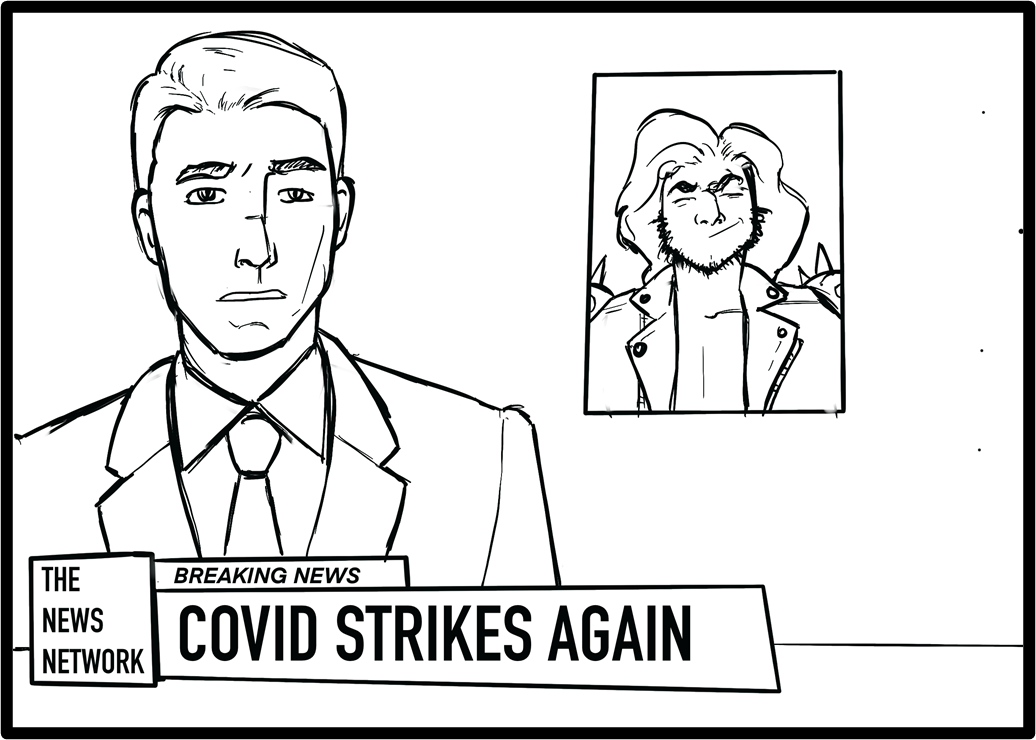
    NEWSREPORTER: AUTHORITIES REPORT YET ANOTHER HOME INVASION PERPETRATED BY A MAN WE NOW KNOW AS COVID NINETEEN FROM THE CORONAVIRUS CRIME FAMILY. HIS REIGN OF TERROR HAS GRIPPED THIS SLEEPY NEIGHBORHOOD SINCE LAST YEAR. IT SEEMS HIS M. O. IS INVADING THE HOME AND MAIMING OR KILLING EVERYONE INSIDE. HE CAN BE EASILY IDENTIFIED BY HIS UNIQUE LEATHER JACKET AND BOOTS.

    –

    MEANWHILE IN THE JANE JOHNSON HOME…

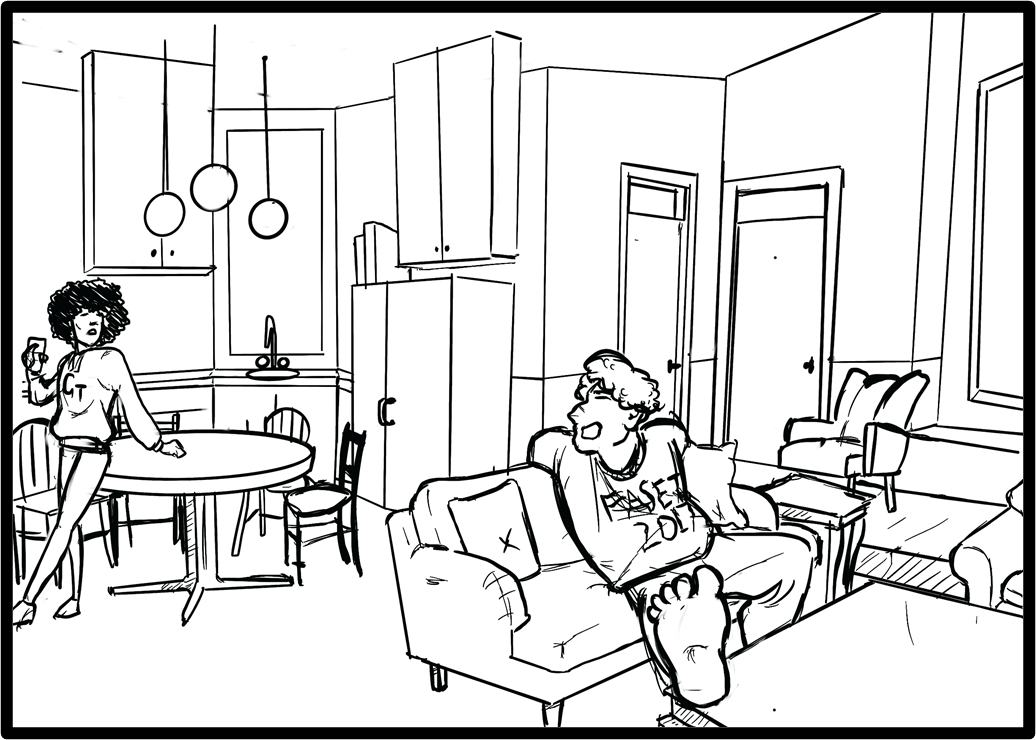
    GARY: THIS COVID GUY IS OUT OF CONTROL!

    STEPH: YEAH. DID BRAIN EVER ORDER THAT mRNA?

    GARY: SHE DID! VIA VACCINE SAME-DAY EXPRESS DELIVERY. IT SHOULD BE HERE ANY SECOND NOW.

    —

    OUTSIDE…

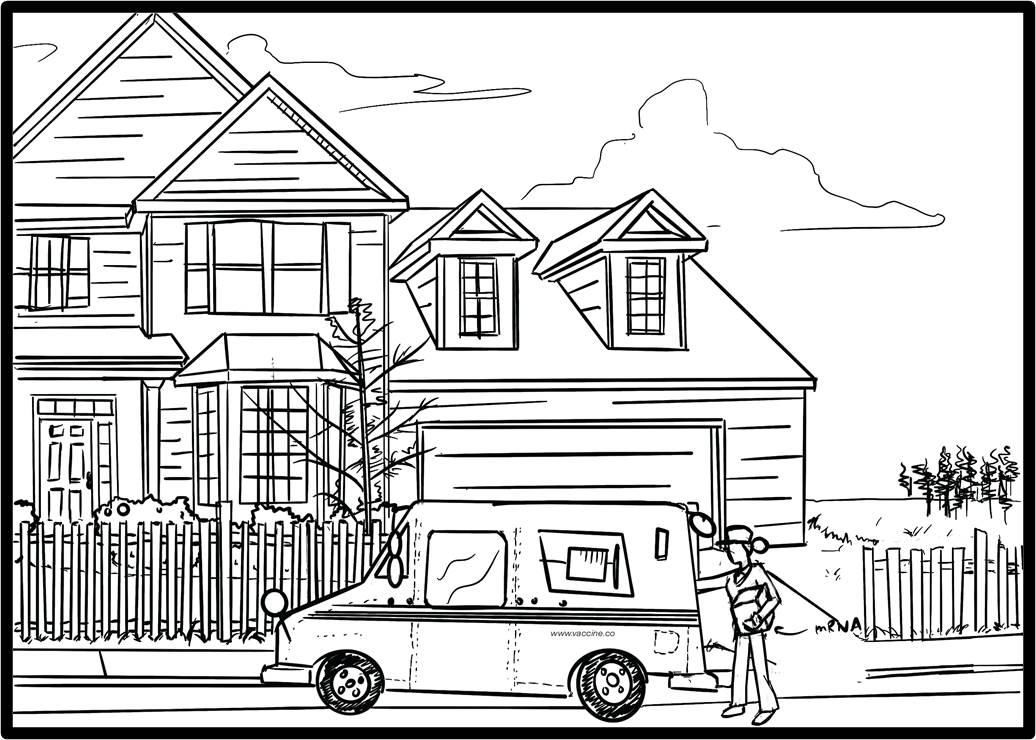
    THE VACCINE DELIVERY WORKER, MS. LIPID NANOPARTICLE, CARRIES THE BOX TO THE DOOR AND RINGS THE DOORBELL.

    —

    LIPID NANOPARTICLE: HERE’S THE mRNA MANUAL YOU ORDERED!

    GARY: THANK YOU MS…. LIPID NANOPARTICLE.

    LIPID: PLEASE, CALL ME LIPPY. LIPID NANOPARTICLE IS MY MOTHER’S NAME.

    —

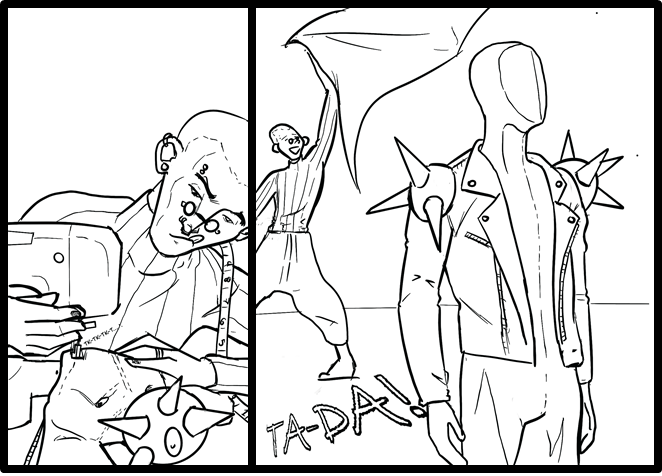
    GARY & STEPH CARRY THE mRNA MANUAL, WHICH DETAILS HOW TO MAKE COVID’S LEATHER JACKET AND BOOTS, TO THE ROOM WHERE THEIR HOUSEMATE, AXL THE RIBOSOME, DOES THEIR SEWING. A THOUGHT COMES TO GARY.

    GARY: WAIT! WON’T THAT MANUAL GET MIXED UP WITH THE DNA MANUAL, PERMANENTLY CHANGING THINGS AROUND HERE?

    STEPH: THE DNA MANUAL IS IN A SAFE IN THE STUDY. THIS MANUAL WILL GET NOWHERE NEAR IT. BESIDES, THIS IS WRITTEN IN ENGLISH, AND THE DNA MANUAL IS IN JAPANESE, SO THIS WOULD HAVE TO BE TRANSLATED FIRST, MAKING A MIX UP LIKE THAT IMPOSSIBLE

    —

    THEY GIVE THE MANUAL TO AXL THE WHO GETS TO WORK MAKING THE CLOTHES.

    —

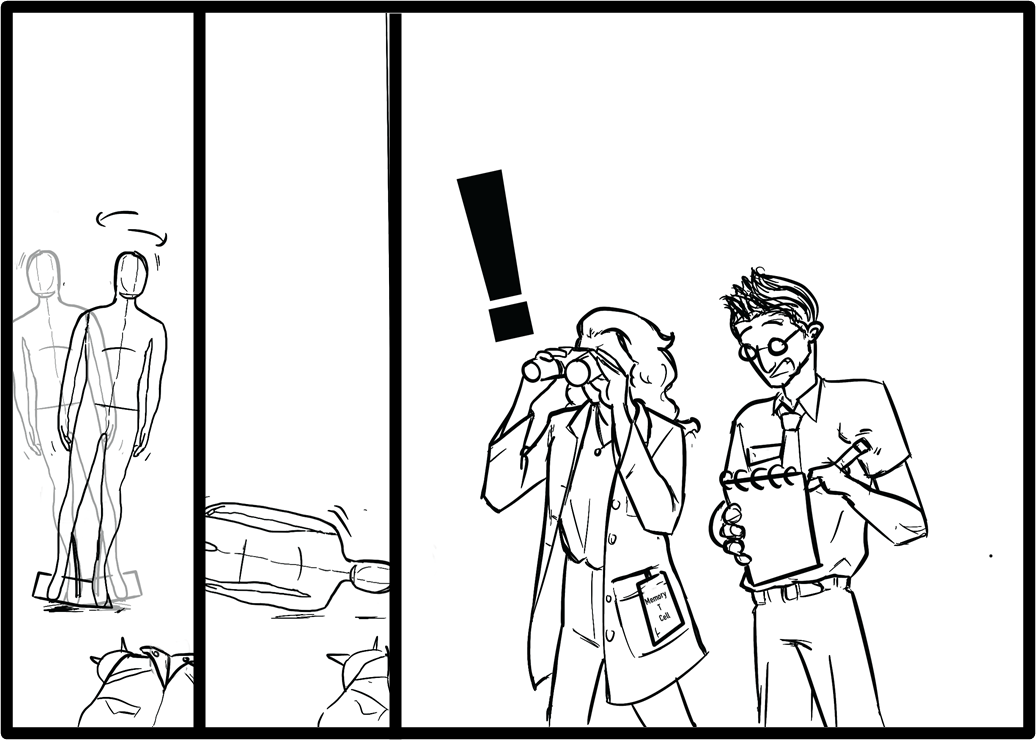
    HOME SECURITY SPOTS THE MANNEQUIN WEARING COVID’S CLOTHES AND DEPLOYS THE ANTIBODY SQUAD TO SUBDUE THE THREAT.

    —

    OTHER MEMBERS OF THE SECURITY TEAM RECORD THEIR FINDINGS

    MEMORY T CELL [LEFT]: WRITE THAT DOWN! WRITE THAT DOWN!

    —

    THEN ONE DAY…

    COVID NINETEEN DECIDES TO PAY THE JANE JOHNSON HOME A VISIT

    —

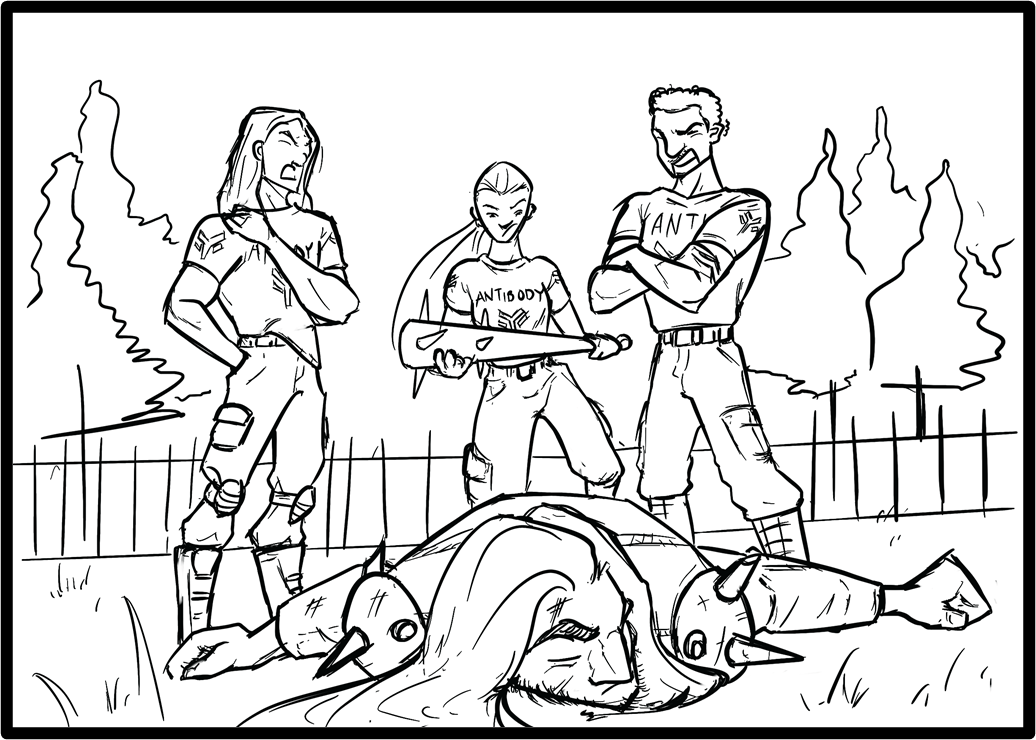
    BUT THE HOUSE IS BATTLE-TESTED AND READY FOR HIM. THEY ATTACK HIM IMMEDIATELY.

    —

    COVID ANTIBODY SQUAD [ALL]: AND STAY OUT!

    COVID JOINS A LONG LIST OF CRIMINALS WHO ARE NO MATCH FOR HOME SECURITY AND ITS ELITE ANTIBODY SQUAD!


    FIN

  • College Student? Or Air in a Spark-Ignition Engine? A Haiku

    I’m compressed. One spark,

    And I explode. So I work;

    Then leave exhausted

  • Vinyl is Better than Digital Music

    Hear that music??? That, my friend, is the sound of classic vinyl…

    Meet Ernie. My vinyl player 🙂

    You know that round spinning thingy that plays music that your grandparents and/or parents used growing up? Well, good news – it’s not extinct! When it comes to enjoying music, one of the best ways that I have discovered is by using vinyl (aka: the record player).

    Compressed MP3 files and digital streaming services such as Spotify, Apple Music, Pandora, and YouTube have been the social norm for listening to music; however, vinyl sales have tremendously increased from under a million in 2007, to more than 8 million today in the U.S alone. According the British Phonographic Industry, vinyl sales hit a peak in the UK and the US in recent decades. Why? Because vinyl just is better!!

    Let’s delve into the reasons why vinyl records are superior to digital MP3.

    1) Simply put, vinyl sounds better than MP3:

    Vinyl is the only playback format readily available to consumers that is fully analog and fully lossless. That means that with a quality record player, you get to enjoy a high-fidelity listening experience. High-fidelity equates to high-quality reproduction of sound, that has inaudible background noise and distortion – giving a sound extremely similar to the original. Who wouldn’t want to listen to music that sounds as authentic as the source intended it to be?

    The quality is immaculate. The song you hear playing in this article is featured above. It is a vinyl by the Righteous Brothers, with a song clip entitled “The White Cliffs of Dover” (1965).

    2) Listening to vinyl is a complete experience:

    An expanding collection of my vinyls!

    You know when you can feel the music when listening to your favorite songs? Well, with vinyl, you not only figuratively feel the music coursing through your mind and soul, but you can physically feel the music through the tangible form of the vinyl. There’s nothing like unraveling a vinyl wrapped in its cover. There’s nothing like being able to smell the music, just like the comforting smell of books in the library. With vinyl, you get to fully experience music with literally all of your senses.

    3) Going to record stores is so fun!!

    There’s nothing like the nostalgic and magical experience of entering a record store, whether it’s your first time, third time, or hundredth time! You can easily spend hours in the record store browsing, searching, and discovering music! You can mingle with other vintage audiophiles, and you can usually always get a special discount when buying vinyl in bulk! Furthermore, there is no monthly subscription to enjoy the music you want (Haha, take that Spotify and Apple Music)!

    Unraveling a shiny vinyl!

    Vinyl is an unbeatable classic that has remained relatively unchanged for the past 40 years! Since it’s creation in 1948, numerous developments and refinements within the vinyl industry have been made to perfect its technical and practical excellence. As George Plasketes, a professor of media studies and popular culture in the School of Communication and Journalism at Auburn University in Alabama, put it:

    “Vinyl is not simply a recording format, but the artefact of an age; it is an experience that embraces emotion, passion and romance”.

    Keep calm and vinyl on!

    Sources:

    Oregonian/OregonLive, David Greenwald. “Does Vinyl Really Sound Better? An Engineer Explains.” Oregonlive, 19 Nov. 2014, www.oregonlive.com/music/2014/11/does_vinyl_really_sound_better.html.

    Plasketes, George. “Romancing the Record: The Vinyl De‐Evolution and Subcultural Evolution.” Wiley Online Library, John Wiley & Sons, Ltd, 5 Mar. 2004, onlinelibrary.wiley.com/doi/abs/10.1111/j.0022-3840.1992.00109.x.

    Sarpong, David, et al. “’Vinyl Never Say Die’: The Re-Incarnation, Adoption and Diffusion of Retro-Technologies.” Technological Forecasting and Social Change, North-Holland, 29 Nov. 2015, www.sciencedirect.com/science/article/pii/S0040162515003078#bb0310.

    Zabowski, Jason. “4 Reasons Why Vinyl Is Better Than MP3.” VOX Player, 21 Nov. 2017, https://vox.rocks/blog/vinyl-is-better

  • Direct Fusion Drive— It IS Rocket Science!

    Rockets had their humble start in 13th century China: bamboo tubes filled with gunpowder, attached to arrows, to be shot at Mongol invaders. Seven hundred years later, similar, albeit slightly bigger, tubes were filled with liquid hydrogen and oxygen, attached to a lunar module, and shot at the moon. Now, in the 21st century, we’re seeing another evolution, this time with Direct Fusion Drive (DFD). But the more things change, the more they stay the same, and the fundamental concepts behind rocketry that repelled the Mongols at the Battle of Kai Keng are the same fundamentals that are going to propel us to Pluto and beyond in record time.

    Rocket Science

    Well, how do rockets work anyway? On a theoretical level, they work thanks to Newton’s Third Law of Motion, which holds that every action has an equal and opposite reaction. Propellant is mixed and burned in a combustion chamber. The gas produced goes through a nozzle and accelerates to supersonic speeds (think about how partially covering the outlet of a hose with your thumb sends the water shooting out). The gas shooting out the other end necessitates an equal reactive force in the opposite direction on the engine, a force called thrust. This thrust is what makes the rocket fly, and since the rocket carries its own fuel and oxidizer (the chemical that fuel needs to burn), it doesn’t need oxygen from the environment to conduct combustion like a car engine does, making it ideal for traveling through the vacuum of space.

    Chemical Rockets

    Since their creation, conventional rockets have depended on exothermic chemical reactions to create the necessary hot, propelling gas. An exothermic reaction is a chemical reaction that produces heat. These rockets come in 2 major forms: solid-fuel rockets and liquid fuel. The fuel and oxidizer grains are mixed from the beginning, and to cause combustion, the surface of the mixture is ignited. Liquid fuel rocket fuel and oxidizer are originally separate and then injected into the combustion chamber, where they mix and burn.

    How DFD Works

    These two methods have sent countless astronauts into space, but in the coming decades, DFD may supplant them. DFD aims to use the power of its fusion reactions to not only propel the module but to generate its electricity. 

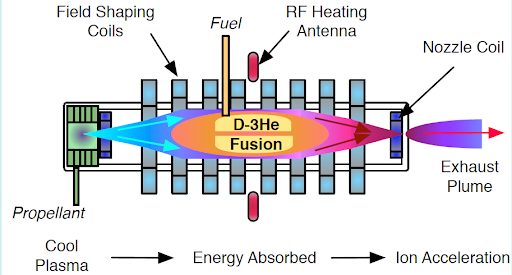
    Schematic showing how DFD works
    Image courtesy of http://fiso.spiritastro.net/telecon/Thomas_5-29-19/Thomas_5-29-19.pdf

    At its core, DFD is a fusion reaction powering a plasma rocket. Powerful rings of magnets are lined up to form something resembling a cylinder. Smaller but stronger magnets are situated at both ends. In the center of this configuration, helium-3, a stable helium isotope with only 1 neutron, is put in a fusion reaction with deuterium, a hydrogen isotope with roughly double the mass of ordinary hydrogen (isotopes are atoms of the same element that have the same number of protons but a different number of neutrons). These reactions and some side reactions create a fusion region the length of a surfboard. Cool plasma flows around it to extract energy (plasma is gas-like matter made up of ions and electrons; the presence of these electrons makes plasma really good at conducting electricity and easily influenced by electromagnetic fields). Antennae surrounding the engine create a rotating magnetic field that induces a current in the plasma. The plasma ions get more and more energized until they fuse, and the fusion products get shot out the back of the engine like hot gases in a conventional rocket, creating thrust.

    This process produces tons of excess heat, which is used in a Brayton Engine to create more than 200 kW of electrical power. All remaining heat gets rejected to space, the ultimate thermal reservoir.

    How DFD Measures Up to Conventional Propulsion

    Conventional rockets have many advantages: high thrust and (relatively) low cost. They’re a reliable mechanism that has been used for centuries. What makes DFD so attractive is its compact design and efficiency. An important quantity in rocketry is specific impulse—impulse per unit of propellant or how efficiently a rocket creates thrust. The higher the specific impulse (often measured in seconds), the less propellant required for the desired impulse. Solid and liquid fuel rockets top out with a specific impulse of around 500 seconds, but a DFD engine boasts a specific impulse of 10,000 to 20,000 seconds, all while being no more than 2 meters in diameter.

    With these numbers, NASA predicts that a 10,000 kg mission with DFD could get to Pluto in 4 years, which is much shorter than the 9.5 years it took 478 kg New Horizons on hydrazine propulsion, with more capabilities to do scientific work thanks to its increased power supply.

    The Future

    All in all, NASA is very excited about the DFD concept, as it can easily fit into NASA’s current launch infrastructure and would be an ultra-low radiation fusion option; however, there’s still a lot of work to be done. For example, while the Brayton Engine has been developed and the ion-energizing process is being developed, the crux of the concept, nuclear fusion, still has to be demonstrated. DFD design is going into its second phase, which seeks to improve its plasma heating system and shielding capabilities. According to the current timeline, actual flights are planned for after 2030 and, in the future, could power orbital platforms, interplanetary travel, and even bases on the Moon and Mars.


    Hablas español? Haz clic aquí para leer una traducción al español!

    —–


    Sources:

     Paluszek, M., Pajer, G., Razin, Y., Slonaker, J., Cohen, S., Feder, R., … Walsh, M. (2014). (rep.). Direct Fusion Drive for a Human Mars Orbital Mission (pp. 1–9). Princeton, New Jersey: Princeton Plasma Physics Laboratory Office of Reports and Publications. 

    Princeton Satellite Systems. (2018). Technical Video of Dfd Engine. YouTube. https://www.youtube.com/watch?v=hggqvB5I95I. 

    Thomas, S. (n.d.). Direct Fusion Drive: Enabling Rapid Deep Space Propulsion. Lecture. 

    Benson, T. (2014, June 12). Brief History of Rockets. NASA. https://www.grc.nasa.gov/www/k-12/TRC/Rockets/history_of_rockets.html. 

  • Are You Smiling Under Your Face Mask?

    Adaptation of Tokyo Japan during daytime photo – Free Person Image on Unsplash

    Well, I can’t tell and neither can the children growing up in the covid-19 pandemic struggling to develop their social and emotional intelligence.

    At the beginning of 2020, The Year of the Pandemic, the novel coronavirus was announced. A series of lockdowns and safety protocols were put in place. Schools were closed down, businesses went under, and the eerie shadow of death dawned over the entire globe. 

    Just as a brief overview, the covid-19 disease is caused by a new coronavirus that had yet to be seen in humans until the beginning of 2020. Typically, those afflicted with the disease experience dry coughs, fevers, etc. and in older individuals or those with underlying conditions may have more severe reactions. There are also many individuals considered to be asymptomatic, meaning they do not exhibit any symptoms and most of the time do not even realize they were ever infected. With that being said, roughly 1 in 6 people who do get infected become seriously ill and may have difficulty breathing which could potentially result in death (WHO Team, 2020).

    In addition to the explicit and devastating outcomes that have affected everyone, covid-19 is also causing implicit effects that may be going unnoticed. Some of these effects may not even be seen until later on, once this pandemic has passed. One example of this is the negative psychological impacts that it may be having on children. Kids growing up in this age of isolation and death could be experiencing serious psychological tolls. They are at the prime age of development as they are learning languages, gaining a sense of self, and being introduced to independence (Pelz, n.d.)

    It is possible that children’s emotional-facial recognition could not be developing properly, they are experiencing great amounts of stress, and they are missing out on key milestones in their lives. This could all lead to great psychological disparities in the future that many may not be anticipating.

    Break in Routine

    With the break in routine that many children experienced at the beginning of covid comes many unknown consequences. Activities like waking up, getting ready, going to school, lunchtime, playtime, cleanup, group circles, etc. are all part of a child’s routine and losing this structure could have psychological side effects (The Importance of Schedules and Routines, 2020).

    For one, suddenly being ripped away from this routine (or having never even been introduced to a routine) leads children feeling they have no control of their environment. This also comes with inevitable confusion as many were not able to grasp the entirety of the situation the world was facing (CDC, 2020).

    These children have lost a sense of security and safety. For many families, household incomes were lost along with many jobs. This leads to an inconsistency for children in their access to healthy food, safe transportation, or even shelter (CDC, 2020). In addition, this had a great toll on the parents themselves as they experienced great economic and social stresses. This can be confusing and have adverse impacts on the children as those are the individuals that they look up to and rely on for guidance.

    For many children, there was also a great break in their continuity of care and learning. Whether they were taken out of preschool or daycare, or were taken out of an elementary level education system, they were suddenly taken away from their daily routines and friends and became socially isolated. This led to increased stress for both parents and children once again (Araújo et al., 2020). This social isolation also leads to lack of communication with other children which can be a key factor in the psychological development of children. Building positive interactions with peers play a role in facilitating feelings of belonging and confidence as well as the ability to exercise control over the outside environment as previously mentioned (Kington et al., 2013).

    FACE-ing Many Problems

    Although most children have not lost complete interaction with the outside world due to this pandemic, those that do get the chance to go out are met with emotionless faces covered in cloth. Due to the mandates requiring face masks, it is possible that children are not properly developing their facial-emotional recognition.

    This psychology term refers to how people generally “infer the emotional states of other people, such as joy, sadness, and anger, using facial expressions,” (Ko, 2018). The reason the development of such a key psychological component could be obstructed within children specifically is because this is a process that develops early in life. It emerges around 7 months of life but its improvement and maturation continues developing until around the age of 14 in line with the frontal cortical maturation (Malsert et al., 2020).

    More specifically, the recognition of these emotions can vary and do not all develop at once. Happiness seems to be the first to develop with children at ages of 5 and 6 are able to accurately evaluate it at the same level as adults. Then comes fear with adult levels emerging at age 7, anger 2 years after, and disgust 4 year after. Additionally, children below the age of 9 were not able to accurately identify neutral facial expressions as they would typically label them as happy or sad (Durand et al., 2007).

    Furthermore, the ability for an infant to develop facial processing or focusing on another’s face is being obstructed by face masks. Newborns have been proven to prefer looking at faces and have a natural ability to recognize faces. They are able to recognize familiar faces and depend on their parents for survival and must be able to recognize them. In order for this process to develop properly, they must be able to visualize facial expressions accurately. This allows them to feel safe since they have a great dependence on visual cues and facial expressions to regulate their responses (Green et al., 2020).

    Missing Life Events

    With all of this also comes the inevitability of missing major milestones in their young childhood. Important events such as birthday parties, family gatherings, holidays, vacations, etc. are all crucial parts of one’s life that this pandemic has halted for many. Spending quality time with family and having celebrations as some of the few positive breaks in routine that children can benefit from.

    In addition, for many children it may also have been the moment of intimate exposure to death. With the virus, individuals around the world lost those close to them and children were shocked into the reality of life and death. For some, this could have even been to the extreme of losing both of their parents or losing siblings which can take a great toll.

    Even as the end of this pandemic draws near, we will still be feeling its effects down the line and potentially be reminded of it for several years afterwards.


    References

    Araújo, L. A., Veloso, C. F., Souza, M. D., Azevedo, J. M., & Tarro, G. (2020). The potential impact of the COVID-19 pandemic on child growth and development: A systematic review. Jornal De Pediatria. doi:10.1016/j.jped.2020.08.008

    CRC. (2020, August 20). Young children’s WELLBEING during COVID-19: Parental Resources |CDC. Retrieved from https://www.cdc.gov/coronavirus/2019-ncov/daily-life-coping/parental-resource-kit/early-childhood.html

    Durand, K., Gallay, M., Seigneuric, A., Robichon, F., & Baudouin, J. (2007). The development of facial emotion recognition: The role of configural information. Journal of Experimental Child Psychology, 97(1), 14-27. doi:10.1016/j.jecp.2006.12.001

    Green, J., Staff, L., Bromley, P., Jones, L., & Petty, J. (2021). The implications of face masks for babies and families during the Covid-19 pandemic: A discussion paper. Journal of Neonatal Nursing, 27(1), 21-25. doi:10.1016/j.jnn.2020.10.005

    The importance of schedules and routines. (2020, July 13). Retrieved from https://eclkc.ohs.acf.hhs.gov/about-us/article/importance-schedules-routines

    Kington, A., Gates, P., & Sammons, P. (2013). Development of social relationships, interactions and behaviours in early education settings. Journal of Early Childhood Research, 11(3), 292-311. doi:10.1177/1476718×13492936

    Ko, B. (2018). A brief review of facial emotion recognition based on visual information. Sensors, 18(2), 401. doi:10.3390/s18020401

    Malsert, J., Palama, A., & Gentaz, E. (2020). Emotional facial PERCEPTION development in 7, 9 and 11 YEAR-OLD children: The emergence of a silent eye-tracked emotional other-race effect. PLOS ONE, 15(5). doi:10.1371/journal.pone.0233008

    Pelz, B. (n.d.). Periods of Development. Retrieved from https://courses.lumenlearning.com/suny-hccc-ss-152-1/chapter/periods-of-development/

    WHO Team. (2020, May 8). Coronavirus disease (COVID-19): Risks and safety for older people. Retrieved from https://www.who.int/news-room/q-a-detail/coronavirus-disease-covid-19-risks-and-safety-for-older-people

  • Deep Philosophical Questions About the Universe

    Are you currently laying in bed in the wee-hours of the morning and are wondering… what even is life?? Why on EARTH am I here? If aliens exist, then why haven’t we made contact with them yet?….. Or maybe extraterrestrial life has already attempted to make contact with humans, but our technology is not advanced enough to detect them…

    Well, look no further in your search for some interesting and deep, philosophical questions. If you are scrolling through your phone in bed, these questions might help you fall asleep — but not because they are boring, rather, they will have your mind thinking deeply, to the point where your brain will be thinking so deeply that it will get tired, and thus, you might fall asleep from mental and intellectual exhaustion.

    These four questions are all about the universe, and will surely make your head spin like a spiral galaxy. Some of the questions have been supported by research, others are too complicated or abstract to conduct studies on. Hopefully some day in the future, scientists will be able to answer some of these questions with complete assurance.


    1)   WHAT CAME BEFORE THE “BIG BANG”?

    Photo Credits: @ActionVance: https://unsplash.com/s/photos/space-explosion

    Depending on your belief of how the universe became, there are two most popular beliefs: the Big Bang, or that simply God created all of the universe and life. The Big Bang hypothesis states that about 13.8 billion years ago, all of the current and past matter in the universe came into existence at the same time. But, have you ever thought of what happened before the Big Bang? If nothing existed before the Big Bang, then how can something can just come from nothing? And how did that nothing become something?? According to Stephen Hawking,

    “Asking what came before the Big Bang is meaningless, according to the no-boundary proposal, because there is no notion of time available to refer to. It would be like asking what lies south of the South Pole.”

    He proposed that there’s no  end,      or beginning,      at all.

    Take a second and try to grasp that idea… Can’t grasp it? Me neither.

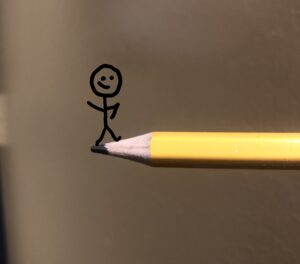
    In relation to Hawking’s “no-boundary” principle, it is like looking at the tip of a pencil. Take the example picture of my pencil below:

    “No-boundary” principle. Featuring my pencil

    Just as the tip of the pencil has a diameter of zero at its top-most point and gradually widens as you move to the right — the universe smoothly expanded from a point of zero size. Very peculiar and mind-blowing, isn’t it?!?


    2)  ARE WE ALONE IN THE UNIVERSE?

    My creepy drawing of an alien.

    To many people, there is no way that extraterrestrial beings cannot exist, even if they cannot see them. To others, aliens are a fantasy that has never, currently does not, and will never exist (except for E.T.). Dr. Zank and his colleagues from the University of Alabama in Huntsville within the Department of Space Science are among some of the scientists looking for the factors that make conditions optimal for exoplanets to fall into the “Goldilocks Zone”. The Goldilocks zone is where the planets are not too cold, nor too hot — but juuust right to possibly foster life.

    My representation of The Goldilocks Zone.

    There are lots of stars, called G-type or G-class stars, that are similar to our Sun. They radiate more light toward the infrared spectrum and they look promising for hosting exoplanetary life. Our nearest neighbors, Alpha Centauri A and Alpha Centauri B, look promising.

    The Fermi paradox offers an interesting perspective about the absence of evidence for extraterrestrial beings. Italian-American physicist Enrico Fermi created the Fermi paradox, which is the apparent contradiction between high estimates for the probability of extraterrestrial civilizations and the lack of evidence, thereof. However, various solutions to the Fermi paradox belong to different categories, such as the ones included below, regarding aliens:

        1. They Are Here: Aliens visited Earth in the past and they left evidence, via Alien Artifacts/Hieroglyphics, UFO’s, and witnesses.
        2. They Are Us: We– the humans– are the descendents of them ancient alien civilizations and we are the aliens.
        3. They Exist, But Have Not Communicated With Us, Yet: Aliens do indeed exist, but they either have not had enough time to reach us, are signaling but we do not know how to interpret the signaling, they have no desire to communicate with us (because humans are dumb, duh), their technology is too advanced, or they are all dead because of various catastrophes (that humans will eventually face).
        4. They Obviously Do Not Exist: Life is extremely rare, planets with the “perfect” conditions are rare, and humans are the superior race.

    Pick and choose your fighter as you will. I am not going to tell you which one to believe, but I will say that they can all be true — because we have not found evidence (or a lack thereof) of each possible solution.


    3)  IS THERE INHERENT ORDER IN NATURE, OR IS IT ALL JUST RANDOMNESS AND CHANCE?

    The recognition of randomness and apparent chance can be outwardly shown through things like galactic evolution (ie: the formation of the Universe), biological evolution (ie: development of early life), and geologic phenomena (ie: volcanos, mountains, rivers, etc). However, these phenomena can also be described via the perspective that there is inherent order in nature. For example, some Darwinistic-like theories suggest that through natural selection, life and everything that exists on the planet now is the result of deterministic principles.

    However, both are important to describe nature.  Nature is neither chaotic nor orderly; and neither random nor deterministic. In classical physics, things are observed as the same result every time given the same initial conditions. However, also in physics, the Big Bang theory suggests that the universe was created suddenly, by chance of the right conditions.

    So what gives? →  A paradox.

    A paradox such that chaos is deterministic, created by precise rules that do not involve any elements of chance. With this paradox, the future is completely determined by the past, but through time, small uncertainties accumulate upon each other — thus, even if a particular behavior is predictable in the short term, it remains unpredictable in the long run.

    My deck of cards with (literal) chaos surrounding it.

    “Essentially, there is order in chaos: underlying chaotic behavior there are elegant geometric forms that create randomness in the same way as a card dealer shuffles a deck of cards or a blender mixes cake batter.” — Chaos, Scientific American Journal

    Opposites truly do attract, in this case. I would have never thought of how order and chaos could mesh together so … naturally.


    4)  DO WE LIVE IN A SIMULATION?

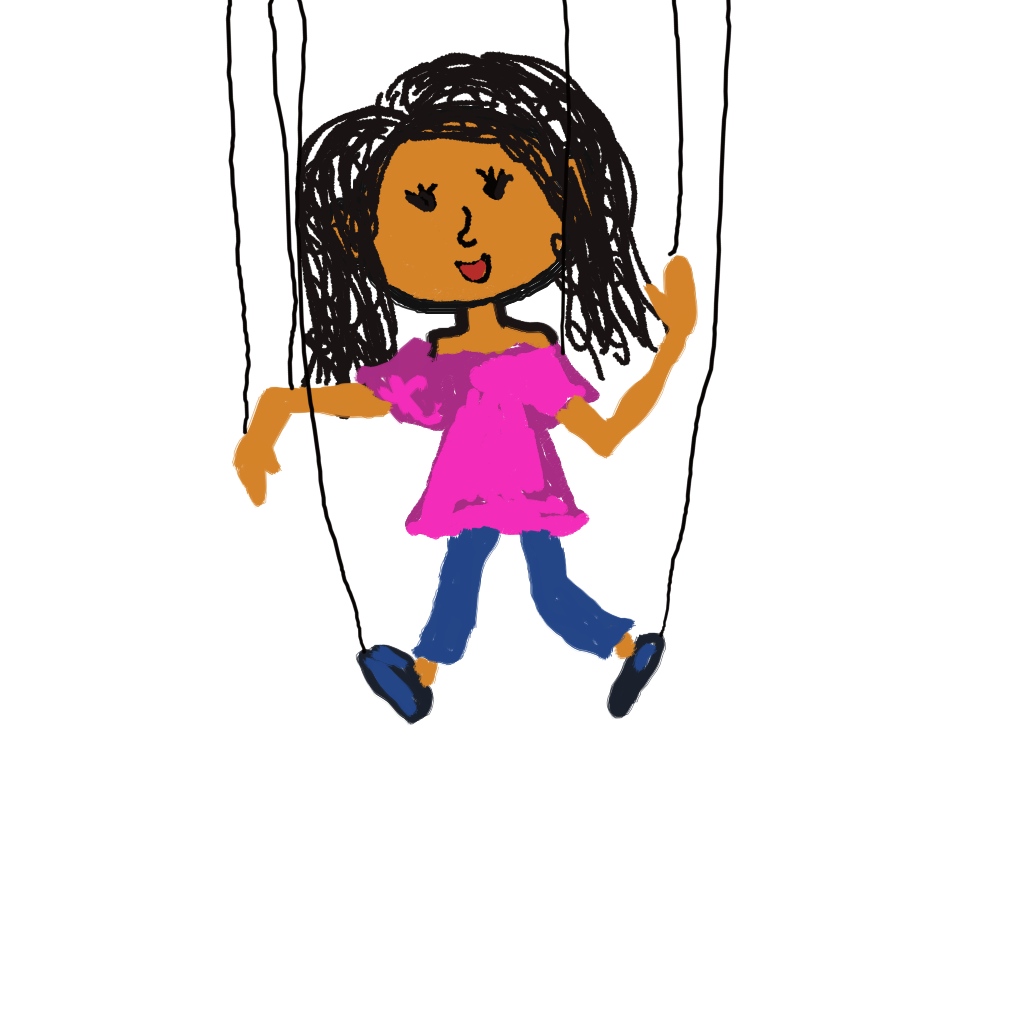
    Are we sort of like puppets??

    The idea that we could be virtual beings living in a computer simulation means that our simulated environment would create perceptions of reality on demand, rather than simulate all of reality all the time. This is similar to a video game where only parts of a scene are rendered to be visible to a player.

    According to Neil deGrasse Tyson, “Maybe that’s why we can’t travel faster than the speed of light, because if we could, we’d be able to get to another galaxy… So the programmer put in that limit”.  A new analysis by Nick Bostrom of the University of Oxford shows that ‘the odds that we are living in base reality—meaning an existence that is not simulated—are pretty much even’.

    Bostrom’s simulation argument showed that at least one of the following scenarios must be true:

    1. Humans almost always go extinct before reaching the simulation-savvy stage.

    2. Even if humans make it to that stage, they are unlikely to be interested in simulating their own ancestral past.

    3. The probability that we are living in a simulation is close to one.

    If you think that perspective is interesting, take a look further. On November 12, 2019, professors at the Georgia Institute of Technology debated on the question: “Do we live in a simulation?”. There were lots of interesting answers, including the one below by professor Hans Klein in the School of Public Policy:

    “It’s a simulated world that we live in to the extent that we live in this world that arrives to us through media the nature of the simulation is that institutions have interests and the interests of the media corporations and the interests of the entities that are being reported on by the media corporations. They’re all actively shaping the information flows that come to the public, it’s quite significant […] A lot of effort is made to influence how our knowledge of the world is mediated and it’s done in such a way so that we will so we end up living in if we live on critically we live in a world that’s a bit of a bit of a fantasy world and it’s a fantasy world that reflects off in the interests of media institutions and powerful societal interests.”

    In a sense, Klein is saying that we, as humans, are creating our own simulating reality through the media and information we consume and the powerful interests of society that media corporations help perpetuate. With this perspective, maybe we are living in base reality after all…


    ALAS,

    As mysterious as the universe can be, hopefully one day humans will be able to answer these questions with impeccable certainty. Maybe the universe or some higher power does not want us to know the truth about our universe… Or maybe simply, humans just are not advanced enough yet to grasp the true notions of our reality, origin, or purpose. Hopefully you are asleep by now (if you wanted to be), but if not, may the Universe always be with you!


    SOURCES:

    Ananthaswamy, Anil. “Do We Live in a Simulation? Chances Are about 50–50 – Scientific American.” Scientific American, Scientific American, 13 Oct. 2020, https://scientificamerican.com/article/do-we-live-in-a-simulation-chances-are-about-50-50/.

    “Before the Big Bang: The Prehistory of Our Universe – Brian Clegg – Google Books.” Google Books, Brian Clegg, Aug. 2009, https://books.google.com/books?hl=en&lr=&id=3fZ0SM78LFsC&oi=fnd&pg=PP2&dq=what+happened+before+the+big+bang&ots=6aaH7pfy8I&sig=Gw6XKD59ZborhgRoidXqEaSqb88#v=onepage&q=what%20happened%20before%20the%20big%20bang&f=false. Accessed 10 Feb. 2021.

    C. JOHN MANN; Randomness in Nature. ‘GSA Bulletin’ 1970;; 81 (1): 95–104. https://pubs.geoscienceworld.org/gsabulletin/article-lookup/81/1/95 Accessed 2 Mar. 2021.

    Chaos. Scientific American, 1986, https://www.jstor.org/stable/pdf/24976102.pdf?refreqid=excelsior%3A9e5867f32c36ce9d2401f9b76c3af1cc. Accessed 26 Feb. 2021.

    Cvitanović, Predrag, et al., editors. Professor Debate on the Topic – Do We Live In a Simulation? Georgia Tech Library, 12 Nov. 2019, https://smartech.gatech.edu/handle/1853/62045. Accessed 3 Feb. 2021.

    Fermi’s Paradox.http://abyss.uoregon.edu/~js/cosmo/lectures/lec28.html. Accessed 18 Feb. 2021.

    “If the Universe Is Teeming with Aliens … WHERE IS EVERYBODY?: Fifty … – Stephen Webb – Google Books.” Google Books, https://books.google.com/books?hl=en&lr=&id=Kp6g79LuKWEC&oi=fnd&pg=PA2&dq=do+aliens+exist&ots=aAMZyI0X6s&sig=0DONvBxxF8VTV6N37huhr3X5M5c#v=onepage&q=do aliens exist&f=false. Accessed 6 Mar. 2021.

    “Physicists Debate Hawking’s Idea That the Universe Had No Beginning.” Quanta Magazine, Natalie Wolchover, 6 June 2019, https://www.quantamagazine.org/physicists-debate-hawkings-idea-that-the-universe-had-no-beginning-20190606/. Accessed 2 Mar. 2021.