Category: today i learned (til)

  • Hydrogel-Semiconductor Hybrids: Blurring the Line Between Biology and Technology

    Hydrogels are materials that mimic the softness and flexibility of biological tissues, making them invaluable in medicine for tasks like wound healing and drug delivery. Semiconductors, on the other hand, power the electronics that define our modern world, offering functionalities like sensing, amplification, and light-based modulation. Bringing these two materials together could transform the way we design devices for biomedical use, but this combination has been difficult to achieve—until now.

    Researchers have developed a process called solvent affinity–induced assembly that embeds a hydrophobic semiconducting polymer into a hydrogel without compromising its softness or stretchiness. This innovation allows the creation of a hybrid material that behaves like biological tissue while also carrying out advanced electronic functions. The process starts by mixing a semiconducting polymer called p(g2T-T) with a hydrogel-forming monomer, acrylic acid, in a solvent known as dimethyl sulfoxide (DMSO). Ultraviolet (UV) light is used to cross-link the mixture into a stable double-network structure, and the DMSO is then replaced with water. This crucial solvent exchange step transforms the material into a soft, water-filled hydrogel while preserving the semiconductor’s electronic properties.

    The resulting material exhibits a modulus, or stiffness, as low as 81 kilopascals, similar to biological tissues, and can stretch up to 150% without breaking. Despite its softness, it maintains high charge-carrier mobility, a measure of how efficiently it conducts electricity, comparable to that of rigid semiconductors. The hydrogel’s porous structure further enhances its performance by promoting molecular interactions with surrounding fluids, which improves its ability to sense and respond to biochemical signals.

    This breakthrough has significant implications for medicine and technology. Because the hybrid material matches the mechanical properties of living tissues, it reduces the likelihood of immune responses when used in the body. Its combination of biocompatibility and electronic functionality enables a range of possibilities, such as real-time biosensing to detect subtle changes in the body, like shifts in pH or glucose levels. It also has potential for light-based therapies, delivering precise stimulation to tissues or nerves through photomodulation. Furthermore, its softness and stretchability make it ideal for wearable or implantable devices that conform to the surface of organs or skin without causing discomfort or damage.

    By merging the tissue-like properties of hydrogels with the advanced electronic capabilities of semiconductors, this innovation represents a major step forward in bioelectronics. The ability to create soft, biocompatible materials with integrated electronic functionality opens up new possibilities for smarter, more adaptable medical devices. From diagnostic tools to therapeutic implants, this hydrogel-semiconductor hybrid is poised to reshape the landscape of biomedicine.

    As research continues, this hybrid material could become a cornerstone of next-generation bioelectronics, paving the way for seamless integration between biology and technology.

    Reference:
    Dai, Y., Wai, S., Li, P., Shan, N., Cao, Z., Li, Y., Wang, Y., Liu, Y., Liu, W., Tang, K., Liu, Y., Hua, M., Li, S., Li, N., Chatterji, S., Fry, H. C., Lee, S., Zhang, C., Weires, M., Sutyak, S., … Wang, S. (2024). Soft hydrogel semiconductors with augmented biointeractive functions. Science (New York, N.Y.), 386(6720), 431–439. https://doi.org/10.1126/science.adp9314

     

  • Blind Box Culture and Its Appeal

    What is it?

    The first time I heard about what a blind box is, I was skeptical about the appeal. The first blind box I ever got was gifted to me and they came from the Sonny Angel series. I wondered what about these mostly naked babies with their butt cheeks out could be cute and desirable by the masses. Little did I know that this would be the beginning of my blind box figurine collection.

    The idea of blind boxes originated in Japan around the 1980s where the earliest form is called fukubukuro, also known as “lucky bag” (Tse 2023). Blind boxes contain collectable figurines that come packaged in a box where the buyer does not know what character they will receive. The figurine designs are often centered around different themes. Within each theme, there are secret figurines that are rare and there are often less than 1% manufactured out of the entire series (Nguyen 2024). This article explores the psychology behind a consumer’s motive on buying blind boxes and how it makes them feel.  

    Why do people buy blind boxes?

    Places that sell blind boxes often have many options for customers to choose from. Due to the various selections possible, consumers are overwhelmed by curiosity and excitement surrounding which character they could pull. This is one of the biggest incentives for people to want to buy a blind box. When they open the box, they either feel happy for getting what they want or disappointment for getting a duplicate or feeling of wanting to buy another one to test their luck (Nguyen 2024). Consumers often want to obtain secret figurines or complete the series collection, which results in feeling the need to buy more. The act of purchasing a blind box draws upon the concept of sunk cost fallacy, where the amount already spent increases one’s commitment to continue buying until they achieve the desired result (Ronayne 2021). 

    The sunk cost fallacy effect is attributed to high-stakes decisions which can be applied to various scenarios such as the decision on whether to buy a blind box or not. In a research conducted by Harvard on the sunk cost fallacy, participants were tested with eight different scenarios on their decision making. The finding from this was that “those with above average susceptibility scores (10 or higher) were almost three times as likely (36% vs 13%) to fall prey to the effect than those scoring below the average (9 or lower) when money was on the table” (Ronayne 2021). This relates to consumers’ motive for buying blind boxes as the fallacy manifests when they continue buying blind boxes because they’ve already invested money, rather than evaluating each new purchase decision independently. Specific triggers for the sunk cost fallacy in blind box purchases include, trying to complete a collection, attempting to get rare or secret figurines due to its scarcity nature, wanting to “make up for” previous disappointing pulls, and the desire to keep trying after getting duplicates.

    The uncertainty factor in blind boxes is attributed to positive emotion, information gap theory, uncertainty resolution, and innate optimism theory (Zhang 2022). Due to uncertainty in what character the buyer could obtain, it enables a higher arousal state in turn increases physiological arousal. This causes people to experience their emotions more intensely and so positive uncertainty increases consumers’ positive feelings when making purchase decisions (Zhang 2022). In terms of information gap, this theory explores the idea of “an information gap between the known information of a person and the unknown and desired information” (Zhang 2022). As a result, increasing one’s desire to know the information. This ties into the uncertainty resolution theory where “human beings are born with an inherent desire to solve uncertainty” (Zhang 2022). Furthermore, the innate optimism theory enables people to subconsciously perceive themselves as lucky, estimating outcomes optimistically, which drives their motivation to desire or logically believe they need to buy a blind box. These all contribute to consumer’s action and motive behind their purchases as they perceive the product’s value as beneficial. 

    Lastly, blind boxes build anticipation for its consumers. With the combination of uncertainty, dopamine is released when the consumer opens the box. The anticipation and surprise cause the release of dopamine, a neurotransmitter associated with pleasure and reward. Additionally, opening the blind box triggers the brain’s reward circuitry, particularly pathways in the mesolimbic system that generate feelings of reward and enjoyment. (Nguyen 2024). 

    Expansion and Influence

    Not only are consumers driven to buy blind boxes due to the overwhelming nature of displays when shopping in-person, but also the community it builds. Online, social media platforms feature communities dedicated to blind box culture. Collectors share unboxing videos, showcase their finds, and discuss their collections. These platforms allow consumers to connect with others who share their passion. As the popularity of blind boxes continues to rise, companies are finding new ways to innovate within this trend. Some examples are advent calendars or mystery items that come along with purchases, such as cosmetics. It is interesting to see how blind boxes have transformed today, and I’m excited to see how it continues to grow whether that is in popularity, influence, or in design concepts.


    Sources cited

    Nguyen, P. (2024, March 21). What psychological factors influence consumers’ decision about buying blind boxes? Cognitive NeuroEconomics @ UCSD. https://medium.com/cognitive-neuroeconomics/what-psychological-factors-influence-consumers-decision-about-buying-blind-boxes-a3440992273b

    Ronayne, D., Sgroi, D., & Tuckwell, A. (2021, July 15). How susceptible are you to the sunk cost fallacy? Harvard Business Review. https://hbr.org/2021/07/how-susceptible-are-you-to-the-sunk-cost-fallacy

    Tse, A. (2023, March 24). Diving into blind box culture. Generasian. https://generasian.blog/2023/03/24/diving-into-blind-box-culture/

    Zhang, Y., & Zhang, T. (2022). The effect of blind box product uncertainty on consumers’ purchase intention: The mediating role of perceived value and the moderating role of purchase intention. Frontiers in Psychology, 13, 946527. https://doi.org/10.3389/fpsyg.2022.946527


  • Glowing Gels for Clearer Vision: A New Era in Eye Surgery

    In the intricate world of eye surgery, where precision is crucial, researchers are turning to innovative solutions to improve patient safety and outcomes. A recent breakthrough at Johns Hopkins University introduces a “glowing” gel that enhances surgical visibility and reduces the risk of complications. This novel tool, developed at the Wilmer Eye Institute and the Department of Biomedical Engineering, combines fluorescein and hyaluronic acid (a naturally occurring substance in the eye) to create a gel that “lights up” under a specific blue light.

    The glow arises from a reaction between fluorescein, a fluorescent dye widely used in medical diagnostics, and hyaluronic acid. When fluorescein absorbs light from a blue light source, it emits a greenish-yellow glow, a property known as fluorescence. Hyaluronic acid acts as the gel’s base, providing a biocompatible medium that integrates seamlessly into surgical applications. The team at Johns Hopkins optimized the concentration of fluorescein so that the gel would glow brightly without altering its physical properties or interfering with the surgeon’s view of delicate eye structures.

    Eye surgeries, such as cataract removal, often rely on ophthalmic viscosurgical devices (OVDs)—gel-like substances that stabilize the eye during procedures. While OVDs are indispensable, their use comes with challenges. Any gel left behind post-surgery can increase eye pressure, cause irritation, or lead to complications requiring additional intervention. Current techniques to locate and remove residual OVDs depend on the surgeon’s experience and careful observation under white light, which may not always reveal minute amounts of leftover material.

    This new fluorescein-infused gel, dubbed “conjOVD”, addresses this issue by making the gel instantly visible under cobalt blue light (CBL). Surgeons can now detect and remove every trace of the gel before concluding the operation. This innovation could significantly improve surgical outcomes, as even a slight reduction in post-operative complications benefits patients immensely.

    During laboratory tests, the gel demonstrated a unique advantage: it remains clear under normal white light but becomes vividly fluorescent under blue light. This dual property ensures the gel doesn’t obstruct the surgeon’s view during delicate steps of the surgery while enabling precise removal at the end.

    While still in the testing phase, this glowing gel has the potential to become a game-changing addition to surgical toolkits. It reflects a growing trend in combining chemistry, engineering, and medicine to address challenges in modern surgery.

    By improving visibility during operations and reducing risks associated with retained OVD, this tool promises to make eye surgeries quicker, safer, and more effective for patients. As further studies confirm its efficacy, this technology could soon be a standard feature in operating rooms worldwide, bringing in a new era of precision eye care.

    Reference:

    Rocher, Erick E. BS; Eghrari, Allen O. MD, MPH. Fluorescein-conjugated hyaluronic acid enables visualization of retained ophthalmic viscosurgical device in anterior chamber. Journal of Cataract & Refractive Surgery 50(10):p 1058-1064, October 2024. | DOI: 10.1097/j.jcrs.0000000000001503 

  • Why Is Sleep So Important?

    Many of us are consistently sleep deprived. On average, children need 8-10 hours of sleep per night and adults need 7-9 hours per night (National Heart, Lung, and Blood Institute, 2022). However, many of us get less than the recommended amount of sleep on a consistent basis. Why is sleep so important and what are the benefits of getting enough sleep? This infographic explains the benefits of getting good quality sleep each night.


    Citations:

    1. Aguirre, C. (2015, November 12). What would happen if you didn’t sleep? – Claudia Aguirre. YouTube. https://youtu.be/dqONk48l5vY?si=X8WAdJ3BDkuEeTyx
    2. Finan, P. (2019). The Effects of Sleep Deprivation. Johns Hopkins Medicine Health Library. https://www.hopkinsmedicine.org/health/wellness-and-prevention/the-effects-of-sleep-deprivation
    3. Garbarino, S., Lanteri, P., Bragazzi, N. L., Magnavita, N., & Scoditti, E. (2021). Role of sleep deprivation in immune-related disease risk and outcomes. Communications Biology, 4(1). https://doi.org/10.1038/s42003-021-02825-4
    4. How Much Sleep Kids Need. (2024, June 4). Cleveland Clinic. https://health.clevelandclinic.org/recommended-amount-of-sleep-for-children
    5. Liew, S. C., & Aung, T. (2020). Sleep deprivation and its association with diseases- a review. Sleep Medicine, 77. https://doi.org/10.1016/j.sleep.2020.07.048
    6. National Heart, Lung, and Blood Institute. (2022, March 24). How Sleep Works – How Much Sleep Is Enough? | NHLBI, NIH. Www.nhlbi.nih.gov. https://www.nhlbi.nih.gov/health/sleep/how-much-sleep
    7. Papatriantafyllou, E., Efthymiou, D., Zoumbaneas, E., Popescu, C. A., & Vassilopoulou, E. (2022). Sleep Deprivation: Effects on Weight Loss and Weight Loss Maintenance. Nutrients, 14(8), 1549. https://doi.org/10.3390/nu14081549
    8. Tomaso, C. C., Johnson, A. B., & Nelson, T. D. (2020). The Effect of Sleep Deprivation and Restriction on Mood, Emotion, and Emotion Regulation: Three Meta-Analyses in One. Sleep, 44(6). https://doi.org/10.1093/sleep/zsaa289
    9. You, I. (2013, September 22). What If You Stopped Sleeping? YouTube. https://youtu.be/nNhDkKAvxFk?si=bTGL9bxLfCqiwnnu
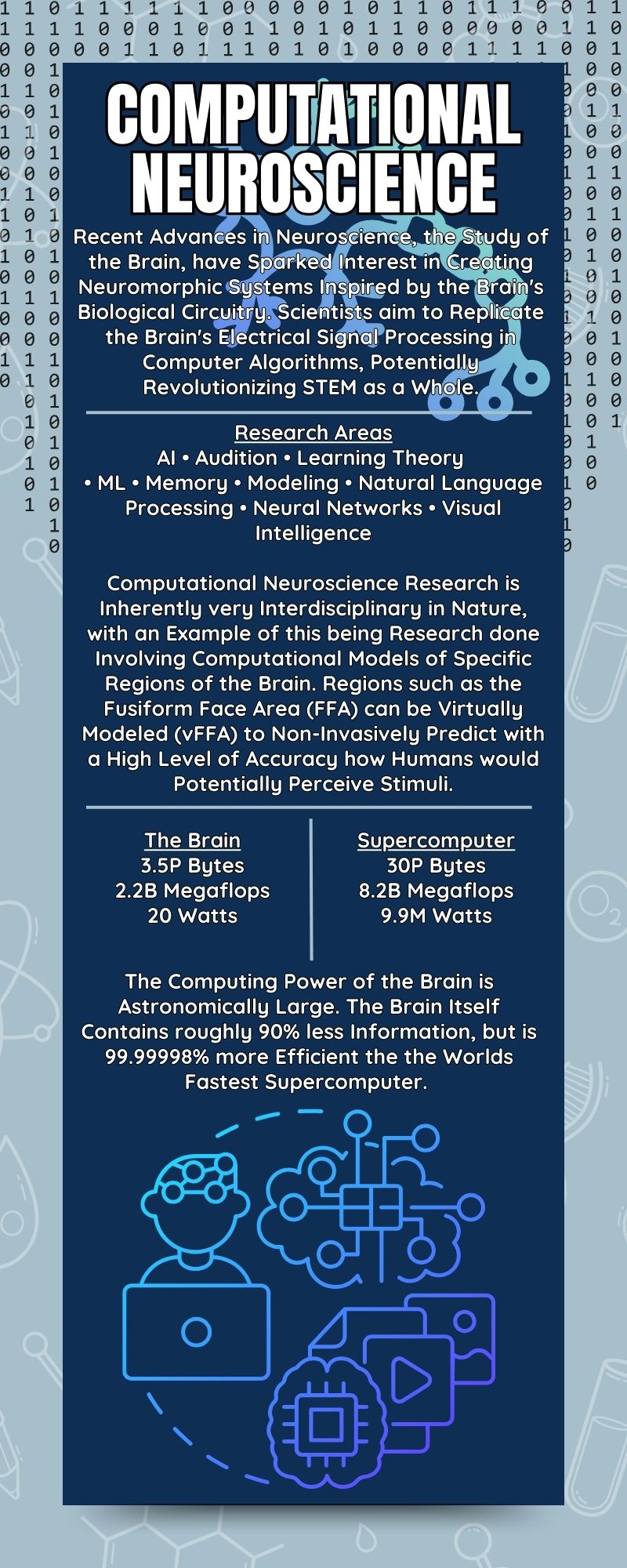
  • Computational Neuroscience Infographic


    References

    DiCarlo, J., Fedorenko, E., Fiete, I., Gosh, S., Harnett, M., Jazayeri, M., Kanwisher, N., McDermott, J., Poggio, T., Saxe, R., & Seethapathi, N. (2024, September 12). Computational neuroscience. MIT McGovern Institute. https://mcgovern.mit.edu/research-areas/computational-neuroscience/

    Michael Douglas, A., Vulisa Q, C., Vigneshwaran, J., Dineva, B., Tsai, Y.-L., de Planque, T., Opanga, P., Verena Rentschler, C., & Wang, J. (n.d.). Big Data: Computer vs. human brain: MS&E 238 blog. MSE 238 Blog Big data Computer vs Human Brain Comments. https://mse238blog.stanford.edu/2017/07/teun/big-data-computer-vs-human-brain/

    Murty, A. R. (n.d.). The murty lab: Georgia tech. MurtyLab. https://www.murtylab.com/

    U.S. Department of Health and Human Services. (n.d.). Infographic: Why do we study neuroscience?. Eunice Kennedy Shriver National Institute of Child Health and Human Development. https://www.nichd.nih.gov/newsroom/digital-media/infographics/neuroscience 

  • Noses Know: The Fragrant Connection to Our Memories


    https://unsplash.com/photos/macro-shot-of-yellow-flowers-t0ZfzT8FopE

    Imagine walking into a café and being instantly transported back to your childhood—an aroma of freshly baked cookies, a hint of vanilla, and suddenly you’re twelve years old again, standing in your grandmother’s kitchen. This is the power of our sense of smell, intricately woven into the fabric of our memories.

    When we think of our senses, vision and hearing often take center stage. However, the olfactory system, responsible for our sense of smell, has a unique and profound influence on our memories and emotions. Let’s dive into how this remarkable connection works and why it matters in our daily lives.

    Did you know that the olfactory bulb, which processes smells, is directly linked to the amygdala and hippocampus—two brain areas critical for emotion and memory? This direct pathway is why certain scents can trigger vivid memories, often laden with strong feelings. It’s no wonder that many people report memories associated with particular smells more clearly than those tied to sights or sounds.

    Research shows that our brains are wired to associate smells with experiences and emotions. A study found that when participants were exposed to specific odors, they recalled personal memories more easily than when presented with neutral cues. This phenomenon, often referred to as “Proustian memory,” named after the famous writer Marcel Proust, illustrates how a single scent can unlock a floodgate of memories. You might find that a whiff of a certain perfume brings back a memory of a special person or event.

    The olfactory system doesn’t just process these smells; it helps encode them into our memory. When you inhale an odor, the olfactory receptors send signals to the brain, activating areas responsible for memory and emotion. This process allows us to remember not just the smell itself but the context in which we experienced it. The interplay of memory and emotion creates rich, vivid recollections that can be both comforting and nostalgic.

    Understanding the link between smell and memory has real-world implications, especially in therapeutic settings. For example, reminiscence therapy often employs familiar scents to help evoke memories in individuals with dementia or Alzheimer’s disease. Kodak, for instance, recently released “memory shots” to allow users to create AI images of memories. This triggers memories in people who have neurodegenerative conditions, which can reduce anxiety, stress, and depression. By harnessing the power of smell, caregivers can help patients reconnect with their past and enhance their quality of life. 

    Additionally, olfactory training—exposing individuals to various scents—can aid those with olfactory dysfunction, potentially improving memory recall and overall well-being.

    The olfactory system is a fascinating aspect of human biology that serves as a bridge between our senses and our memories. As college students navigating a whirlwind of experiences, being aware of how smells can evoke memories may help us savor the present while honoring our past. So next time you catch a whiff of something familiar, take a moment to reflect—what memories does it awaken for you?

    References:

    Bohbot, V. D. (2022, May 18). What smells tell us about our memories. Nature. https://www.nature.com/articles/d41586-022-01626-x

    Hummel, T., Whitcroft, K., Fjaeldstad, A. W., et al. (2011). Olfactory dysfunction and its consequences for quality of life. International Journal of Otolaryngology, 2011, 1-9.

    Fischer, K. (2024, October 7). Kodak launches reminiscence therapy tool for people with dementia. McKnight’s Long-Term Care News. https://www.mcknights.com/news/kodak-launches-reminiscence-therapy-tool-for-people-with-dementia/

    Li, W., Zheng, F., & Hu, Y. (2010). Odor-evoked fMRI responses in the human brain: A review. Neuroscience & Biobehavioral Reviews, 34(8), 1204-1216.

    Renaud, M. (2020, February 25). How scent, emotion, and memory are intertwined—and exploited. Harvard Gazette. https://news.harvard.edu/gazette/story/2020/02/how-scent-emotion-and-memory-are-intertwined-and-exploited/

    Wang, Q., Li, Q., & Li, J. (2020). Olfactory and memory: A review of studies from the 20th century to the present. Frontiers in Psychology, 11, 577823.

  • “Quacking the Code” – Rubber Ducks in IT

    When asked to think about a rubber duck, the average person would probably envision a yellow toy that kids play with, usually when taking a bath.

    In the information technology field, however, rubber ducks signify more than just a toy. To those in the software industry, rubber ducks are tools used for debugging and hacking.

    No longer the staples of childhood bathtime, rubber ducks are used by programmers as debugging companions. Often referred to as “rubber duck debugging,” this practice is a simple yet surprisingly effective tactic. When programmers encounter a particularly troublesome bug or a problem in their code, they explain the code and their thought process out loud to the rubber duck, as if the duck were an attentive listener.

    The act of verbalizing the problem forces the programmers to slow down and articulate their thoughts, which can often lead them to identify the issue themselves. A form of cognitive debugging, the act of explaining the code helps the programmer understand it better by breaking complex problems down into smaller, more manageable parts. By walking through the code step by step, they can often pinpoint exactly where any flaws or logical errors occur.

    Apart from this effective debugging tactic, rubber ducks signal another aspect of software – hacking USBs. Theoretically, this tool is utilized for penetration testing. Security experts can use rubber duckies to test the resiliency of their computers systems. However, it can also be used by hackers for keystroke injection attacks. When plugged into a computer’s USB port, they emulate a keyboard and can type out pre-programmed keystrokes at an extremely rapid pace, often faster than a human could type.

    Posing a significant threat to computer security, USB rubber duckies can bypass common security measures to automate attacks, exploit physical access, and evade traditional security measures. Incredibly dangerous tools like the Hak5 USB Rubber Ducky exploit the trust that computers place in activities such as clicking and typing. Because these actions are typically associated with humans, computers are less likely to have security measures built in. USB rubber duckies can be pre-loaded with scripts that automate various malicious actions, such as installing malware, stealing sensitive data, or reconfiguring system settings. Once plugged in, they execute these scripts with lightning speed, making it difficult for users to detect and respond to the attack in real-time. Additionally, unlike remote hacking methods that rely on exploiting vulnerabilities over a network, USB rubber duckies require physical access to the target system. This makes them particularly dangerous in scenarios where an attacker can physically access a computer, such as in an office setting, where unattended workstations are common. USB rubber duckies can also be easily disguised as innocent-looking USB drives, making them effective tools for social engineering attacks. USB rubber duckies can bypass traditional security measures that focus on detecting malicious software or network-based attacks. Since they appear as standard keyboards to the computer’s operating system, they often go unnoticed by antivirus software or intrusion detection systems.

    The Hak5 USB Rubber Ducky.

    Organizations and individuals should be aware of the risks associated with these devices and take steps to mitigate them, such as implementing strict access controls, educating users about the dangers of plugging in unknown USB devices, and deploying endpoint security solutions that can detect and prevent unauthorized keystroke injections.

    While the image of a rubber duck may evoke memories of childhood innocence for many, its significance in the realm of information technology transcends mere nostalgia. From its role as a trusted debugging companion in software development to its potential as a formidable tool for hackers in the form of USB rubber duckies, this seemingly innocuous object embodies both creativity and danger. As technology continues to evolve, understanding both the playful and perilous aspects of innovations like rubber ducks is crucial for safeguarding digital systems and maintaining a secure computing environment.


    Sources:

    Dahmane, A. (2016, March 24). USB Rubber Ducky — Basic Use Case Scenario. Medium. https://medium.com/@dahmane/usb-rubber-ducky-basic-use-case-scenario-51b2fcbe2f5e

    Faife, C. (2022, August 16). The new USB Rubber Ducky is more dangerous than ever. The Verge. https://www.theverge.com/23308394/usb-rubber-ducky-review-hack5-defcon-duckyscript

    Kahmen, J. (2023, May 12). Awareness with a USB Rubber Ducky. Turingpoint. https://turingpoint.de/en/blog/awareness-with-a-usb-rubber-ducky/#:~:text=A%20USB%20Rubber%20Ducky%20is

    Rubber Duck Debugging: History and Benefits. (2023, April 7). Masterycoding.com. https://www.masterycoding.com/blog/rubber-duck-debugging-history-and-benefits#:~:text=Rubber%20duck%20debugging%20is%20a%20simple%20but%20effective%20technique%20used

    Rubber ducky attack definition – Glossary | NordVPN. (2023, August 9). Nordvpn.com. https://nordvpn.com/cybersecurity/glossary/rubber-ducky-attack/#:~:text=A%20rubber%20ducky%20attack%2C%20also

    Subastil, A. C. (2020, August 12). The Psychology Behind Rubber Duck Debugging. Medium. https://medium.com/@arnoldcsubastil/the-psychology-behind-rubber-duck-debugging-f19141c70060

  • Lava Lamps – A Surprising Beacon of Light for Internet Encryption

    In the realm of Internet security, where digital threats loom large and data protection is paramount, innovative solutions often emerge from unexpected sources. One such solution is Cloudflare’s use of lava lamps as an unconventional approach to encryption.

    Cloudflare, an IT service management company, works with clients to improve the speed, security, and reliability of their Internet properties. As a leading Internet security and performance corporation, Cloudflare handles a significant proportion of all Internet traffic, making ultimate security a critical concern for the company and compelling it to find better solutions for secure encryption.

    At the heart of Cloudflare’s San Francisco, California headquarters lies an unusual feature: a wall of about a hundred lava lamps. Apart from adding an aesthetically-pleasing quality to the office, the mesmerizing wall forms a crucial component of the company’s encryption strategy.

    The lava lamp wall in the San Francisco office of Cloudflare.

    Invented in the 1960s, lava lamps consist of a transparent vessel filled with colored wax and liquid. When heated by an incandescent bulb at the base, the wax begins to melt and rise, creating undulating shapes and patterns within the liquid. The movements are chaotic and inherently unpredictable, making lava lamps an ideal source of randomness for cryptographic purposes. Due to their unique fluid dynamics and unpredictable patterns, lava lamps provide a rich source of entropy. Entropy, simply put, refers to the amount of disorder in a system. A camera captures the movement of wax  within each lava lamp, which is then fed into a cryptographic algorithm and used to generate cryptographic keys for encrypting internet traffic.

    The high entropy of lava lamps provide the key and most essential element of the process – randomness. Lying at the core of secure encryption algorithms, randomness can be considered the foundation for generating cryptographic keys that resist brute-force attacks and other such vulnerabilities. Unlike deterministic processes, which follow predictable patterns, randomness introduces unpredictability and complexity, making it exceedingly difficult for adversaries to decipher encrypted data without the corresponding keys.

    In the busy lobby of Cloudflare’s headquarters,  obstructions are commonplace, as people come and go, blocking parts of the wall from the camera’s view for varying periods of time. Surprisingly, these interruptions become part of the randomness that the camera captures, contributing to the entropy leveraged for secure encryption.

    Computers, which operate on logic, are programmed to work based on if-then statements: By design, repeatedly entering the same input should produce the same output each time as a result. Certain computer programs can simulate randomness, but it is just that – a simulation. Eventually, patterns within these simulations can be found and predicted, forming an unstable base for security. As such, the lava lamp wall is a remarkable alternative to create unpredictable randomness and generate stronger keys.

    Understanding the need for backups, Cloudflare has various contingency measures in place. The possibility of the camera being shut off or damaged is a potential concern for the integrity of the encryption process. In the event of camera failure, the company can rely on two other sources for randomization: the Linux operating system running on Cloudflare servers and physical access to the camera, which is situated in a Cloudflare-owned space. This accessibility enables Cloudflare to quickly rectify any issues by turning the camera on again or replacing it as is necessary, ensuring the continuity of the encryption process. Another possible scenario to consider is the secret use of an external camera to film the wall and generate cryptographic keys. However, to combat this case, Cloudflare also utilizes its two other major offices around the world to generate random data from real-world inputs. Filming the movements of a double-pendulum system in its London office and recording the radioactive decay of a uranium pellet via a Geiger counter in its Singapore location, Cloudflare has enabled the encryption process to become even stronger and more chaotic.

    The lava lamp wall at Cloudflare, along with its other endeavors at its global offices, not only exemplifies a practical solution for generating cryptographic keys, but also models creative problem-solving. The success of Cloudflare’s lava lamp wall serves as inspiration for others in the technology industry to rethink traditional paradigms and explore new, unique avenues for enhancing digital security.


    Sources:
    Airhart, Ellen. “How a Bunch of Lava Lamps Protect Us from Hackers.” Wired, 29 July 2018, www.wired.com/story/cloudflare-lava-lamps-protect-from-hackers/.
    Garge, Ishwari. “Cloudflare’s Encryption with Lava Lamps.” CSI Decrypt, 9 July 2021, medium.com/csirait-decrypt/cloudflares-encryption-with-lava-lamps-a144b4ad623f.
    “How Do Lava Lamps Help with Internet Encryption?” Cloudflare.com, Cloudflare, www.cloudflare.com/learning/ssl/lava-lamp-encryption/.
    “The Lava Lamps That Help Encrypt the Internet.” Atlasobscura.com, 29 Apr. 2019, www.atlasobscura.com/videos/these-lava-lamps-help-encrypt-the-internet.

  • The Syrinx: The Musical Instrument For Rose-Ringed Parakeets

    The rose-ringed parakeet (Psittacula krameri) also known as the ring-necked parakeet, is a medium-sized bird species that is native to the Indian subcontinent as well as some parts of Africa and the Middle East. These parakeets are known for their vibrant plumage and their charming personalities, which attract both humans and other birds to their warm personalities. They are highly social creatures and always playful and curious as they explore their surroundings with keen interest and engage in activities that challenge their minds. They are known for their vibrant green feathers and males have a narrow black or dark blue ring encircling their neck, hence the name “ring-necked” parakeet. Their diet mostly consists of a variety of fruits, nuts, and seeds, and the occasional spray millet, which is considered a treat. 

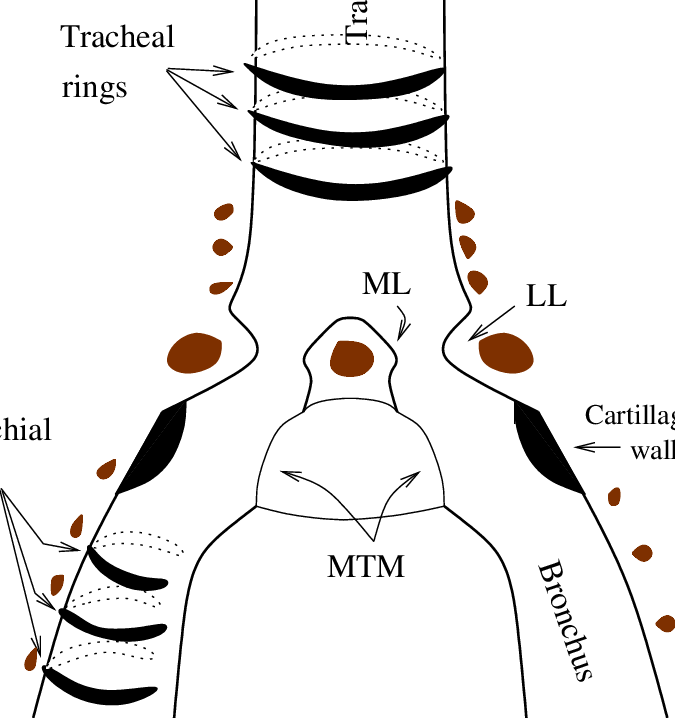
    Aside from all of those characteristics, the rose-ringed parakeets are known for their remarkable ability to mimic human speech and other sounds. They are proficient learners, often picking up on words, phrases, and noises from their surroundings and incorporating them into their vocalizations.  Their ability to vocalize their surrounding sounds comes from the remarkable feature called the syrinx. The syrinx is the avian equivalent of our voice box, situated at the base of the trachea where it splits into the bronchi. Unlike mammals the larynx, which produces sounds using vocal cords, birds have a more complex system involving a series of muscles, membranes, and cartilage within the syrinx. This intricate structure allows for precise control over pitch, volume, and tone, resulting in the diverse vocalizations observed across bird species.

    “The Syrinx Of Birds” Image Credit: Mendez & Goller (2020)

    One of the key features of the syrinx is its bilateral structure, meaning it has two halves, each capable of producing independent sounds. Each half of the syrinx is controlled by a set of muscles that allow for independent control of sound production. This enables birds to produce harmonious duets or even simultaneous but distinct vocalizations. This specialization can result in incredibly intricate vocalizations, with birds using one side for producing low-frequency sounds and the other for high-frequency sounds simultaneously. Additionally, the bilateral structure of the syrinx enables birds to modulate the airflow independently, allowing for the production of complex harmonies and melodies. This ability is particularly crucial during courtship displays, where male and female birds engage in elaborate duets to strengthen pair bonds and establish territory boundaries. Furthermore, the bilateral nature of the syrinx provides redundancy in vocal production, ensuring that birds can continue to communicate effectively even if one side of the syrinx is damaged or impaired.

    What makes the syrinx particularly interesting in rose-ringed parakeets is its ability to produce a wide range of sounds, including human speech. Their syrinx is well-developed, allowing them to accurately replicate words, phrases, and even melodies. Through a combination of muscle control and airflow modulation, these parakeets can produce sounds that closely resemble those of their human companions. Using their syrinx, they then attempt to replicate these sounds with astonishing accuracy. With practice and repetition, some parakeets become proficient at mimicking human speech to the point of holding conversations. This ability to mimic human speech has made rose-ringed parakeets popular as pets and subjects for study in the field of animal communication. Their capacity for vocal imitation demonstrates the remarkable adaptability and complexity of the avian syrinx, showcasing its role not only in natural communication but also in deep interactions between humans and birds.

    Rose-ringed parakeets are not only visually stunning but also possess an extraordinary musical talent thanks to their syrinx. Through their mimicry, they bridge the gap between humans and birds, captivating our hearts with their melodious songs and music. Their syrinx is one-of-a-kind as it enables them to mimic human speech and sounds that they hear from their natural environments. Their key features, like the bilateral structure, allow them to produce sounds in different frequencies and modulate their airflow better. These features also give them the incredible ability to mimic human speech and give them a small ability to hold conversations with us. In summary, the incredible musical talents of rose-ringed parakeets, made possible by their unique syrinx, make them delightful companions and subjects of study and fascinating creatures. 

    References: 

    Pârâu, L. G., Strubbe, D., Mori, E., Menchetti, M., Ancillotto, L., Kleunen, A. V., … & Wink, M. (2016). Rose-ringed parakeet Psittacula krameri populations and numbers in Europe: a complete overview. The Open Ornithology Journal, 9(1).

    Méndez, J. M., & Goller, F. (2020). Multifunctional bilateral muscle control of vocal output in the songbird syrinx. Journal of Neurophysiology, 124(6), 1857-1874.

    Ritchison, G. (2023). Sound and Vocal Production and Function. In a Class of Their Own: A Detailed Examination of Avian Forms and Functions (pp. 1595-1731). Cham: Springer International Publishing.

    Schematic view of Songbird Syrinx. according to classical … (n.d.-d). https://www.researchgate.net/figure/Schematic-view-of-songbird-syrinx-According-to-classical-theory-sound-is-produced-by-the_fig3_228771300

    Vuckovic, A. (2018, October 26). Rose ringed parakeet health, personality, colors and sounds – petguide. Petguide.com. https://www.petguide.com/breeds/bird/rose-ringed-parakeet/

  • Caffeine: A Neuroprotective Agent Against Adenosine Receptors

    Effects of Caffeine

    Caffeine a widely consumed psychoactive stimulant mostly found in drinks such as coffee, tea, matcha, and other popular energy drinks is known to effectively increase brain activity and in the nervous system. Especially, for college students, these are the beverages that we turn to when we are stressed and need to concentrate, when we need to be alert, or to even simply wake up. Excessive consumption of caffeine leads to many different negative effects on physical and mental health. Physically, caffeine can increase your urine output, blood pressure, and heart rate, which leads to a risk of a heart attack. Mentally, caffeine can lead to disruptive sleep patterns, cause insomnia, and increase headaches. Caffeine addiction is also a common problem that is seen among habitual caffeine drinkers, as the withdrawal effects of caffeine have strong symptoms making it hard to ween off. 

    Benefits of Caffeine 

    Even with all these adverse talks about caffeine, there are a lot of hidden benefits that caffeine has on a person’s mental and physical health. There have been numerous studies on how caffeine helps with increasing metabolism and helps with lowering the risk of type 2 diabetes, helps with liver protection reducing the inflammation of the liver. One of the most interesting benefits to me was how effective caffeine works as a neuroprotective agent against many different types of neurological diseases. For example, for Parkinson’s disease, caffeine acts as an antagonist to adenosine reception in the brain. By blocking these receptors, caffeine helps with enhancing dopamine signaling and counteracts the dopamine loss seen in Parking’s diseases. It also helps with Huntington’s disease, a genetic disorder that causes progressive degeneration of the nerve cells in the brain. Caffeine also influences the dopamine pathways and reduces oxidative stress, which helps fight against the breaking down of those cells. Caffeine also helps with migraines constricting the blood vessels and reducing the throbbing pain in your head. Aside, from all those benefits, one of the most amazing benefits of caffeine is how it helps prevent Alzheimer’s. 

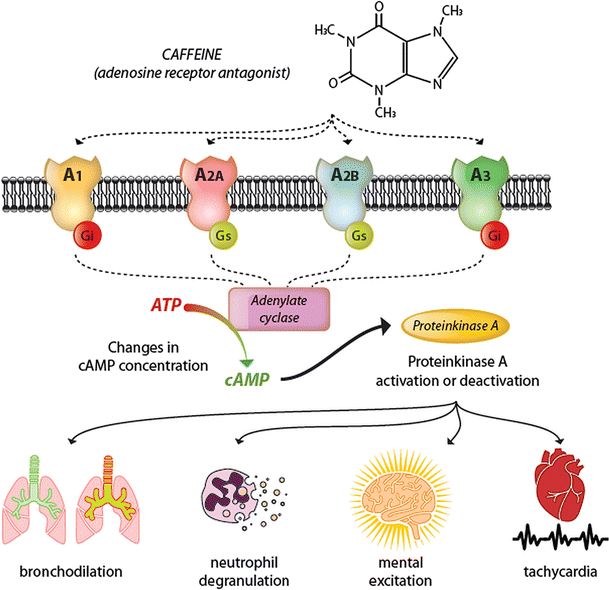
    “Adenosine Receptors Blockage” Image Credit: ResearchGate

    Alzheimer’s and Adenosine Receptors 

    Alzheimer’s disease is a progressive neurodegenerative disorder. It is mostly characterized by memory loss, cognitive decline, and many changes in behaviors. It is one of the most prevalent forms of dementia found commonly in people between the ages of 65-80. There is also no cure for Alzheimer’s, but research says that lifestyle factors play into the risk of developing the disease. Caffeine is effective in reducing the risk of Alzheimer’s by blocking adenosine receptors in the brain. Adenosine is a neurotransmitter that regulates neuronal activity, promoting sleep, and modulating the release of other neurotransmitters.  Adenosine exerts its effects by binding to specific receptors called adenosine receptors. There are several subtypes of adenosine receptors, including A1, A2A, A2B, and A3. In Alzheimer’s disease, A1 receptors are widely distributed in the brain and are involved in various functions, including the modulation of neurotransmitter release and synaptic plasticity. A1 receptors are overstimulated due to elevated adenosine levels, which can impair memory and cognitive function.A2A receptors are predominantly found in regions of the brain associated with cognitive function, such as the hippocampus and cortex. However, overactivation of A2A receptors has been linked to neuroinflammation and neuronal damage observed in Alzheimer’s disease. Caffeine works by competitively blocking adenosine receptors, particularly A1 and A2A receptors. By occupying these receptors, caffeine prevents adenosine from binding to them and exerts its inhibitory effects on neuronal activity. This blockade leads to increased neuronal firing and the release of neurotransmitters associated with alertness and cognitive function. This can help to alleviate some of the symptoms associated with Alzheimer’s disease, such as cognitive decline and memory loss. 

    In conclusion, while excessive consumption of caffeine can lead to negative physical and mental health effects, it also offers significant hidden benefits as a neuroprotective agent against various neurological diseases. One of the most remarkable benefits of caffeine is its potential to reduce the risk of Alzheimer’s disease. By preventing the overstimulation of these A1 and A2A receptors, caffeine helps mitigate cognitive decline and memory loss associated with Alzheimer’s disease. While caffeine shows promise as a neuroprotective agent, further research is needed to fully understand its mechanisms and effectiveness, especially concerning Alzheimer’s disease. However, it’s clear that caffeine, when consumed in moderation, can offer significant benefits for both mental and physical health. 

    References:

    Fiani, Brian, et al. “The neurophysiology of caffeine as a central nervous system stimulant and the resultant effects on cognitive function.” Cureus 13.5 (2021).

    (PDF) Caffeine and Cardiovascular Diseases: Critical Review of Current Research, www.researchgate.net/publication/296627459_Caffeine_and_cardiovascular_diseases_Critical_review_of_current_research. 

    Uddin, Md Sahab, et al. “Neuropsychological effects of caffeine: Is caffeine addictive.” J Psychol Psychother 7.02 (2017): 1-12.

    Zhao, Y., Zhou, Y. G., & Chen, J. F. (2023). Targeting the adenosine A2A receptor for neuroprotection and cognitive improvement in traumatic brain injury and Parkinson’s disease. Chinese Journal of Traumatology.