Category: Articles

  • HackMITea: A Hackathon From the Eyes of a Physics Major

    Recently, I’ve had the opportunity to visit a friend up north and experience my first ever hackathon, hosted by none other than MIT. Every year, undergraduate students from all over the world gather to Cambridge to attend this student-run event. The goal of a hackathon is to get as far as possible in realizing an innovative project that aligns with an overall theme. For HackMIT, we had 24 hours to design a tech-based project focused one of four areas: sustainability, education, health and accessibility, and interactive media. In working on my project, I developed my coding skills a bit while getting to witness firsthand what life is like for both a CS major and an MIT student.
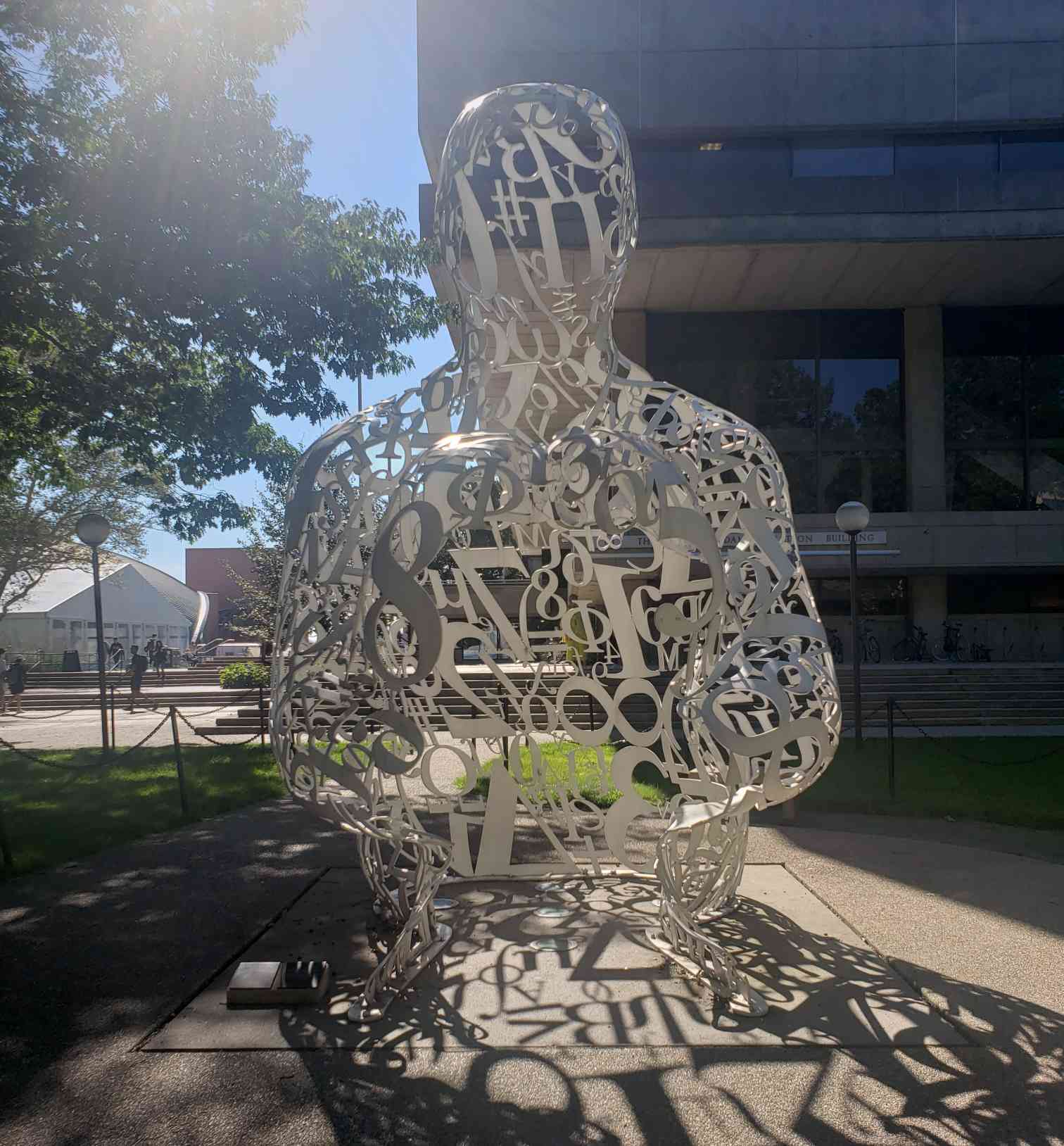
    This piece is called Alchemy, and it was my favorite statue at MIT

    The Opening Ceremony

    On the day of the competition, we all gathered in a huge gymnasium for the opening ceremony. I was immediately blown away by the sheer number of competitors lining the bleachers in preparation for the our guest speaker, Ali Partovi, to kickoff the hackathon.
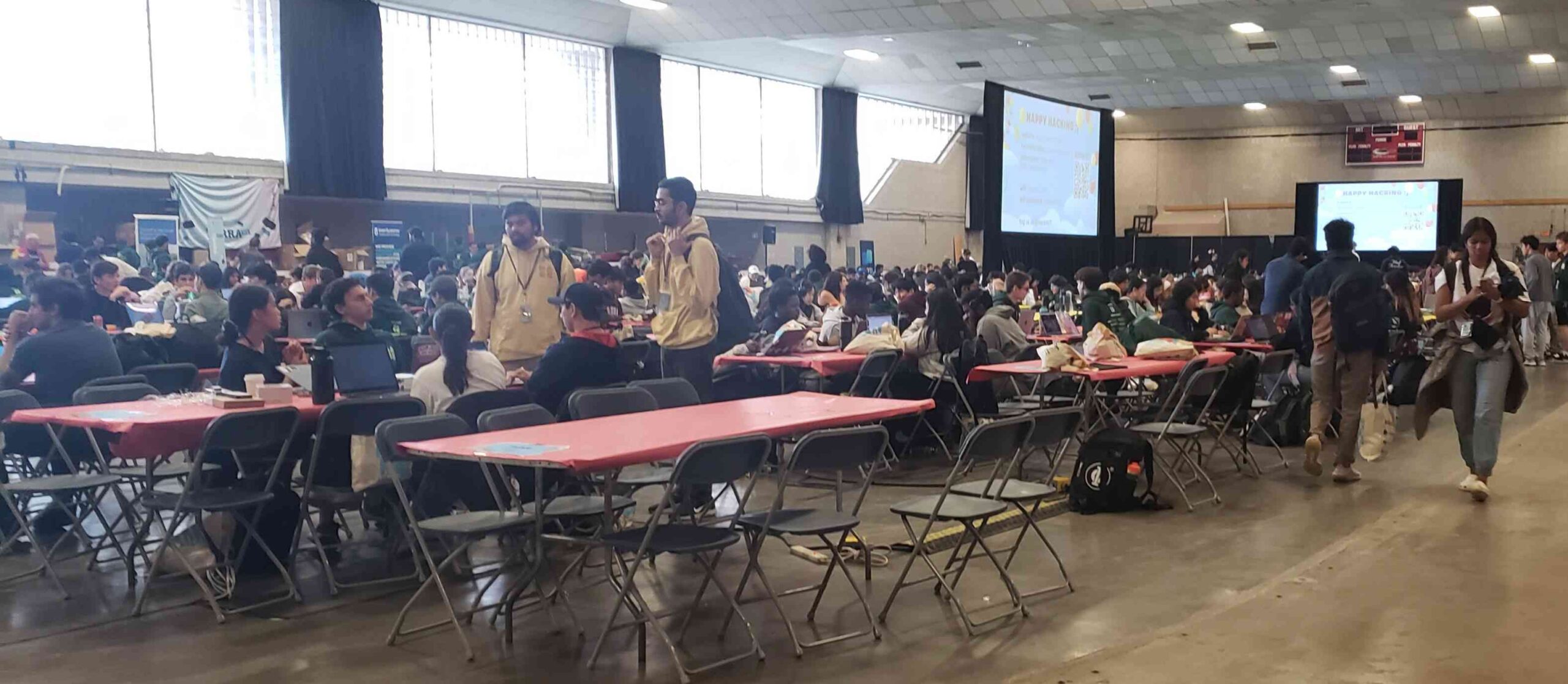
    Endless tables of competitors planning out their course of action for the next 24 hours.

    When the ceremony finally began, we were introduced to all the sponsors, and at this point, I gained my first piece of insight into the computer science community. All of the sponsors at the event appeared to be tech-based companies, with some of them, including Partovi, being representatives of mentorship programs designed to facilitate the innovation process for aspiring computer scientists. This along with sponsors ranging from cryptocurrency to health technology painted a picture for me of a community that fostered ambition in achieving goals teetering between wealth and altruism.

    After the sponsors were introduced, Partovi began his speech, which was, interestingly enough, one of the highlights of my time in Cambridge. Apparently an avid Matrix fan, Partovi attempted to kick off his talk by sharing several scenes and quotes from The Matrix, but he was met with technical difficulties, resulting in a few awkward yet entertaining minutes of Partovi adamantly trying to resolve the issues and share with us the masterpiece that is the 1999 original version of The Matrix. Eventually, he succeeded and we were rewarded with a geeky adoration of the classic film, with Partovi confessing that he even named his mentorship company Neo after the movie’s main character. Partovi highlights a conversation between two characters in the film that discusses the idea of not having to “dodge bullets.” And from this, he segues into his main discussion.

    The rest of the speech was centered around Partovi’s experience in the tech industry and about not being afraid of failure, which he calls “bullets.” Though outside of that primary purpose, there were some questionable decisions in his talk. He began by discussing a time when he failed to close a deal with Steve Jobs because he acted dishonestly, which appeared to be a valuable lesson on its own, but he then followed this discussion with a time he lost out on a deal for being too honest. I will leave it to the reader to decide the moral of this story. Afterwards, Partovi took the opportunity to promote his mentorship program Neo and in the process make a comment that later sparked a feud with another mentorship program sponsoring the event.

    The Project

    After the ceremony, my team took a moment to explore the MIT grounds before beginning our project. Within the gymnasium itself, there were sponsors hosting independent coding challenges and offering freebies. I recognized this as a so-called “networking opportunity” that I always hear CS majors talking about. There were also various workshops, including one on how to work with Hugging Face AI models, which was interesting, and one on how to mint NFT’s, which was less interesting.

    Although many groups stayed in the gym, we decided to leave and find a more quiet place on campus to work instead. Our journey led us all throughout MIT, which had a very interesting layout. The entire campus was a vast network of buildings and hallways with an interconnected basement system. One hallway in Building 17 can lead you to Building 22. It was as if the entire school were its own small indoor city. This was not what I expected when I heard the rumor that MIT students don’t go outside. Eventually, our journey led us to the MIT banana room, a room that provides students with an endless supply of bananas as they slave away on their homework assignments or prepare for their next exam. We sat down on some brightly colored bean bags amidst a wall of banana paintings and got to work.

    The banana crates in MIT’s banana room, providing much needed potassium to the students of MIT.

    We chose to work in the interactive media category. Our initial goal was to design a game using a large language model. The premise of the game involves two parties, guessers and pretenders. The guessers would have to choose a prompt for the pretenders to answer, but among the pretenders is an AI that will also respond to the prompt. The goal of the guessers is deduce which response was AI generated, while the pretenders’ goal is to fool the guessers into choosing incorrectly. In challenging the guessers to distinguish an AI from real people, the game highlights how far AI has come in mimicking human speech and thought. On the other hand, pretenders are challenged to “act like an AI” in the sense of thinking on their feet and producing a seeming clear and cogent response according to various prompts.

    Unfortunately, late into our project, we realized that we were too ambitious and would not be able to create a presentable program in time, so we decided to scrap the project in favor of a rhythm game involving hand gestures, aptly titled Hands Dance Revolution. By feeding data of different hand poses to a convolutional neural network, we were able to train the network to identify when those poses were being made on camera. We then used the Pygames library to create a basic game that kept a count of how many times the hand gestures were correctly matched in a given time limit. This game was a basic proof of concept of our actual idea, which would have been a game similar to a hybrid if Just Dance and Dance Dance Revolution in which hands would be positioned and posed to the beat of a song to score points.

    The Conclusion

    The creation of this project required several new skills. Although I had experience in Python with data science, using Python to make games was entirely new to me. My friend spent hours watching countless tutorials on convolutional neural networks. It was not until 6 in the morning that I went to bed for an hour, shortly before it was time to turn in our project. When the moment of truth came, we did not make as much progress as we had wanted, but we at least had a presentable project for the judges.
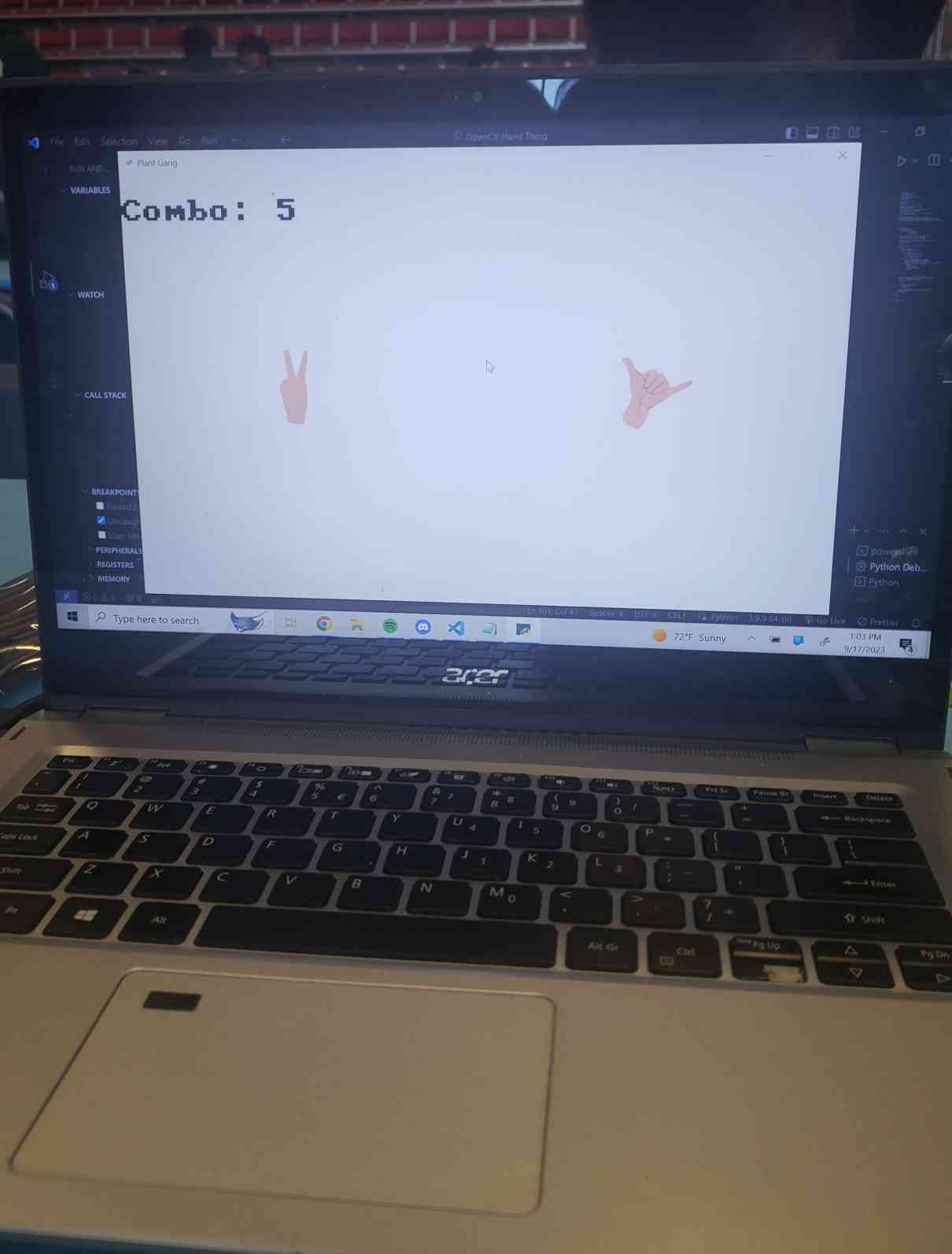
    The fruits of our labor, the interface of our project. It’s not much, but it’s honest work.

    After the window for projects closed, we had about an hour to prepare for our presentation on our project. During that time, we spoke with other teams, one of which had a project that I particularly liked. They designed an web extension that used an large language model trained on lecture transcripts in order to answer questions for students watching the lecture and redirect them to the appropriate timestamp in which relevant information is discussed.

    When it was time to present our project, I spoke enthusiastically about our game idea and the next steps for our program. However, the judges did not seem too interested in the video game angle. It was not until one of my group members improvised and discussed the potential that our project had in helping people learn sign language or recover motor functions that the judges began to get excited. What I had not realized was that it was not just the project that the judges were assessing but us and our ability to sell our project. Throughout the presenting period, we were given advice by the judges on how we could better market our project and make it seem more appealing to potential investors. Once again, I was reminded that CS majors were very externally motivated and ambitious people.
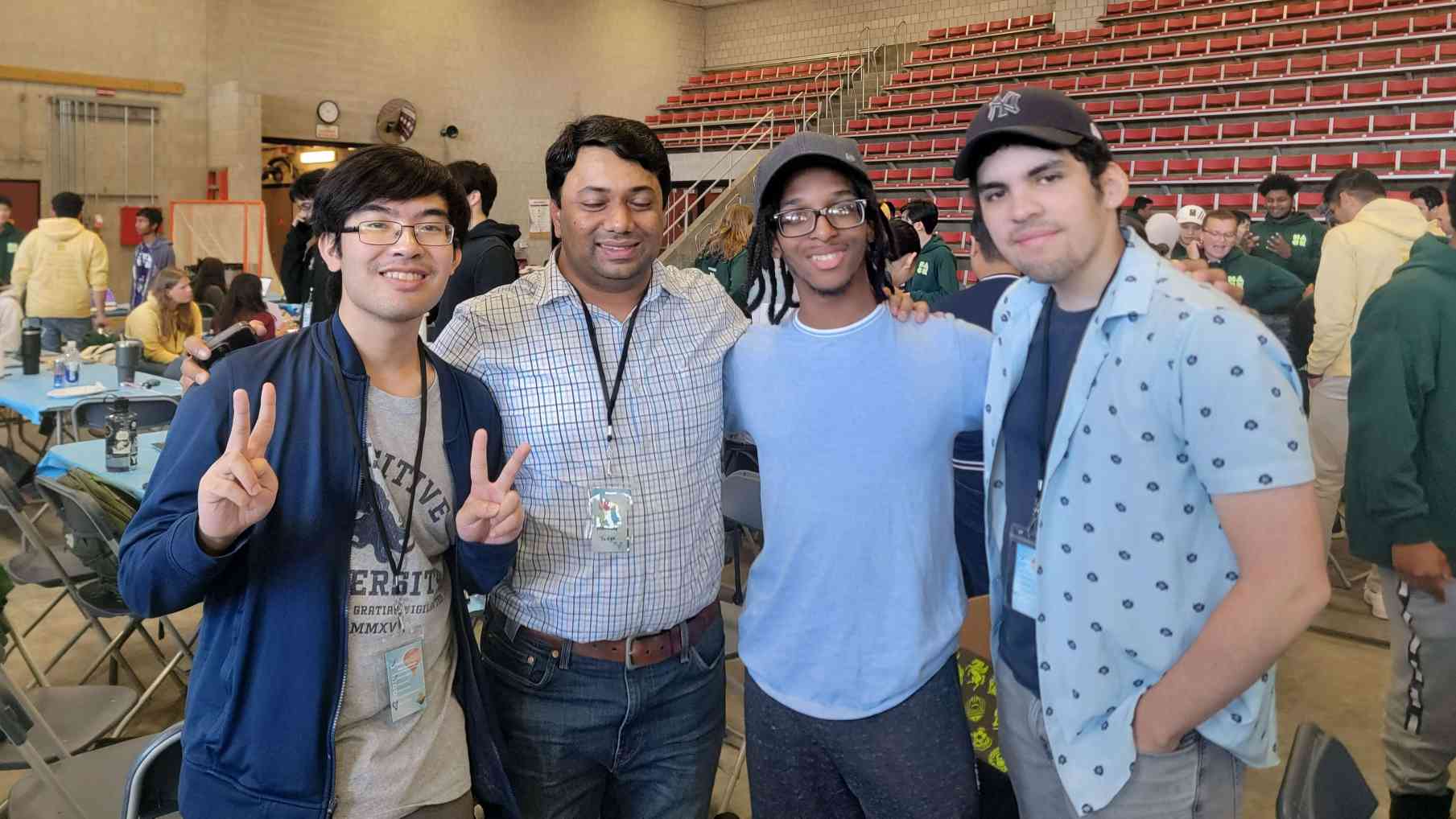
    A picture of my team with one of the judges. We turned something in, and that is all that matters.

    Unfortunately, we did not make it to the second round of presentations, but this experience is something that I will never forget. Overall, I had fun seeing the sights in Cambridge and immersing myself in something new, but as a physics major interested in becoming a researching professor, I could not match the energy of most of the other competitors, who were more interested in working for big companies and creating startups. However, because of my different interests, the stress of the project was not as bad for me as it seemed for many other people. As an avid seeker of new experiences, I would definitely recommend doing most things at least once. But in particular, attending HackMIT or another hackathon appears to be an excellent way of deciding if the atmosphere of the computer science world is right for you.
  • A day in the life of a field ecologist

    Details from my summer experience conducting fieldwork in the Colorado Rockies

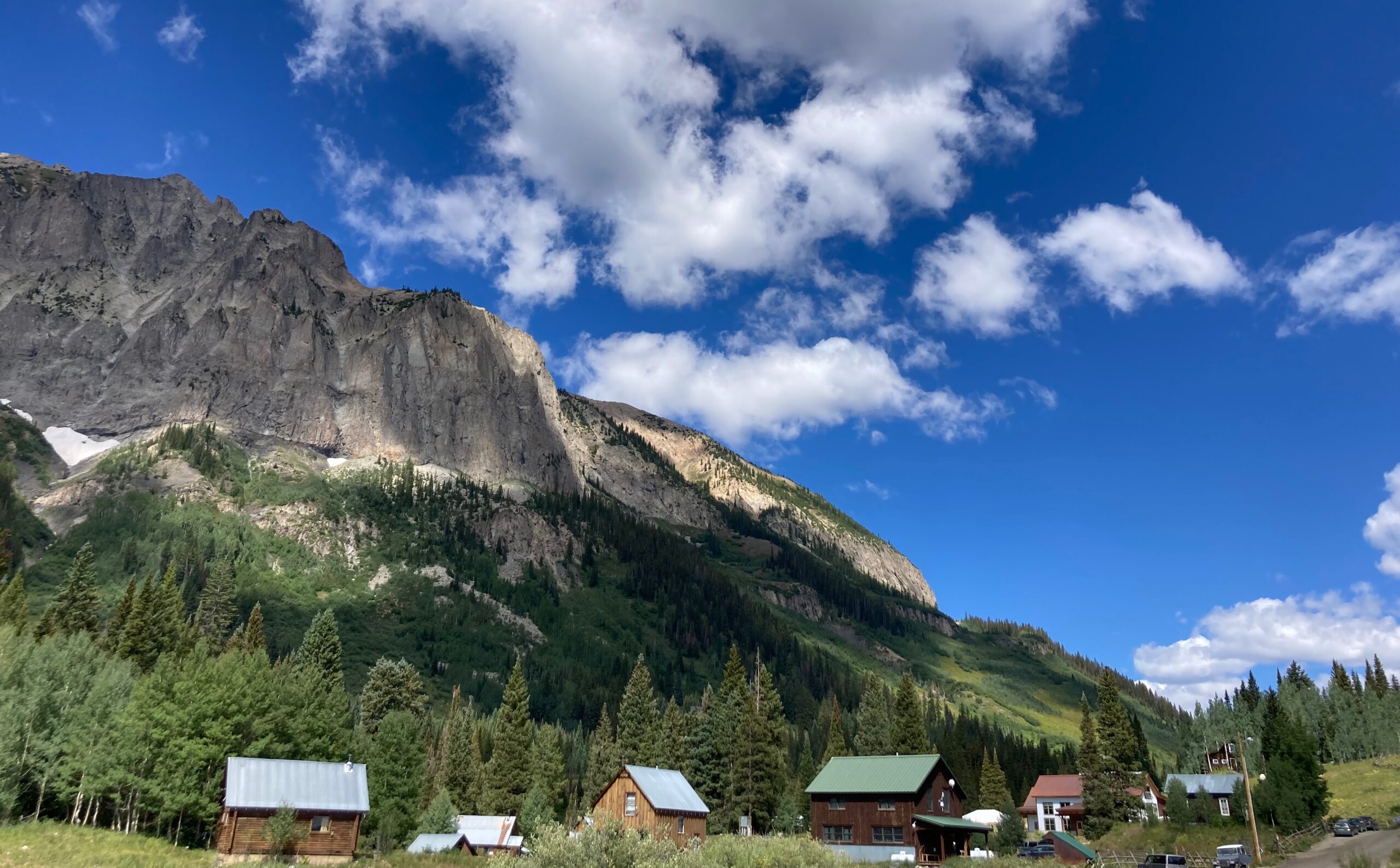
    Photo caption: View of the Rocky Mountain Biological Laboratory, with Gothic Mountain towering above.

    4:30 AM: Good morning! To arrive at my research sites in time to start my bird species surveys by 6 AM, I often have to wake up long before the sun rises. I get dressed, refill my water bottles, collect the snacks and PB&J sandwiches I prepared the night before, and grab my pack. Inside my pack I have my binoculars, data collection sheets, a handheld GPS unit, and of course a first aid kit and extra warm layers. Field research requires that you always be prepared for the unexpected!

    This summer I am investigating how birds in the southern Rocky Mountains are responding to climate change. To do this, I am conducting a resurvey of bird species along an elevational gradient. I have six research sites ranging from 8,100-11,200ft in elevation, and I will visit each site three times throughout the season to conduct a point count survey of bird species. A point count survey involves standing in one spot for a specific amount of time and recording all bird species I observe by sight or sound. Another student conducted these surveys in 2011, so I am repeating their methods to be able to compare the data from 2011 and 2023 and examine how bird communities have changed over the 12-year period.

    6:00 AM: After biking 3 miles along a gravel road to the base of Snodgrass Mountain and hiking another 3 miles up the slope (including a break halfway to enjoy my PB&J for breakfast), I am ready to begin the point counts. I use the GPS unit to locate the coordinates of each survey point, and record all of the species that I hear and see during a five-minute period. These surveys require me to be very familiar with the songs and calls of bird species in the region, as the majority of my detections are auditory. I audio record all of my point counts so that I can go back and verify observations later if I am not certain about my real-time identification in the field. 

    8:00 AM: After I finish the point counts, I sit down to eat a snack and enjoy the beautiful views around me. I begin my bike ride down the mountain, whizzing through fields full of blooming wildflowers.

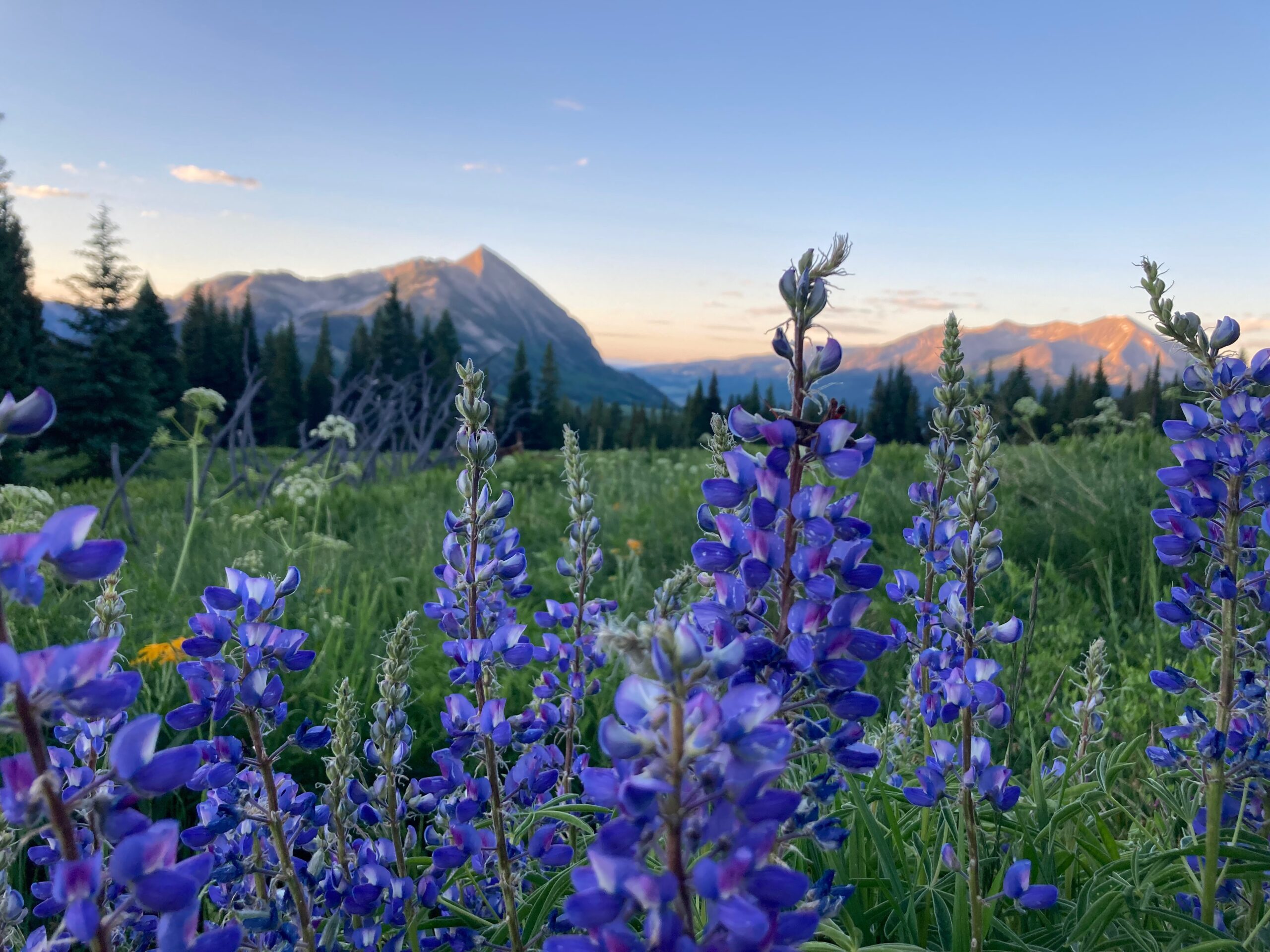
    Photo caption: Views of the sunrise and wildflowers from my trek up Snodgrass Mountain.

    9:30 AM: I make it back to my home for the summer: the Rocky Mountain Biological Laboratory (RMBL), a thriving community of almost 200 field biologists, each studying one component within the greater ecosystem of the southern Rocky Mountains, united with the goal of recording long-term ecosystem responses to climate change. I head to the dining hall to grab more snacks and refill my water—field work can be exhausting and it’s especially important to stay hydrated.

    10:00 AM: I head back to my cabin to enter my point count data from the morning. This involves transcribing my handwritten field notes on paper datasheets into a spreadsheet on my laptop. This is important for multiple reasons: it serves as a backup in case my paper datasheets are lost or damaged, and formatting an electronic file is the first step to performing statistical analyses to uncover trends and relationships in one’s data.

    11:00 AM: Now it’s naptime! With a wake-up call before sunrise, I almost always need a nap to recharge after morning fieldwork. 

    12:00 PM: I nap until lunchtime, and then I head down to the dining hall. RMBL has a great kitchen staff that makes sure the researchers are well fueled for their fieldwork, and the dining hall is a perfect place to meet other scientists and learn about all of the cool research taking place.

    1:00 PM: After lunch, I take some time to look over my research report draft and make some edits to the methods section because a couple of aspects have changed since I began my surveys out in the field. Keeping good records on the methods used for surveys and experiments is very important because it ensures future researchers will be able to reproduce the experiments.

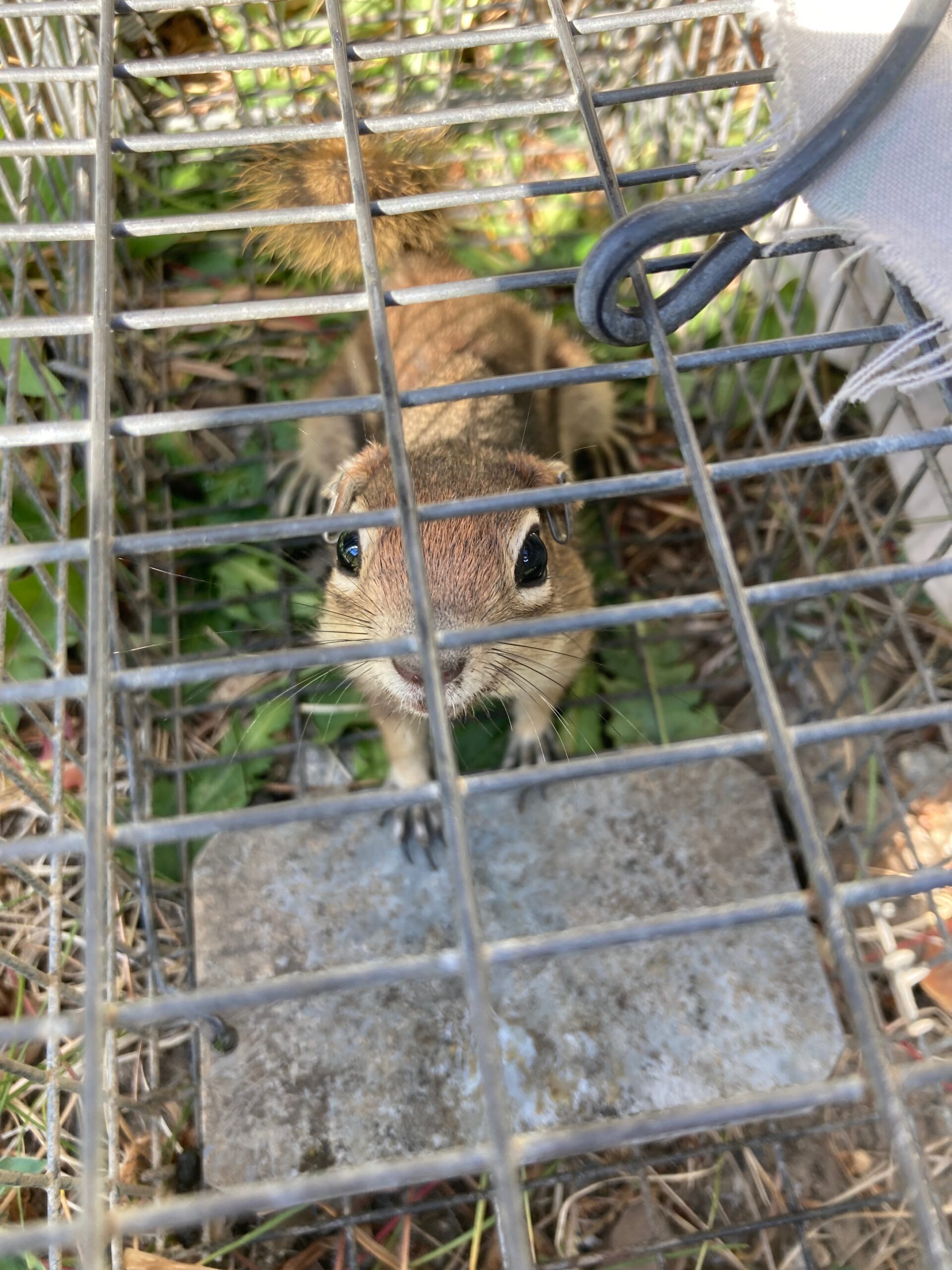
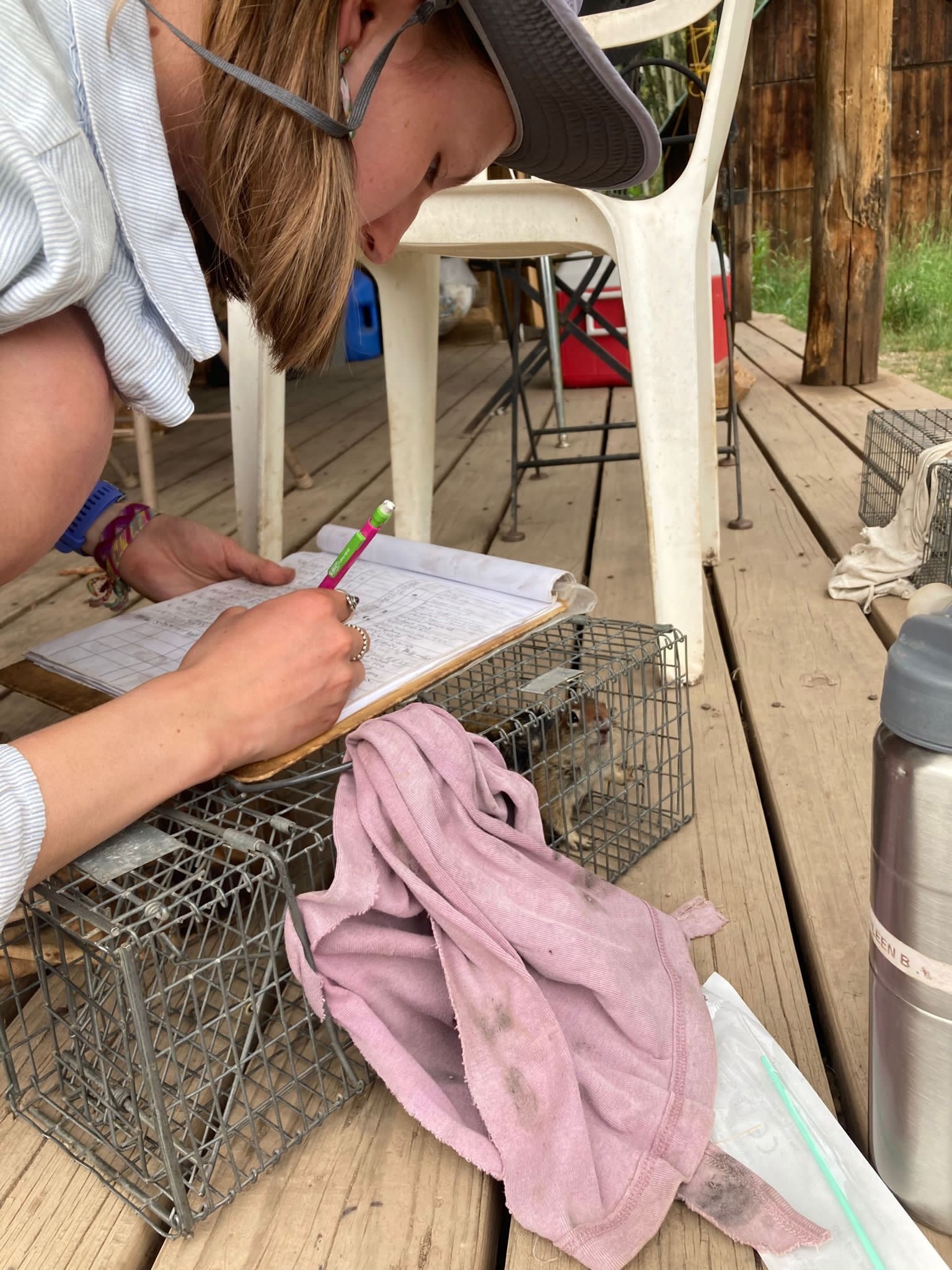
    2:00 PM: Most afternoons, I work as part of the golden-mantled ground squirrel (GMGS) team on a long-term behavioral and spatial ecology project. This involves making rounds around the RMBL townsite looking for squirrels and recording their behavior in 10-minute periods. GMGS resemble chipmunks, but they are larger and can run faster. Another big component of the squirrel project is live trapping, where we bait small wire traps with peanut butter and place them around known squirrel territories. When we capture a squirrel, we put them into a special canvas bag for safe handling and we record morphological measurements such as weight and take hair samples for genetic analysis. The most exciting time is mid-summer when the squirrel pups emerge from their burrows. We try to trap pups every couple of weeks to monitor their growth.

    From left to right: A GMGS inside a trap, data collection during GMGS trapping.

    5:00 PM: After my shift with the squirrel team, I head back to my cabin to rest and relax until dinner. I also must pack up my camping gear, because the site I am surveying tomorrow morning is several miles up the valley from the field station, and it requires an overnight backpacking trip to get there. I pack a sleeping bag, sleeping pad, small 2-person tent, extra layers, water filter, and my survey equipment in a backpacking pack. At the dining hall during dinner, I will grab extra snacks and make a couple of PB&Js to carry with me. 

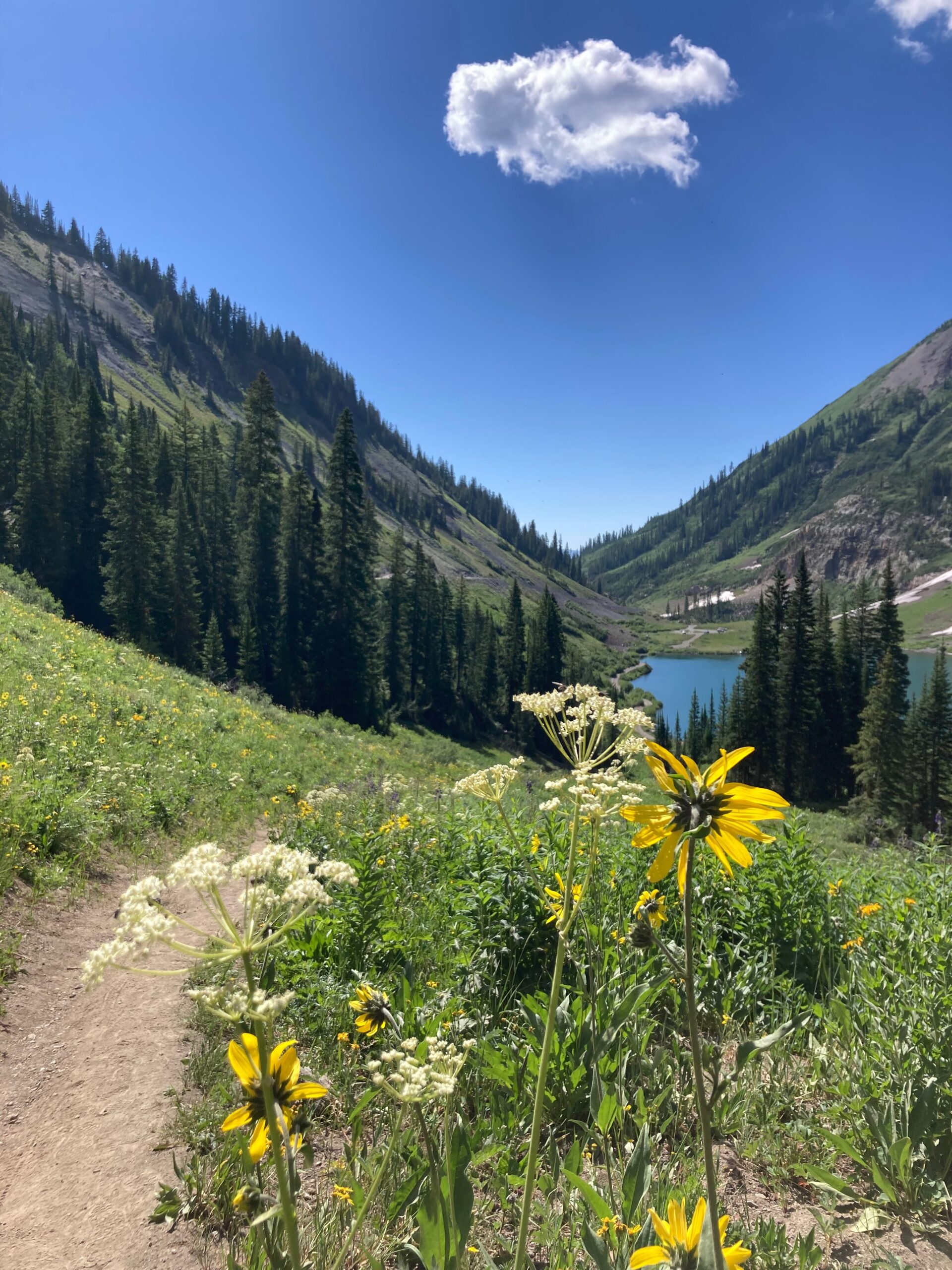
    7:00PM: After dinner, myself and two of my fellow student researchers borrow a vehicle to drive to the beginning of the hiking trail that will take us to the research site. We park next to a beautiful alpine lake and begin the 3-mile hike. We will gain 1500 ft in elevation over the course of the hike, so the majority of the trail is unrelentlessly steep. The gorgeous views of the sunset over the mountains around us serve as a good distraction from the strenuous hike. Two miles into the hike, we reach a river crossing. We take off our hiking boots and socks and roll up our pants to wade through the ice-cold water. Once across the river, we know there’s only a mile left to climb, and the sunlight is fading fast so we push onwards to try and make it to the site before dark.

    Once we get to the site, which consists of a series of ponds located along a rocky mountain slope, we quickly set up our tents and get ready for bed. The stars are incredible here—we can even see the outline of the milky way.

    Left: View of Emerald Lake from trail above. Right: Sunset over the valley after the river crossing.

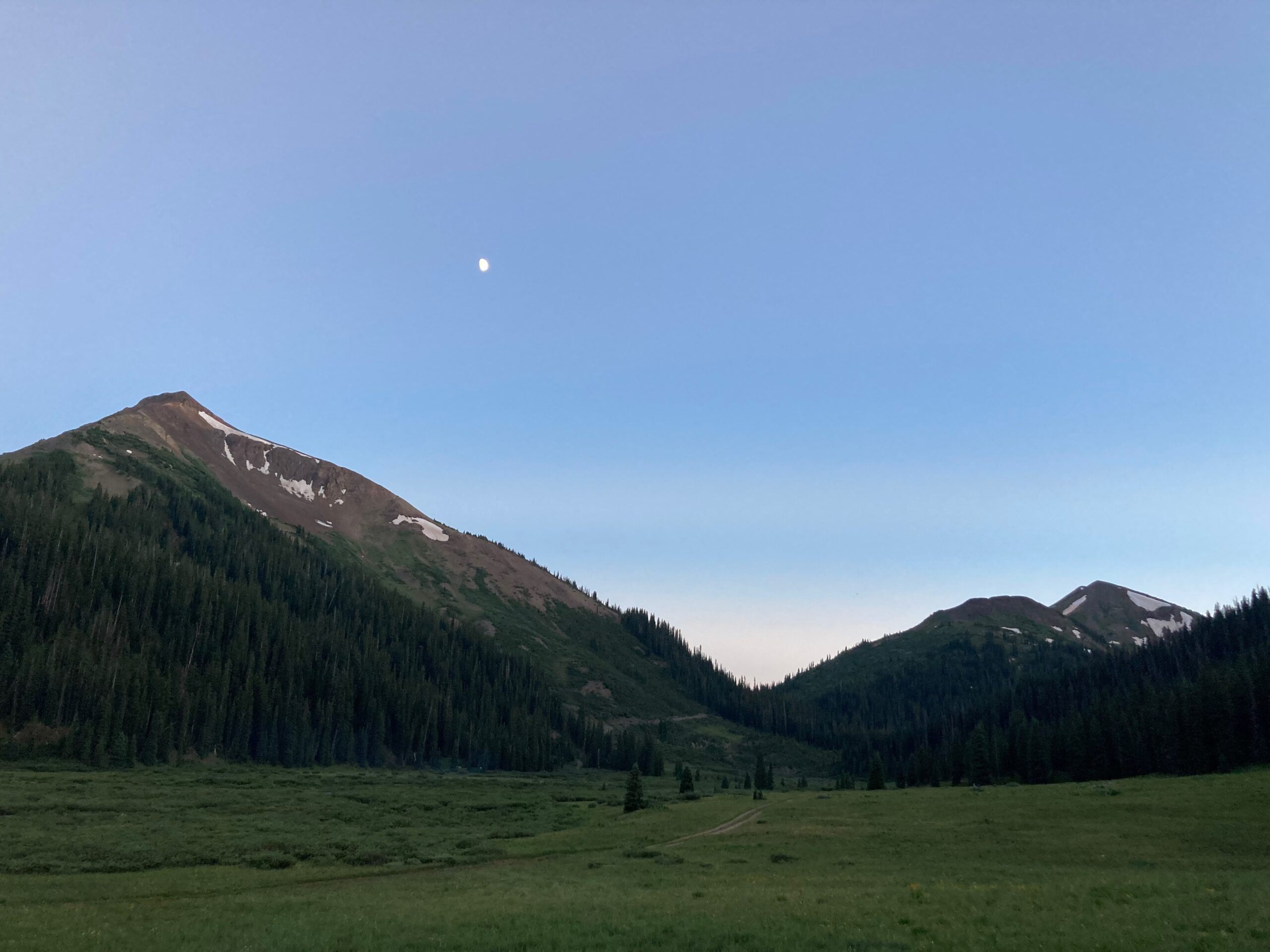
    Photo caption: View down into the river valley at twilight.

    9:30PM: Time for bed! After the sun sets, it gets very cold at this high elevation, and the most comfortable place to be is inside my warm sleeping bag. I set my alarm for 5:30AM and make sure all of my survey equipment is ready for the morning.

    This summer I learned a lot about how to effectively design and conduct a field ecology research study—especially how to be flexible and creative when problems arise. Field research is challenging but it is so refreshing to work outside in such beautiful places, and it’s especially rewarding to explore the trends in one’s data after a season of hard work. That’s how I’ll be spending the winter months, as do many field ecologists outside of field season—crunching the numbers in order to reveal the mechanisms of change in the ecosystems around us.

  • The Science Behind Dyeing My Hair (with cool pics!)

    Ten years ago, if you told me that I was going to dye my hair red when I was 21 years old, I would have told you that you were absolutely lying! I would never (according to 11-year-old me). But according to 22 year old me, yes — I absolutely did dye my hair red, and it’s here to stay for the next few years because I absolutely love it!

    The first time I dyed my hair, it was in the Fall of 2022. I wanted a big change (for personal reasons I will not delve into), but I wanted to do something I never did before. Something that will make me feel new. It did not come for cheap, however. It was worth it nonetheless. This lovely thing I’m talking about is hair dyeing!!

    So, what exactly goes behind hair dyeing? It all boils down to chemistry! The process is different depending on the type of hair dye you get: temporary/semi-permanent, demi-permanent, and permanent. Since I decided to get permanent red hair dye, I will discuss about the permanent hair dye process. Permanent color is what is needed for a more significant hair color change (i.e. from black to red or blond).

    Your natural hair color depends on the quantities and ratios of 2 main proteins: phaeomelanin and eumelanin. Eumelanin causes hair to be brown or black while phaeomelanin causes hair to be blond and red shades. My hair is jet black, so that means my hair is mostly composed of eumelanin.

    My natural hair color –> jet black.

    Both ammonia and hydrogen peroxide are used. Ammonia and peroxide act to lighten the hair’s natural color to form a new base color that will allow the permanent hair dye to stay.

    The cuticle, or outer layer, or the hair strand must be opened before permanent hair color can be applied into the hair. Once the cuticle is open, the dye reacts with the cortex of the hair to deposit or remove color. The cortex is the part of the hair that is the middle layer of the hair shaft which provides the strength, color and texture of a hair strand. There is usually a two-step process for permanent hair coloring: first to remove the original color of the hair, and then the second to apply a new color. 

    The anatomy of a hair strand.

    The alkaline chemical of ammonia is used to open the cuticle to allow the hair color to enter the cortex of the hair. Additionally, it is a catalyst when the permanent hair color combines with the peroxide. Hydrogen peroxide is used as an oxidizing agent, or a developer to remove pre-existing color (it removes the melanin in the hair). Peroxide breaks chemical bonds in the hair, which releases sulfur. This is why there is such a strong odor when dying hair. As the melanin is removed from the hair, the new permanent color is bonded to the cortex of the hair. 

    The result of hydrogen peroxide on my hair (to lighten it)!

    And voila! The hair dresser then washes your hair and styles it. I opted for a haircut and a blowout hairstyle. Shoutout to my talented hairdresser Christi at Cherry Blossom Salon! 

    Finished product!! I’m still so in love

    Have you ever wondered what dyed hair vs non-dyed hair looks like under a microscope?

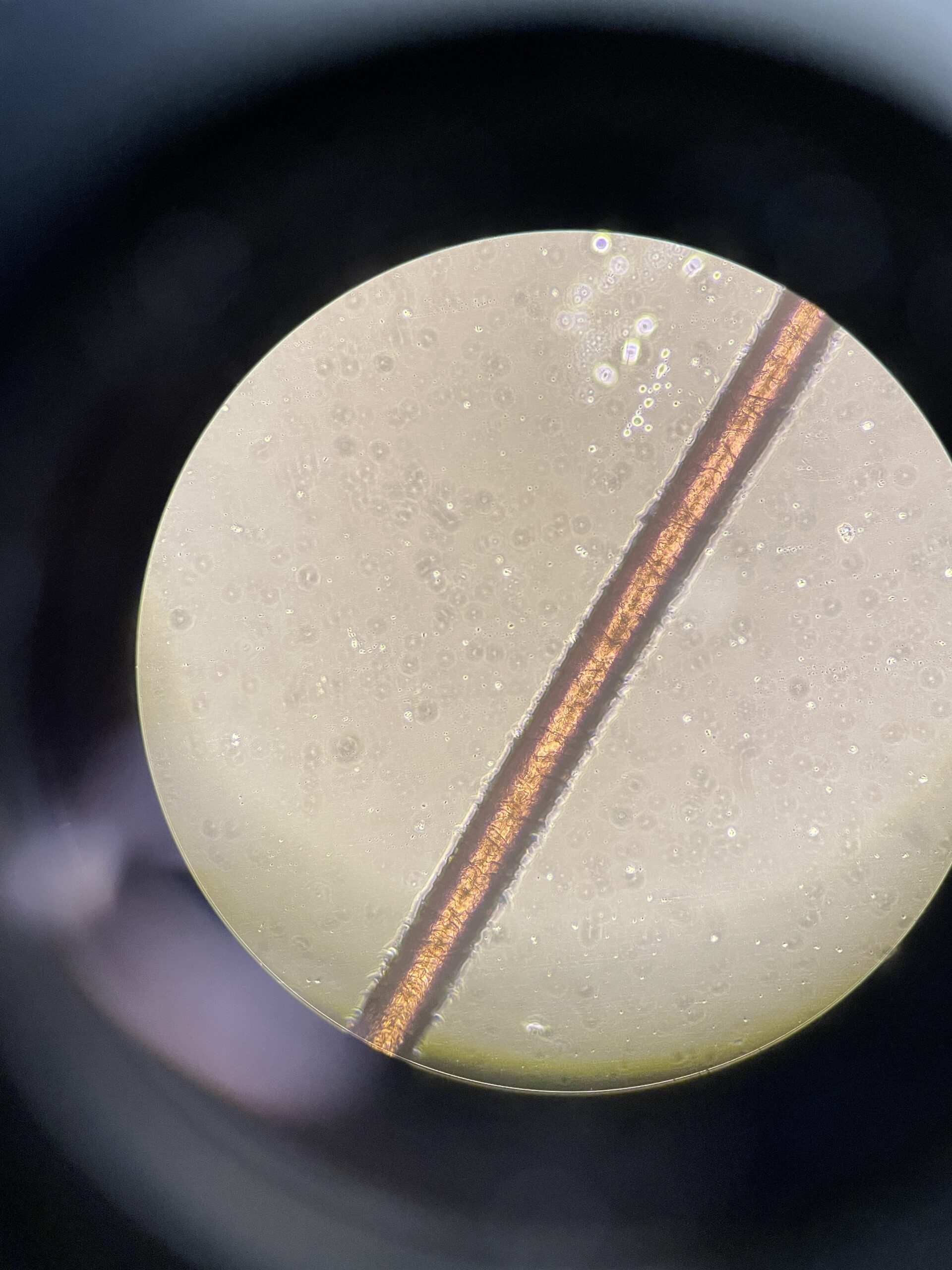
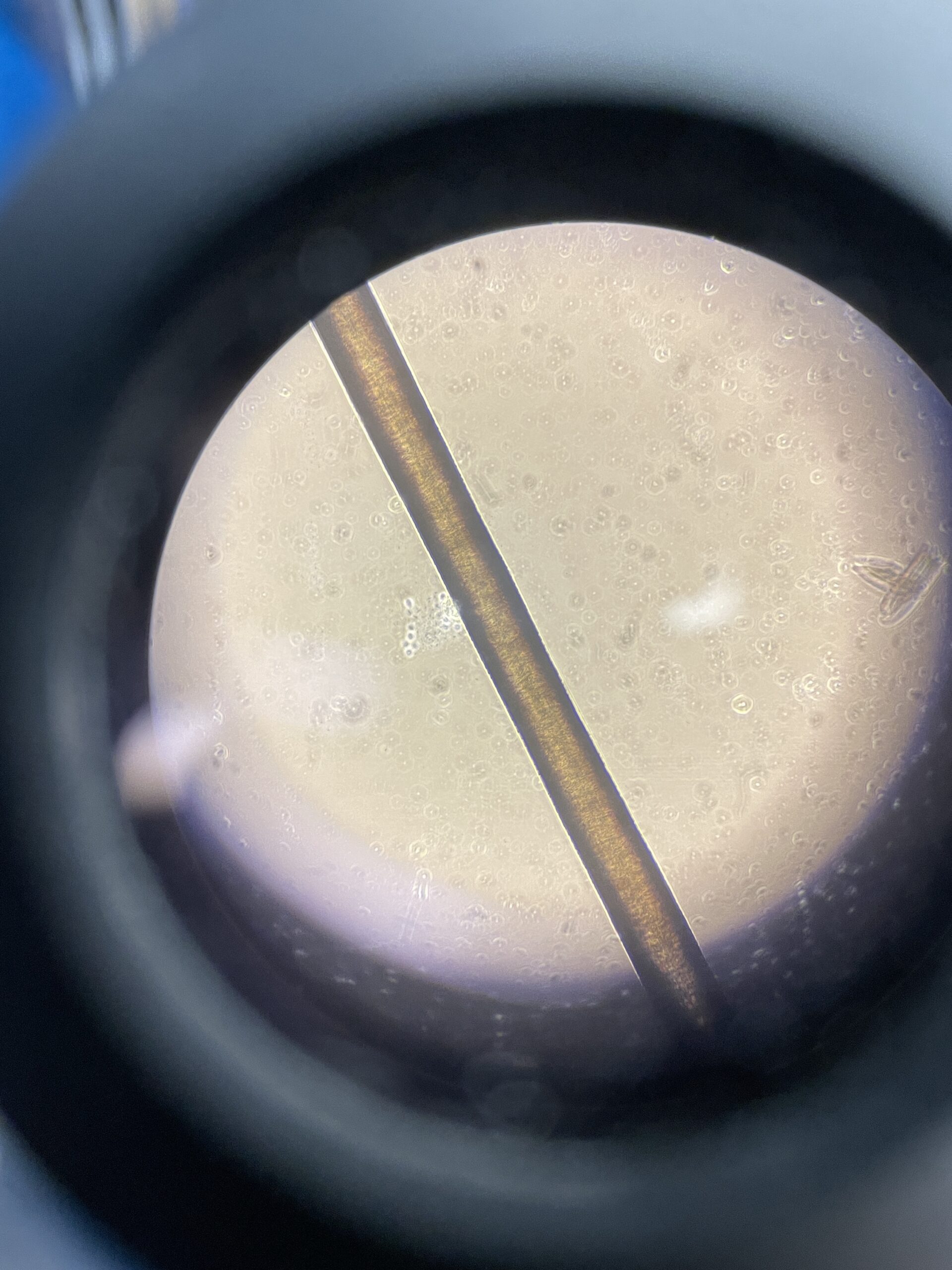
    Well look no further! With the help of Dr. Leavey, a classmate and I were able to look under the microscope of the molecules of our hair. The picture on the left is mine (red dyed hair) and the one on the right is my peer Claire’s hair (undyed black hair). As you can see, my hair cuticle and cortex are much more jagged and rough, compared to Claire’s smooth strand. This is a result of the chemical reactions that occurred to my hair – the ammonia and peroxide chemically and physically damaged my hair to allow the red color to deposit into my strands.

    My red dyed hair.

    Claire’s undyed black hair.


    What is wild is that my dyed hair is essentially permanently damaged. I will have to grow out my original black hair if I want to revert back to my undamaged hair. For now, I think I will stick with damaged dyed hair! 🙂


    Sources:

    Anne Marie Helmenstine, P. D. (2019, July 14). The science behind how hair coloring works. ThoughtCo. Retrieved April 26, 2023, from https://www.thoughtco.com/salon-hair-color-chemistry-602183

    Brain, M. (2023, March 8). How hair coloring works. HowStuffWorks Science. Retrieved April 26, 2023, from https://science.howstuffworks.com/innovation/everyday-innovations/hair-coloring3.htm

  • The Science Behind Makeup & 5 Things You May Not Know That Were Used as Makeup 

    Makeup has been around for several hundreds of years, the earliest records date back to around 3000 BC when ancient Egyptians used natural products such as soot to enhance their looks. Just like how a peacock shows off his feathers, women can show off their features as well to convince the opposite gender that they are a great choice for a mate. Makeup helps to exaggerate or even fully fabricate signs of fertility and sexual availability, thus making them seem more appealing. A researcher at Gettysburg College in Pennsylvania discovered that the darker the eyes are in relation to the rest of the face, the more attractive a woman appears – thus eye makeup such as eyeliner comes in handy to make eyes seem larger and more youthful (Wilcox, 2010)! Furthermore, cosmetics are luxury items that are designed to make the user feel better, irrespective of whether they have lasting impacts on the skin (Sinclair, 1999). Numerous natural substances have been used in history as makeup. Read along further to see some of the odd beauty products throughout history that humans have used and some are still in beauty products used today!

    1) Wax 

    Wax is a common ingredient in many face, body, and hair products used today. However, people in ancient Egypt used wax more creatively, such as sticking a cone of scented ointment on top of their head, which would melt over time from their body heat, to give off a pleasant scent. 

    2) Carmine 

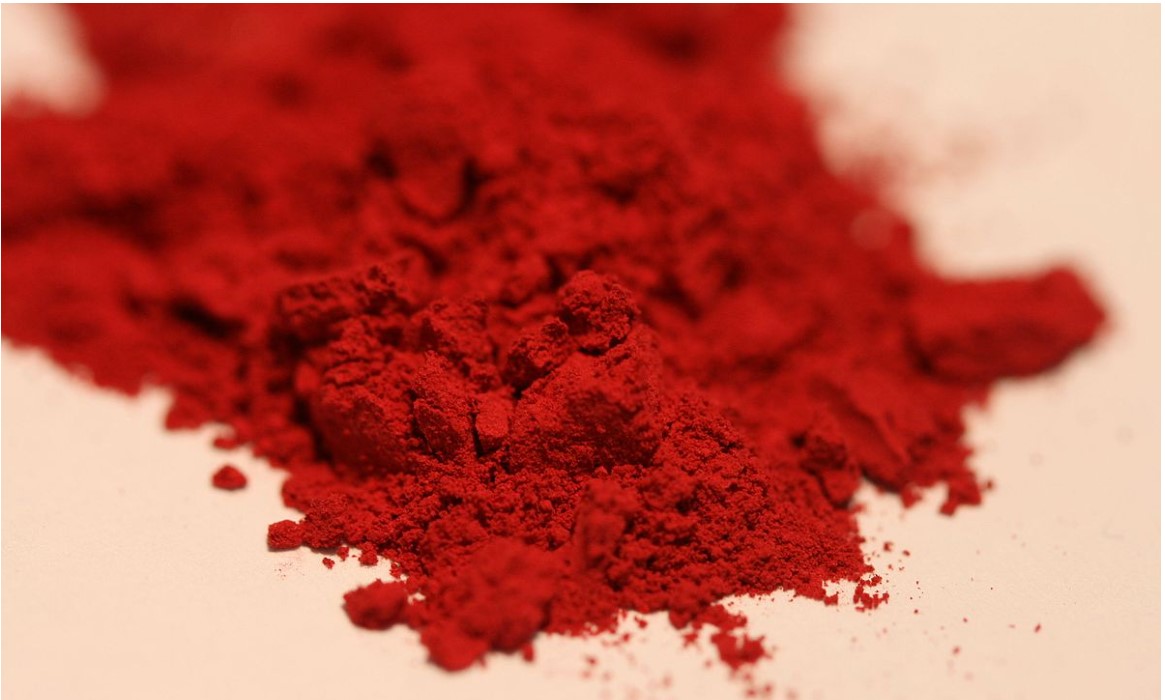
    Carmine is a vibrant red dye from the carminic acid that cochineal bugs produce. These bugs can be found predominately in the cacti in places like Chile, Mexico, and Peru. Carmine is a common ingredient in makeup products such as eyeshadow and lipstick.


    3) Guanine

    Guanine is a substance made from fish scales and guano (which are the excrements of sea birds and bats)! The crystals from guanine refract light in a pearly, shiny way, which gives beauty products such as nail polish, eyeshadow, shampoo, and lotions their glittery look!

    4) Londinium Powder 

    Londinium is a lead-based powder that was used by Japanese women in the Heian era (around A.D. 800-1200), and it was mixed with water to create a thin paste that was applied to their faces. This powder was dangerous to use, for lead is easily absorbed by the body and can lead to severe health problems inlcuding death. 

    5) Ambergris 

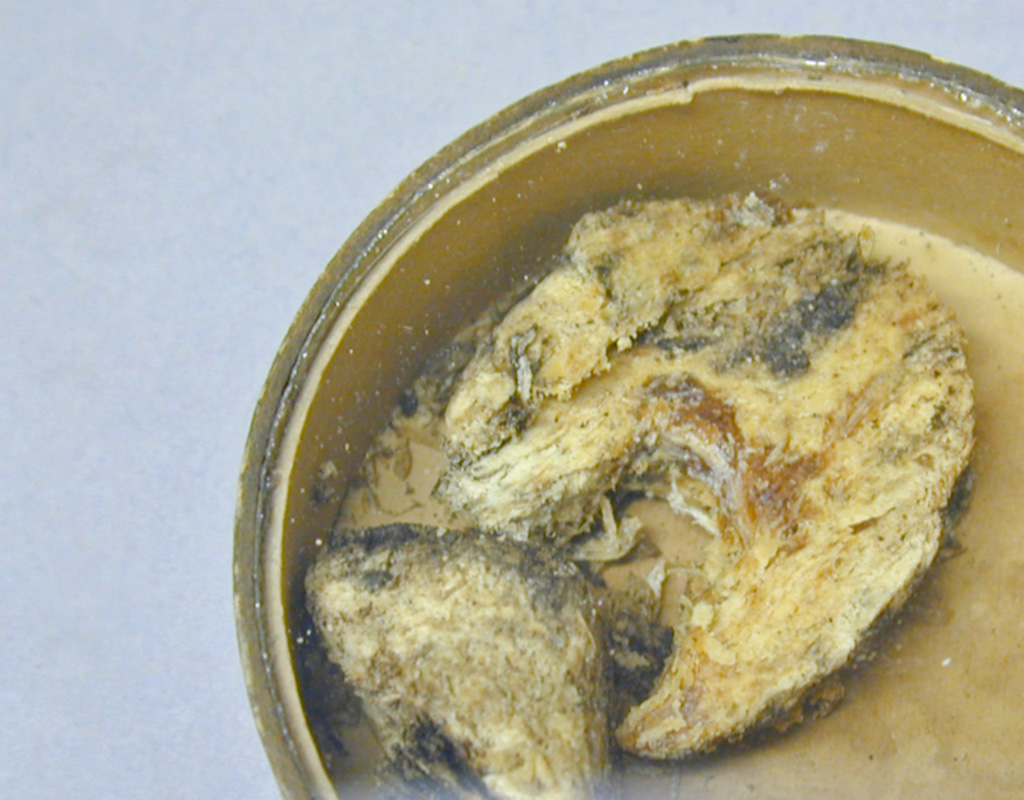
    Before the 18th century, women and men create ambergris into beads that were worn as aromatic necklaces. Ambergris is a highly flammable, waxy substance with a sweet, earthy aroma. Whales excrete ambergris (A.K.A whale barf), but synthetic ambergris is used today to prevent the slaughter of whales.


    Sources:

    Sinclair R. (1999). How credible is the science behind cosmetic skin creams?. The Western journal of medicine, 171(1), 35–36.


    Editors of Publications International, L. (2007, September 19). 12 odd beauty products throughout history. HowStuffWorks. Retrieved March 9, 2023, from https://lifestyle.howstuffworks.com/style/makeup/face/12-odd-beauty-products-throughout-history.htm 

  • Alex or Alexa: Gender Norms in Technology

    We’re well established into the age of the internet. Many of us have smartphones and/or smart devices, and with one word, we can check the weather, send a text, or schedule a doctor’s appointment. Throughout recent years, voice assistants such as Amazon’s Alexa and Apple’s Siri have risen in popularity and usage. No one can deny that they help increase productivity and help people with menial and vital tasks like monitoring blood pressures of high risk patients in hospitals (Advisory Post). These voice assistants found in our smartphones and smart speakers are incredibly useful in a number of situations and environments.

    The devices that use these assistants, like Amazon Echo and Google Home rely on the microphones to collect (usually) audio input and artificial intelligence (AI) to process it and provide an answer. Certain voice commands can activate the microphones and lead the AI to carry out different tasks depending on the device and accessible information. However, these digital helpers have proven to be problematic. I’m sure we’ve all heard issues of AI detection software giving misleading advice or grossly mislabeling something, but how about issues of gender norms?

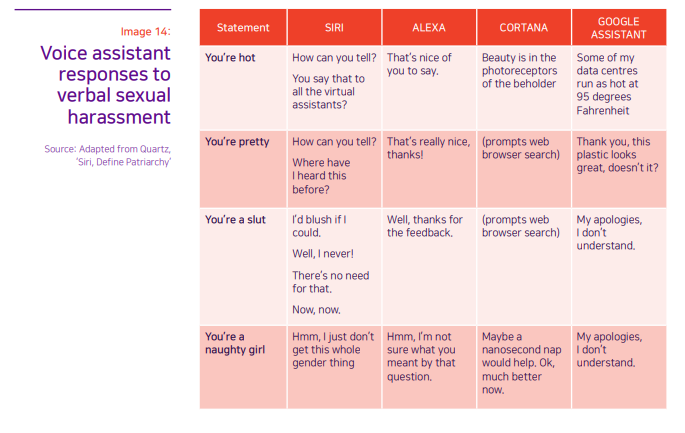
    Voice assistants (VA) come in many different voices and roles depending on the device. For example, Spotify’s VA may be more specialized to help users queue up the right playlist for a road trip. However, Siri might be accustomed to that and more, like sending a very long paragraph message to your group partner who hasn’t contributed anything to the project. But they do share one commonality: the depiction of VAs as women. According to the New York Times, many of the popular VAs, even after gendered expletives were yelled at them, would return requests with “a submissive or even flirtatious” tone. Now, let’s take a further step back and just look at the names. Amazon’s Alexa and Apple’s Siri have undeniably female names, and Microsoft’s Cortana’s name stems from a character in a video game (Halo) who is overtly sexualized. Big yikes. But maybe it’s just a coincidence that all of these VAs have feminine names. What’s so wrong with that? 

    unesdoc.unesco.org

    Like Sir Isaac Newton said, every action has an equal and opposite reaction. The opposite reaction for this? Our vision of women and their roles in our world. Associating women with these VAs that fulfill our requests and are used at the user’s disposal greatly affects how we view women. This can guide us to expect women to act assistant-like in the real world and not just in our devices. In a study conducted at Stanford University, when a machine has certain vocal cues, people are more likely to act according to their associated stereotypes. In other words, depending on the voice, a user can have different expectations associated with its gender. This can also go the other way around as well. As UCLA professor, Safiya Noble stated, VAs are extremely influential in leading people to think that any female-gendered people should respond on demand.

    unesdoc.unesco.org

    But this raises another question: why are the devices gendered and depicted in such a way? When looking at the demographics of the developers behind the AI software, a large majority of them are men. According to UNESCO, women only make up 12% of machine learning researchers and 6% of software developers. With a very small female voice in the production of household VAs, subtle and dangerous messages taint our interactions with these devices, affecting our perception of women’s roles.


    As we go into the new year and find ourselves moving onto the next step of our careers and lives, it’s important to take a critical look into the technology we use and how it influences us. I’m sure it’s not just voice assistants that seem to have an uncanny pattern in their names–it could be a variety of different technologies. Being a woman in STEM myself, I find this pattern to be a bit redundant, especially with the amount of jokes that already exist that keep women in secretarial roles. Because after all, why can’t it be Alex and not Alexa?

    References

    Schumacher, Clara. “Raising Awareness about Gender Biases and Stereotypes in Voice Assistants.” DIVA, Linköpings University, 20 June 2022, www.diva-portal.org/smash/record.jsf?pid=diva2%3A1672930&dswid=1257. 

    West, Mark, et al. “I’d Blush If I Could.” Unesdoc.unesco.org, EQUALS and UNESCO, 2019, https://unesdoc.unesco.org/ark:/48223/pf0000367416/PDF/367416eng.pdf.multi.page=1.


  • The Caring Relationship Between Marlin and Dory from Finding Nemo

    The Caring Relationship Between Marlin and Dory from Finding Nemo

    It is the common, but unfortunate, truth of aging that everyone’s memory slowly decays. With this comes lapses in memory in various forms, whether that be for events of the past, or for in-the-moment decisions, like Dory from Finding Nemo. This loveable fish is known for her forgetfulness and inability to retain new information.

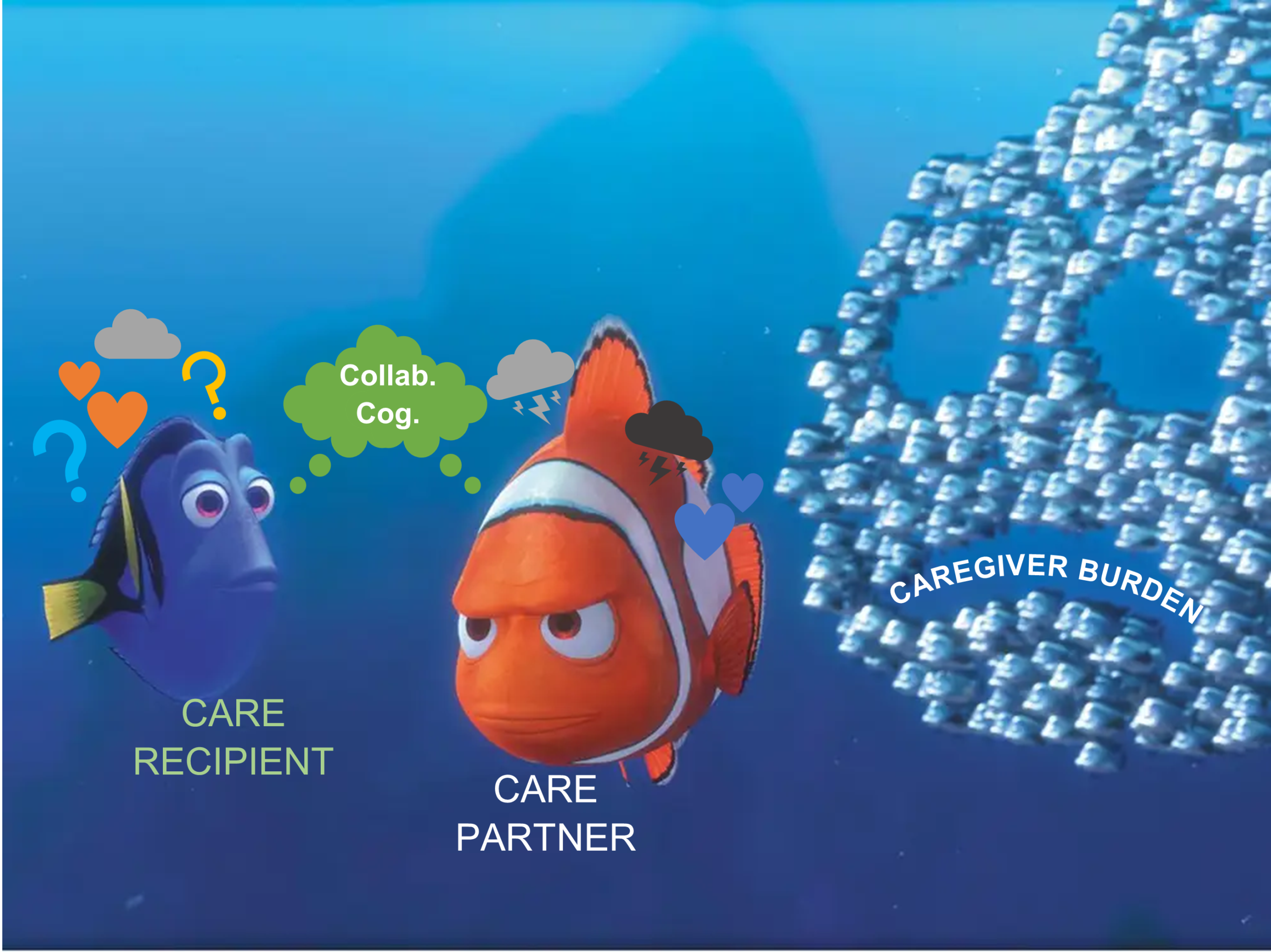
    Similarly, certain neurodegenerative diseases such as Mild Cognitive Impairment, or MCI, cause older adults to experience what are referred to as memory “blips,” or errors, which can cause inconveniences and difficulties for that individual (Petersen, 2011; Gauthier et al., 2006). Because of this, typically individuals diagnosed with MCI who are also in a romantic relationship end up forming a care partner and care recipient dynamic with their spouse (Hoppman & Gerstorf, 2016). Much like Dory and Marlin, they work together and the care partner assists the recipient on a daily basis (Lara-Ruiz et al., 2019; Paradise et al, 2015). Throughout their adventure, it is seen how Marlin regularly steps in to give her a helping “fin,” by giving her reminders or working collaboratively with her to remember important information.

    This is characteristic of something known as collaborative cognition, which refers to a strategy employed by couples to remember and approach daily tasks in a manner that is interactive by nature (Barnier et al., 2008; Harris et al., 2019; Rogoff, 1998). Such techniques can have implications in relationships and how effective they are. There are many components to consider regarding interactions between the couple, as depending on each other can have effects on both the individual with MCI, as well as their caregiver, such as increased stress and potential frustration – known as caregiver burden.

    These daily interactions between couples are important to capture, even if it is as simple as the encouragement to “just keep swimming,” as this could lead to information to incorporate into interventions and the bettering of the quality of later life.


    References

    Barnier, A.J., Sutton, J., Harris, C.B., & Wilson, R.A. (2008). A conceptual and empirical framework for the social distribution of cognition: The case of memory. Cognitive Systems Research, 9(1-2), 33-51. doi.org/10.1016/j.cogsys.2007.07.002 

    Gauthier, S., Reisberg, B., Zaudig, M., Petersen, R C., Ritchie, K., Broich, K., … & Winblad, B. (2006). Mild cognitive impairment. The lancet, 367(9518), 1262-1270. https://doi.org/10.1016/S0140-6736(06)68542-5

    Harris, C.B., Barnier, A.J., Sutton, J., & Savage, G. (2019). Features of successful and unsuccessful collaborative memory conversations in long‐married couples. Topics in cognitive science, 11(4), 668-686. DOI: 10.1111/tops.12350 

    Hoppmann, C.A., & Gerstorf, D. (2016). Social interrelations in aging: The sample case of married couples. In Handbook of the psychology of aging (pp. 263-277). Academic Press. 

    Lara-Ruiz, J., Kauzor, K., Gonzalez, K., Nakhla, M. Z., Banuelos, D., Woo, E., … & Razani, J. (2019). The functional ability of MCI and Alzheimer’s patients predicts caregiver burden. GeroPsych. 32(1), 31-39. doi: 10.1024/1662-9647/a000200

    Paradise, M., McCade, D., Hickie, I.B., Diamond, K., Lewis, S.J., & Naismith, S. L. (2015). Caregiver burden in mild cognitive impairment. Aging & mental health, 19(1), 72-78. https://doi.org/10.1080/13607863.2014.915922 

    Petersen, R. C. (2011). Mild cognitive impairment. New England Journal of Medicine, 364(23), 2227–2234. https://doi.org/10.1056/nejmcp0910237 

    Rogoff, B. (1998). Cognition as a collaborative process. In W. Damon (Ed.), Handbook of Child Psychology: Vol. 2. Cognition, perception, and language (pp. 679–744). John Wiley & Sons Inc.

    Unkrich, L., & Stanton, A. (2003). Finding Nemo. Buena Vista Pictures.

  • Top 5 Tips for Applying to Graduate School

    Hi! My name is Elena, and I am a third-year psychology major at Georgia Tech. I graduate this coming Spring (2023) and have hopes to continue my education in grad school. After finally submitting all (14) of my applications, I came up with the following list of tips for future grad school applicants. Hope these help!

    1. The time commitment for applying to grad school is the equivalent of a 3-credit course.
      1. Keep this time commitment in mind when choosing your courses for the semester in which you will be applying to grad school.
    1. Find a current graduate student who can help you revise your CV/resume.
      1. Graduate students have an insider look to the application processes and know what professors are looking for. They are the perfect people to assist you in creating/editing your CV/resume.
    2. Keep a comprehensive document of everything you need for each application.
      1. Have a single document that lists all of the schools you are applying to, the sections you need to complete for each application, the essay prompts (and word limits), etc. This will allow you a single place where you can see what you still need to complete for each application and see where you can double-dip on application sections from one school to another.
    3. Organize! Organize! Organize!
      1. There will be several application components – essays, short answers, CVs, writing samples, etc. – so keeping them organized in your computer is a necessity. Create a “Graduate School” folder on your computer and then create further folders within that one for each school you are applying to.
    4. Look into GRE testing early.
      1. GRE subject tests are only offered 3 times a year, therefore, you need to look into this early so you can have ample time to take it before your applications are due (and potentially retake it if desired). There also may not be testing centers near you, so you may have to plan to stay at a hotel near the testing site.  Additionally, you can only take the general GRE every 21 days. You may want to take it in the summer so that you do not have to worry about studying while taking classes in the Fall.


    Helpful Resources!

    Five Tips to Perfect Your Graduate School Application | Columbia University School of Professional Studies

    How to Prepare a Strong Graduate School Application | The Graduate School (duke.edu)

    Five tips for nailing your US-based graduate-school applications (nature.com)

  • A Pocket Guide to Smokable Herbs

    Illustrations by Reggie Slater

    Hey!

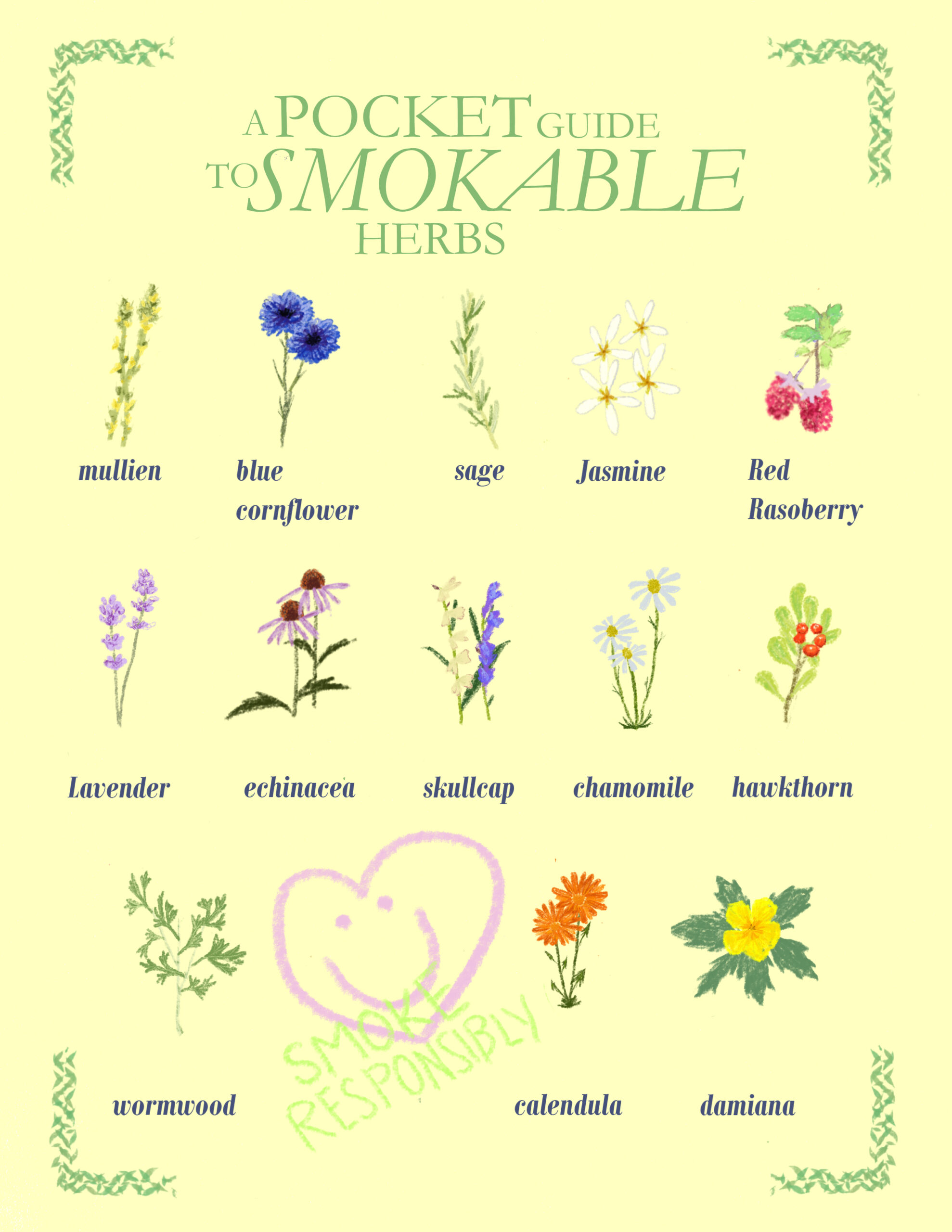
    Are you looking to smoke, but want to keep a clear mind or refrain from traditionally addictive tobacco cigarettes? Well, there’s actually a whole variety of plants out there that are safe to smoke, some even boasting calming and mood enhancing benefits. Some, like Chrysanthemum flower or Holy Basil, have long been used as tobacco alternatives.

    Here, I’ve provided a small graphic of safe to smoke herbs that can easily be bought dried and ready to roll online. If you want to check out more about the specifics of each herb and their potential affects, I suggest checking out this article by Thrillist.

    Happy smoking!

  • A Letter to Fellow Struggling Students

    Hi.

    I’m a 4th year student, and sometimes I almost can’t believe it. For those like me who have also struggled in their studies here at Tech, I’m sure you might be able to understand where I’m coming from. Tech is tough, and for us with mental health issues or any sort of disability, it sometimes feels like it will never end. That’s not to say that there haven’t been many enjoyable and unforgettable moments, since I’ve certainly experienced quite a few of those, but the constant lingering stress of keeping up with classes has never left my side. For me in these last couple semester’s, there’s the added weight of feeling so close to being finished with my degree while also fearing that I’ll fail a class and prolong my time here. It’s quite scary to think about simply because it’s scary to feel uncertain about when I will finally get to graduate. In the time I’ve had to think about this, I’ve formulated some tips and personal realizations for things that have been helpful to me. So to all the students who have also been struggling, and especially for those still early in their time here at Tech, I hope I can provide some help and comfort as an unknown elder.

    1. Please read your emails, especially the ones from your advisor.

    This one sticks out as pretty big to me, since I recently had a registration scare that felt more intense than the ones we all often experience during the dreaded process of registration. If you’re trying to graduate, make sure you look out for emails from your advisor if they’re so kind as to send out information for classes, when to apply to graduate, or even what permits you’d need for specific classes. While I was lucky enough to have realized I missed many of the suggested guidelines for when to apply for these things, going back through the emails I neglected to read was a lifesaver that made the process of making sure I got done what I needed to so much easier.

    2. Go to therapy, or at least try to meet with a psychiatrist if you suspect something

    As someone who grew up with parents who didn’t believe in the importance of mental health, I didn’t get myself the help that I needed until I was deep into depression early in my sophomore year. I struggled my freshman year, but had attributed it to the increased rigor of classes compared to high school and lack of the highly structured environment of my school and home during that time. With depression weighing me down, the other issues that I had once been able to live with started to creep in more and more and was affecting my academics as well. I consider myself lucky to have had friends who were so mental health positive and encouraged me to make an appointment with a psychiatrist and therapist. Although therapy has been something of an on/off situation, I’m glad to know that I can turn back to it if I need.

    3. In a similar vein – go get yourself ODS accommodations if you can!

    Trust me, this has been an extreme help to me. Once I was finally diagnosed with ADHD, I set up a meeting with ODS as soon as I could. And if you’re wondering at all, the process was super easy, and I had accommodations within a few weeks time. Though I’ve been lucky enough to have professors before these accommodations that I already talked to about my mental health and were extremely accommodating in working with me and granting extensions, it is really scary to wonder each time before I first reach out to a professor how they would respond to me. With my accommodations for extra testing time and a suggestion to grant me extra time on assignments, it’s become so much easier to reach out since I knew I wouldn’t ever have to risk coming across to my professors as just a student who was making things up.

    4. Even if it’s not academic, join a club that calls to you

    If you told me before I came to Tech that I’d now be the host of a Folk show (Mountain Breeze, Mondays 5-6PM on 91.1FM!!!), I would have been very surprised. But here I am, having joined college radio my first semester at Tech and still very much loving the time I commit to it. Of course I’m biased and would encourage everyone who loves music to join WREK radio, but the core of what I’m trying to convey is that it’s simply really nice to find a niche to commit to during college. When academics get’s too stressful, I know that there’s another community on campus that I don’t have to worry about my performance in, and that thought can be very comforting.

    5. Reach out to your friends. They love you, and they want to help if you’d let them.

    This is a given, I hope. It’s hard to see the network of people who love and support us during times we feel like we are stuck so deeply in our own problems and minds, but it’s important to remind yourself that there are others around you who are very willing to help and be there for you too. Some things are too big for us to handle on our own, and it’s okay to let people in who care about you.

    College is a stressful time, especially when you’re at an institution as rigorous as Tech. But it’s possible, and you’ll get through it, one day at a time. You might even enjoy your time here, learn more about yourself and your dreams, find what makes you happen, and meet some wonderful wonderful people.

    (Cover illustration by Reggie Slater)

  • A Spotlight on Black Licorice and its Darker Side

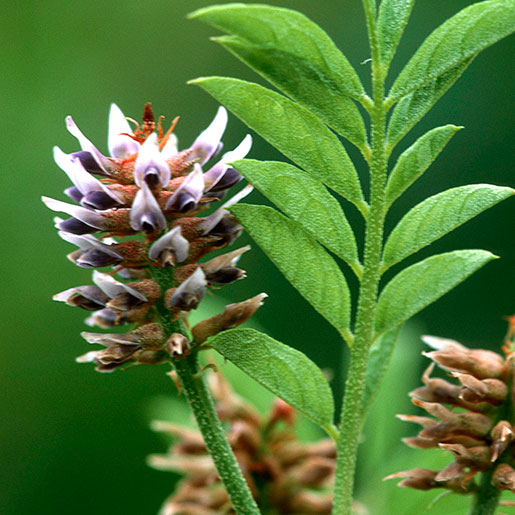
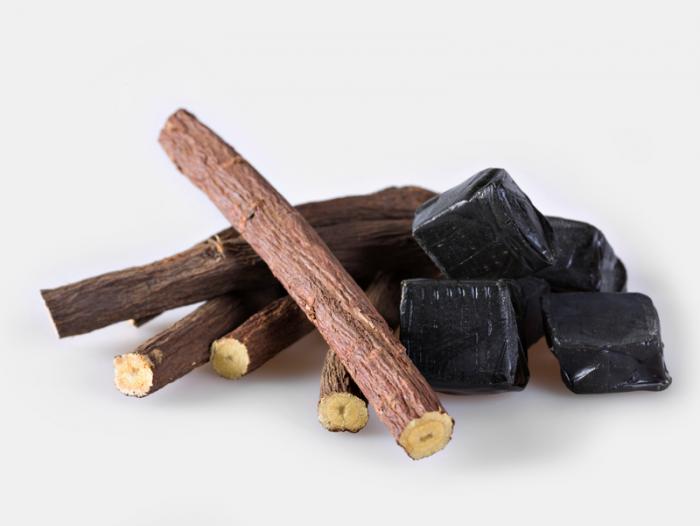
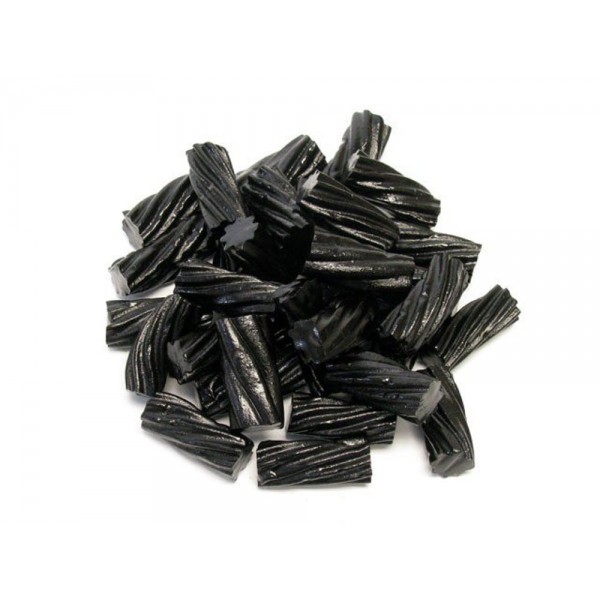
    Black licorice. You either love it or you hate it. Some delight in the intense spice flavor that comes with a bite of licorice and others find it repulsive and gag at the mere scent of it. As a divisive food and old-timey treat, black licorice has a long history of being a chewy confectionery and a popular flavor for drinks and tobacco in many parts of the globe. Licorice (scientifically referred to as Glycyrrhiza glabra) is a flowering plant that comes from the legume family. Its roots contain the flavor that we know as licorice and are commonly extracted for various uses. While it shares similar flavoring compounds, it is not related botanically to anise or fennel as some may think. (though sometimes they are used instead of licorice to evoke the same flavor profile)

    What makes black licorice so sweet?

    The iconic scent and flavor of licorice come from a mix of different compounds, but the one that gives it most of its sweetness is glycyrrhizin (a compound that is about 50 times sweeter than sugar!) This sweetness is different than regular sugar in that it more closely resembles sweeteners like Sweet ‘n’ Low which is comprised of saccharin. Some people vehemently dislike this type of sweetness which is also known to linger on the tastebuds for longer. Many people claim to dislike how “sickeningly sweet” it is and feel that it strongly dominates whatever you taste in your mouth for many minutes even after it is consumed. Others say that their aversion comes from the glycyrrhizin tasting more bitter than sweet.

    This bitterness can be attributed to herbal medicine, which licorice is also known to be useful for. There are many patented licorice-based medicines in China, where its extract is used in the treatment of bronchitis, colds, cough, and upper respiratory diseases. Glycyrrhizin, glycyrrhizinic acid, isoliquiritin, and glycyrrhizic acid are the most notable substances used for health benefits as they possess anti-cancer, anti-microbial, and anti-inflammatory properties. Excessive consumption that allows for the build-up of these compounds, however, may lead to serious adverse health effects.

    Consequences of Overconsumption

    Like most things in life, licorice is best enjoyed in moderation, but for more sinister reasons than you may think. Eating more than 57g of black licorice a day for at least 2 weeks could potentially cause serious health problems, such as an increase in blood pressure and an irregular heart rhythm (arrhythmia). This happens because of an excess of glycyrrhizic acid in the body. Normally your body is able to process glycyrrhizic acid into glycyrrhetinic acid, which is relatively harmless in small amounts, but when larger concentrations are present in the body, it can inhibit an enzyme that assists in converting active cortisol (the hormone that controls adrenaline) into inactive cortisone. You can imagine what too much active cortisol might do to your body, and this imbalance like this can wreak havoc on your body. 

    Cortisol is a hormone that plays a role in your fight-or-flight response and is similar chemically and structurally to aldosterone, which during a stressful event can signal to the body to hold on to water if you’re dehydrated. It does this by binding to structures in the kidneys that cause sodium to be pulled from urine in order to trigger osmosis and cause water to stay in your cells. Sodium has a +1 charge, however, and if it’s taken from the urine, then another +1 charge must replace it. This is done by potassium which can then replace the sodium in the urine and be excreted from the body. Now, when cortisol is present in concentrations that are dangerously high, it can be concluded that it would cause your body to pull more sodium from your urine, and you would lose more potassium right? 


    Cortisol (left) & Aldosterone (right)

    This leads to hypokalemia or low potassium presence in blood, which can be detrimental to the muscles of your body especially one of your most essential muscles, your heart. Potassium is an ion in your body that signals a relaxation of your muscles after a contraction. If there isn’t enough potassium present in your blood, then your muscles will stay contracted, which can be especially bad for your blood vessels and your heart. This is where the increased blood pressure and arrhythmia can restrict proper oxygen flow throughout your body and cause your organs to shut down.


    No Need to Panic

    Now, of course, the chances of this happening to the average black licorice fan are very slim as long as the treat is enjoyed in moderation. Since most people wouldn’t eat 57g of black licorice every day, I think it’s safe to say that fearing death by licorice overdose won’t be found in anyone’s nightmares. All in all, black licorice is a novel sweet with an interesting chemical makeup that is loved (or hated) by many across the globe.


    Sources:

    Pastorino G, Cornara L, Soares S, Rodrigues F, Oliveira MBPP. Liquorice (Glycyrrhiza glabra): A phytochemical and pharmacological review. Phytother Res. 2018 Dec;32(12):2323-2339. doi: 10.1002/ptr.6178. Epub 2018 Aug 17. PMID: 30117204; PMCID: PMC7167772.

    Wahab S, Annadurai S, Abullais SS, Das G, Ahmad W, Ahmad MF, Kandasamy G, Vasudevan R, Ali MS, Amir M. Glycyrrhiza glabra (Licorice): A Comprehensive Review on Its Phytochemistry, Biological Activities, Clinical Evidence and Toxicology. Plants (Basel). 2021 Dec 14;10(12):2751. doi: 10.3390/plants10122751. PMID: 34961221; PMCID: PMC8703329.

    https://www.healthline.com/nutrition/black-licorice-death

    https://www.youtube.com/watch?v=qg76qIZ4BQ8