Listen in on our thoughts as regarding the wonderful green spaces on campus and how they contribute to our study habits and mental health.
Watch the video on our YouTube channel here! This video was made in collaboration with Rachel Weng and Christie Lin.
If you would like to know more about green spaces, check out the references below:
van den Berg, Magdalena, et al. “Health Benefits of Green Spaces in the Living Environment: A Systematic Review of Epidemiological Studies.” Urban Forestry & Urban Greening, vol. 14, no. 4, 2015, pp. 806–16, https://doi.org/10.1016/j.ufug.2015.07.008.
Vidic, Zeljka, and Nicholas Cherup. “Mindfulness in Classroom: Effect of a Mindfulness-Based Relaxation Class on College Students’ Stress, Resilience, Self- Efficacy and Perfectionism.” College Student Journal, vol. 53, no. 1, 2019, pp. 130–44.
Vleet, Zayden Van, et al. “The Effects of Green Space on College Students’ Mood.” Journal of American College Health, 2023, pp. 1–9, https://doi.org/10.1080/07448481.2023.2252931.
Rakowska, Scarlett B., et al. “Examining the Effects of Green Space Accessibility on School Performance for 3421 Elementary Schools.” Landscape and Urban Planning, vol. 234, 2023, pp. 104731-, https://doi.org/10.1016/j.landurbplan.2023.104731.
In the Aquarium and Shark Lab of Team ECCO in North Carolina, there is a mystery in the water: Charlotte the California round stingray has become pregnant with three or four pups despite the lack of male rays!
Before we get into this mystery, let’s learn a little more about Charlotte. She is a round stingray with brown and yellow muddled spots. This type of stingray can be anywhere from 20 to 55 centimeters in length. Most round stingrays are found near California or in the eastern Pacific Ocean. They like to eat all types of invertebrates, like shrimps and crabs. Round stingrays are usually pregnant for 3-4 months before giving birth to up to six pups. Now that we know more about Charlotte, let’s get back into uncovering this scientific phenomenon.
The news of Charlotte’s pregnancy caught the attention of many online and it continued to snowball when the head of the aquarium suggested that the stingray could have been impregnated by one of their sharks.
While this was a very popular theory amongst those on social media, there are actually a few more scientifically reasonable ways for a ray to become pregnant without males.
The director of Team ECCO, Brenda Ramer, explained that while some rays can store sperm, there is no chance Charlotte could be pregnant this way, because no male stingrays have ever been in her tank. But wait, there were male sharks in her tank. There were two white spot bamboo sharks that had shared the tank with Charlotte last year. For some male sharks, they mate with females by biting them, so when the team found that Charlotte had some bite marks, the whole scenario just got more confusing.
If you’re still wondering if a shark can actually breed with a stingray, think about it ilke this: according to Dr. Noah Bressman, “sharks and rays are as distantly related as humans and snakes, so a snake knocking up a human is just as likely as a shark knocking up a ray” (Bluesky). In short, their DNA is simply incompatible.
So knowing that cross-species hybrids are plausible but extremely rare, we turn to a more likely explanation. While sexual reproduction is the norm for rays, some can occasionally pull off something different. They have this asexual reproduction method called parthenogenesis, which means “virgin birth.” This uncommon method lets them develop embryos without needing sperm. It’s not unheard of, though – this phenomenon “has been observed in more than 80 vertebrate species, many of which are fish and reptiles (Forbes).
As of right now, there are not any updates from Team Ecco regarding Charlotte’s pregnancy. They’ve posted an image of her ultrasound on their Instagram and some other cute videos as well. Hopefully Charlotte has a smooth delivery!
Sources:
Hobson, M. (22 February 2024). This stingray is about to have a ‘virgin birth’. Scientists explain how. Discover Wildlife. https://www.discoverwildlife.com/news/stingray-virgin-birth-parthenogenesis
Large, H. (13 February 2024). Shark-Ray Hybrid? Aquarium Suggests Shark May Have Impregnated Its Lone Stingray. IFL Science. https://www.iflscience.com/shark-ray-hybrid-aquarium-suggests-shark-may-have-impregnated-their-lone-stingray-72919
Murray, C. (14 February 2024). No, Sharks Cannot Impregnate Stingrays – As North Carolina Aquarium Investigates Mysterious Pregnancy. Forbes. https://www.forbes.com/sites/conormurray/2024/02/14/no-sharks-cannot-impregnate-stingrays-as-north-carolina-aquarium-investigates-mysterious-pregnancy/?sh=6b7774aa28ed
Whitehead, B., Berger, J. (17 February 2024). ‘Miraculous birth’ expected from stingray with no mate, possible impregnated by shark. ABC 13 News. https://wlos.com/news/local/stingray-miracle-birth-expected-team-ecco-shark-lab-hendersonville-aquarium-parthenogenesis-possibly-impregnanted-shark-no-male-mate-clone-female-charlotte-jurassic-park#
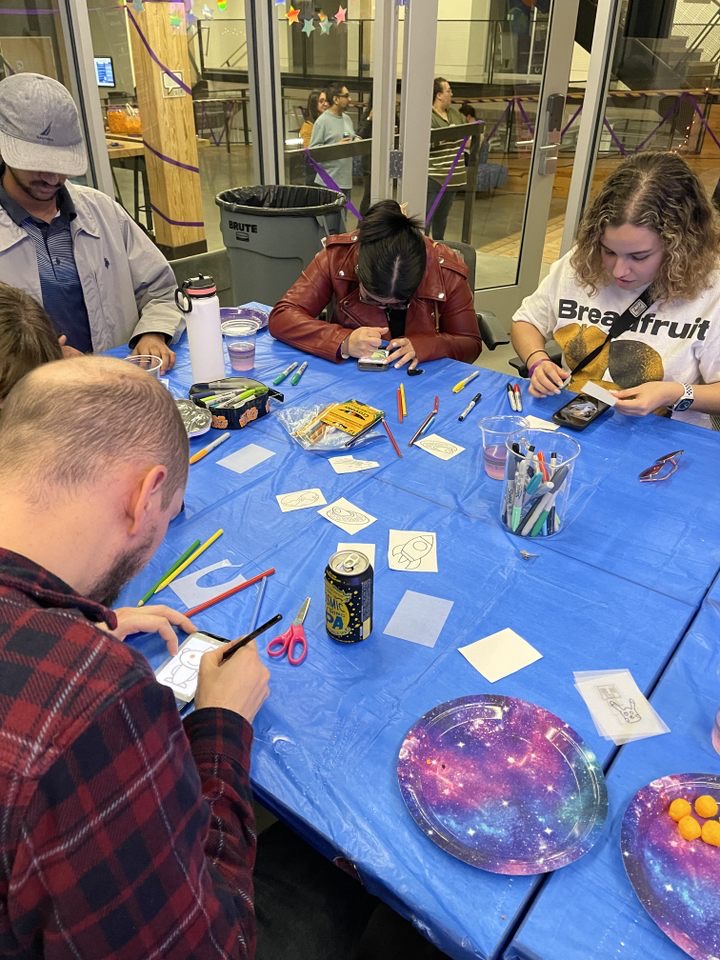
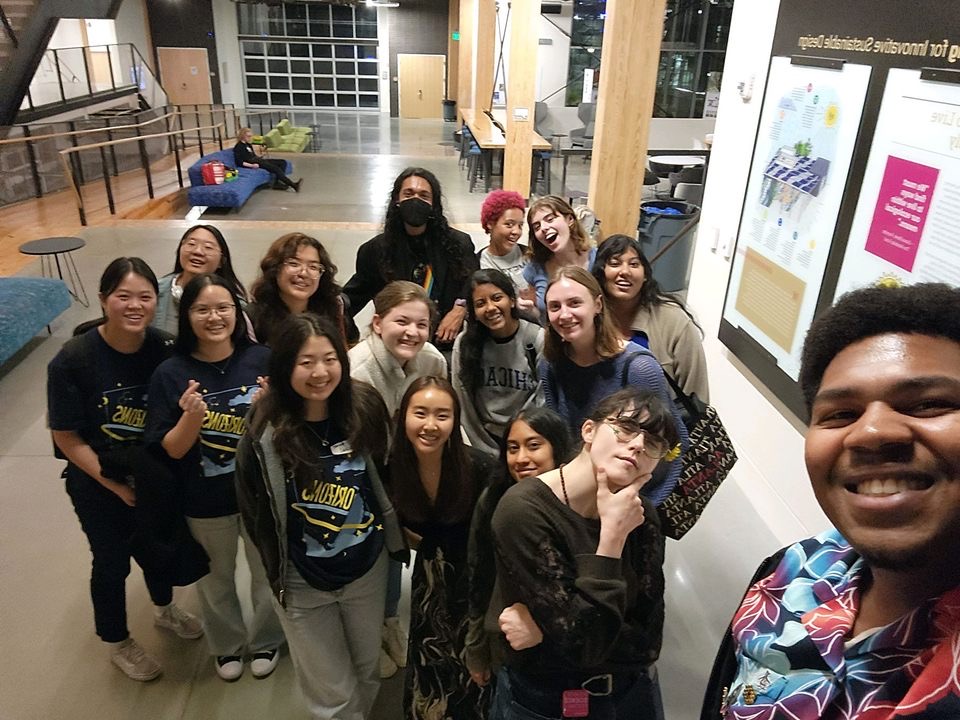
I joined STEMComm this semester because I was interested in writing articles centered around science and helping out with coordinating events. This semester I got the opportunity to work on the Atlanta Science Festival event after-party, particularly with the shrinky dink activity. I had a lot of fun throughout the entire process, starting with ideation to the final product. Initially, my group and I were uncertain what we wanted to do that would be scientific and fun. However, during the brainstorming, we decided to host a shrinky dink workshop. This turned out to be engaging and didn’t cost too much money.
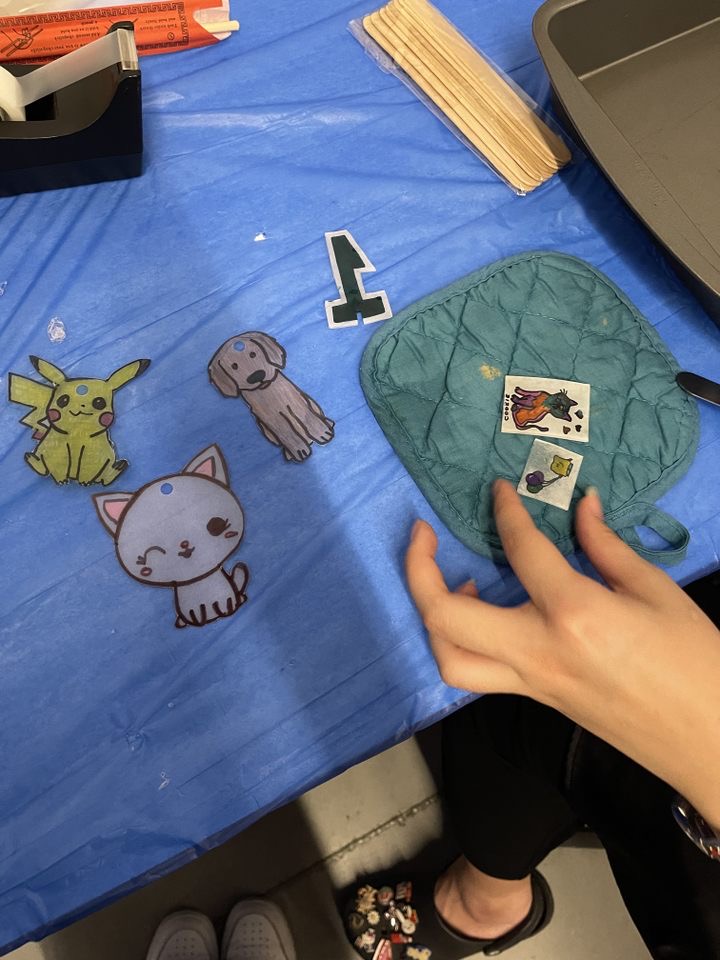
A shrinky dink is a toy that was invented in 1973 and was super popular in the 1980s. The process involves drawing one’s design on thin, flexible sheets of polystyrene (a type of thermoplastic), cutting it out, and then heating it thus shrinking it into a thicker, more rigid form (Gelfand). Polystyrene is a common plastic and is considered similar to recycled plastic #6 (Magazine). These sheets are created by extrusion, where the material is melted and die-cut into the final product (Gelfand). By heating the plastic, the long polymer chains in the plastic that are stretched out go back to their original state. As a result, the design “shrinks” to around a third of its size and is marketed as magic.
In our workshop, we cut the plastic sheets into smaller sections for the participants and had a variety of art materials. These included colored pencils, sharpies, markers, hole punchers, and scissors. The product options we decided on were keychains, pins, and magnets. To maintain a safe environment for everyone, we had some team members stationed with heating guns to do the shrinking process. This ensured no participants were harmed in the heating process. Additionally, we had resin that hardened under the UV lamp to create a more secure encasing and fun gloss layer if anyone wanted. The UV light cures the resin through a photochemical reaction. This process does not take too long, depending on how much resin is needed to harden.
Before the event started, we also created several examples to display as well as posters and slideshows to explain the process of shrinky dinks, and resin. Once the event started, the workshop received many curious participants and positive feedback. All the participants were surprised and intrigued by the shrinking process. It was fascinating to see how small the designs became when heated up. While some designs became too small or shrunk a little funky, after a few tries, participants were able to grasp how large they should go with the design before shrinking.
The workshop was a big success and many participants came back to make more than one item. I enjoyed the setup process and seeing the participant’s faces light up in delight during the event. Running the event and seeing the final product of all the planning come together was a rewarding experience. I am looking forward to helping coordinate and run more events in the future!
Sources Cited
Magazine, Smithsonian. “The Science of Shrinky Dinks.” Smithsonian.Com, Smithsonian Institution, 14 Oct. 2010, www.smithsonianmag.com/science-nature/the-science-of-shrinky-dinks-36715644/. Accessed 16 Apr. 2024.
Existential Physics opens with an anecdote about a difficult question a young man posed the author during outreach: because of quantum physics, his deceased grandmother isn’t really dead, is she? “Physicists are really good at answering questions,” author Sabine Hossenfelder quips, “but really bad at explaining why anyone should care about their answers.” And from my own experiences, I do agree. In the biological sciences, it’s really easy for people to care about the science. Or even if it’s a topic that’s dense, we can usually connect it to some disease that terrifies you to attention. The mechanisms of biology are intimately embedded in our own flesh and blood. No matter how you feel about the Krebs Cycle or the structure of insulin receptors, it’s easy to understand why these are crucial to understand. On the other hand, the sweeping conclusions in physics about the universe feel less universal.
If you’re going to read this book, definitely go with an ebook or a physical copy. I listened to the audiobook, and I found myself rewinding a lot to go back to a definition or an explanation that I missed. There’s also a handy dandy PDF of diagrams that goes along with the book, and I think that would be really helpful for anyone really trying to absorb this information.
As expected, this novel covers a ton of topics: gravity, relativity, black holes, time, aging stars, and even the beginning and ending of the world. Along the way, Dr. Hossenfelder debunks various pseudoscientific physics myths (i.e., people can’t use quantum leaps to travel through time and space). It also encourages us to think critically about these theories, which the doctor admits can sound ridiculous. As a neuroscience major, I really liked the explanation of Boltzmann brains, the product of a theoretical thought experiment where the tiniest chance of atoms colliding in space makes a brain form spontaneously from the element soup. That brain has maybe half a thought before its parts collapse back into the mush.
Honestly, as the book gets deeper, I felt like that brain: briefly having a moment of insight before falling into an ocean of mild confusion. Don’t get me wrong, it was incredibly fun, but I feel like I may have only absorbed about 60% of the information. Don’t underestimate the “Existential” half of Existential Physics. This book not only introduces uncertainty, but it revels in it. Why do we do science at all if the laws of science, just like everything else, might stop working tomorrow? Does anything actually exist or is it just our perception as “brains in a vat”? Where did we come from and how will the world end? Does free will exist?
Still, the prose of this title brings things back to a more understandable state. At the end of each chapter, the professor gives the main takeaway in a sentence or two. So even if we don’t completely know what’s going on, we can get the big idea. Even more, she interviews other physicists about their own views on the theoretical physics theories of the day. These sections, written in a more direct and casual way, helped me understand the concepts in context. It also has some entertainment value, the same way someone would watch an Actors on Actors video interview.
This book is quite unique in that it covers very dense, deep content, but it never feels stifling. Dr. Hossenfelder’s tone, aimed at older teenagers and adults, doesn’t talk down to the audience. She doesn’t mistake oversimplification with approachability, which is something I find really refreshing about this book. I’ve noticed that while short form internet content (Instagram Reels, Youtube Shorts, TikToks) can give people bite sized pieces of information, it also dumbs things down to fit the time limit of the posts. Because of the format, this book is able to really delve into different topics, and the result is a complete, enriching experience. If you want to learn more about how the big physics questions can help you recontextualize your own life, give it a chance.
Lurking beneath the surface of the normal internet lies the dark web, a labyrinthine network of hidden websites accessible only through specialized software. Often shrouded in mystery and fear, the dark web has earned a reputation as a haven for criminals, a digital underworld where illegal activities flourish like weeds in the dark. But is this image entirely accurate? Is the dark web simply a playground for the nefarious, or is there another side to the story?
The dark web’s anonymity and encryption indeed provide fertile ground for illegal activities. Drugs, weapons, stolen data, and even child pornography find ready markets in this hidden bazaar. Hackers ply their trade, offering malware and cybercrime services to the highest bidder. Terrorist groups and extremist organizations utilize the dark web for communication and recruitment, leveraging its secrecy to spread their ideologies. These illicit activities undoubtedly paint a grim picture of the dark web, fueling the narrative of a digital underworld overrun by criminals.
However, to solely label the dark web as a criminal haven would be a gross oversimplification.
Beyond just illegal activities, the dark web also offers unique opportunities. It serves as a vital tool for activists and whistleblowers operating in repressive regimes, offering them a platform to expose human rights abuses and corruption without fear of reprisal – which in some regimes constitutes death [1]. Journalists, researchers, or citizens in countries with restricted internet like China and North Korea can utilize the dark web to access censored information and communicate with sources in dangerous environments. The dark web also provides a safe space for marginalized communities facing discrimination and persecution to connect and share their experiences, especially in extremely dangerous environments [2]. The dark web can literally save people’s lives.
You could also argue the dark web fosters innovation and technological advancement. Cryptocurrencies like Bitcoin, originally conceived on the dark web, have become huge financial vehicles in the 2020s. Anonymity-preserving tools developed within the dark web have applications in cybersecurity and privacy protection. The decentralized nature of the dark web also holds promise for building more secure and resilient online platforms.
The very features that make the dark web useful for good – its anonymity and encryption – also pose significant challenges for regulation. Traditional law enforcement methods struggle to navigate the complex network and identify illegal activity [3]. Attempts to regulate the dark web often raise concerns about censorship and the potential erosion of online freedoms. Finding the right balance between protecting individuals and restricting criminal activity remains a delicate and ongoing debate.
The dark web is not simply a binary of good vs. evil, criminals vs. activists. It is a complex and multifaceted ecosystem, where both light and darkness coexist. While it is undeniable that illegal activities flourish within its confines, it would be a mistake to ignore the potential for positive change and innovation that the dark web also offers. The challenge lies in developing effective regulation strategies that address the legitimate concerns surrounding illegal activities without stifling the potential for good. This requires a multi-pronged approach that involves collaboration between law enforcement, technology experts, and civil society organizations, all working towards a common goal: harnessing the potential of the dark web while mitigating its harmful aspects.
The nuances of the dark web allow it to move beyond simplistic narratives of “evil” and work towards a future where the dark web serves not as a haven for criminals, but as a tool for positive change and innovation. This truly is a testament to the human spirit’s ability to find light even in the darkest corners of the digital world.
Sources:
Bartlett, Jamie. The Dark Web: Cybercrime, Online Activism, and the Future of the Internet. John Wiley & Sons, 2016.
Weimert, Gabrie. The Hidden Web: Exposing the Dark Side of the Internet. Apress, 2015.
Russell, Mike W. Inside the Dark Web: Understanding the Underworld of Online Crime. Greenwood Publishing Group, 2017.
In the digital age, the lines between public and private have blurred. Our every click, swipe, and purchase leaves a trail of data, meticulously collected by corporations, governments, and third-party entities. This pervasive surveillance raises urgent questions: who owns our data? How is it used? And most importantly, how can we reclaim control over this vital piece of ourselves?
The scale of data collection is staggering. Smartphones track our location, social media platforms analyze our interactions, and smart devices monitor our homes [1]. Facial recognition technology identifies us in public spaces, and even our browsing history paints a detailed picture of our interests and beliefs [2]. This data is then analyzed, packaged, and sold, shaping everything from targeted advertising to political campaigns.
The consequences of this data-driven world are far-reaching. Algorithmic bias can perpetuate discrimination, data breaches can expose our vulnerabilities, and the erosion of privacy can stifle free expression [3]. We become not individuals, but data points, subject to manipulation and control.
However, amidst this unsettling reality, there is hope. Reclaiming our privacy requires a multi-pronged approach, encompassing both individual action and collective advocacy.
Taking Control of Your Digital Footprint:
Mindful data sharing: Be cautious about what information you share online. Consider the purpose of each platform and the potential consequences of divulging personal details. Opt-out of data sharing settings wherever possible.
Privacy-focused browsers and apps: Ditch data-hungry browsers like Chrome for privacy-oriented alternatives like DuckDuckGo and Firefox. Utilize secure messaging apps like Signal and Telegram for encrypted communication.
Strong passwords and two-factor authentication: Implement unique, complex passwords for every account and activate two-factor authentication for added security.
Data minimization: Limit the data you share with third-party applications and services. Regularly review and revoke unused app permissions.
Digital detoxing: Disconnect regularly from social media and online platforms to reclaim your mental space and reduce data trails.
Collective Advocacy:
Support privacy legislation: Advocate for stronger data protection laws and regulations that empower individuals to control their data.
Hold corporations accountable: Demand transparency from tech companies and challenge their data collection practices.
Raise awareness: Educate others about the importance of privacy and encourage them to take protective measures.
Reclaiming our privacy in the age of surveillance is not a one-time action, but an ongoing process. It requires vigilance, awareness, and a commitment to safeguarding our digital and physical selves. By adopting these practical steps, amplifying our voices, and demanding accountability, we can begin to rewrite the narrative of data ownership and reclaim control over our lives in the digital age.
By understanding the pervasiveness of data collection, adopting practical protective measures, and advocating for stronger privacy protections, we can begin to navigate the age of surveillance with a greater sense of control and empowerment. Remember, our data is not simply a commodity; it is a fundamental part of our identity, and we have the right to decide how it is used. So, let us not surrender to the panopticon of the digital age, but rise up and reclaim our right to privacy, one click and one voice at a time.
Sources:
The Algorithmic Society: Social Theory in the Digital Age by Nick Srnicek, https://www.jstor.org/stable/j.ctv319wpvm, 2023
The New Digital Age: Reshaping the Future of Business, Work, and Society by Eric Schmidt and Jonathan Rosenberg, https://www1.goramblers.org/papersCollection/Book?dataid=mTn:3008&Academia=The_New_Digital_Age_Eric_Schmidt(3).pdf
The Public Option: How to Build a Better Internet by Evgeny Morozov, 2011, https://www.youtube.com/watch?v=le8Ldl5EeZA
While scales of justice have long been a symbol of fairness and impartiality, that has never been completely accurate. Racial, gender, and class has always affected your experience with the justice system, however, in the 21st century, they are increasingly balanced on the shoulders of algorithms. Artificial intelligence is rapidly transforming legal systems, from predicting recidivism to analyzing evidence. These impacts can have massive ripple effects on people’s lives.
One of the most common applications of AI in the courtroom is in risk assessment tools, which are algorithms used to predict the likelihood of a defendant re-offending if released on bail or parole. Proponents argue that these tools can help reduce crime rates by identifying high-risk individuals, while critics raise concerns about bias and lack of transparency.
A 2016 study by ProPublica found that a widely used risk assessment tool in Wisconsin was significantly more likely to misclassify Black defendants as high-risk compared to white defendants [1]. This raises the crucial question: Are AI tools simply perpetuating existing racial inequalities within the criminal justice system?
AI is also being used to analyze vast amounts of evidence, including video footage, DNA, and social media data. This can be a valuable tool for investigators and prosecutors, but it also raises concerns about the manipulation of evidence.
A 2019 report by the National Academies of Sciences, Engineering, and Medicine found that AI-based facial recognition technology has significant accuracy disparities across racial and ethnic groups [2]. This raises the possibility of innocent individuals being wrongly convicted based on flawed algorithms, and these issues particularly impacting minorities.
Another big challenge with AI is the lack of transparency. Many algorithms are opaque “black boxes,” making it difficult to understand how they reach their conclusions. This lack of transparency can undermine public trust in the justice system and make it difficult to hold algorithms accountable for errors.
In a 2023 case in California, a judge ruled that prosecutors could not use an AI-based risk assessment tool because the algorithm’s decision-making process was not sufficiently transparent [3]. This landmark case highlighted the need for greater transparency and accountability in the development and use of AI in legal systems and slowed the impacts of AI in California.
The potential of AI to improve the justice system is still unrealized. However, it is crucial to acknowledge and address the challenges of bias, transparency, and accountability. We must ensure that AI is used in a way that promotes fairness and equal justice for all, not simply reinforces existing inequalities.
The use of AI in the courtroom holds immense promise for improving the justice system by removing human bias, we must also be mindful of the way AI perpetuates and is built upon human biases. By acknowledging the challenges and taking steps to mitigate them, we can ensure that AI is used in a way that upholds the fundamental principles of fairness and equal justice.
Even though I have been involved with the STEMComm VIP team for almost four full years now, I have never taken the time to learn about science communication properly and ways to go about it. Taking a communication class has been long overdue for me because it’s something that I’ve always been interested in improving about myself and my skill set as a graduate student and as a budding scientist. So, I finally leaped into MSE 8200: Advanced Presentation Skills.
The Warm Up
MSE 8200 had six students in a classroom meant for 40, so I needed to connect with my classmates to go through the class. We started with some surprisingly deep icebreaker questions about where we came from and what drove us to become engineers. From there, we began our warm-up exercises, where we went over problems of writing in science and how we can improve our communication. We all related to the feeling when we finally found an article with a title that might help us with our projects, but then we came to find out that the paper was impossible to understand. Since writing is the most significant thing that non-scientists see, it’s one of the things that should be practiced to be understandable and intriguing!
After discussing the basics of science writing, we reviewed different science stories, what they did well in communicating their science, and what could have been done better. We finished the warm-up also talking about how to communicate with younger audiences, reading some different stories from well-known scientists, and how we can improve on explaining technical issues to a non-technical audience (with some pretty cool Ted Talks). After writing our versions of how to explain some of the foundations of our research, it was time to make our presentations!
Speaking Up
After the warm-up, we switched between learning about different methods of presentations and creating presentations for the class with peer and instructor feedback. Our first style (and probably the easiest for me) was the elevator pitch, where we gave a short 90-second pitch on the research we do, why it matters, and what we learned from our work. It was an easy assignment since I love telling people what I do, whether they’re other materials scientists or a friend who wants to listen. The 3 Minute Thesis presentations were also fun to practice, summarizing my work and learning more about what my classmates do. It also gave me a fun challenge to take my research from my summer internship and condense seven research slides into one slide that explains three months of work!
My most challenging communication style was long-form oral presentations for a technical audience. Essentially, they were presentations a researcher would give to other scientists at an academic conference. I realized that I’ve never attended an academic conference, so I wasn’t sure what would be the best information from my internship to explain further or delete. I also realized that since my Master’s research experience is from my internship, it was difficult to talk about my work for 15 minutes when I’ve been used to presenting it for 3-5 minutes. We closed out the course with a poster presentation, where we gave a brief pitch of our work once more, with some final comments on our experience in the class.
Did Jalen learn to communicate better?
Yes. 1000%. Absolutely (and any other words you can think of). Even though I have a good amount of experience creating science-related content, what I learned in this class will make me a better communicator. With the help of my instructor and my peers, I got a lot of feedback on what I could improve on in my presentation style and what I could do better. I learned that even though my long-form presentations were shorter than I would have liked, I did a great job presenting my work’s complicated terms and concepts in a way for both technical and non-technical audiences to understand and engage. With the use of animations and analogies in my work, I could put a clear image in the audience’s mind of what I was doing and put a lot more emphasis on the why; if a scientist cannot explain why their work matters, then it becomes even more challenging to engage with a non-technical audience, especially in fields like renewable energy, electric vehicles, and artificial intelligence.
What I want to work on and improve is including more conciseness in my presentations. Though my explanations were clear, I spent more time elaborating on small details than I probably needed to, especially for a non-technical audience. I think if I improve on this, then I will be able to create more accessible presentations. I also hope to practice with more resources like “Academics Suck at Writing” to learn more ways that I can improve my STEM communication skills.
MSE 8200 has been one of the most enjoyable and engaging experiences of my Master’s. Not only did I learn skills to make me a better science communicator, but I also realized that my communication style is more robust when it includes visuals or oral presentations. It also gave me a path to move forward with my STEM communication journey as I prepare to graduate and move on to the next career step. I plan to attend a science communication conference in the spring and use the lessons from this class to grow even further. If you can take a science writing or presentation class in your program or work, I highly recommend it!
Note: If you want to see my research (and my communication skills in action ), I posted my 3 Minute Thesis presentation from my class below.
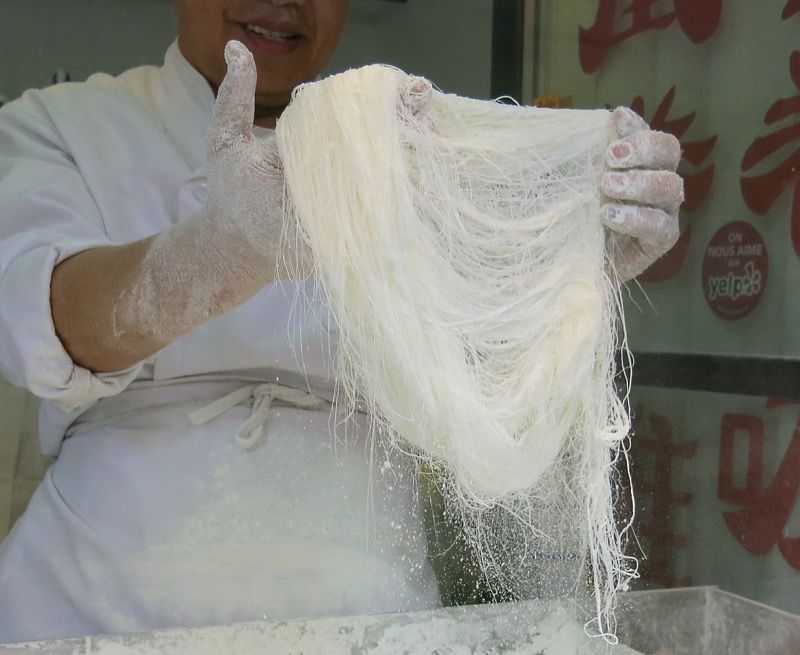
“Dragon Beard Candy” Image Credit: A Canadian Foodie
Dragon’s Beard Candy, also known as “Chinese Cotton Candy,” is a prime example of the masterful blending of culinary creativity and traditional culture. This delicate confection, which has its origins in ancient Asian traditions, has enthralled generations with its elaborate preparation and distinctive texture, which is reminiscent of fine silk threads. In this essay, we will explore the origins, preparation, and cultural significance of Dragon’s Beard Candy, shedding light on the science and craftsmanship behind this time-honored treat.
Dragon’s Beard Candy has a rich history dating back to ancient China, where it was once considered a delicacy reserved for royalty. The candy’s creation takes on a mythical charm due to its association with dragons, which are highly revered in Chinese mythology. Dragon’s Beard Candy is a popular treat at weddings, festivals, and other special occasions. It has evolved over the centuries into a symbol of joy and celebration.
The fundamental ingredients for Dragon’s Beard Candy are simple yet essential: sugar syrup and starch. First, a viscous syrup is made by heating sugar and water together. The critical step lies in the meticulous pulling, twisting, and folding of the sugar strands. This intricate dance transforms the once-solidified syrup into countless fine threads, resembling the beard of a dragon. There are two benefits to adding cornstarch or potato starch. First of all, it keeps the delicate strands from adhering to one another, preserving the candy’s unique texture. Second, the starch enhances the entire sensory experience by subtly counterbalancing the sweetness.
There is an intriguing interaction between physics and chemistry in the making of Dragon’s Beard Candy. The process of pulling sugar is similar to an alchemical cooking technique in which heat and constant stretching turns sugar syrup into an intricate web of tiny threads. In addition to adding layers and air to the candy, twisting and folding gives it a fluffy, dreamy texture. The structural integrity of the candy is enhanced by the starch coating. Starch is essential for preserving the uniqueness of each sugar strand by preventing them from combining or collapsing thanks to the processes of encapsulation and absorption.
Crafting Dragon’s Beard Candy requires a delicate touch and a keen understanding of the candy’s behavior under various conditions. Skilled confectioners become experts at pulling sugar, measuring syrup consistency, and striking the ideal ratio of elasticity to fragility. With meticulous execution of every twist and fold, the confection is not only aesthetically magnificent but also a demonstration of the artist’s talent.
“The Golden Ratio” Image Credit: Getty Images Plus
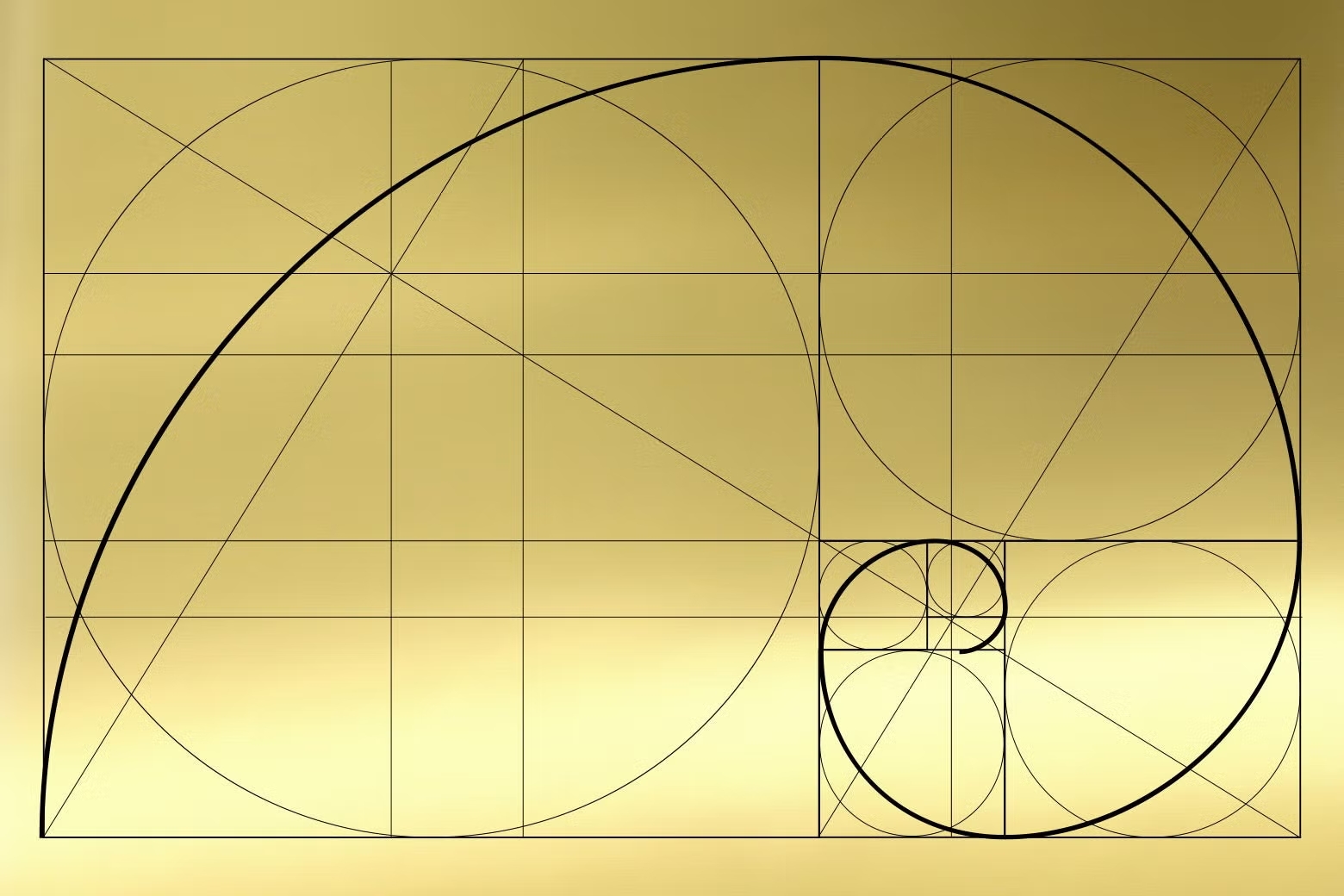
The manual way of stretching the candy is by hooking and folding it over itself, which involves a multiplication factor of 2 (doubling in length). Nowadays, the modern candy-pulling machine implements a stretch factor related to the Golden Ratio,(1/2 + sqrt(5)/2 approximately 1.618), which is based on the number of rods/hooking with in the machine. The Greek letter phi (φ), which represents the mathematical constant known as the golden ratio, has historically been used to symbolize harmony and proportion in art. Within the culinary arts, Dragon’s Beard Candy presents an interesting pairing for the golden ratio as delicate dance of precision and ratios goes into the painstaking preparation of this old confection. The intricate texture of the candy is achieved by pulling, twisting, and folding the sugar strands, which demonstrates a meticulous attention to proportions and is reminiscent of the influence of the golden ratio in both art and nature. The golden ratio is subtly acknowledged as one savors the dreamy sweetness of Dragon’s Beard Candy, linking the culinary experience to the timeless appeal of mathematical beauty.
Dragon’s Beard Candy is more than just candies; it is a culinary masterwork and a cultural asset. Its preparation, which has its roots in antiquated customs, accentuates the tasteful fusion of science and artistry. Savoring the threads of this delicious treat allows us to participate in a timeless tradition that weaves us into the rich fabric of cultural celebration and culinary history. Dragon’s Beard Candy encourages us to recognize the beauty in the craft of people who, akin to contemporary alchemists, turn ordinary ingredients into sensory-pleasing wonders.
“Dragon’s Beard Candy – Alchetron, the Free Social Encyclopedia.” Alchetron.Com, 7 Sept. 2022, alchetron.com/Dragon%27s-beard-candy.
Ellenberg, Jordan. “The Number That Becomes More Amazing the More You Study It.” Slate Magazine, Slate, 8 June 2021, slate.com/technology/2021/06/golden-ratio-phi-irrational-number-ellenberg-shape.html.
Lugonja, Valerie. “Dragon Beard Candy.” A Canadian Foodie, 5 May 2015, www.acanadianfoodie.com/2015/05/05/dragon-beard-candy/.
Magazine, Smithsonian. “Using Math to Build the Ultimate Taffy Machine.” Smithsonian.Com, Smithsonian Institution, 21 Oct. 2016, www.smithsonianmag.com/science-nature/using-math-build-ultimate-taffy-machine-180960849/.
The Mathematics of Ta y Pulling – University of Wisconsin, people.math.wisc.edu/~thiffeault/talks/ddays2018.pdf. Accessed 14 Dec. 2023.
Virtual reality (VR) has emerged as technology with the potential to change education in the future. VR’s immersive and interactive experiences are redefining traditional educational methods as we navigate the digital age. This article examines how virtual reality is affecting education, stressing its advantages, difficulties, and potential applications for both teachers and students.
When used in education, virtual reality offers a dynamic and engaging environment that goes beyond the confines of conventional classrooms. From the comfort of their classrooms, students can use virtual reality (VR) to explore far-off planets, go back in time, or learn more about the intricate workings of the human body. With the help of this technology, learning can take on a more interesting and dynamic quality.
The potential of virtual reality (VR) to improve student engagement and retention is one of its main benefits in education. Students frequently find it difficult to pay attention in traditional lectures and textbooks, which results in lower information retention. However, virtual reality (VR) stimulates multiple senses, immersing learners in an interactive, three-dimensional environment that leads to a more profound and long-lasting understanding of the subject matter.
Teachers can design customized learning experiences with virtual reality that are based on the needs of each individual student. Students can advance at their own pace while getting real-time assistance and feedback from adaptive virtual reality programs. By catering to the various learning styles and preferences of students, this individualized approach promotes a more inclusive and efficient educational system. In disciplines like science, engineering, and medicine that demand practical experience, virtual reality is especially helpful. Students can hone their skills in a risk-free environment by practicing them in simulations and virtual laboratories. This is especially beneficial in disciplines where real-world practice may be expensive, dangerous, or logistically challenging.
With virtual reality, geographical limitations no longer prevent collaborative learning. Participation in shared virtual classrooms by students from around the world promotes global perspectives and cross-cultural interactions. Additionally, virtual reality (VR) bridges the gap between educational opportunities by making education accessible to people living in remote or underserved areas. Virtual reality in education seems to have a bright future as long as technology keeps improving. Applications for virtual reality (VR) are probably going to get more advanced, providing more customized and realistic learning experiences. Furthermore, the combination of VR and AI can improve adaptive learning even more by giving students individualized learning paths.
“VR Education” Image Credit: The Tech Trend
The use of virtual reality in the classroom has the potential to completely transform both the way teachers and students learn. Education becomes a dynamic and engaging experience thanks to VR’s immersive and interactive qualities, which also promote improved comprehension, retention, and skill development. Virtual reality in education has a bright future, despite certain obstacles. These obstacles will be addressed by continued technological advancements and a dedicated effort. The educational landscape will profit from virtual reality’s boundless potential as we embrace this game-changing tool for the next generation of students.
Source:
“Pros and Cons of Using Virtual Reality in Education: LITSLINK Blog.” Litslink, 23 July 2021, litslink.com/blog/usage-of-virtual-reality-in-education-pros-and-cons.
Onu, P., Pradhan, A. & Mbohwa, C. Potential to use metaverse for future teaching and learning. Educ Inf Technol (2023). https://doi.org/10.1007/s10639-023-12167-9
Radianti, Jaziar, et al. “A systematic review of immersive virtual reality applications for higher education: Design elements, lessons learned, and research agenda.” Computers & Education 147 (2020): 103778.
Riley, Zoey. “Top 13 AR & VR Companies That Are Working on Education Sector.” The Tech Trend, 10 Oct. 2021, the-tech-trend.com/reviews/top-13-ar-vr-companies-that-are-working-on-education-sector/.
Unleashed, Universal Unity. “The Impact of Virtual Reality on Education: Transforming the Classroom Experience.” Medium, Medium, 21 Nov. 2023, medium.com/@gabri4974/the-impact-of-virtual-reality-on-education-transforming-the-classroom-experience-ef6ed342b525.